Roman Breakfast Guide: Coffee, Cornetto and How to Order
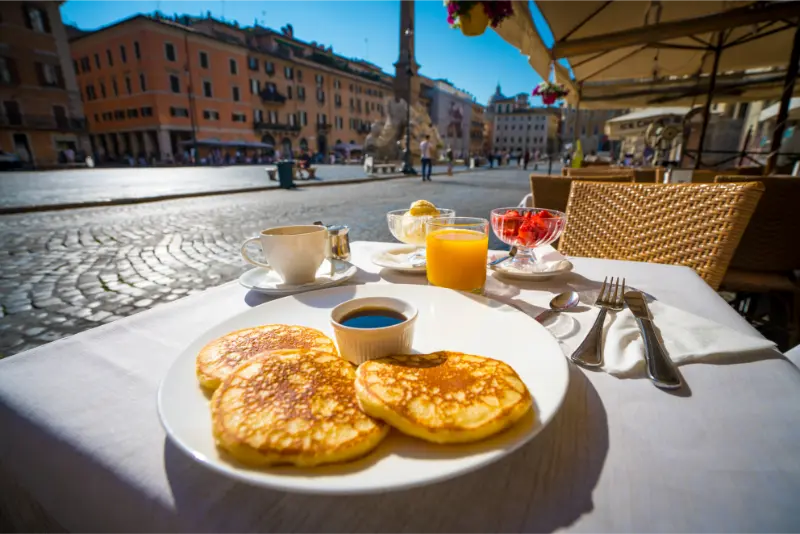
A typical Roman breakfast is much lighter than breakfast in many English-speaking countries. For countless locals it means coffee—often cappuccino in the morning—plus a cornetto eaten quickly at the bar. Visitors sometimes expect eggs, bacon, pancakes and a long sit-down meal, then conclude that Roman breakfast is “small.” It makes more sense to understand it as part of a different daily rhythm.
Learning the bar system also makes breakfast cheaper and more enjoyable. Use the Rome coffee guide for drink terminology and the Rome street-food guide for what to eat later in the day. Breakfast is less about finding one famous café and more about becoming comfortable with neighborhood routines.
What Romans eat for breakfast
The classic combination is a cornetto and coffee. Cornetti can be plain, filled with cream, jam or chocolate, and vary from crisp to soft depending on the bakery/bar style. You may also see maritozzi, especially in places that specialize in traditional Roman pastries, although they are richer and not necessarily an everyday choice for everyone.
Coffee choices in the morning
Cappuccino is completely normal at breakfast. Espresso, caffè macchiato and other coffee variations are equally common. The idea that Italians “ban” cappuccino after a certain hour is exaggerated: it is a cultural habit, not a law. Order what you enjoy, but knowing local patterns helps you understand the bar rather than treating etiquette as a set of punishments.
Standing at the bar vs sitting down
In many cafés, consuming coffee at the counter is cheaper than table service, especially in tourist-heavy areas. Check the menu or price list before sitting. If you want a fast local-style breakfast, order at the cashier where required, take the receipt to the counter and eat standing up. Systems vary by bar, so watch what others do.
How to order
A simple “Un cappuccino e un cornetto, per favore” is enough. If you want a filled pastry, point or ask for crema, cioccolato or marmellata. You do not need perfect Italian; clear, polite ordering works. Keep the counter moving if the bar is busy.
Where to have breakfast
Neighborhood bars often provide the most typical experience and better value than landmark-facing terraces. In areas such as Testaccio, Prati, Trastevere and Monti, try a well-used local bar near your accommodation instead of crossing the city for a viral café. The best breakfast place is often the one you can revisit each morning.
Healthier and savory alternatives
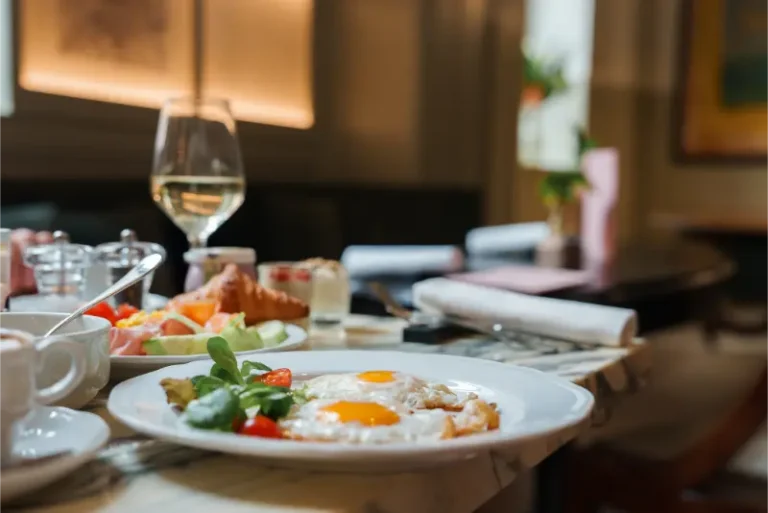
Hotels and modern cafés may offer yogurt, fruit, toast, eggs, sandwiches or savory baked goods. If a sweet breakfast does not suit you, there is no reason to force it. Supermarkets and bakeries also make it easy to assemble fruit, yogurt and bread for an early sightseeing day.
Breakfast before an early tour

For a sunrise walk or early Vatican/Colosseum entry, check opening times the night before. Some neighborhood bars open very early, but tourist cafés may not. A small snack in your room plus coffee later is better than arriving hungry at a timed entrance.
Common mistakes
- Assuming table service costs the same as standing at the counter.
- Crossing Rome for a famous café when a good neighborhood bar is next door.
- Thinking cappuccino after 11:00 is illegal or offensive.
- Ordering a huge breakfast before a long hot walking day if you are not used to it.
- Forgetting that pastry names and fillings vary from bar to bar.
Frequently asked questions
What is the most typical breakfast in Rome?
Coffee and a cornetto is the classic everyday combination.
Do Romans drink cappuccino at breakfast?
Yes. Cappuccino is strongly associated with the morning meal.
Is it cheaper to stand at the bar?
Often yes, especially in central tourist areas where table service has a different price. Check the displayed menu.
What if I want eggs or a savory breakfast?
Hotels, brunch cafés, bakeries and some bars offer savory options. You do not need to follow the sweet-breakfast pattern if it does not suit you.
How to fit this into a realistic Rome itinerary
A good Rome day leaves enough space around Roman breakfast for queues, security, heat, navigation and spontaneous stops. Avoid planning by distance alone: two places that look close on a map can still require stairs, traffic crossings or a timed entrance. Pair this experience with one or two nearby priorities and keep at least one flexible break for coffee or lunch.
For first-time visitors, geographic grouping is more useful than chasing a citywide top-ten list. Central Rome is walkable, but repeated cross-city transfers quickly drain time. If a major timed attraction is part of the same day, place the flexible church, museum or food stop before or after it rather than between two fixed reservations.
Best time of year and time of day
Spring and autumn are comfortable for walking but also busy. Summer requires heat management, while winter gives shorter daylight and occasional rain but can make indoor culture especially attractive. In every season, early morning usually reduces crowds around outdoor landmarks; museums and churches can be better during midday heat.
Opening arrangements can change around holidays, religious celebrations, exhibitions, strikes, restoration work or institutional events. Use the practical details in this guide as a planning baseline, then confirm the official source shortly before the visit when a specific time, ticket or reservation is essential.
Accessibility and traveling with children
Historic Rome is not uniformly accessible. Cobblestones, steps, old lifts and narrow entrances can matter more than the straight-line distance on a map. Families should also keep the visit focused: one clear story, artwork or practical objective is often enough to make a stop memorable for children without turning the day into a lecture.
Travelers with mobility requirements should check the venue’s current accessibility page or contact the site when access is critical. Temporary routes can differ from permanent descriptions, especially during restoration. Build extra transfer time and avoid assuming that every historic entrance is the accessible entrance.
What to notice instead of rushing
When you reach Roman breakfast, spend the first few minutes orienting yourself before taking photographs. Identify the building’s relationship with the street, nearby monuments or neighborhood. Inside, look for scale, materials, light and circulation. These observations create a stronger memory than collecting dozens of disconnected photos.
Rome’s value comes from layers. Ancient structures survive inside later buildings; Baroque interventions reshape medieval spaces; modern transport moves beside imperial ruins. Ask what belongs to which period and what changed. Even a short visit becomes more meaningful once you stop expecting every site to represent only one century.
Final practical advice
Carry a small bottle, comfortable shoes and as little unnecessary gear as possible. Save the official location and opening information before leaving your hotel in case mobile reception is poor inside thick historic buildings. If a site is unexpectedly closed, have one nearby alternative rather than crossing the city in frustration.
Most importantly, do not measure a Rome day by the number of attractions completed. A museum, church, neighborhood meal or quiet square can be the highlight precisely because you had time to notice it. Use this guide to make decisions, then leave enough flexibility for the city to interrupt your plan.
A deeper way to experience this part of Rome
Try to connect what you see with something encountered earlier in the trip. Compare a Baroque interior with another church, a sculpture collection with the Capitoline Museums, or a neighborhood habit with what you observed near your accommodation. Comparison turns isolated sightseeing into understanding and helps you remember why places differ.
If you enjoy photography, make one wide image for context, one medium view that explains the space and one detail you genuinely find interesting. Then put the phone away for a few minutes. If you travel with other people, ask what they noticed first; different reactions often reveal details you missed.
Before leaving, decide whether the stop changed the rest of your itinerary. You may want to follow an artist to another church, visit a related museum, try a food you learned about, or simply slow down. Rome works best when one place leads naturally to the next rather than when every stop is predetermined.
Who will enjoy this most
Roman breakfast works best for travelers who enjoy adding context to the famous sights rather than racing only between landmarks. It is especially useful on a second or longer visit, but first-time visitors can also benefit when the stop lies naturally along their route. The key is to treat it as part of the neighborhood rather than as an isolated box to tick.
If your schedule is already crowded, choose depth over accumulation. One well-understood church, museum, local ritual or practical system often teaches you more about Rome than three hurried stops. Travelers with a strong interest in art, history, food or urban life should allow extra time, while families can focus on one or two memorable details and then move on before attention fades.
Planning for real conditions on the day
Rome changes from hour to hour. A street can be empty at breakfast and congested by lunch; a church can close briefly for a service; a museum room can be unavailable during installation; summer heat can make a fifteen-minute walk feel much longer. Keep your itinerary flexible enough to absorb these conditions without losing the whole day.
Save the official page, carry identification when a booking may require it, and keep a small amount of time between fixed reservations. If you arrive and conditions differ from what you expected, ask staff or read the current notice before assuming the information is wrong. Temporary changes are normal in a living city with active churches, government buildings, archaeological work and rotating exhibitions.