Stadium of Domitian Rome: Piazza Navona Underground and Current Closure
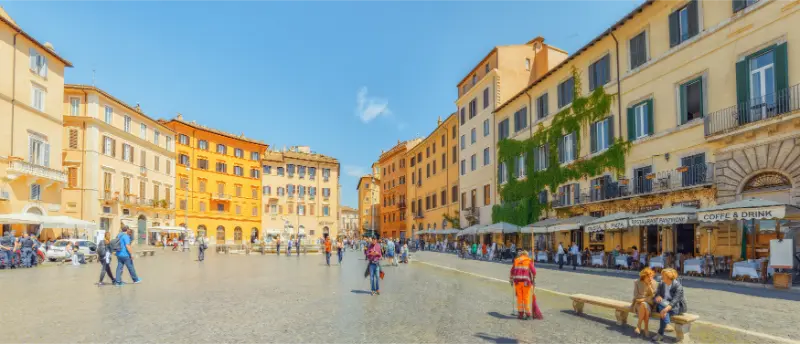
Piazza Navona preserves the shape of an ancient Roman stadium so clearly that you can understand the building before seeing a single excavated wall. The Stadium of Domitian was constructed for athletic competitions in the first century AD, and the long oval outline of the modern piazza still follows its arena.
There is one critical update for 2026: the archaeological area at Via di Tor Sanguigna is currently closed for restoration, according to Turismo Roma. Older websites may still show ticket prices and daily hours, so do not plan around those figures. Check the official Turismo Roma listing and the venue website shortly before your trip.
Stadium of Domitian at a glance
| Practical point | Current situation |
|---|---|
| Main archaeological entrance | Via di Tor Sanguigna 3 |
| Current status | Closed for restoration |
| What remains visible | Piazza Navona preserves the stadium outline; ancient fabric survives below and around the square |
| Historic use | Athletic competitions and public spectacles |
| Best alternative plan | Explore Piazza Navona, Sant’Agnese, Palazzo Braschi and nearby ancient-Rome sites |
Why Piazza Navona has its unusual shape
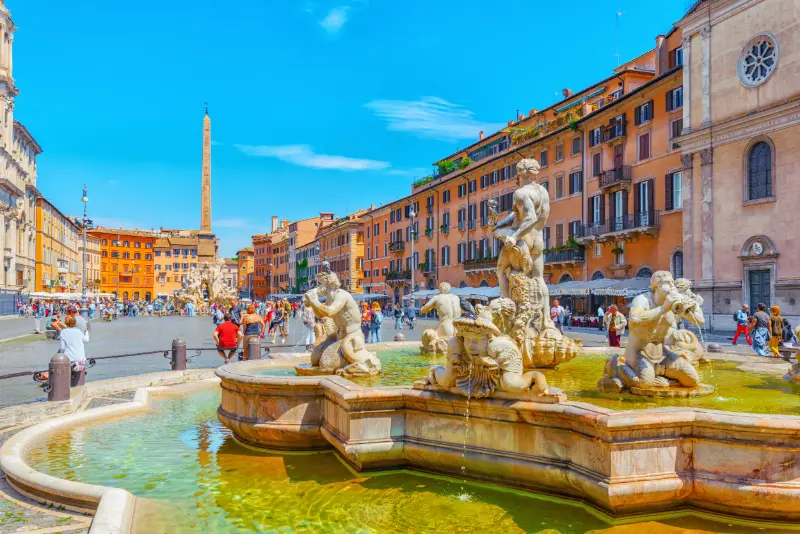
The answer is the stadium. Domitian’s building had a long arena with a curved northern end, unlike the elongated circuits of Roman chariot-racing circuses. Later buildings rose around and over the surviving substructures, but the open space in the center remained. The result is one of Rome’s clearest examples of an ancient plan surviving inside a modern neighborhood.
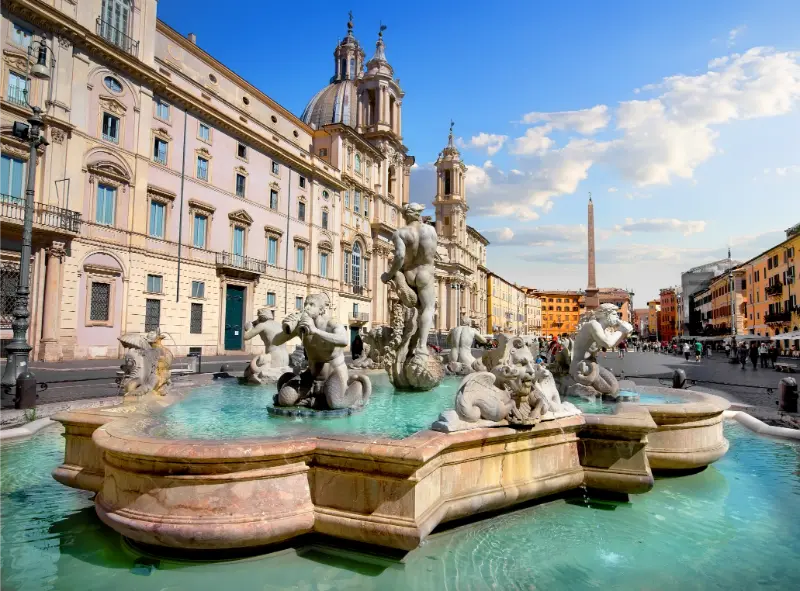
Walking the piazza from south to north is therefore an archaeological experience even when the underground area is closed. The fountains and Baroque façades belong to a much later city, but the shape under your feet is Roman.
What the stadium was used for
The Stadium of Domitian was associated primarily with athletic contests inspired by Greek traditions: running, wrestling and other competitions rather than the chariot races of the Circus Maximus. Ancient spectators sat around the arena, and the building formed part of Domitian’s broader program of public architecture.
Understanding that distinction helps avoid a common mistake: calling Piazza Navona a former “circus” in the same sense as Circus Maximus. The stadium had a different shape, purpose and sporting culture.
What survives below Piazza Navona
Substructures of the stadium survive several meters below the modern street level. Sections have been incorporated into or preserved beneath later buildings, especially at the northern end near Tor Sanguigna. The underground archaeological area normally gives visitors a much clearer sense of the seating structures and construction technique than the piazza alone.
While restoration keeps the site closed, the most useful approach is to read the piazza as the stadium’s footprint. Stand near the northern curve, look down the length of the square and imagine the arena replacing the fountains and pavement.
Current closure and old ticket information
Search engines can still surface pages listing opening hours and prices from before the restoration closure. Treat those as historical unless the official venue confirms reopening. This is exactly the kind of Rome attraction where a traveler can waste time by trusting an undated blog or booking widget.
When the site reopens, confirm the entrance, ticket type, last-entry time and whether all underground sections are available. Restoration projects sometimes reopen in phases.
What to do instead while it is closed
Spend more time in Piazza Navona itself, visit Palazzo Braschi at the southern end, and consider nearby underground or ancient sites that are operating normally. Vicus Caprarius near Trevi is compact, while the Domus Romane of Palazzo Valentini offers a more structured multimedia archaeological visit.
For a broader ancient-Rome day, use our Ancient Rome beyond the Colosseum guide or Underground Rome guide.
A Piazza Navona archaeology walk
Begin at the southern end near Palazzo Braschi and walk north along one side of the piazza, paying attention to the continuous curve of the façades. Cross near the Fountain of the Four Rivers, then continue to the northern rounded end at Tor Sanguigna. From there, look back south to read the full stadium shape.
This walk takes only 15–20 minutes, but it changes the way you see Piazza Navona. The square stops being just a Baroque composition and becomes a visible survival of Roman urban planning.
How much time to allow
For most visitors, 20–30 minutes is enough to understand the exterior footprint while the underground area is closed. That is enough to understand the site without turning it into a rushed photo stop. Add extra time if you are combining it with Piazza Navona and Palazzo Braschi. Rome itineraries become much easier when you plan by neighborhood rather than crossing the city after every attraction.
Build a small buffer before any timed entry. the Stadium of Domitian is in Piazza Navona, where pedestrian traffic, buses and security checks can add uncertainty. Arriving early is more comfortable than trying to recover a missed slot.
Best time to visit
Early morning is best for reading the shape of Piazza Navona before the square fills; evening is best for atmosphere. The best time is not only about crowds: light, temperature and what you plan immediately before or after can change the experience. If the site is underground or indoor, use it as a midday break and save open-air sightseeing for cooler morning or late-afternoon hours.
Weekdays are often easier than weekends, but small-capacity sites can feel busy even on an otherwise quiet day. When booking is available, reserve the time that fits your neighborhood plan rather than simply choosing the first slot you see.
Accessibility and physical conditions
The piazza itself is mostly accessible by normal street approaches, though cobblestones can be uneven. The underground site is currently closed, so future accessibility should be rechecked when reopening is announced.
If step-free access or assistance is essential, contact the venue directly before paying for a non-refundable ticket. Historic and archaeological sites often contain level changes that cannot be understood from a normal street map. The official access information should take priority over old reviews or social-media comments.
Visiting with children
Children can understand the site well if you frame it as a “hidden stadium” beneath a famous square. Because the underground area is closed, keep the history explanation short and combine it with fountains and open space.
Families should keep the visit focused on one clear story: what the place was, who used it and what survives. Our Rome with kids guide has broader advice on pacing, transport and realistic daily schedules.
Photography and visitor etiquette
The northern curve and long central axis make the best explanatory photographs. A wide lens helps show how the modern buildings follow the ancient stadium.
Do not block narrow passages, stairs or circulation routes for photographs. Flash, tripods and professional equipment can be restricted even when normal phone photography is permitted. When rules are unclear, ask staff rather than assuming that a photograph seen online proves current permission.
Frequently asked questions
Is the Stadium of Domitian open in 2026?
The archaeological area is currently listed by Turismo Roma as closed for restoration. Check the official listing and venue website before travel for reopening news.
Is Piazza Navona the Stadium of Domitian?
Piazza Navona occupies the stadium’s ancient arena and preserves its shape, but the visible Baroque square and fountains are much later.

Can I see Roman remains without entering the underground site?
You can understand the stadium footprint from the piazza and see the relationship between the modern square and ancient structure. Access to excavated underground remains depends on the archaeological area reopening.
Was it used for chariot races?
It was built primarily for athletic contests rather than functioning like the Circus Maximus. Its stadium form reflects that different use.
What should I visit nearby while it is closed?
Palazzo Braschi, the Pantheon, Largo Argentina, Vicus Caprarius and the Domus Romane of Palazzo Valentini all fit well into a central Rome itinerary.
Final advice
Do not skip the history of the Stadium of Domitian simply because the underground area is closed. Piazza Navona is one of the best places in Rome to see an ancient building’s plan preserved by a later city. Learn the shape, walk the curve and use the closure as a reason to look more carefully at the square above.
Planning notes that make the visit easier
Before you leave your hotel, save the exact address, opening information and any booking confirmation for Stadium of Domitian Rome offline. Rome is full of similarly named churches, archaeological sites and museum entrances, and mobile reception can be inconsistent underground or inside thick historic buildings. A screenshot of the official confirmation and a map pin can prevent a small navigation error from turning into a missed entry.
Build the rest of the day around geography. A short attraction can still consume a large block of time if it requires two cross-city transfers. When two sights are within the same district, leave room to walk between them rather than scheduling a distant reservation immediately afterward. This creates a more resilient itinerary if queues, weather or transport delays appear.
Finally, check the official website again the evening before the visit. Temporary closures, religious services, restoration works and special events are common in Rome, and the most accurate information is usually the venue’s current notice rather than a cached search result. If an attraction is unexpectedly unavailable, having one nearby alternative already saved will keep the day moving.