Villa Doria Pamphilj Rome: Park, Walks and Visiting Guide
Villa Doria Pamphilj is the place to go when Rome’s monuments start to feel relentless. The vast historic park spreads across the Monteverde and Gianicolense area with pine avenues, lawns, fountains, woodland, jogging paths and seventeenth-century architecture. It is the largest historic villa park in Rome and feels dramatically different from the compact gardens of the city center.
Unlike Villa Borghese, which is woven into major tourist routes, Villa Pamphilj is more residential and spacious. That makes it especially useful for families, runners, couples and anyone spending more than a few days in Rome who wants a slower morning away from queues.
A short history of Villa Pamphilj
The core of the estate developed in the seventeenth century around the Pamphilj family during the papacy of Innocent X. The Casino del Bel Respiro, associated with architect Alessandro Algardi and collaborators, became the architectural centerpiece of a formal landscape of gardens, fountains and views. In the nineteenth century the property expanded through its connection with Villa Corsini.
The area was also touched by the fighting around the Roman Republic in 1849. Later, the city acquired the estate and eventually opened it to the public. Today its layers are visible in fragments: noble architecture, historical monuments, botanical areas and ordinary recreational spaces all coexist.
How big is the park?
Villa Pamphilj is enormous by central Rome standards, and that changes how you should plan the visit. Do not enter through a random gate and assume you can see everything in an hour. Choose the section that matches your goal: formal architecture and historical features, a long nature walk, children’s play areas or a simple picnic and rest.
Main highlights
Casino del Bel Respiro
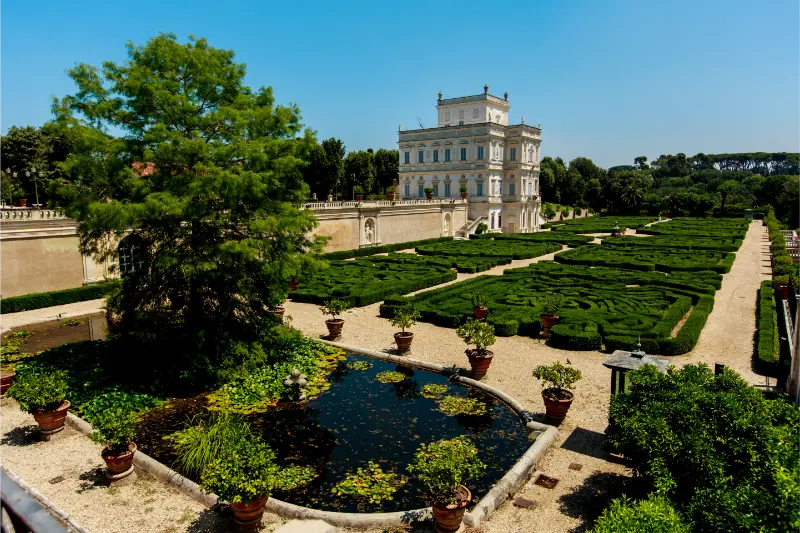
The Casino del Bel Respiro, also called Villa Algardi, is the park’s most elegant building. Its formal garden setting and sculptural decoration evoke the aristocratic villa that existed before the area became a public park. The building is not generally an open-access museum, so appreciate it from permitted viewpoints and do not plan your day around entering the interior.
The lake and fountains
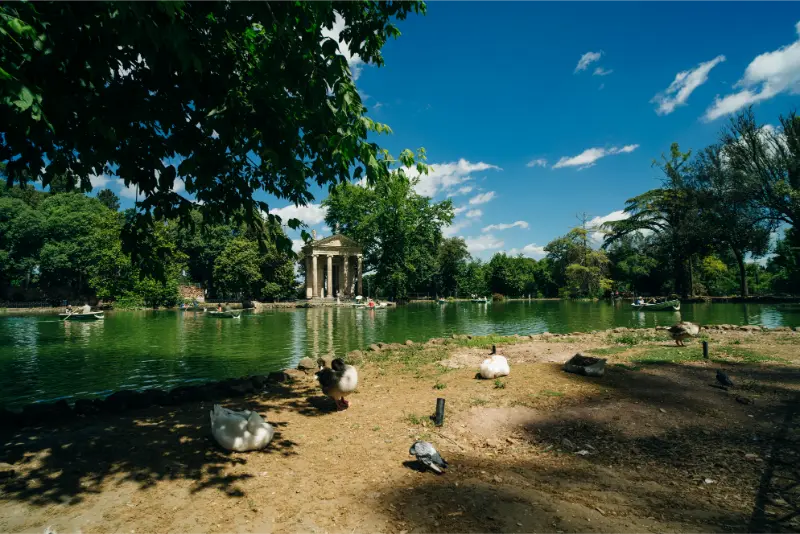
The park contains water features, fountains and a lake that break up long walking routes. They are useful landmarks because phone maps can feel abstract in such a large green area. The landscape is not manicured uniformly; some sections feel formal while others become wooded and semi-rural.
Historic trees and botanical variety
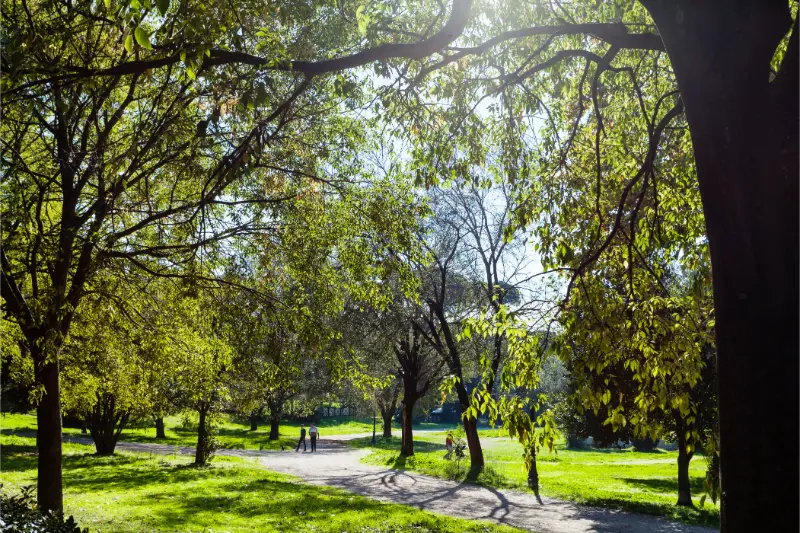
Rome’s official park information notes pines, holm oaks, cypresses and several monumental specimens, along with unusual collection species. You do not need botanical expertise to enjoy the variety. The easiest way to notice it is to compare the exposed lawns with denser wooded sections and the older garden areas near historic buildings.
Opening hours and entrances
Roma Capitale lists several entrances, including Via Aurelia Antica, Via Leone XIII, Via Vitellia, Via della Nocetta and Porta San Pancrazio. The official Villa Doria Pamphilj page gives seasonal opening hours and confirms that access is free. Separate city notices regulate gate opening and closing, so check current information if you plan to arrive very early or leave around dusk.
Because the park is so large, your entrance matters more than it would at Villa Borghese. Porta San Pancrazio works well when combining the park with the Janiculum; Via Vitellia is convenient from Monteverde; Via Aurelia Antica can be useful if your accommodation lies west of the center.
How much time to spend
| Plan | Suggested time |
|---|---|
| Short local break | 45–60 minutes |
| Main historical area walk | 1.5–2 hours |
| Long park exploration | 3–4 hours |
| Picnic / family half-day | Half day |
The park is best when you stop trying to optimize every minute. If you only have two days in Rome, it may not be a priority. If you have four or five days, a slow morning here can improve the rest of the trip by giving your feet and attention a break from museums and stone streets.
A simple first-time walking strategy
Enter from the side that best matches your previous stop, identify the Casino del Bel Respiro and one water feature as anchors, then build a loop rather than a straight crossing. A full east-to-west traverse can be longer than expected. Save an offline map or screenshot before entering because paths branch frequently.
Villa Pamphilj with children
Families appreciate the open space and play areas. Bring snacks, water and a lightweight picnic blanket. The park works particularly well after several days of churches and archaeological sites. For more ideas, see our Rome with kids guide. Keep younger children close around cyclists and runners on shared paths.
Running and cycling
Villa Pamphilj is one of Rome’s classic places for running because the size allows longer routes without repeating the same small loop. Cyclists also use designated and shared paths. Surfaces vary, so road-racing shoes or very narrow bicycle tires are not ideal everywhere. Early morning is cooler and calmer in summer.
Food, water and picnics
There are refreshment options in or near parts of the park, but the area is too large to rely on finding one exactly when you need it. Carry water, especially in warm weather. A simple bakery or supermarket picnic from Monteverde is often more practical than planning a formal lunch inside the park.
What to combine nearby
- Janiculum Hill and the noon cannon
- Trastevere
- Monteverde Vecchio
- San Pietro in Montorio
- Orto Botanico
- A relaxed evening in Trastevere after the park
A good route is Janiculum in the morning, enter Villa Pamphilj from the eastern side, then descend toward Trastevere later. Our Janiculum Hill guide explains the viewpoints and walking sequence.
Accessibility and terrain
Some entrances and paths are more accessible than others. The park contains slopes, unpaved surfaces and long distances, so visitors with reduced mobility should choose a limited section rather than attempting a full crossing. Roma Capitale lists accessible entrances and services on its park page.
Common mistakes
- Entering without checking which gate is closest to your goal
- Trying to see the entire park in one hour
- Relying on one café for water
- Underestimating summer heat on open lawns
- Assuming every historic building is open inside
- Forgetting how far the return walk to public transport can be
Who will enjoy Villa Pamphilj most?
Travelers with four or more days, families, runners and repeat visitors get the most from it. It is less essential for a first-time visitor with only 48 hours, but extremely valuable for anyone who wants to experience Rome as a lived-in city rather than an uninterrupted sequence of famous monuments.
FAQ
Is Villa Doria Pamphilj free?
Yes. General access to the public park is free.
Can I picnic in the park?
A simple picnic is a common way to enjoy the green space. Follow current park rules, use bins and avoid restricted landscaped areas.
Is it close to Trastevere?
The eastern side is relatively close, but the park itself is huge. Plan the specific gate rather than thinking of Villa Pamphilj as one single point on a map.

How to make the visit more rewarding
Do not try to absorb every date or label. Choose three anchors before you enter: the building itself, one artistic or historical feature, and the relationship with the surrounding neighborhood. This keeps the experience coherent and gives you something to remember beyond photographs. Rome can overwhelm visitors with layers of information; a selective approach usually produces better understanding than reading every panel while worrying about the next reservation.
Planning around crowds
Crowds in Rome are uneven rather than constant. Large tour groups often arrive in waves, while smaller sites may become almost empty between them. If a room or viewpoint is packed, move to another section and return later when possible. Carrying a flexible sequence is more useful than chasing a theoretical “perfect” minute. In warm months, also consider how sun exposure affects outdoor sections and save covered areas for the hottest part of the visit.
A note on changing information
Opening hours, ticket rules, restoration closures and access routes can change with little notice, especially at active churches, archaeological sites and state monuments. Treat the official website as the final source for operational details and check it shortly before leaving your accommodation. This is more reliable than saving an old screenshot months before the trip. If a small area is closed, do not assume the whole visit has lost its value; Rome’s major sites usually contain far more than one headline feature.
How to fit this stop into a Rome day
The easiest way to protect the quality of a visit is to group sights geographically. Put one major timed attraction at the center of the day, then use nearby churches, viewpoints, parks or streets as flexible additions. This avoids spending the best hours crossing the city and gives you room to respond to queues, weather or temporary closures. Leave at least thirty minutes between the end of this visit and any reservation in another district; central Rome looks compact on a map, but security exits, pedestrian diversions and crowded streets can consume that buffer quickly.
What to notice beyond the headline feature
Many visitors arrive knowing the single image that made a place famous and leave as soon as they have seen it. A better method is to look for three quieter details: how people move through the architecture, which materials change from one period to another, and what you can see of the surrounding city from the site. Those observations turn a famous attraction into part of Rome rather than an isolated object. They also make the visit more memorable because you leave with a spatial story, not only the same photograph that appears on thousands of travel pages.