
Janiculum Hill Rome: Views, Noon Cannon and a Beautiful Walk Above Trastevere
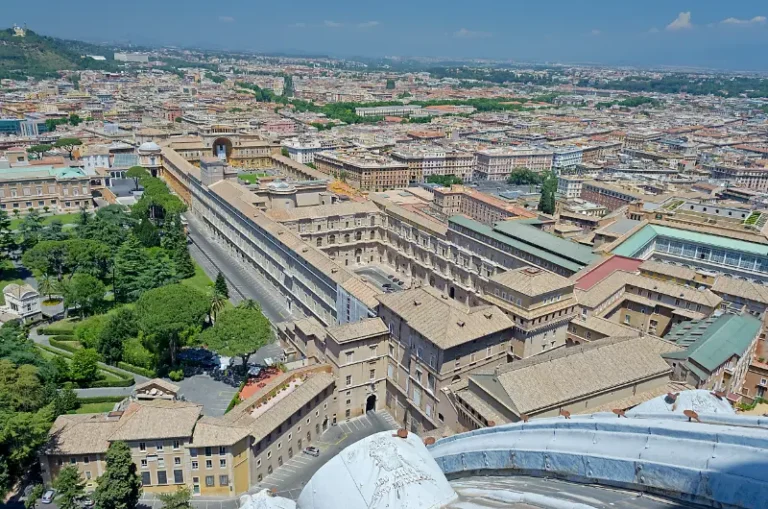
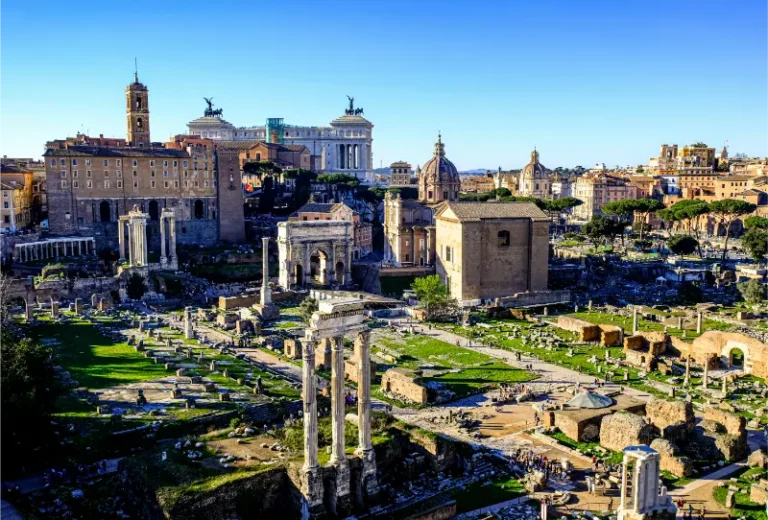
The Janiculum, or Gianicolo, is not one of Rome’s ancient seven hills, but it offers one of the broadest views over the historic city. Rising above Trastevere and west of the Tiber, it feels both central and slightly removed from the main sightseeing circuit.
The hill is especially memorable around midday because a cannon fires a blank round every day at noon, a tradition introduced in 1847 to synchronize church bells. Turismo Roma confirms that the ritual continues daily beneath the monument to Giuseppe Garibaldi. See the official Turismo Roma page.
Why visit the Janiculum
Come for the view, but stay for the route. The Janiculum gives you monuments connected with the Roman Republic, tree-lined roads, a quieter pace and several ways to descend toward Trastevere, the Vatican or the river.
Unlike a rooftop terrace, the experience is not confined to one platform. The hill itself is the attraction, and the best visit involves walking at least part of it.
The noon cannon
The cannon tradition began under Pope Pius IX in 1847 and later moved to the Janiculum. Today the blank shot at noon is one of those small Roman rituals that turns a viewpoint into a living piece of city history.
Arrive before 12:00 rather than exactly at noon. The area around the cannon can draw visitors, and the sound is naturally loud. Children may love it, but anyone sensitive to sudden noise should keep some distance.
Monument to Giuseppe Garibaldi
The equestrian monument to Garibaldi is one of the hill’s visual anchors and connects the Janiculum with the battles of the 1849 Roman Republic. Nearby busts and monuments commemorate other figures associated with the struggle.
Even without a detailed history lesson, the political memory of the hill adds meaning to the panorama. This is not simply a scenic park road.
Passeggiata del Gianicolo and viewpoints
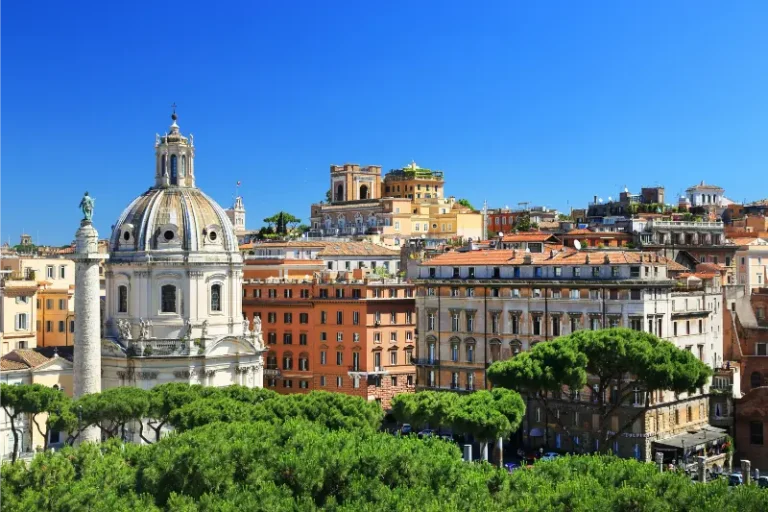
The promenade offers repeated openings toward the city rather than one single mandatory photo spot. Dome silhouettes, central rooftops and changing light make the walk especially good in late afternoon.
Because trees and seasonal vegetation can affect individual sightlines, keep walking rather than judging the whole hill from the first viewpoint.
Fontana dell’Acqua Paola
The monumental Acqua Paola fountain sits on the Janiculum slope and is one of the most dramatic places to begin or end the walk. Its white façade and elevated position create a strong contrast with the smaller fountains of the historic center.
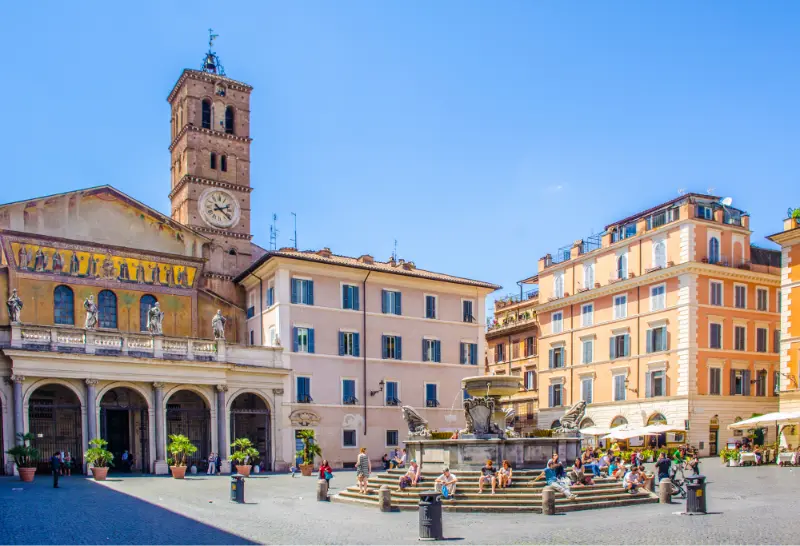
From here you can descend toward Trastevere, making the fountain a useful bridge between panoramic Rome and evening food streets.
How to combine Janiculum with Trastevere
A strong route starts on the hill in late afternoon, passes the main viewpoints and Acqua Paola, then descends into Trastevere before dinner. This uses gravity in your favor and avoids climbing after a heavy meal.
If you want the noon cannon, reverse the logic: reach the hill before midday, then descend for lunch and explore Trastevere afterward.
Walking difficulty and transport
The Janiculum requires more effort than central piazzas because the approaches are steep. Buses and taxis can reduce the climb, after which you can walk mostly downhill.
Travelers with reduced mobility should research the exact access point and pavement conditions rather than assuming that a panoramic hill route is step-free.
Best time for views
Clear mornings give crisp visibility, midday adds the cannon tradition, and late afternoon produces warmer light. Sunset is attractive but can make the descent busier and darker, so plan footwear and route accordingly.
How to plan this without overloading your day
Give the hill at least 60–90 minutes if you are walking a meaningful stretch. The Janiculum works best when it is paired with Trastevere or the Vatican side of the city, not inserted between two appointments on opposite sides of Rome.
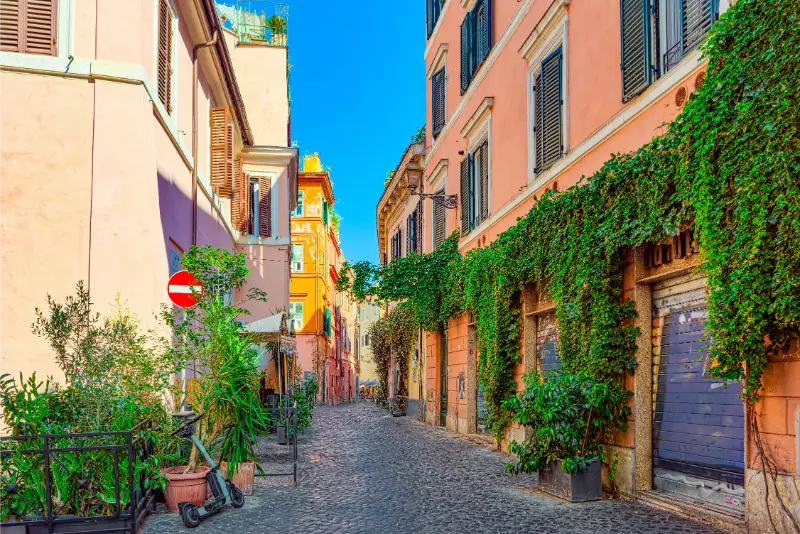
A useful rule in Rome is to treat walking time as part of the experience rather than dead time between attractions. Cobblestones, security checks, photographs, church interiors and spontaneous stops make almost every route slower than the map suggests. Build at least 20–30 minutes of margin around important reservations, and avoid placing two non-refundable timed entries back to back unless they are genuinely next door.
Tickets, transport and last-minute checks
There is no ticket for the public viewpoints or the noon cannon tradition. Check transport and any event-related road restrictions on the day. If your route includes museums or gardens nearby, confirm their separate opening hours.
For anything with a timed entry, use the official website where possible and save the confirmation offline. For trains and local transport, check the operating company again shortly before travel because strikes, engineering work and timetable changes can affect even a well-designed itinerary. External information links in this article are intended as planning references; always verify the final operational details before departure.
Food, water and energy management
Bring water for the climb and save the main meal for Trastevere or another nearby neighborhood. A hilltop snack is pleasant, but the Janiculum’s strength is scenery and walking rather than destination dining.
Carry a refillable water bottle, especially from late spring through early autumn, and wear shoes that work on uneven stone. In hot weather, move long outdoor walks toward morning and evening. In winter, protect the strongest daylight hours for parks, archaeological areas and viewpoints. A short coffee stop or a proper lunch often improves the second half of the day more than squeezing in one additional attraction.
Who this experience is best for
The Janiculum is ideal for repeat visitors, photographers, couples, families who enjoy outdoor walks and first-timers who want one panoramic experience without paying for a terrace.
Frequently asked questions
What time does the Janiculum cannon fire?
The traditional blank cannon shot is fired daily at noon.
Is Janiculum Hill one of the seven hills of Rome?
No. It lies west of the Tiber and is not one of the classical seven hills of ancient Rome.
Can I walk from Trastevere to the Janiculum?

Yes, but the climb is steep in places. Many visitors prefer to go up by bus or taxi and walk down.
Final advice
The Janiculum is one of the best examples of a Rome experience that costs nothing but rewards good timing. Arrive for the cannon or the light, walk instead of simply taking one photograph, and let the descent into Trastevere become part of the evening.
One more planning layer: build the day around priorities
Before you leave the hotel, decide which one or two experiences would make the day successful even if everything else changed. Rome rewards flexible travelers because churches can close for services, transport can be delayed, weather can shift and a museum may take much longer than expected. When your priorities are clear, you can drop a minor stop without feeling that the day failed. This is especially important on a first visit, when almost every street produces a new temptation to change direction.
Also remember that neighborhoods are not simply containers for attractions. Give yourself time to notice the change in atmosphere between the monumental center, residential streets, market areas and green spaces. A travel day becomes more memorable when it has contrast: archaeology followed by lunch, a museum followed by a park, or a fast train followed by an unhurried evening back in Rome.
A final practical habit is to check the next morning’s first commitment before going to bed. Confirm the route, ticket name, opening time and expected travel duration, then stop planning. Rome trips become tiring when visitors spend every evening rebuilding the next day from scratch. A small amount of preparation protects the morning while leaving the rest of the schedule open enough for discoveries, longer meals and unexpected stops.
Think of this article as a framework rather than a contract. Seasonal opening hours, restoration work, public events and transport disruption can change what is practical on a specific day. If one element becomes difficult, replace it with something nearby instead of forcing the original plan. Rome has enough density that a strong alternative is usually within walking distance, and the day often improves when you stop treating every planned stop as mandatory.
It also helps to review the route from the perspective of the slowest person in your group. Families, older travelers and anyone with mobility concerns may need more breaks, easier surfaces or fewer changes of transport. Solo travelers can often move faster but still benefit from daylight awareness and a clear return route at night. Good planning is not about maximizing attractions; it is about matching the city to the people actually taking the trip.
Before publishing or traveling, make one final check against official sources for the few facts that can change quickly: admission rules, opening hours, train times and temporary closures. Keep the broader route stable, but let those operational details remain flexible. That small distinction makes a travel guide useful for much longer while still giving readers the confidence to act on it.
Leave some room for the city to surprise you. A church you had never heard of, a market stall, a neighborhood festival or an unexpectedly beautiful street can easily become more memorable than a scheduled attraction. The most useful itinerary is therefore one that protects the essential reservations but leaves enough unscripted time for Rome itself to participate in the plan.