Via Tiburtina Rome: Porta Tiburtina, Ancient Route and Tivoli Connection
Via Tiburtina Rome is one of the best ways to understand Rome as a living archaeological landscape rather than a collection of isolated monuments. The ancient road linked the city with Tibur, modern Tivoli, east of Rome, and its line still shapes modern streets, neighborhoods, bridges, gates and archaeological sites.
This 2026 guide explains where the Via Tiburtina ran, why it mattered, what survives today and how to trace the most interesting sections without turning the day into a transport marathon. Some monuments along the route have limited access, restoration closures or special-opening schedules, so use the official source linked below shortly before visiting.
Via Tiburtina Rome at a glance
| Destination | Tibur, modern Tivoli |
| Origins | Republican road following an older eastward route |
| Ancient gateway | Porta Tiburtina / Porta San Lorenzo |
| Key nearby district | San Lorenzo |
| Regional continuation | Tivoli and the Aniene valley |
| Best for | Combining urban archaeology with a Tivoli day-trip theme |
Why the Via Tiburtina matters
The Via Tiburtina linked Rome with Tibur, modern Tivoli, a town that controlled routes into the Aniene valley and the central Apennines. The road was formalized in the Republican period but followed older movement corridors used for trade, livestock and access to the eastern countryside.
The city gate is unusually informative because Porta Tiburtina began as an Augustan arch carrying three aqueduct channels over the road. When the Aurelian Walls were built in the third century AD, the structure was incorporated into the defenses. Later Honorian works added another fortified layer.
The route served travelers heading toward Tibur’s sanctuaries, quarries, villas and thermal resources. Travertine from the Tivoli area became one of Rome’s signature building materials, so the road was tied not only to people but also to the movement of construction stone and goods.
The modern Tiburtina remains a major eastern transport artery, but archaeological visibility becomes intermittent outside the gate. This makes the road a good example of how historical significance can survive even where physical remains are buried or fragmented.
Where the ancient road ran
The road exited the late-antique city at Porta Tiburtina, near today’s San Lorenzo district. It then headed east, roughly following the modern Via Tiburtina toward the Aniene valley and Tivoli.
Immediately beyond the gate, the route passed through a funerary and suburban landscape. Modern railway construction, the Verano cemetery and dense urbanization have transformed the area, but the direction remains clear.
Farther east, archaeological discoveries continue to appear beneath the modern road. A Roman bridge found during works along the Tiburtina demonstrated how much infrastructure remains buried under the contemporary corridor.
Roman roads were not immutable lines drawn once and preserved forever. Approaches to the city changed when walls, bridges and gates were rebuilt; later roads often shifted a few meters from the ancient alignment; medieval and modern construction reused paving and masonry. For visitors, the goal is therefore not to imagine that every modern lane sits exactly on Roman basalt, but to recognize a corridor that remained strategically important for centuries.
Best places to trace the road today
Porta Tiburtina
This is the essential archaeological stop. The inner Augustan arch in travertine carries inscriptions connected with the Aqua Marcia, Tepula and Iulia, while the surrounding fortifications show how the structure became a city gate. Few places in Rome combine road and aqueduct history so clearly.
San Lorenzo district
Just outside the gate, San Lorenzo provides a modern counterpoint. The district is known for student life, nightlife and 20th-century history, but its location makes sense only when you remember that it developed beside an ancient road and major rail approaches.
Verano and San Lorenzo fuori le Mura
The basilica of San Lorenzo fuori le Mura and the surrounding cemetery landscape continue the ancient tradition of burial beyond the city. The church also connects the road corridor with early Christian pilgrimage.
The modern Tiburtina corridor
Most of the ancient road is not presented as an archaeological attraction. Instead, the modern axis preserves the direction while excavations occasionally reveal bridges, tombs or paving beneath later layers.
Tivoli as the destination
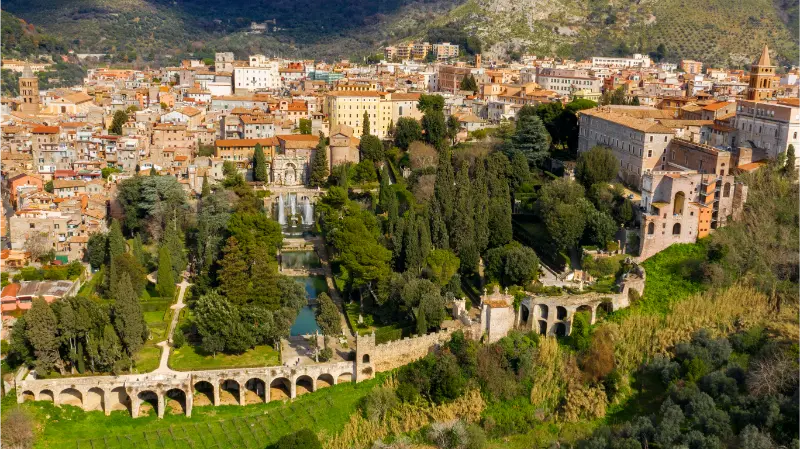
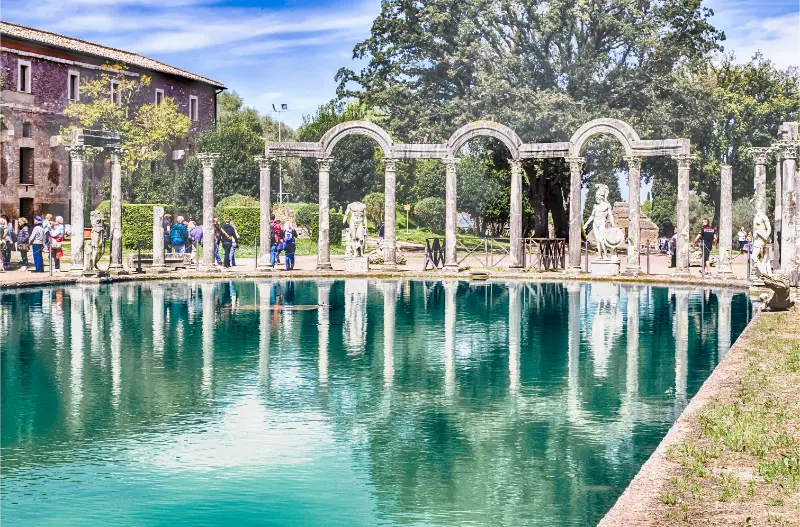
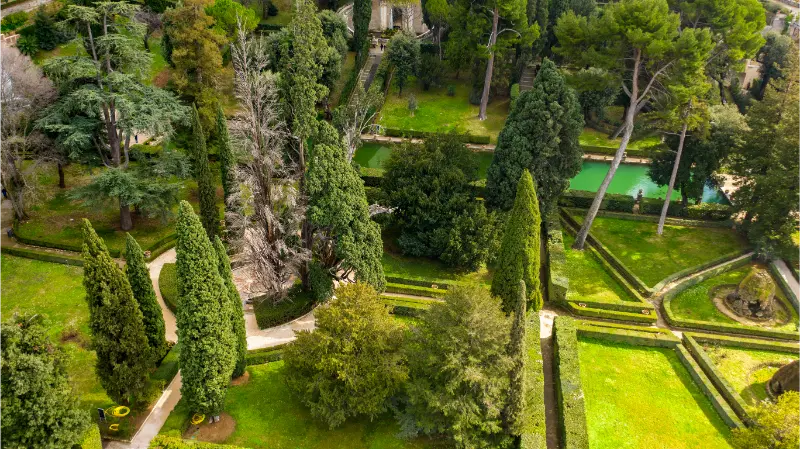
The most satisfying way to complete the story is with a separate day trip to Tivoli. Hadrian’s Villa, Villa d’Este and the historic town show why this eastern corridor remained important through Roman, Renaissance and modern times.
A practical self-guided route
1. Study Porta Tiburtina
Walk around both sides of the gate and read the structure vertically: road below, aqueduct channels above, walls around them.
2. Explore San Lorenzo
Take a short neighborhood walk rather than following traffic immediately. This gives the route a human scale.
3. Visit San Lorenzo fuori le Mura
Continue toward the basilica and consider the relationship between ancient roads, cemeteries and Christian pilgrimage.
4. Use public transport for the outer corridor
There is little value in walking long modern industrial stretches. Bus, Metro B or train connections are more efficient.
5. Plan Tivoli for a separate day
Use the road guide as historical context, then visit Tivoli independently when you can give its major sites enough time.
Allow roughly 3 hours in Rome; make Tivoli a separate full-day trip for the core route. You can shorten it by choosing only the first two or three stops, or expand it into a full day by adding the nearby museums, churches and parks mentioned in the internal links. The route is more enjoyable when you leave time to look at the urban fabric instead of treating every stop as a checklist item.
How to read what survives
Porta Tiburtina demonstrates adaptive reuse at monumental scale. An aqueduct arch became a defensive gate because Roman builders recognized that an existing structure already occupied the exact place where the road crossed the new walls.
In San Lorenzo, the road is less visible archaeologically but still shapes movement. Modern transport lines often follow ancient corridors because topography remains constant even when buildings change.
The buried bridge discovered along the Tiburtina reminds visitors that absence from the surface does not mean absence underground. Rome’s suburbs contain enormous archaeological deposits that only become visible during construction.
Practical visiting information for 2026
| Main monument | Porta Tiburtina, Viale di Porta Tiburtina |
| Outdoor cost | Free to view |
| Nearby church | San Lorenzo fuori le Mura |
| Best public transport | Metro, tram, bus and regional rail depending on segment |
| Regional extension | Tivoli |
Porta Tiburtina is an exterior monument and can be seen at any reasonable hour, but daylight is essential for reading the inscriptions and masonry. Traffic around the gate can be intense, so use pedestrian crossings carefully.
The basilica has religious opening hours rather than museum hours. Dress appropriately and avoid interrupting services.
Tivoli deserves its own day. Trying to “follow the road” from Rome to Tivoli on foot or by a chain of local buses is unnecessary; use train or direct transport and focus your time on the destination.
For the latest access information, check the official Turismo Roma page for Porta Tiburtina. Official pages are especially important for monuments that open only on selected dates, require guided access or may close temporarily for conservation work.
How to get there and move between the stops
Porta Tiburtina is close to major urban transport. San Lorenzo is easily reached by tram and bus, while Tiburtina station provides rail and Metro B connections.
For San Lorenzo fuori le Mura, buses are usually more practical than walking from the gate in summer heat.
For Tivoli, regional train and bus options vary by destination within the town. Check whether you are prioritizing Villa d’Este, Hadrian’s Villa or the historic center before choosing the transport mode.
What to see nearby
Use the Porta Tiburtina guide, San Lorenzo fuori le Mura and Tivoli from Rome to build the route into a complete east-Rome cluster.
Photography tips
At Porta Tiburtina, photograph the travertine arch from the inner side where the ancient aqueduct inscriptions are easiest to understand. A moderate zoom helps isolate the stacked water channels above the roadway. Ancient road sites often look modest at first glance, so side light, a human figure for scale and a wider view that includes the modern city can tell the story better than a tight photograph of masonry alone.
At roadside monuments, never step into traffic lanes or climb barriers for a photograph. A telephoto lens or phone zoom is often safer and more useful than trying to stand directly beside a monument that was never designed as a modern visitor attraction.
Accessibility and comfort
The gate can be viewed from paved public areas, but traffic islands, curbs and uneven surfaces may complicate close viewing. Church access is generally easier, while outer-road archaeology is often not designed for visitors.
Carry water in warm months, wear shoes with reliable grip and avoid assuming that a short distance on the map will be comfortable in summer heat. Rome can be demanding in July and August, while heavy rain can make park paths muddy and expose uneven paving.
Common mistakes to avoid
- Treating Porta Tiburtina as only a city gate and missing the aqueduct channels.
- Walking the modern Tiburtina for long distances expecting continuous ruins.
- Trying to include Tivoli in the same half day.
- Confusing Tiburtina station with the ancient gate area—they are separate points along the corridor.
- Ignoring San Lorenzo fuori le Mura because it is outside the historic-center sightseeing circuit.

FAQ about Via Tiburtina Rome
Where did the Via Tiburtina go?
It connected Rome with Tibur, modern Tivoli, before routes continued into the Apennine interior.
Is Porta Tiburtina free to see?
Yes. The exterior monument is visible from public space.
Why are aqueducts built into the gate?
The Augustan arch originally carried aqueduct channels over the road. The Aurelian Walls later incorporated the existing structure as a fortified gateway.
Can I walk from Rome to Tivoli on the ancient road?
It is technically possible to follow parts of the corridor, but it is not a pleasant or practical tourist walk. Use modern transport for Tivoli.
What should I combine with the route?
San Lorenzo, San Lorenzo fuori le Mura and a separate Tivoli day trip form the most coherent combination.
Final tips
The Via Tiburtina makes sense when you read it vertically and geographically. At the gate, road, water and walls occupy the same structure; beyond it, the route continues through a modern city toward Tivoli. You do not need continuous ruins to understand the ancient road—its direction still organizes eastern Rome.