Santa Maria dell’Orto Rome: Hidden Trastevere Church, Art and Visiting Guide
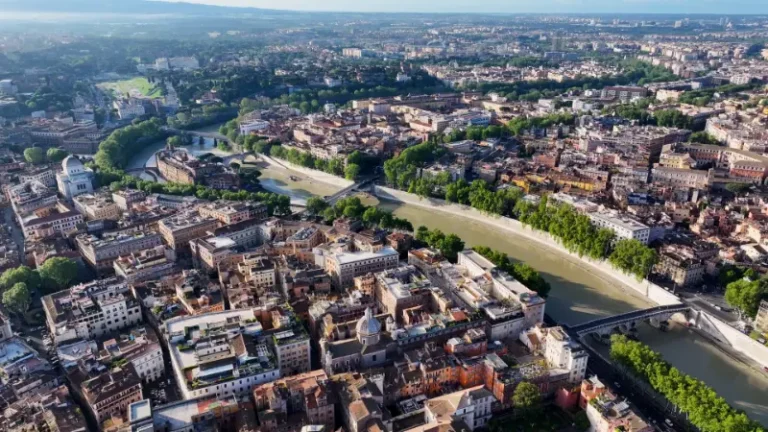
Santa Maria dell’Orto is one of Trastevere’s richest churches and one of its least predictable discoveries. Away from the busiest restaurant streets, it preserves a dense interior shaped by confraternities, craft guilds, Renaissance architects and later Baroque decoration. Its name remembers the market gardens that once occupied this part of the district, while its history began around a Marian image that attracted popular devotion.
The church is also unusual for its international identity: it is known as the national church of the Japanese Catholic community in Rome. Yet the strongest impression inside is intensely local. Chapels, guild patronage and decorative details speak to the working communities that once organized much of Trastevere’s religious and social life. For travelers who enjoy places where art history and neighborhood history overlap, Santa Maria dell’Orto deserves more than a quick glance.
| Planning point | Useful detail |
|---|---|
| Location | Via Anicia 10, in the quieter southern part of Trastevere |
| Access | Active church. Turismo Roma advises contacting the church for current Mass times and visiting arrangements. |
| Cost | Church entry is generally free when open; donations are appropriate. |
| Suggested time | 45–60 minutes |
| Best for | Hidden churches, Renaissance and Baroque art, guild history and quieter Trastevere |
Why Santa Maria dell’Orto is worth visiting
Santa Maria dell’Orto works best when you treat it as part of Rome rather than as a box to tick. Its value comes from the way art, architecture, worship and the surrounding streets reinforce one another. Because it is less crowded than the city’s headline monuments, you can usually spend more time observing materials, inscriptions and spatial details instead of following a fixed tourist flow.
For travelers building a deeper itinerary, Santa Maria dell’Orto also provides useful contrast. Rome’s major basilicas show imperial scale and papal ceremony; smaller churches often reveal guilds, foreign communities, confraternities, neighborhood devotion and the practical history of local worship. That human scale is one reason these sites become memorable after the first trip.
History and context
Tradition links the origin of the church to a painted image of the Virgin on a wall bordering vegetable gardens. Reports of a miraculous healing encouraged devotion, and a small chapel was created in the late fifteenth century. Construction of the present church began soon afterward, turning a local cult into a substantial communal project.
The building history involved several important architects. The façade is associated with Vignola and was completed by Francesco da Volterra, while Guidetto Guidetti reshaped the interior plan. Giacomo Della Porta contributed to the high altar. This sequence makes the church a compact lesson in Roman architectural culture between the Renaissance and the Baroque.
Unlike churches built principally around papal or aristocratic patronage, Santa Maria dell’Orto was strongly connected with professional associations and guilds. That social history is essential to the visit. The decoration was not simply a display of taste; it also represented communities that worked in food supply, crafts and commerce and wanted a visible religious home in Trastevere.
What to see
The façade and clock
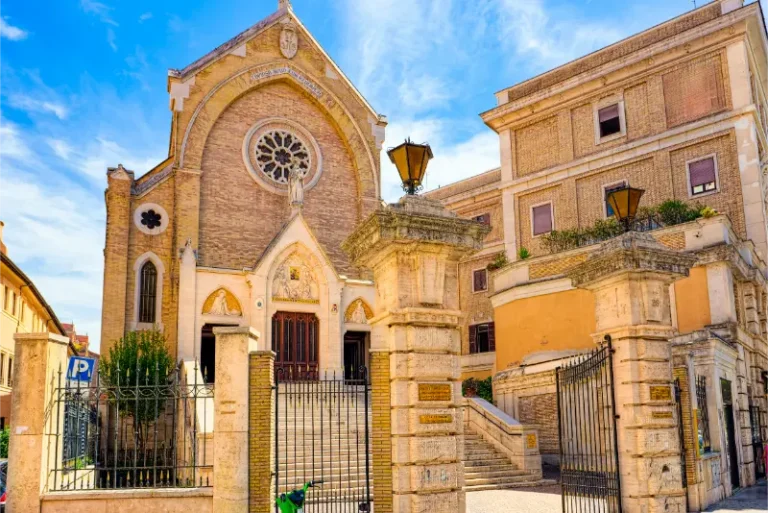
Pause on Via Anicia before entering. The façade is ordered in two levels and includes a clock that gives the exterior a civic as well as religious character. Small obelisk-like ornaments and the vertical rhythm of the pilasters distinguish it from the rougher residential fabric around the church.
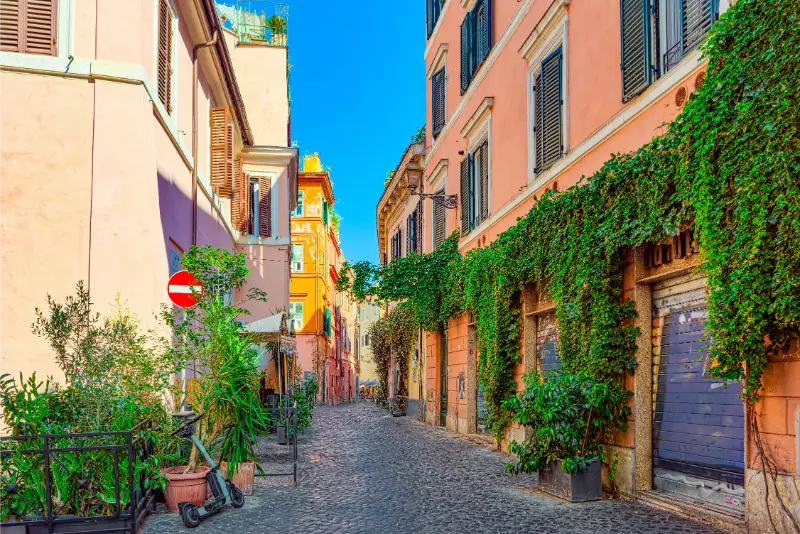
Because the street is relatively narrow, the façade is best understood obliquely rather than from a grand frontal viewpoint. Move a few steps in both directions and notice how the architecture was designed for a neighborhood street, not an enormous ceremonial square.
The guild chapels
Inside, look for the way individual chapels functioned as statements of collective identity. Historic guilds and professional groups supported altars and decoration, using sacred space to express solidarity, status and charitable responsibility.
This is one reason the church feels different from a palace chapel. Instead of one dominant patron, you encounter a layered community. Reading labels, coats of arms and chapel dedications can turn the visit into a social map of early modern Trastevere.

The apse frescoes and Marian program
The apse preserves a major cycle connected with Taddeo and Federico Zuccari, centered on episodes from the life of the Virgin. The paintings reward a slower look because the architecture, altar and frescoed surface were meant to be read together rather than as separate museum objects.
The high altar houses the revered Marian image associated with the church’s origins. Even for secular visitors, understanding this continuity matters: the artwork is not simply an old picture displayed for tourists but the devotional focus around which the institution developed.
The pavement and small oratory
The polychrome pavement and later decorative interventions add another chronological layer. Patterns underfoot can easily disappear from attention when visitors concentrate on the ceiling and altar, so make a deliberate pass through the nave looking down as well as up.
A small oratory connected with the complex is often described as a Baroque jewel. Access may not coincide with ordinary church opening, making it another feature to verify in advance rather than assume is included in every casual visit.
How to plan your visit
Santa Maria dell’Orto is best approached as part of a quieter Trastevere itinerary rather than squeezed between distant attractions. Current visiting hours are not presented as a fixed tourist schedule on the municipal page, so contacting the church or checking recent notices is the safest approach.
The location works especially well after Santa Cecilia or before a walk toward the river and Testaccio. Wear clothing appropriate for worship, avoid visiting during ceremonies solely for photography and allow time to look at the guild chapels rather than treating the building as a single-room checklist.
Do not judge Santa Maria dell’Orto only by the number of famous artists attached to it. Smaller Roman churches are often valuable because scale allows you to understand relationships that disappear in larger basilicas. A chapel, memorial, floor pattern and altar may have been conceived as parts of one program. Spending ten extra minutes tracing those connections often produces more insight than adding another distant attraction to the same day.
Season and time of day can change the visit. Summer heat makes a shaded church stop especially welcome, while winter light can make interiors noticeably darker. During major religious periods, liturgies and community events may alter access. Keep the schedule flexible and check recent notices rather than relying on a timetable copied months earlier. In Rome, active churches are living institutions first and sightseeing venues second.
Practical tips before you go
- Check current access shortly before visiting, especially because liturgies, maintenance and special events can change normal routines.
- Dress for an active place of worship: shoulders and knees should be covered, and hats should normally be removed inside.
- Use silent camera settings and avoid flash unless staff or posted rules explicitly allow it.
- Do not place an inflexible timed attraction immediately after the visit; allow a small buffer for unexpected closures or ceremonies.
- Read one or two key historical points before entering so the architecture and artworks have context rather than becoming a list of unfamiliar names.
If the doors are closed when you arrive, do not force the itinerary. Santa Maria dell’Orto sits in an area with other worthwhile sights, so use the nearby route below and return later if practical. This is often a better strategy in Rome than waiting outside an active church whose schedule has changed.
What to see nearby
Santa Maria dell’Orto combines naturally with Trastevere guide, Santa Cecilia in Trastevere, San Francesco a Ripa, Villa Farnesina. These nearby pages are already part of MyRomeTrip and can help readers turn one church visit into a coherent half-day rather than a disconnected detour.
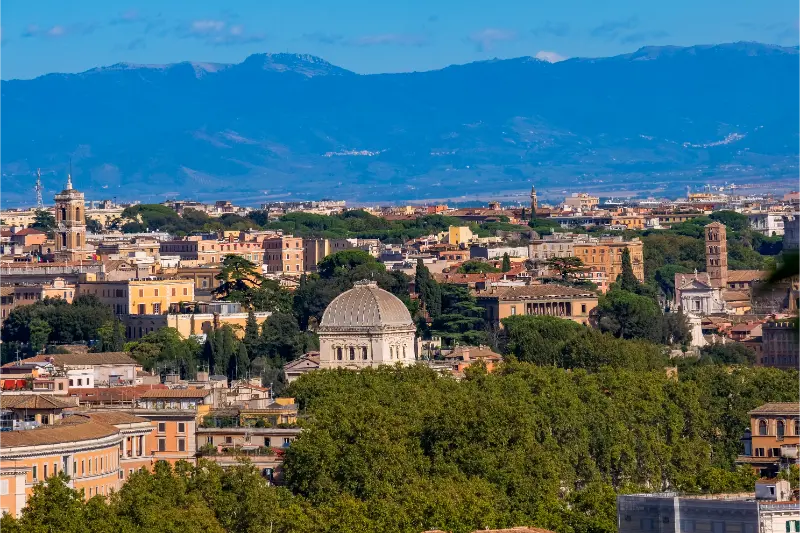
Begin around Santa Cecilia, walk through the southern Trastevere lanes to Santa Maria dell’Orto, then continue toward San Francesco a Ripa. If you want a longer day, move north through the neighborhood toward Villa Farnesina and the Janiculum. The route reveals a quieter Trastevere before rejoining the better-known central streets.
Who will enjoy this stop most?
This church suits art lovers, repeat visitors and travelers interested in the lives of ordinary Romans rather than only popes and emperors. It is particularly rewarding for anyone curious about guilds, neighborhood devotion and how professional communities shaped sacred architecture.
First-time visitors with only a few hours in Rome do not need to replace the Colosseum, Pantheon or Vatican with Santa Maria dell’Orto. The better approach is to add it when geography already brings you nearby. Repeat visitors, art lovers and travelers who enjoy slower city exploration will usually get the greatest value from the stop.
Photography, accessibility and respectful visiting
The church occupies a historic structure with thresholds and changing internal levels possible. Anyone requiring step-free access should contact the church before traveling specifically for the visit. Interior lighting can be subdued, so a phone or camera that performs well without flash is useful; flash should be avoided unless explicitly permitted.
One more practical approach is to spend the first five minutes inside Santa Maria dell’Orto without taking photographs. Let your eyes adjust, identify the main axis and notice which details attract your attention naturally. Photograph afterward. This reduces screen time in a sacred space and usually results in better images because you understand the room before framing it.
Official information and changing access
For current access, services and special closures, consult the official or municipal information page: visitor information for Santa Maria dell’Orto. Hours published online can change, particularly around feast days, restoration campaigns and liturgical events, so readers should verify details close to the day of the visit.
FAQ
Why is it called Santa Maria dell’Orto?
The name refers to the market gardens that once characterized the area and to a Marian image on a garden wall that became the focus of local devotion.
Is Santa Maria dell’Orto free to enter?
When the church is open, ordinary entry is generally free, though donations are appropriate and special spaces may have separate arrangements.
Is it really connected with Japan?
Yes. The church is known as the national church of the Japanese Catholic community in Rome.
What else should I see nearby?
Santa Cecilia, San Francesco a Ripa and the quieter southern streets of Trastevere combine naturally with the visit.
Final tips
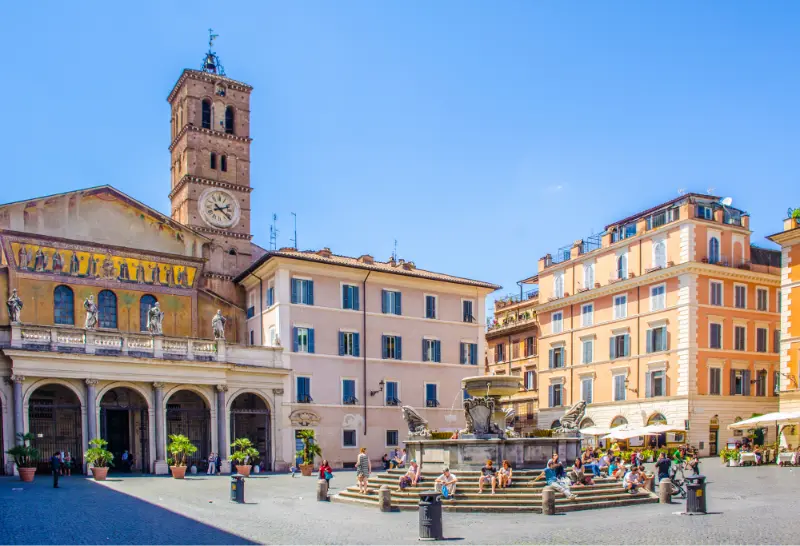
Santa Maria dell’Orto is the kind of place that makes a Rome itinerary feel more personal. It does not require the logistics of a major museum, but it rewards context, patience and respectful attention. Pair it with nearby sights, keep the timing flexible and focus on a few details rather than trying to memorize every name. That approach is often the difference between simply entering another church and actually understanding why the building belongs to the story of Rome.