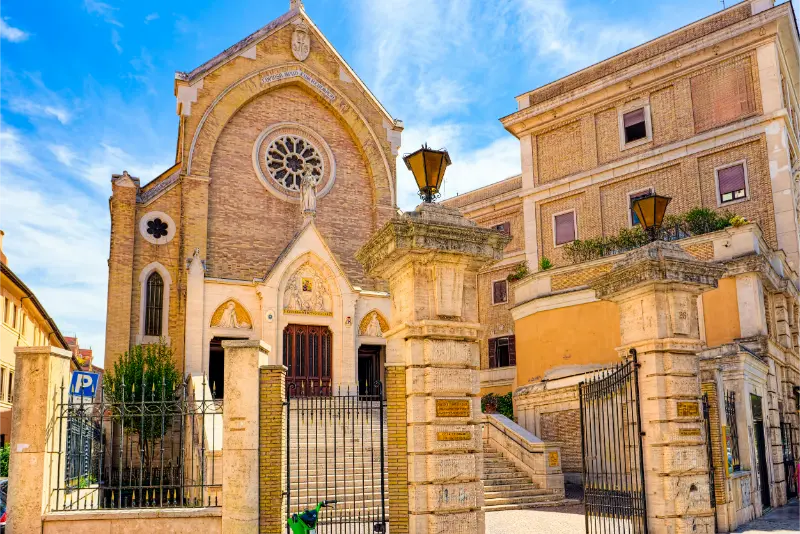
San Lorenzo in Damaso Rome: Hidden Church in Palazzo della Cancelleria
San Lorenzo in Damaso is a church you can almost walk past without realizing it is there. Unlike Rome’s theatrical façades, it is absorbed into the enormous Palazzo della Cancelleria near Campo de’ Fiori. The lack of a conventional exterior makes the discovery memorable: you enter a sacred space embedded inside one of the city’s great Renaissance palace complexes.
Its history reaches much further back than the palace around it. Tradition connects the original church with Pope Damasus I in the fourth century, while the present setting reflects the rebuilding of the late fifteenth century and later restorations. Inside are works and monuments connected with artists including Bernini, Vignola, Nicola Salvi and Federico Zuccari. The result is a compact site where early Christian memory, Renaissance urbanism and Baroque intervention meet.
| Planning point | Useful detail |
|---|---|
| Location | Piazza della Cancelleria 1, beside Campo de’ Fiori |
| Access | Active church incorporated into Palazzo della Cancelleria. Current access can follow liturgical and institutional needs; verify before a dedicated visit. |
| Cost | Ordinary church access is normally free when open. |
| Suggested time | 35–55 minutes |
| Best for | Hidden churches, Renaissance Rome, Bernini details and Campo de’ Fiori itineraries |
Why San Lorenzo in Damaso is worth visiting
San Lorenzo in Damaso works best when you treat it as part of Rome rather than as a box to tick. Its value comes from the way art, architecture, worship and the surrounding streets reinforce one another. Because it is less crowded than the city’s headline monuments, you can usually spend more time observing materials, inscriptions and spatial details instead of following a fixed tourist flow.
For travelers building a deeper itinerary, San Lorenzo in Damaso also provides useful contrast. Rome’s major basilicas show imperial scale and papal ceremony; smaller churches often reveal guilds, foreign communities, confraternities, neighborhood devotion and the practical history of local worship. That human scale is one reason these sites become memorable after the first trip.
History and context
A church dedicated to Saint Lawrence existed here from Late Antiquity and is traditionally associated with Pope Damasus I. Over the centuries it was restored and endowed with relics, making it one of Rome’s old sacred foundations even though the current visitor sees a later architectural envelope.
The decisive change came when Cardinal Raffaele Riario developed the Palazzo della Cancelleria at the end of the fifteenth century. The older church was rebuilt and integrated into the palace complex. This physical incorporation explains why modern visitors do not encounter the kind of independent façade they expect from a Roman basilica.
Later centuries brought damage, restoration and stylistic change. French occupation affected the church, and nineteenth-century campaigns altered earlier Baroque interventions. Instead of searching for a perfectly preserved period room, read San Lorenzo in Damaso as a building repeatedly adapted to new political, devotional and aesthetic circumstances.
What to see
The hidden entrance and Palazzo della Cancelleria context
The first “highlight” is the urban puzzle itself. Stand in Piazza della Cancelleria and look at the disciplined Renaissance palace façade. The church is part of that composition, not an adjacent monument with its own independent visual identity.
This relationship makes the visit more interesting if you first walk around the palace block. The exterior scale helps explain how ecclesiastical, residential and administrative functions could be combined within one monumental complex in Renaissance Rome.
The internal portico and funerary monuments
Inside, the approach through the internal portico slows the transition from busy Corso Vittorio Emanuele II to sacred space. It also contains funerary sculpture and monuments that are easy to miss if you head directly toward the nave.
Among the important associations is the tomb of Alessandro Valtrini, made to a design by Gian Lorenzo Bernini. Treat it as part of a broader Baroque story rather than an isolated name: Bernini’s Rome is present not only in huge fountains and piazzas but also in smaller commemorative works embedded in active churches.
The Madonna Avvocata icon
The church preserves an important Marian icon known as the Madonna Avvocata or Madonna di Grottapinta, transferred from another Roman church. Its presence is a reminder that Rome’s sacred objects often moved when buildings were demolished, suppressed or transformed.
This mobility complicates the idea that every artwork has always belonged to the space where you see it today. Reading labels and provenance can reveal a hidden geography of vanished churches and changing neighborhoods.
The apse and later restorations
The apse and sanctuary reflect later campaigns, including a Federico Zuccari altarpiece and nineteenth-century restoration choices. Look for differences in material, color and architectural language rather than expecting visual uniformity.
Because earlier interventions by Bernini were partly altered or removed, the church is also an example of how restoration can edit the historical record. What survives is the result of successive decisions about which version of the past should be emphasized.
How to plan your visit
The church is active and integrated into a Vatican-owned institutional complex, so visitor access is less predictable than at a museum. The municipal tourism page publishes Mass information but advises checking because schedules can change. For sightseeing, verify current access and avoid building a tight itinerary around a single assumed opening window.
San Lorenzo in Damaso is easiest to include while exploring Campo de’ Fiori, Piazza Navona and Via Giulia. The stop does not require public transport if you are already in the historic center. Allow extra time to understand the palace context outside; that is what makes this church distinctive.
Season and time of day can change the visit. Summer heat makes a shaded church stop especially welcome, while winter light can make interiors noticeably darker. During major religious periods, liturgies and community events may alter access. Keep the schedule flexible and check recent notices rather than relying on a timetable copied months earlier. In Rome, active churches are living institutions first and sightseeing venues second.
After leaving San Lorenzo in Damaso, spend a few minutes outside without immediately opening a map. Look at street width, building height, paving and the direction of pedestrian movement. The relationship between a church and its surroundings often explains why an entrance is modest, why a façade is viewed at an angle or why a bell tower dominates from one street but disappears from another. Rome’s sacred buildings were shaped by dense neighborhoods, not isolated museum plazas.
Practical tips before you go
- Check current access shortly before visiting, especially because liturgies, maintenance and special events can change normal routines.
- Dress for an active place of worship: shoulders and knees should be covered, and hats should normally be removed inside.
- Use silent camera settings and avoid flash unless staff or posted rules explicitly allow it.
- Do not place an inflexible timed attraction immediately after the visit; allow a small buffer for unexpected closures or ceremonies.
- Read one or two key historical points before entering so the architecture and artworks have context rather than becoming a list of unfamiliar names.
If the doors are closed when you arrive, do not force the itinerary. San Lorenzo in Damaso sits in an area with other worthwhile sights, so use the nearby route below and return later if practical. This is often a better strategy in Rome than waiting outside an active church whose schedule has changed.
What to see nearby
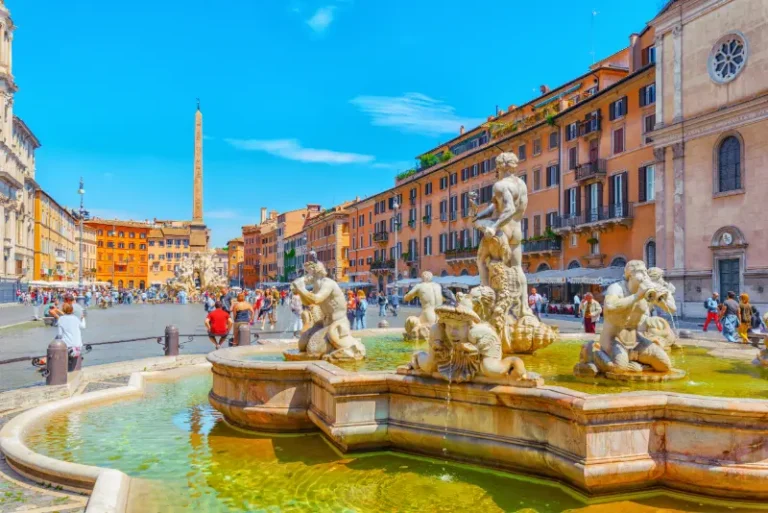
San Lorenzo in Damaso combines naturally with Campo de’ Fiori, Via Giulia, Piazza Navona, Palazzo Spada. These nearby pages are already part of MyRomeTrip and can help readers turn one church visit into a coherent half-day rather than a disconnected detour.
Start in Campo de’ Fiori, cross to Piazza della Cancelleria for San Lorenzo in Damaso, then walk south toward Palazzo Spada and Via Giulia. Finish at Piazza Navona. The route is short in distance but dense in Renaissance and Baroque history, making it ideal when you want depth without crossing the entire city.
Who will enjoy this stop most?
San Lorenzo in Damaso will appeal most to architecture enthusiasts, church explorers and repeat visitors who enjoy hidden spaces. It is also excellent for travelers interested in the Renaissance transformation of central Rome because the church cannot be separated from the palace that encloses it.
First-time visitors with only a few hours in Rome do not need to replace the Colosseum, Pantheon or Vatican with San Lorenzo in Damaso. The better approach is to add it when geography already brings you nearby. Repeat visitors, art lovers and travelers who enjoy slower city exploration will usually get the greatest value from the stop.
Photography, accessibility and respectful visiting
The central location is relatively easy to reach on foot, but historic thresholds and institutional access arrangements may affect step-free entry. Confirm current conditions if accessibility is essential. Photography should remain discreet, especially because the church is used for worship rather than operated as a conventional museum.
One more practical approach is to spend the first five minutes inside San Lorenzo in Damaso without taking photographs. Let your eyes adjust, identify the main axis and notice which details attract your attention naturally. Photograph afterward. This reduces screen time in a sacred space and usually results in better images because you understand the room before framing it.
Official information and changing access
For current access, services and special closures, consult the official or municipal information page: visitor information for San Lorenzo in Damaso. Hours published online can change, particularly around feast days, restoration campaigns and liturgical events, so readers should verify details close to the day of the visit.
FAQ
Why does San Lorenzo in Damaso have no obvious façade?
The church is incorporated into Palazzo della Cancelleria, so it is visually absorbed into the larger Renaissance palace complex.
How old is the church?
Its origins are traditionally connected with Pope Damasus I in the fourth century, although the present building reflects major later rebuilding and restoration.
Is San Lorenzo in Damaso free?
Ordinary church entry is generally free when access is available.
What is the best nearby itinerary?
Combine it with Campo de’ Fiori, Via Giulia, Palazzo Spada and Piazza Navona.
Final tips
San Lorenzo in Damaso is the kind of place that makes a Rome itinerary feel more personal. It does not require the logistics of a major museum, but it rewards context, patience and respectful attention. Pair it with nearby sights, keep the timing flexible and focus on a few details rather than trying to memorize every name. That approach is often the difference between simply entering another church and actually understanding why the building belongs to the story of Rome.