Palazzo Spada Rome: Borromini Perspective, Galleria Spada, Tickets and 2026 Guide
Palazzo Spada is one of central Rome’s best small museums, combining a historic picture gallery with Borromini’s famous forced-perspective corridor. Hidden a short walk from Campo de’ Fiori and Piazza Farnese, the palace offers a very different experience from the Vatican Museums or Capitoline Museums. The collection remains arranged with the density of an old aristocratic gallery, while the courtyard and garden preserve one of Baroque architecture’s most celebrated optical illusions.
For 2026, the official Galleria Spada information lists opening from 8:30 to 19:30 with last ticket at 19:00, closed on Tuesday, and a standard full ticket of €6. Individual visitors do not normally need to reserve, although special events and free-entry days can change procedures. These details make the museum unusually easy to fit into a flexible historic-center day.
| Planning point | Useful detail |
|---|---|
| Location | Piazza Capo di Ferro 13, between Campo de’ Fiori and Via Giulia |
| Access | Open 8:30–19:30 with last ticket at 19:00; normally closed Tuesday. Check the official site for exceptional openings. |
| Cost | Full ticket €6; reduced €2 for eligible visitors; first Sunday initiatives and concessions may apply. |
| Suggested time | 60–90 minutes |
| Best for | Borromini, Baroque painting, small museums and a quieter alternative to major galleries |
Why Palazzo Spada is worth visiting
The museum succeeds because scale and setting reinforce each other. You can study paintings by major seventeenth-century artists without crossing enormous galleries, and the old-fashioned display preserves the feeling of a private collection rather than a modern white-walled museum.
Borromini’s perspective is the unforgettable architectural feature. A corridor that appears much longer than it really is uses a rising floor, narrowing walls, diminishing columns and a small sculpture at the far end to manipulate perception. It is a playful object, but it also demonstrates serious Baroque interest in geometry, spectacle and controlled viewing.
History and context
The palace began as a sixteenth-century residence associated with Cardinal Girolamo Capodiferro and later passed to the Spada family. Cardinal Bernardino Spada expanded the collections and commissioned architectural interventions that shaped the building’s Baroque identity.
The picture collection preserves the taste of the Spada family and includes works associated with artists such as Guido Reni, Guercino, Orazio and Artemisia Gentileschi, as well as painters influenced by Caravaggio and classicism. The gallery’s dense hanging is historically informative in itself because it evokes aristocratic collecting practices.
What to see
Borromini’s forced perspective
The perspective gallery in the secret garden appears to extend for many tens of meters but is actually far shorter. Every element is calibrated to deceive the eye, from the converging architecture to the scaled figure at the end.
Do not look only through a phone screen. First stand at the designed viewpoint and let the illusion work. Then move, if permitted, and notice how quickly the effect changes when you leave the intended position.
The old-master picture gallery
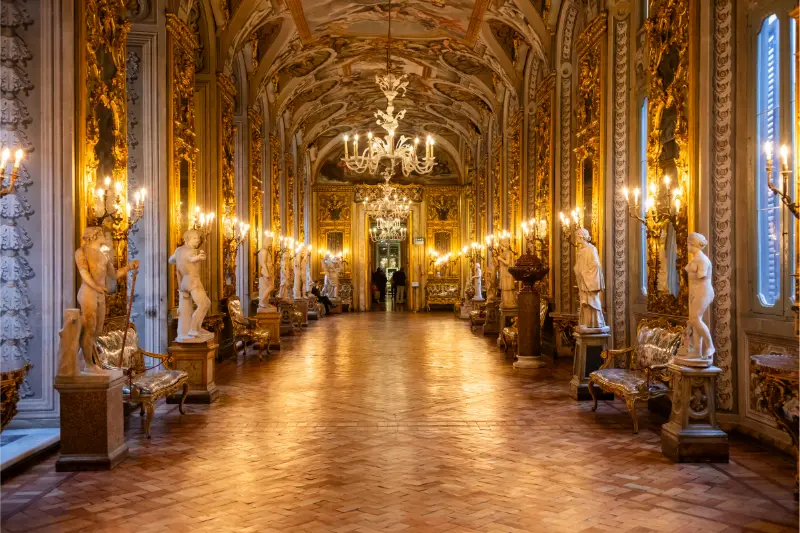
The galleries contain Baroque and seventeenth-century paintings in rooms that retain an aristocratic atmosphere. Works are hung densely, requiring slower looking than a modern museum display.
Choose a few paintings rather than attempting to memorize every label. Compare lighting, gestures and costume, then step back to understand how the whole wall functions as a historical collection.
The palace courtyard
The richly decorated courtyard introduces the palace before you reach the museum rooms. Stucco, niches and classical references establish the learned Renaissance and Baroque language of the residence.
Spend time here even if you are eager to reach Borromini. The courtyard explains the social setting in which the later gallery and architectural experiments made sense.
The secret garden
The garden area frames the perspective and provides a transition between indoor collection and architectural illusion.
The official accessibility information notes that the courtyard, bookshop and garden can be reached relatively easily, although access to the first-floor rooms involves more complications for some wheelchair users.
How to plan your visit
According to the official museum, regular opening is from 8:30 to 19:30, with the last ticket at 19:00, and Tuesday is the normal weekly closing day. Individual visitors do not generally need to reserve. Because extraordinary Tuesday openings and special events do occur, check the official site if your date falls near a holiday or cultural event.
The museum is small enough to combine with other attractions but rich enough to deserve more than a rushed half-hour. Sixty to ninety minutes is a realistic window. If you care about painting labels and the optical construction of the perspective, allow the full ninety.
A practical way to protect the quality of the visit is to keep some flexibility around Palazzo Spada. In central Rome, church ceremonies, maintenance, special exhibitions and crowd patterns can alter what is accessible even when the building itself is open. Build a small buffer into the day, avoid placing a non-refundable timed ticket immediately afterward, and use the surrounding neighborhood as a fallback rather than treating a temporary closure as lost time. Because the site is especially useful for Borromini, Baroque painting, small museums and a quieter alternative to major galleries, a slower visit usually gives more value than trying to squeeze it between two distant attractions.
- Do not plan your visit for Tuesday unless an extraordinary opening is officially announced.
- Buy online if you prefer, but individual visitors normally do not have a reservation obligation.
- Give Borromini’s perspective time before photographing it.
- Use the museum as part of a Campo de’ Fiori–Via Giulia walk.
- Visitors with mobility needs should read the museum’s current accessibility notes before arrival.
What to see nearby
Palazzo Spada combines easily with Campo de’ Fiori, Piazza Navona, the Pantheon. The key is to keep the day geographically compact and avoid crossing the city immediately after a museum visit.
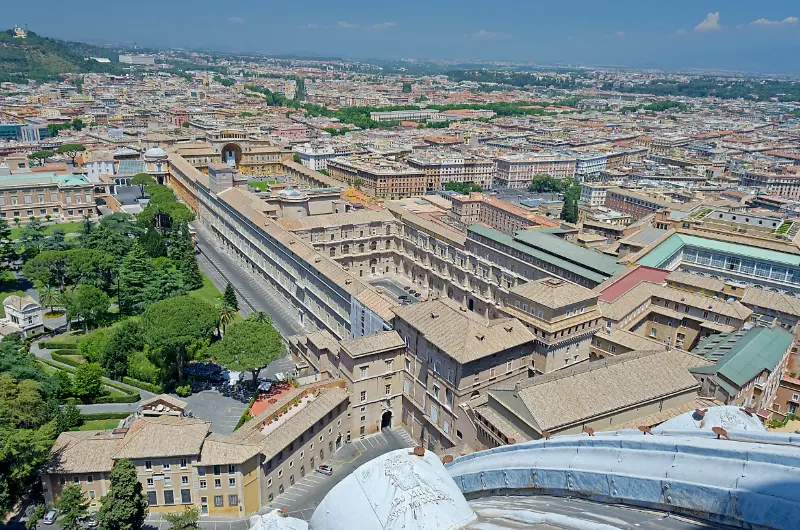
Start around Campo de’ Fiori, walk to Palazzo Spada for the museum, then continue through the lanes toward Piazza Navona and the Pantheon. The route alternates market space, aristocratic palace, Baroque square and ancient monument without transport.
Who will enjoy this stop most?
Palazzo Spada is excellent for travelers who enjoy art but dislike huge museums. Architecture enthusiasts will come for Borromini; painting lovers will appreciate the old-master rooms; repeat visitors will value the lower crowd pressure compared with Rome’s headline institutions.
Families with visually curious children may enjoy the optical illusion more than a conventional gallery, though younger visitors can tire of densely hung paintings. Give them the perspective as a goal and keep the museum portion focused.
For a first visit to Palazzo Spada, it helps to choose one theme before you enter rather than trying to absorb everything at once. You might follow architecture, devotional history, painting, sculpture or the relationship between the building and the streets outside. After that first pass, make a second, shorter circuit and notice details you missed. This two-stage approach is particularly effective in Rome, where interiors accumulated over centuries and a visitor can easily confuse works from very different periods. It also makes the visit easier to remember later because you leave with a few clear visual anchors rather than a long list of names.
If your schedule allows, return to the exterior after the interior visit and spend five minutes looking at Palazzo Spada in its neighborhood context. The surrounding paving, street width, nearby façades and movement of pedestrians often explain why an entrance, dome, tower or courtyard feels the way it does. Rome’s monuments were designed inside a living city, not as isolated museum objects. That final outside look often turns a good visit into a more coherent understanding of the site.
Photography, accessibility and respectful visiting
Photography rules can change by room and exhibition, so follow current signage. In the perspective area, the most effective image is from the intended viewpoint; wide-angle distortion can actually weaken the illusion. The exterior façade and courtyard also offer excellent architectural details.
The official museum notes relatively easy wheelchair access through the courtyard and garden areas, with ramps to some services. Reaching the first-floor gallery involves an old spiral stair and a small lift that itself requires negotiating some steps, so full access can be limited for visitors unable to transfer or manage those steps. Contact the museum in advance for the current route.
One more practical point is to separate seeing from documenting. At Palazzo Spada, spend the first few minutes looking without taking photographs or checking a map. Notice the direction of light, the way visitors naturally move and which details attract your attention. Only then decide what is worth recording. This reduces screen time, keeps narrow interiors calmer and usually produces better photographs because you understand the space before framing it. In active churches, this approach is also more respectful; in museums, it helps prevent the common mistake of collecting images without remembering the actual visit.
FAQ
What are the 2026 opening hours for Galleria Spada?

The official site lists regular opening from 8:30 to 19:30 with last ticket at 19:00, and Tuesday as the normal closing day. Exceptional openings can occur.
How much is a ticket?
The official 2026 information lists a full ticket at €6 and a reduced ticket at €2 for eligible visitors, with statutory free-entry categories and first-Sunday initiatives.
Do I need to book?
Individual visitors normally do not need a reservation. Groups have separate rules, and special free-entry days can use different procedures.
How long is Borromini’s perspective?
It is deliberately much shorter than it appears. The illusion depends on forced perspective created by converging architecture, a rising floor and scaled elements.
Is Palazzo Spada worth it if I already visited Galleria Borghese?
Yes. The experience is much smaller and more intimate, and Borromini’s perspective adds an architectural feature that makes the visit fundamentally different.
Final planning advice
Palazzo Spada is one of the easiest specialist museums to recommend in central Rome. It is affordable, compact, historically atmospheric and anchored by an architectural illusion you cannot experience elsewhere in the same way. Give it an hour or more, then continue walking through the historic center.