
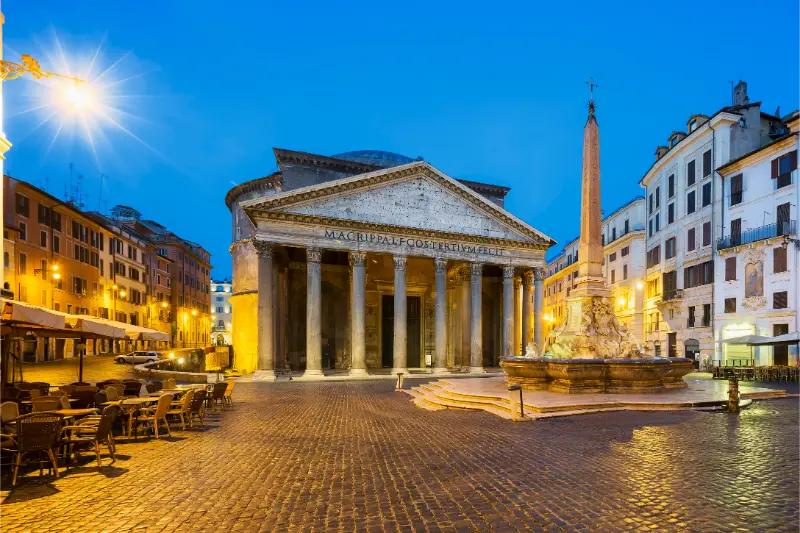
Pantheon Rome: Tickets, History, Oculus and Visiting Tips
The Pantheon is one of those rare places in Rome where the first impression is even stronger than the photographs. You approach through the narrow streets of the historic center, step into Piazza della Rotonda and suddenly face a Roman temple whose proportions still feel astonishing almost two thousand years after the present building was completed. Inside, the vast concrete dome appears to float above the circular hall, while daylight falls through the oculus like a moving spotlight.
For a first trip, the Pantheon deserves more than a quick photograph from the square. It is simultaneously an ancient Roman monument, a working Catholic basilica, an engineering masterpiece and the burial place of important figures including Raphael and two kings of unified Italy. This guide explains how to visit it efficiently in 2026, what to notice once you are inside, and how to connect the Pantheon with nearby sights without wasting time.
Pantheon tickets and practical information in 2026
The Pantheon is a ticketed monument. From 1 July 2026, the standard full-price admission is €7; reduced admission for eligible EU citizens aged 18–25 is €2, while several categories qualify for free entry. Residents of the Municipality of Rome and visitors under 18 are among the categories currently listed for free admission. The first Sunday of each month is also free under the current rules.
Official tickets are sold through the Musei Italiani portal and app, as well as at the on-site ticket offices and automatic machines. The official information specifically notes that visits proceed in order of arrival and that there is no official ‘skip-the-line’ option. Because rules can change for religious services or special events, check the official Pantheon page shortly before your visit.
| Quick fact | What to know |
|---|---|
| Full ticket | €7 from 1 July 2026 |
| Reduced ticket | €2 for eligible EU citizens aged 18–25 |
| Free entry | Under 18, Rome residents and other eligible categories; first Sunday of the month |
| Location | Piazza della Rotonda, historic center |
| Best strategy | Arrive early or in a quieter late-afternoon window and allow 30–45 minutes inside |
A short history that makes the building easier to understand
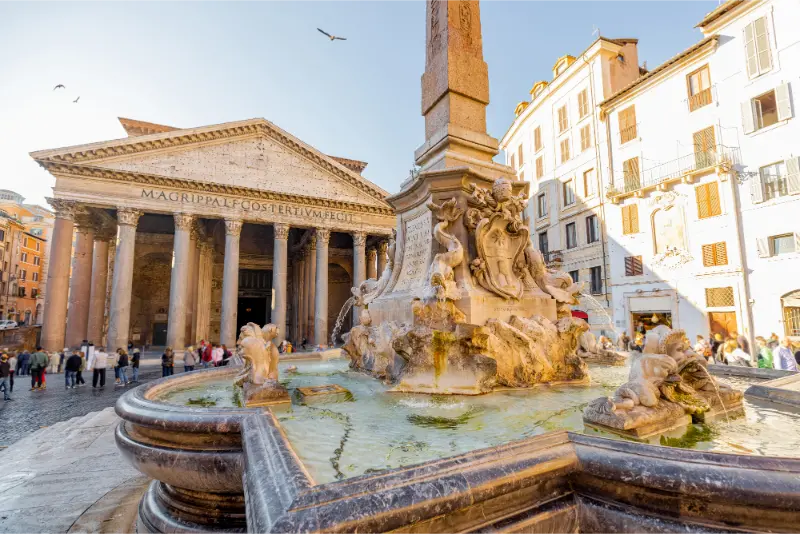
The name Pantheon comes from Greek roots usually interpreted as referring to ‘all the gods’. The original temple on this site was commissioned by Marcus Agrippa in the age of Augustus. What you see today is largely the result of a rebuilding under Emperor Hadrian in the second century AD, even though the inscription on the façade famously preserves Agrippa’s name.
The building survived in exceptional condition partly because it was converted into a Christian church in the early Middle Ages. That continuous religious use protected it from some of the abandonment and stone-robbing that affected other ancient structures. Today its official ecclesiastical identity is the Basilica of Santa Maria ad Martyres, and worship still takes priority over tourism at certain times.
Why the dome is extraordinary
The Pantheon’s dome is the experience most visitors remember. Its interior diameter and the height from floor to oculus are approximately equal, creating the impression that a perfect sphere could fit within the rotunda. Roman builders reduced the weight of the structure as it rises by changing materials and using coffers in the ceiling. The result is still one of the largest unreinforced concrete domes ever built.
The oculus, roughly nine meters across, is the only major source of natural light in the rotunda. It is open to the sky, so rain can enter. The floor was engineered with drainage, and seeing the changing beam of light on the walls is part of the building’s appeal. If you revisit at a different time of day, the interior can feel surprisingly different.
What to look for inside
- The oculus and coffers: stand near the center and look slowly around the entire dome rather than photographing it immediately.
- Raphael’s tomb: the Renaissance painter requested burial in the Pantheon; his tomb is one of the most visited memorials inside.
- Royal tombs: Victor Emmanuel II and Umberto I are buried here, linking ancient Rome with the history of modern Italy.
- Marble pavement: look down as well as up; the geometric floor contributes to the sense of order and proportion.
- Altars and chapels: remember that this is an active basilica, not simply an archaeological exhibit.
Best time of day to visit the Pantheon
The square becomes busy from late morning through much of the afternoon, especially in spring, early summer and autumn. For a calmer exterior experience, arrive early enough to enjoy Piazza della Rotonda before tour groups accumulate. If your main priority is the interior, a later afternoon visit can also work well, but do not cut it too close to last admission.
Rain does not make the Pantheon a bad choice. In fact, the sight of water entering through the oculus is memorable. The practical downside is that more travelers move indoors on wet days, so the interior may feel busier. On very hot summer days, the Pantheon is an excellent stop between outdoor walks through the historic center.
How long do you need?
A focused first visit takes about 30 to 45 minutes inside. Travelers who enjoy architecture, photography or history may want longer. Add time for ticketing and security, and allow a few extra minutes in Piazza della Rotonda. The Pantheon works best as part of a walking route rather than as an isolated journey across the city.
What to see near the Pantheon
The location is almost perfect for linking several famous sights on foot. Piazza Navona is only a short walk west, while Trevi Fountain lies to the east. Campo de’ Fiori, the Jewish Ghetto and Largo di Torre Argentina can all be included in a broader loop. This is one of the reasons central Rome rewards walking more than constant use of public transport.
- Walk to Piazza Navona for Bernini’s Fountain of the Four Rivers.
- Continue to Trevi Fountain and, if you want access to the inner perimeter, remember the 2026 visitor system.
- Head south toward the Jewish Ghetto for a very different atmosphere and layers of Roman history.
- Finish with an evening walk through central Rome if you prefer the monuments illuminated.
Accessibility, dress and respectful behavior
The main interior is on one level and is much easier to manage than many archaeological sites with steep steps and uneven paths. Nevertheless, Piazza della Rotonda and surrounding streets use historic paving, so wheelchair and stroller users should expect some cobblestones. Religious services can temporarily limit access to certain areas.
Because the Pantheon is a basilica, wear clothing appropriate for a place of worship and keep voices low. Photography is generally part of the visitor experience, but do not block circulation or interrupt services. A wide-angle phone lens can be useful for the dome, yet spending a minute without the camera often gives a better sense of its scale.

Pantheon or Colosseum: which is more impressive?
They offer completely different experiences. The Colosseum, Roman Forum and Palatine Hill reveal the monumental scale of imperial entertainment and civic life across a vast archaeological landscape. The Pantheon is more concentrated: in one room you can understand Roman mastery of geometry, concrete and controlled light. Most first-time visitors should see both rather than choose between them.
Common mistakes to avoid
- Buying expensive third-party products without first checking the official ticket route.
- Arriving at midday in peak season and expecting the square to feel quiet.
- Looking only at the dome and leaving without noticing Raphael’s tomb, the marble floor or the changing light.
- Treating the building as a museum and forgetting that religious ceremonies can affect access.
- Scheduling the Pantheon far away from Piazza Navona and Trevi Fountain instead of grouping them into one walk.
A simple Pantheon walking route
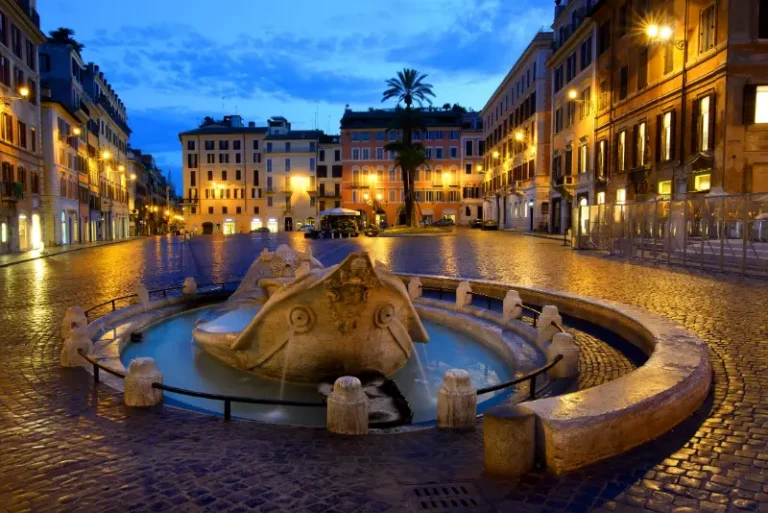
A very efficient half-day route starts at Piazza di Spagna, continues to Trevi Fountain, reaches the Pantheon, then crosses to Piazza Navona and finishes around Campo de’ Fiori or the Jewish Ghetto. This keeps distances short and leaves room for coffee, lunch and unplanned church visits. If you are following our 3-day Rome itinerary, the Pantheon fits naturally into the historic-center portion of the trip.
Is the Pantheon worth paying for?
Yes, especially on a first visit. The new ticket price changes the practical calculation compared with the years when entry was free, but the interior is the reason the Pantheon became one of the most influential buildings in architectural history. If your budget is tight, you can still enjoy Piazza della Rotonda and the exterior without entering, then prioritize the interior if ancient architecture is one of your main interests.
Final tip
Do not rush from the entrance directly to the center of the rotunda. Pause under the portico, notice how dark and compressed the threshold feels, and then step into the bright circular interior. That transition is part of the architectural drama. Rome has many monuments that reward detailed study; the Pantheon is one of the few that can also make sense emotionally in the first ten seconds.
Planning the Pantheon around meals and breaks
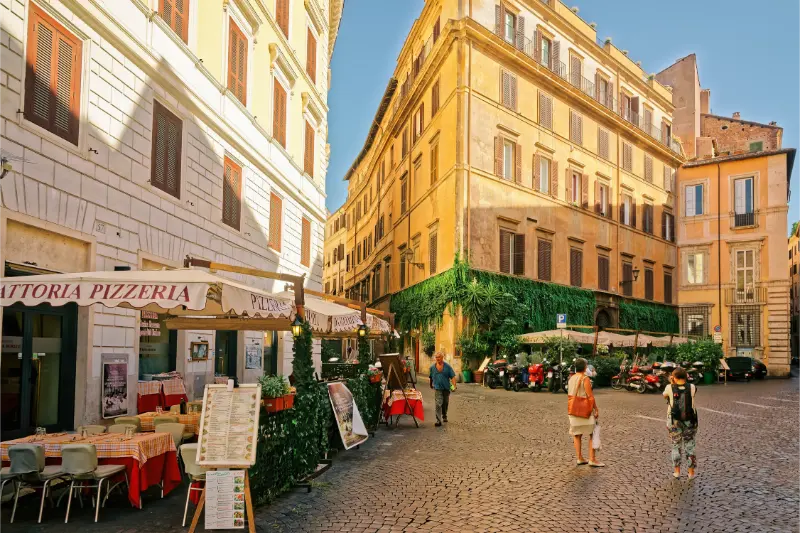
The streets around the Pantheon are ideal for a coffee or lunch break, but the restaurants directly on Piazza della Rotonda trade partly on the view. That can be worth paying for if you want to sit facing the monument, yet travelers focused on food quality should also explore the smaller streets toward Sant’Eustachio, Piazza Navona and the Jewish Ghetto. In summer, an indoor lunch can be a useful cooling break before continuing to Trevi or the Spanish Steps.
What the exterior can tell you before you enter
Spend a few minutes with the portico before going inside. The granite columns are enormous, the pediment is much more austere than many Baroque façades nearby, and the famous inscription naming Agrippa reminds you that Roman monuments often preserve earlier political messages even after rebuilding. Walk to the side of the building as well: the plain brick cylinder of the rotunda looks almost shockingly different from the classical temple front.
If you are interested in architecture
The Pantheon influenced generations of architects because it combines a traditional columned portico with an unprecedented domed interior. Look at how the lower walls use colored marbles and niches, how the coffers reduce visual and structural weight, and how the oculus gives the ceiling a center without closing it. You do not need technical training to appreciate the logic: the building feels harmonious because nearly every dimension relates to the geometry of the circle and sphere.
Visiting during a short layover or cruise stop
If you have only a few hours in Rome, the Pantheon is a strong priority because it sits within a compact cluster of free outdoor sights. A route from Trevi Fountain to the Pantheon and Piazza Navona gives you three major landmarks with little transit time. Just remember that ticket and security queues can expand unpredictably; do not schedule the interior if you must return to a station or transfer at a fixed time.




One Comment
Comments are closed.