
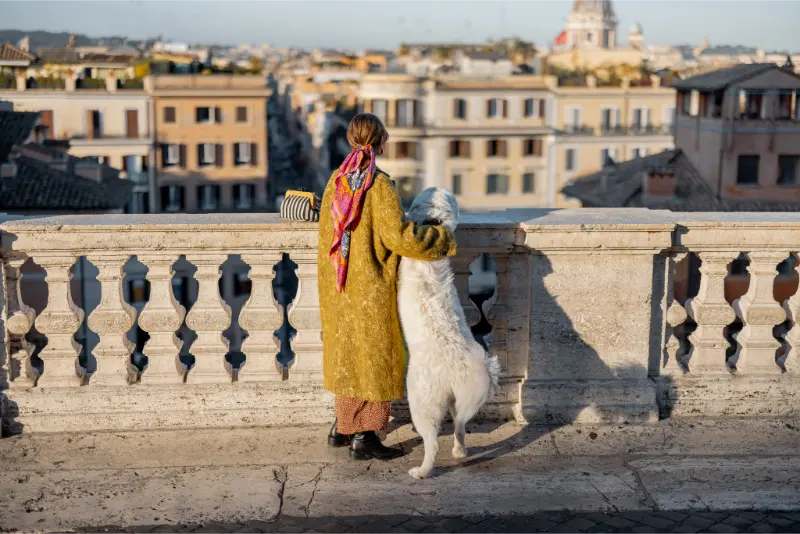
Rome in 3 Days: The Perfect First-Time Itinerary
Three days in Rome is just enough time to understand why people return again and again. You can see the city’s three great layers—Ancient Rome, the Baroque historic center and the Vatican—without spending the entire trip in transit. The key is to group sights geographically and resist the temptation to book too many timed attractions.
This Rome in 3 days itinerary is built for first-time visitors. It assumes three full sightseeing days and a reasonably central base. Start times can be shifted, but keep the order of neighborhoods so you are not crossing the city repeatedly.
Before you start: book two things first
Reserve your Colosseum time slot and your Vatican Museums ticket before locking the rest of the schedule. These are the two reservations most likely to determine the structure of your trip. The Colosseum’s official ticket system releases timed availability according to its current rules, while Vatican Museum dates can become crowded far in advance.
Use only the official Colosseum Archaeological Park and official Vatican Museums website as your reference points for current hours and booking policies.
Day 1: Ancient Rome, Monti and the historic center
8:00–8:30 — Arrive around the Colosseum
Even if your ticket is later, arriving early lets you see the amphitheater before the area reaches full daytime intensity. Grab a quick breakfast beforehand rather than relying on cafés immediately beside the monument. Keep bags small because security checks and restrictions can slow entry.
Morning — Colosseum
Spend about 75–90 minutes inside the Colosseum for a first visit, more if your ticket includes special areas such as the arena or underground. Focus on the architecture and the way the amphitheater functioned rather than trying to memorize every emperor. The scale is easier to understand once you see the seating structure and central arena from multiple levels.
Late morning — Roman Forum and Palatine Hill
Continue into the Forum and Palatine area. The Forum benefits enormously from context, so use a reputable audio guide, guidebook or guided tour. Look for the Arch of Titus, the Via Sacra, the area of the Temple of Saturn and the great open political spaces. Then climb to Palatine Hill for views over the Forum and Circus Maximus.
Allow at least two hours for the combined Forum and Palatine area. In hot weather, carry water and take shade breaks. For ticket options and current official hours, read our Colosseum, Forum and Palatine guide.
Lunch — Monti
Walk into Monti for lunch instead of eating at the first place facing the archaeological zone. The neighborhood has casual pasta, pizza, wine bars and small restaurants. Keep lunch relaxed but not too heavy; the afternoon is mostly on foot.

Afternoon — Capitoline Hill and Piazza Venezia
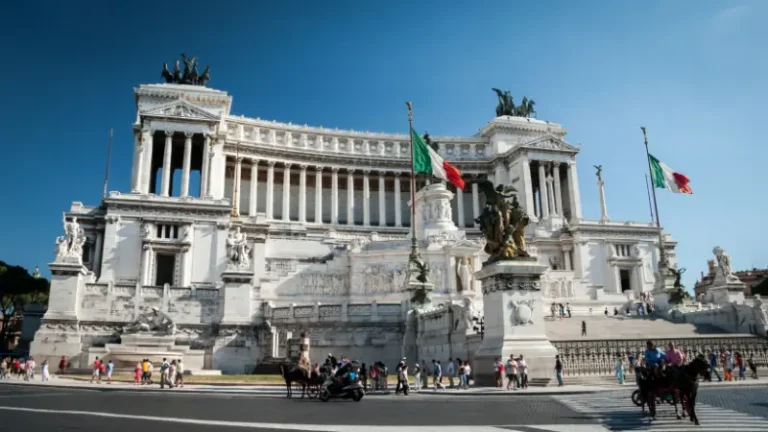
From Monti, walk toward Piazza Venezia and climb the gently sloping Cordonata to the Capitoline Hill. The piazza designed by Michelangelo creates an elegant transition from Ancient Rome to Renaissance Rome. If museums are a priority, the Capitoline Museums deserve several hours, but on a three-day first trip you may prefer to enjoy the square and viewpoints outside.
Late afternoon — Pantheon
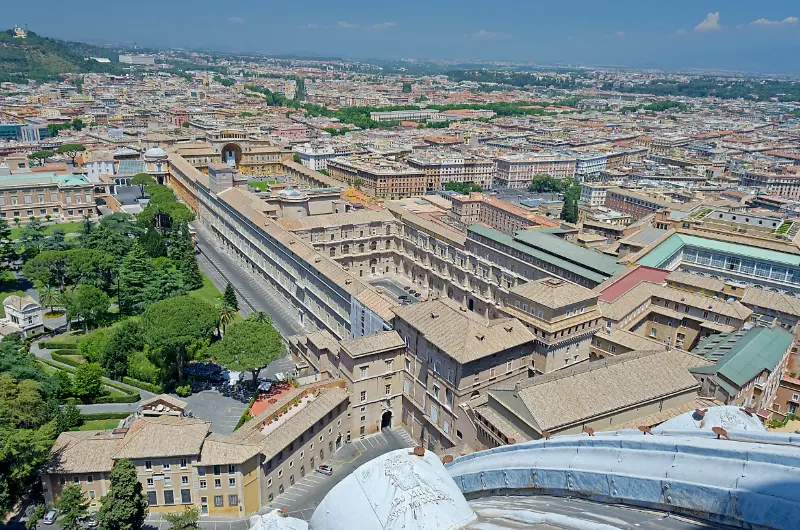
Continue through the historic center to the Pantheon. As of September 2026, the full-price ticket is €7 and official access is handled through Musei Italiani or on-site ticketing. The monument is normally open daily from 9:00 to 19:00 with last entry before closing, subject to religious activities. Verify details on the official Pantheon page.
Evening — Piazza Navona and dinner
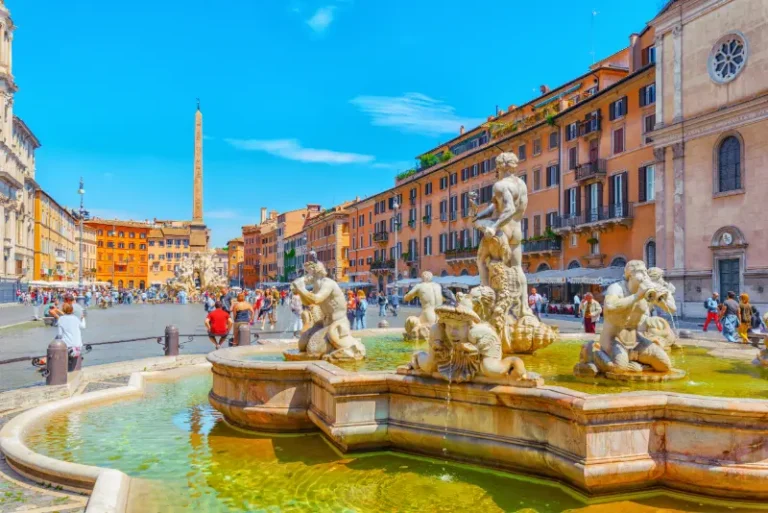
Finish the day in Piazza Navona, then walk through the lanes around Via del Governo Vecchio or toward Campo de’ Fiori. Choose dinner a few streets away from the busiest square if you want a calmer meal. After dinner, revisit the Pantheon or Trevi Fountain under evening light if your energy holds.
Day 2: Vatican City, Prati and Trastevere
Early morning — Vatican Museums
Book the earliest practical Vatican Museums entry you can manage. The official schedule currently lists Monday–Saturday opening from 8:00 to 20:00 with final entry at 18:00, but special closures and last-Sunday conditions apply. Earlier entry generally gives you more flexibility for the rest of the day.
The museums are enormous. On a three-day itinerary, plan roughly three hours unless art history is the central purpose of your trip. A highlights route usually includes ancient sculpture, the Gallery of Maps, Raphael Rooms where accessible on your route, and the Sistine Chapel.
Late morning — Sistine Chapel
The Sistine Chapel is part of the Vatican Museums route, not a separate attraction you can simply enter from St. Peter’s Square. Respect the no-photography and silence rules. Give yourself a few minutes to look up and adjust to the scale rather than rushing immediately to the exit.
Lunch — Prati
Exit the museum complex and eat in Prati. The grid of streets north of the Vatican has many restaurants, bakeries and casual lunch options. It is usually easier to find a comfortable meal a few blocks away from the most touristic approaches to St. Peter’s Square.
Afternoon — St. Peter’s Basilica
Walk to St. Peter’s Square and join the security line for the basilica. Entry to the basilica is generally free, though special areas and the dome are paid separately. Dress appropriately and expect access to change around papal events and liturgical celebrations.
If you want the dome, allow extra time and be realistic about stairs, heights and enclosed spaces. Otherwise, spend your time at ground level with Michelangelo’s Pietà, Bernini’s baldachin and the immense interior.
Late afternoon — Castel Sant’Angelo and the Tiber
Walk along Via della Conciliazione toward Castel Sant’Angelo. You can visit the museum if you still want another ticketed attraction, but a three-day itinerary works well simply crossing Ponte Sant’Angelo and enjoying the river views.
Evening — Trastevere
Cross into Trastevere for dinner and an evening walk. Start around Piazza di Santa Maria in Trastevere, then move away from the busiest restaurant lanes. If you prefer a quieter sunset, climb toward the Janiculum before dinner and descend afterward.
For Vatican-specific planning, see our Vatican Museums and St. Peter’s guide.
Day 3: Trevi, Spanish Steps, Villa Borghese and local Rome
7:00–8:00 — Trevi Fountain
Start early at Trevi Fountain. It is never truly empty for long, but early morning gives you a better chance to appreciate the whole composition and move around the square without dense crowds. From Trevi, walk toward Piazza di Spagna.
Morning — Spanish Steps and Pincio
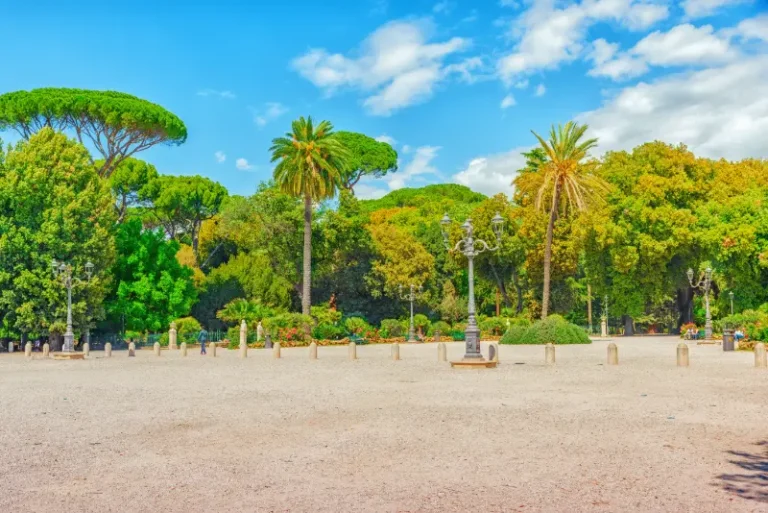
Climb from Piazza di Spagna toward Trinità dei Monti and continue in the direction of Villa Borghese. From the Pincio terrace you get a wide view over Piazza del Popolo and the western skyline. This route gradually replaces crowded shopping streets with greenery and viewpoints.
Choose one: Galleria Borghese or a slower park morning
If you love art, reserve the Galleria Borghese in advance and make it the centerpiece of the morning. If you have already seen enough museums, walk through Villa Borghese instead, rent a bike or simply enjoy the gardens. The second option often works better for families.
Lunch — Piazza del Popolo / Flaminio or central Rome
Eat near Flaminio, around Piazza del Popolo or walk back toward the center. This is a good day for a lighter lunch because the evening should be food-focused.
Afternoon option A — Jewish Ghetto and Aventine
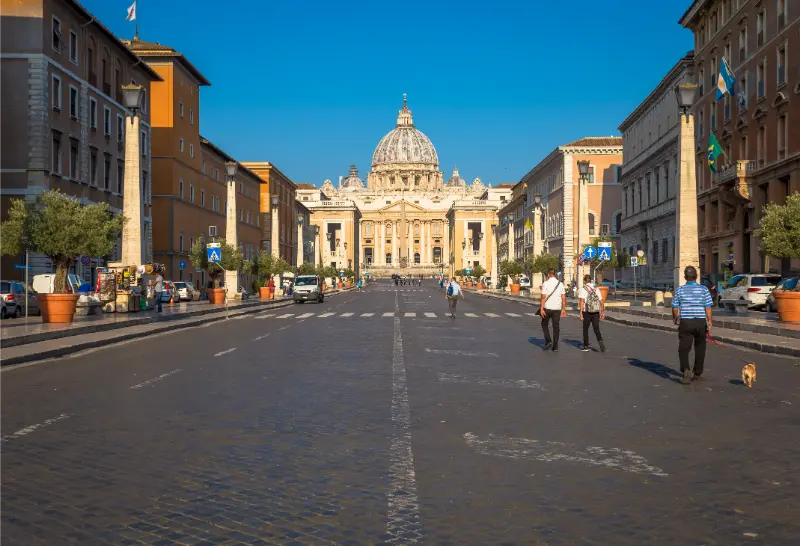
Walk through Largo di Torre Argentina toward the Jewish Ghetto, then continue to the Theater of Marcellus, Circus Maximus and Aventine Hill. The Orange Garden is free and offers one of the city’s best views. The nearby keyhole is a small curiosity that frames St. Peter’s dome.
Afternoon option B — Testaccio
If you would rather see a more everyday side of Rome, go to Testaccio. Visit the market if it is still open, walk around the pyramid and old industrial landmarks, then stay for an early aperitivo or dinner. This is a strong choice for travelers interested in food.
Final evening — a classic night walk
For your last evening, link together your favorite central sights on foot: Piazza Navona, Pantheon, Trevi Fountain and Piazza di Spagna. Rome’s historic center is compact enough that this becomes a natural farewell route.
Where to eat during this itinerary
Do not build every meal around a famous restaurant reservation. Rome is easier when you mix one or two planned meals with neighborhood discoveries. For quick food, look for pizza al taglio, bakeries, supplì and panini. For dinner, search a few streets away from the most crowded monument fronts and check recent menus before sitting down.
Our guide to traditional Roman food explains what to order, including carbonara, cacio e pepe, amatriciana, gricia, supplì, artichokes and maritozzi.
How much walking is involved?
A three-day Rome itinerary can easily reach 15,000–25,000 steps per day, depending on hotel location and how often you use transit. Cobblestones make distances feel longer than the map suggests. Wear broken-in shoes, not new travel shoes, and use buses, metro or taxis strategically if your feet are finished before your interest is.
If it rains
Rain rarely ruins a Rome itinerary; it simply changes the order. Move a church, museum or long lunch into the wettest period and keep open-air archaeology for a clearer window. The Vatican Museums, Galleria Borghese and Capitoline Museums are obvious indoor anchors, while the Pantheon is particularly atmospheric in rain because water enters through the oculus and drains through the ancient floor.
If you have a fourth day
With a fourth day, avoid simply adding more central monuments. Choose one distinct experience: the Appian Way and catacombs, Ostia Antica, Tivoli, a deeper food day in Testaccio, or a museum such as Galleria Borghese if you skipped it. The extra day is also a chance to sleep later and enjoy Rome at a more human pace.
Three-day planning summary
| Day | Main area | Key sights |
|---|---|---|
| Day 1 | Ancient Rome + historic center | Colosseum, Forum, Palatine, Pantheon, Piazza Navona |
| Day 2 | Vatican + Trastevere | Vatican Museums, Sistine Chapel, St. Peter’s, Castel Sant’Angelo, Trastevere |
| Day 3 | Trevi + north/central Rome | Trevi, Spanish Steps, Pincio, Villa Borghese, Aventine or Testaccio |
Three days will never show you everything, and that is part of Rome’s appeal. If you finish this itinerary with a list of places you did not reach, you planned it correctly. Rome is better when there is a reason to return.

2 Comments
Comments are closed.