

Colosseum, Roman Forum and Palatine Hill: Complete Visiting Guide
The Colosseum, Roman Forum and Palatine Hill form one of the most important archaeological areas in the world. They are usually visited together, but each part tells a different story: the Colosseum is the monumental arena, the Forum is the civic and religious heart of Ancient Rome, and the Palatine is the hill of legends, elite houses and imperial palaces.
This guide explains how to visit the Colosseum, Roman Forum and Palatine Hill efficiently, what to book, how much time to allow, what current 2026 opening information says, and how to avoid the most common mistakes.
Current official opening information for 2026
According to the official Colosseum Archaeological Park schedule, the Colosseum opens at 8:30 and the Roman Forum–Palatine area opens at 9:00. From 29 March through 30 September 2026, the park lists closing at 19:15 with last admission at 18:15. Hours become shorter in October and again from late October through winter.
The official park also states that ticket sales for Colosseum timed entry open 30 days before the date of visit. Because schedules and special openings can change, verify your day on the official opening times and tickets page immediately before booking and again before visiting.
Which ticket should you buy?
Ticket names and included areas can change, but the basic decision is whether you want a standard visit or access to special sectors. Standard products generally focus on the Colosseum plus the Forum–Palatine archaeological area. Other options may add the arena, underground areas, SUPER sites or expanded archaeological access.
- Choose a standard ticket if this is your first visit and you mainly want the essential experience.
- Choose an arena-access ticket if standing on the reconstructed arena floor is important to you.
- Choose an underground experience if you are especially interested in how animals, scenery and gladiators moved beneath the arena; availability is limited.
- Choose broader archaeological access if you enjoy ruins and plan to spend much of the day in the park.
Do not buy a more complicated ticket simply because it sounds ‘complete’. A first-time visitor can have an excellent experience with the main monument and Forum–Palatine route.
Book the official timed entry first
The Colosseum uses a mandatory timed entry. This means your entire day should be built around the time printed on that reservation. Arrive early enough for security and orientation. The official online booking portal is linked directly from the archaeological park’s website; use that path rather than searching for look-alike domains.
How much time do you need?
| Area | Minimum useful time | Better pace |
|---|---|---|
| Colosseum | 60 minutes | 75–90 minutes |
| Roman Forum | 75 minutes | 1.5–2 hours |
| Palatine Hill | 45 minutes | 1–1.5 hours |
| Total | About 3 hours | 4–5 hours including breaks |
Visitors who love ancient history can easily spend longer. In summer, heat and lack of shade in some areas make rest breaks essential, so a theoretically ‘faster’ itinerary may actually take more time.
What to see inside the Colosseum
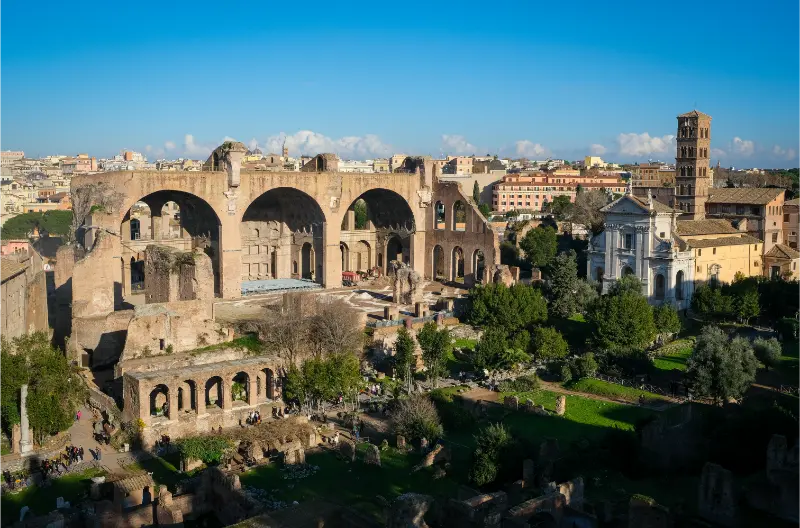
The Colosseum, or Flavian Amphitheatre, was inaugurated in the first century AD and could host enormous crowds for spectacles. What you see today is a combination of original structure, later damage, stone reuse and modern conservation. The exposed center reveals the hypogeum—the service levels beneath the original arena floor.
Move around the accessible levels instead of staying at the first viewpoint. Different angles reveal the seating hierarchy, entrances and engineering. If your ticket includes the arena floor, look back toward the seating to understand how performers would have experienced the space.
The Roman Forum: what you are actually looking at
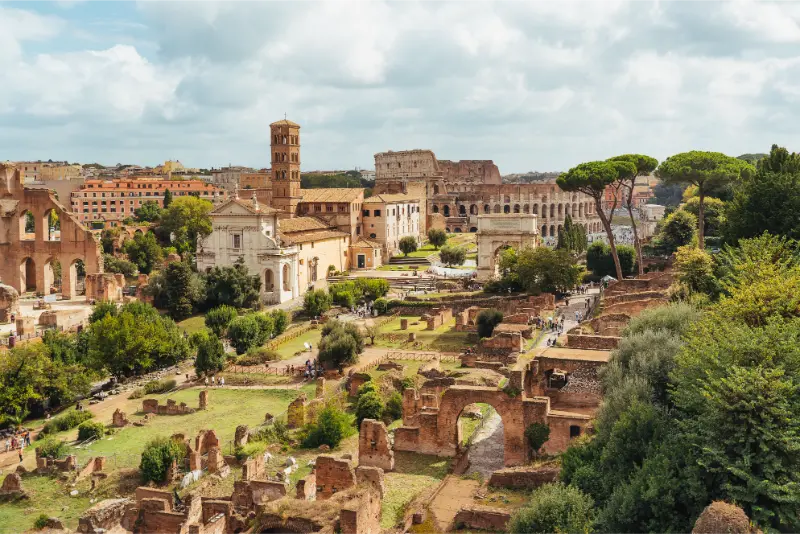
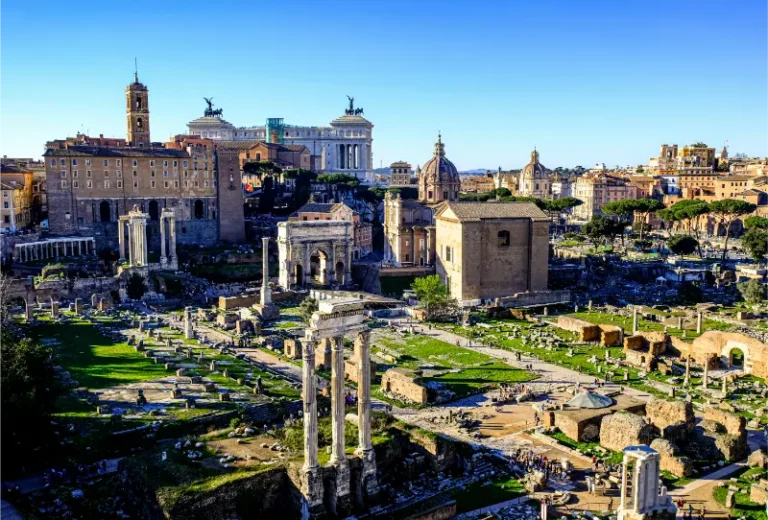
The Forum can initially look like a field of broken columns because it compresses many centuries of construction into one valley. It was not a single-purpose site. Temples, political buildings, law courts, monuments and processional routes stood beside each other and changed repeatedly as Roman power evolved.
Key landmarks include the Arch of Septimius Severus, Temple of Saturn, Curia, Via Sacra, House of the Vestal Virgins and Arch of Titus. Rather than trying to identify every fragment, follow a narrative: the Forum as the center of public life, the transformation from Republic to Empire, and the later decline and reuse of the area.
Palatine Hill: the quieter half of the visit
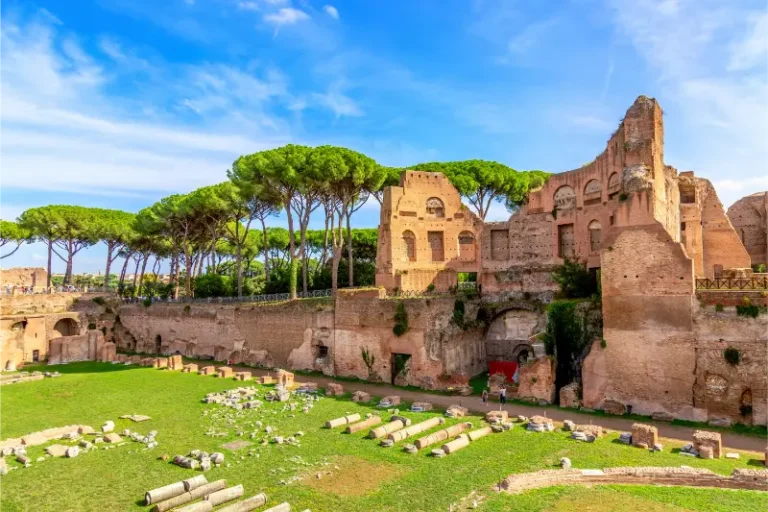
Palatine Hill is associated with Rome’s foundation myth and later became one of the city’s most prestigious residential zones. Imperial palace complexes eventually dominated the hill. Today it provides both archaeology and views, especially over the Roman Forum and Circus Maximus.
Many rushed visitors skip large parts of Palatine Hill because they are tired after the Colosseum. If possible, do the hill while you still have energy. It is often less crowded and helps place the Forum in the city’s geography.
Best order: Colosseum first or Forum first?
The answer depends on your timed ticket. If you have an early Colosseum slot, start there, then continue to Forum and Palatine. If your Colosseum time is later, entering the archaeological area first can be efficient, but you must leave enough buffer to reach the Colosseum entrance before the reserved time.
In hot months, I prefer the earliest possible start because the archaeological zone has long exposed sections. Late-afternoon visits can be beautiful when hours allow, but never assume you can enter close to closing; last admission is earlier.
What to bring
- A small water bottle; refill where permitted and use Rome’s public drinking fountains.
- Sun protection in spring and summer: hat, sunscreen and light clothing.
- Comfortable shoes with grip for uneven ancient surfaces.
- A downloaded map or official site plan so you are not dependent on mobile signal.
- Minimal baggage. Security restrictions can apply, and large luggage is not appropriate for the site.
Can you visit with children?
Yes, and the Colosseum is often one of the easiest archaeological sites for children to understand because the story is visually clear. Explain gladiators, the arena and Roman public spectacles before arrival, then keep the Forum portion shorter if attention drops. Build in a snack or shade break before Palatine Hill.

Accessibility
The Colosseum provides accessible routes and lifts in designated areas, while the wider archaeological park includes slopes, uneven surfaces and ancient paving. Accessibility routes can differ from the standard visitor path. Check the official site for the current accessible itinerary and contact the park if you have specific mobility requirements.
Guided tour or independent visit?
A guided tour is most valuable in the Roman Forum because context turns scattered ruins into a coherent political and social landscape. If your budget allows only one guided experience in Rome, Ancient Rome is a strong candidate. Independent visitors should download background material beforehand rather than trying to research every monument in the sun.
Where to eat nearby
The immediate Colosseum perimeter has many visitor-oriented cafés and restaurants. For better variety, walk into Monti or toward Celio. A 10–15 minute walk can make a noticeable difference in atmosphere and price. If you have an early ticket, eat breakfast before arrival and plan lunch after the archaeological zone.
What to combine with the Colosseum
- Monti: ideal for lunch, aperitivo or dinner.
- San Pietro in Vincoli: see Michelangelo’s Moses.
- Capitoline Hill: excellent views over the Forum and access to the Capitoline Museums.
- San Clemente: a fascinating layered church and archaeological site.
- Circus Maximus and Aventine: a logical continuation if you still want outdoor walking.
Free-admission days
The archaeological park lists free admission on the first Sunday of the month and on certain national dates in 2026, but free days can involve different ticketing procedures and larger crowds. Do not assume ‘free’ means ‘no planning’. Check the official site for how timed Colosseum access is handled on your date.
Common mistakes
- Arriving without a valid timed Colosseum reservation in high season.
- Booking a tour from an unclear seller without understanding what ticket is actually included.
- Allocating only one hour for all three sites.
- Visiting at midday in July or August without sun protection.
- Skipping Palatine Hill because the Forum took longer than expected.
- Expecting detailed signage to replace historical context.
- Scheduling the Vatican Museums immediately afterward on the same day.
A good half-day plan
- 08:00–08:20: arrive in the Colosseum area and orient yourself.
- 08:30–10:00: visit the Colosseum with an early timed entry.
- 10:00–12:30: Roman Forum and Palatine Hill at a comfortable pace.
- 12:30–13:00: walk toward Monti.
- 13:00 onward: lunch, then continue to Capitoline Hill or rest before an evening in the historic center.
This half-day fits naturally into Day 1 of our three-day Rome itinerary. For a broader first-trip plan, also see the Rome travel guide.
Photography and the best light
Morning light is usually the most practical for photography because you can combine softer light with lower temperatures, especially in summer. The Colosseum is impressive from Via dei Fori Imperiali, from the raised streets toward Colle Oppio and from viewpoints around the archaeological perimeter. Inside, avoid blocking narrow passages for photographs. In the Forum, wide views from Palatine Hill often communicate the site’s scale better than close-ups of individual fragments.
How to make the history easier to understand
Before arriving, learn a very short timeline rather than trying to study all of Roman history: Republic, transition to Empire, the Flavian emperors who built the Colosseum, and the later transformation of the city. Once on site, focus on how spaces were used—spectacle in the amphitheater, public life in the Forum and elite power on Palatine Hill. That simple framework makes the ruins much more memorable than a long list of dates.
If you are visiting without a guide, download your reference material before entering. Mobile reception, battery life and bright sunlight can make live research frustrating, and stopping repeatedly to search the web breaks the rhythm of the visit.

2 Comments
Comments are closed.