Via Ostiense Rome: Porta San Paolo, Basilica and Road to Ostia
Via Ostiense Rome is one of the best ways to understand Rome as a living archaeological landscape rather than a collection of isolated monuments. The ancient road linked the city with Ostia, Rome’s river and maritime port at the mouth of the Tiber, and its line still shapes modern streets, neighborhoods, bridges, gates and archaeological sites.
This 2026 guide explains where the Via Ostiense ran, why it mattered, what survives today and how to trace the most interesting sections without turning the day into a transport marathon. Some monuments along the route have limited access, restoration closures or special-opening schedules, so use the official source linked below shortly before visiting.
Via Ostiense Rome at a glance
| Destination | Ostia |
| Ancient gateway | Porta Ostiensis, now Porta San Paolo |
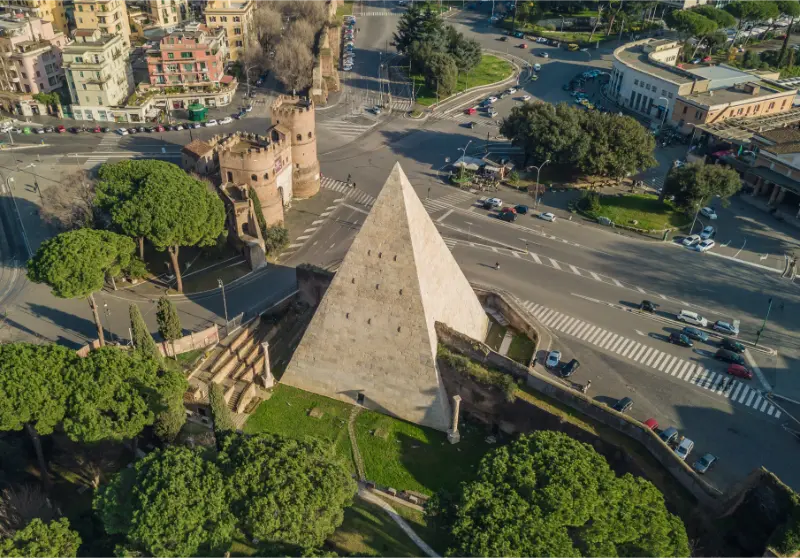
| Major nearby monument | Pyramid of Cestius |
| Christian landmark | St Paul Outside the Walls |
| Archaeological continuation | Ostia Antica |
| 2026 note | The Museo della Via Ostiense is currently closed to normal public access |
Why the Via Ostiense matters
The Via Ostiensis connected Rome with Ostia, the port that handled grain, wine, oil, marble and countless goods arriving by sea and river. Few roads were more directly tied to the capital’s daily survival: an imperial metropolis depended on reliable transport between docks, warehouses and urban consumers.
The road left Rome through Porta Ostiensis in the Aurelian Walls, now called Porta San Paolo. Its two-arched form and defensive towers demonstrate the strategic importance of the southern river-and-port corridor.
As Christianity transformed the city, the road gained a new destination before Ostia: the shrine and later basilica of St Paul Outside the Walls, traditionally built over the apostle’s burial place. Pilgrims therefore shared the corridor with merchants and ordinary travelers.
The archaeological landscape continues all the way to Ostia Antica, where the port city preserves streets, warehouses, baths, temples and apartment blocks. Following the Ostiense conceptually links a city gate with one of the Mediterranean’s greatest archaeological sites.
Where the ancient road ran
The ancient road began at Porta Ostiensis, beside the Pyramid of Cestius, and headed south along the left bank corridor toward the lower Tiber.
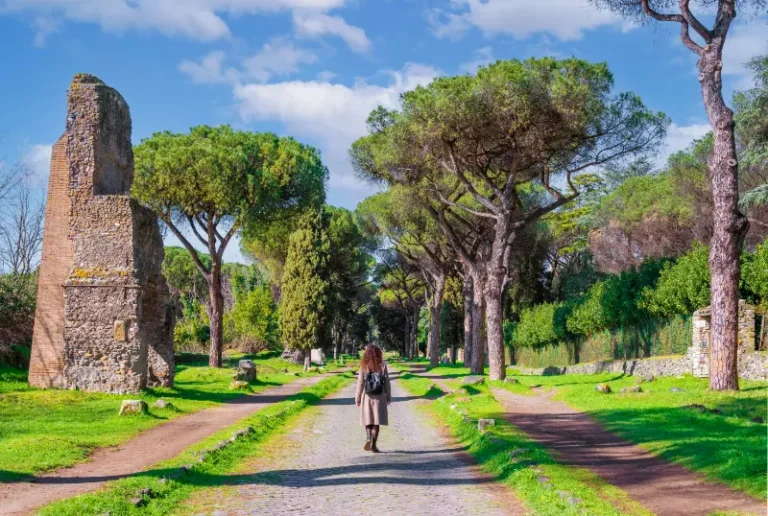
It passed burial zones and later Christian monuments before continuing through the expanding suburban landscape toward Ostia. The modern Via Ostiense follows much of the same general direction, though rail lines and industrial development have transformed the route.
Today the road is best experienced in two parts: an urban sequence from Porta San Paolo to the basilica, then a separate rail journey to Ostia Antica. Trying to walk the entire distance would add little historical value.
Roman roads were not immutable lines drawn once and preserved forever. Approaches to the city changed when walls, bridges and gates were rebuilt; later roads often shifted a few meters from the ancient alignment; medieval and modern construction reused paving and masonry. For visitors, the goal is therefore not to imagine that every modern lane sits exactly on Roman basalt, but to recognize a corridor that remained strategically important for centuries.
Best places to trace the road today
Porta San Paolo
The ancient Porta Ostiensis is one of the best-preserved gates in Rome. Its towers and internal courtyard communicate the defensive role of the Aurelian Walls, while the road direction points directly toward Ostia.
Museo della Via Ostiense
The museum inside the gate was created to explain the road and its archaeological finds. As of 2026, official visitor information lists it as currently closed to the public, so do not assume you can enter simply because the gate is visible.
Pyramid of Cestius

Beside the gate, the pyramid is a late-Republican tomb that stood near the road outside the ancient city. Its survival reinforces how major roads became prestigious burial corridors.
St Paul Outside the Walls
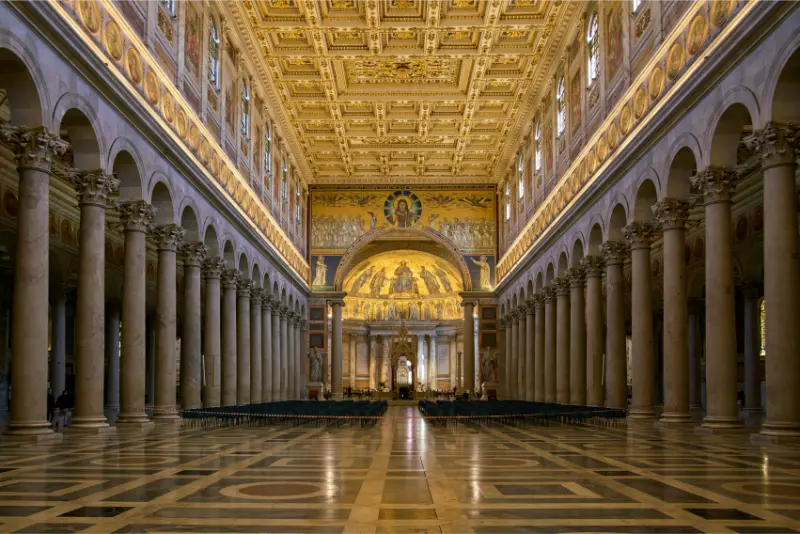
Farther down the Ostiense, the great basilica marks one of Christianity’s most important pilgrimage destinations. The building seen today is largely a reconstruction after the 1823 fire, but the site’s association with the apostle transformed the road’s identity.
Ostia Antica
The road’s ultimate destination is best visited by train. Ostia Antica turns the abstract story of transport into a complete port city, with warehouses, shops, houses and public buildings that depended on the connection with Rome.
A practical self-guided route
1. Start at Porta San Paolo and the Pyramid
Spend time in the square reading gate, tomb and wall together. This is one of Rome’s strongest archaeological junctions.
2. Check the museum status
If the Museo della Via Ostiense remains closed, do not waste time waiting. Use the exterior interpretation and continue south.
3. Travel to St Paul Outside the Walls
Metro B is the easiest connection. Give the basilica enough time for the nave, tomb area and cloister if open.
4. Return or continue to Ostia Antica
For a full-day version, use the rail connection from the Piramide/Ostiense area toward Ostia Antica rather than following the modern road on foot.
5. End at the ancient port city
Spend several hours in Ostia Antica. The site provides the best conclusion to the road’s commercial history.
Allow roughly 3 hours for the urban route; a full day with Ostia Antica for the core route. You can shorten it by choosing only the first two or three stops, or expand it into a full day by adding the nearby museums, churches and parks mentioned in the internal links. The route is more enjoyable when you leave time to look at the urban fabric instead of treating every stop as a checklist item.
How to read what survives
At Porta San Paolo, imagine the road not as a tourist promenade but as a supply line. Goods arriving from the sea and river moved through a corridor essential to feeding Rome.
The Pyramid of Cestius illustrates how elite tombs used road visibility. Its exotic form was designed to be noticed, and its preservation beside the gate makes the junction unusually dramatic.
At Ostia Antica, look for the infrastructure of trade: warehouses, shops, bakeries, guild buildings and the street network. The Via Ostiense only makes complete sense when you understand the economy at the road’s endpoint.
Practical visiting information for 2026
| Urban start | Piazza di Porta San Paolo |
| Museum status | Museo della Via Ostiense currently closed to the public |
| Basilica transport | Metro B to Basilica San Paolo |
| Ostia transport | Roma-Lido/Metromare service from the Ostiense area, subject to current operations |
| Best format | Half day in Rome or full day with Ostia Antica |
The Museo della Via Ostiense has had prolonged closure periods, and official information currently lists it as closed. Check the Soprintendenza before your visit in case special openings or reopening announcements appear.
St Paul Outside the Walls is an active basilica, not only a sightseeing monument. Dress appropriately and expect liturgical areas to have access rules.
For Ostia Antica, reserve several hours and verify transport works or service changes on the day. The archaeological site is large enough that rushing it after a long urban walk is a mistake.
For the latest access information, check the official Turismo Roma page for the Museo della Via Ostiense. Official pages are especially important for monuments that open only on selected dates, require guided access or may close temporarily for conservation work.
How to get there and move between the stops
Metro B makes the urban route extremely easy: Piramide serves Porta San Paolo, and Basilica San Paolo serves the basilica.
The rail line toward Ostia connects naturally with the Porta San Paolo/Ostiense transport hub, making the ancient road story unusually coherent even when you use modern trains.
Avoid driving unless you have a broader coastal itinerary. Public transport is generally more efficient for the gate, basilica and Ostia Antica sequence.
What to see nearby
Combine the Pyramid of Cestius, St Paul Outside the Walls and Ostia Antica from Rome.
Photography tips
The best composition is Porta San Paolo with the Pyramid of Cestius nearby, because one frame can suggest walls, road and funerary landscape. At Ostia, use long street perspectives to emphasize movement toward the port. Ancient road sites often look modest at first glance, so side light, a human figure for scale and a wider view that includes the modern city can tell the story better than a tight photograph of masonry alone.
At roadside monuments, never step into traffic lanes or climb barriers for a photograph. A telephoto lens or phone zoom is often safer and more useful than trying to stand directly beside a monument that was never designed as a modern visitor attraction.
Accessibility and comfort
The gate area and basilica are accessible by urban transport, though cobbles and curbs remain. Ostia Antica has improved accessible routes but still contains uneven ancient paving and large distances.
Carry water in warm months, wear shoes with reliable grip and avoid assuming that a short distance on the map will be comfortable in summer heat. Rome can be demanding in July and August, while heavy rain can make park paths muddy and expose uneven paving.
Common mistakes to avoid
- Assuming the Museo della Via Ostiense is open because Porta San Paolo is accessible.
- Walking the modern road all the way to Ostia.
- Rushing St Paul Outside the Walls as a five-minute photo stop.
- Arriving at Ostia Antica too late to explore the site properly.
- Ignoring the commercial purpose of the road and focusing only on monuments.

FAQ about Via Ostiense Rome
Where did the Via Ostiense go?
It connected Rome with Ostia, the major port city near the mouth of the Tiber.
Is the Museo della Via Ostiense open in 2026?
Official visitor information currently lists the museum as closed to the public; check for updates or special openings.
Can I follow the road to Ostia Antica?
The historical direction is clear, but taking the train is far more practical than walking beside the modern road.
Is St Paul Outside the Walls on the route?
Yes. The basilica grew around the traditional burial place of St Paul beside the Ostiense corridor.
Can this be done in one day?
Yes. Start early at Porta San Paolo, visit the basilica, then spend the afternoon at Ostia Antica.
Final tips
The Via Ostiense is one of Rome’s easiest ancient roads to understand because its purpose remains obvious: city gate, port corridor, pilgrimage basilica and Ostia all line up. Use modern Metro and rail to connect the historical nodes, and you can reconstruct a transport system that once fed the ancient capital.