Ancient Rome Beyond the Colosseum: 15 Ruins and Archaeological Sites Worth Seeing
The Colosseum is the symbol of ancient Rome, but it is only one piece of a city that still reveals antiquity in streets, churches, parks and entire archaeological complexes. If you stop after the Colosseum and Roman Forum, you miss the places that show how Romans bathed, raced, traded, worshipped, lived and buried their dead.
This guide is designed for travelers who want a second layer of ancient Rome. Some sites require tickets, others can be appreciated from public streets, and several fit naturally into neighborhoods you are likely to visit anyway.
At a glance
| Site | Why go |
| Baths of Caracalla | Scale and Roman engineering |
| Circus Maximus | Understand chariot-racing Rome |
| Trajan’s Markets | Imperial architecture and city planning |
| Largo Argentina | Republican temples in the modern center |
| Appian Way | Roads, tombs and landscape |
| Ostia Antica | A whole ancient city outside central Rome |
Baths of Caracalla: monumental everyday life
The Baths of Caracalla are among the best places to understand the scale of Roman public architecture without the visual competition of the Colosseum. The surviving walls make it easier to imagine enormous vaulted rooms, heated bathing areas, exercise spaces and gardens.
Visit early or later in the day in warm weather because much of the site is exposed. Our Baths of Caracalla guide covers tickets, route planning and what the ruins once looked like.
Circus Maximus: read the landscape
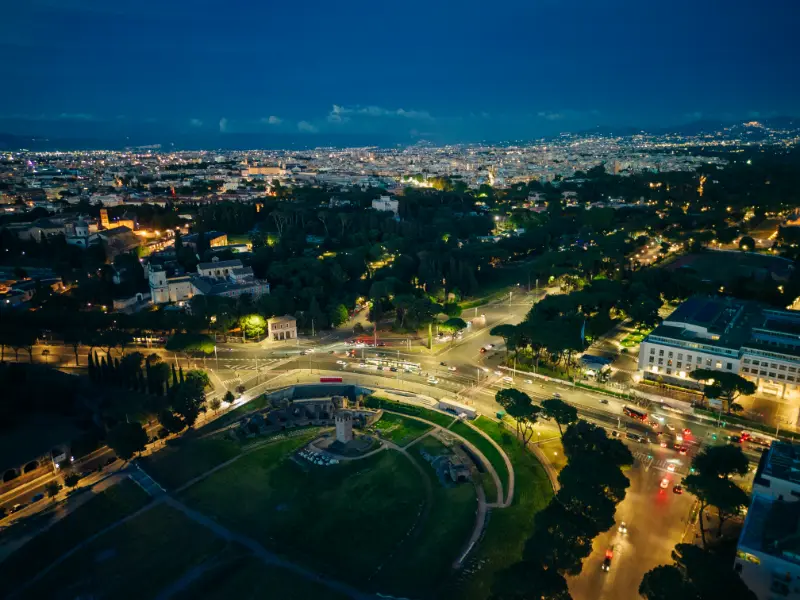
At first glance the Circus Maximus can feel less dramatic because the seating and superstructure have largely disappeared. The reward comes from understanding the shape of the valley: this was the great arena for chariot racing and mass spectacle.
Combine it with the Palatine, Aventine or Baths of Caracalla. Seeing these sites together helps the ancient city make geographic sense rather than becoming a series of unrelated ruins.
Trajan’s Forum and Markets
Trajan’s complex shows imperial Rome as architecture, administration and urban spectacle. The market-like structures climbing the Quirinal side are especially useful for seeing how Romans built vertically into difficult terrain.
From the Via dei Fori Imperiali area you can understand the relationship among Trajan’s Column, the forum spaces and the later city. If you enter the museum complex, allow more time than a quick exterior photograph suggests.
Largo di Torre Argentina
The Republican temples at Largo Argentina sit below modern street level in the heart of the city. The area is associated with the wider archaeological zone where Julius Caesar was assassinated, although the exact experience is more complex than the popular one-line story.
It is easy to combine with the Pantheon, Jewish Ghetto and Campo de’ Fiori. That convenience makes it one of the best ancient stops for travelers who do not want another large museum.
Theatre of Marcellus and Portico of Octavia
The Theatre of Marcellus is one of the clearest reminders that the Colosseum did not invent Rome’s taste for monumental entertainment architecture. Later buildings incorporated parts of the ancient structure, creating the layered appearance that defines Rome.

Nearby, the Portico of Octavia and Jewish Ghetto bring ancient, medieval and modern history into one compact walk. Use our Jewish Ghetto guide to continue the route.
The Appian Way and tomb landscapes
The Via Appia Antica changes the scale of the story. Instead of a dense central monument, you experience a road lined with archaeological remains, tombs and countryside. Cycling can work for confident riders, but walking selected stretches often gives more time to notice details.
See our Appian Way guide and combine it with catacombs only if you leave enough time for transport and booked tours.
Baths of Diocletian and the National Roman Museum
Near Termini, the Baths of Diocletian reveal another enormous bathing complex and form part of the National Roman Museum system. The setting is especially useful for travelers arriving or departing by train because it adds serious archaeology without crossing Rome.
The site also demonstrates a recurring Roman theme: ancient structures were reused and transformed rather than simply abandoned. Reading those layers is one of the keys to understanding the city.
Ostia Antica: the best ancient city day trip
Ostia Antica is not central Rome, but it deserves a place in any serious ancient-Rome plan. Streets, apartment blocks, baths, warehouses, temples and the theatre make daily urban life easier to imagine than at many monumental central sites.
It is large enough to justify most of a day. Our Ostia Antica guide explains how to plan the trip without rushing back to the center.
How to build a two-day ancient Rome plan
Day one can focus on the Colosseum, Forum, Palatine and Capitoline area. Day two can shift to Baths of Caracalla, Circus Maximus and the Appian Way, or to Ostia Antica if you want a complete urban archaeological experience.
This is better than trying to visit every ruin in one exhausting day. Ancient Rome becomes more meaningful when you give each site enough attention to understand its function.
How to fit this into a Rome trip
For a first trip, keep the Colosseum and Forum as the main ancient anchor, then add one secondary archaeological area that matches your interests. Architecture fans may prefer Caracalla or Trajan’s Markets; travelers interested in daily life should consider Ostia Antica; walkers should choose the Appian Way.
Rome is easier when you group sights by neighborhood instead of treating every landmark as an isolated pin. Leave time for security checks, church services, transport delays, cobblestones and the unplanned stops that often become the best part of the day. Keep one or two priorities fixed, then let nearby secondary sights remain flexible.
Practical tips before you go
Wear shoes suitable for uneven surfaces, bring water in warm weather and check seasonal opening hours. Archaeological sites can close sections for conservation or events. Outdoor ruins are also much more enjoyable when visited in cooler morning or late-afternoon hours.
For any attraction with tickets, seasonal hours or religious services, check the official website shortly before the visit. Rome changes more through temporary closures, restoration work, events and liturgical schedules than through dramatic permanent changes, so a final verification can save a wasted journey.
Frequently asked questions
What ancient Roman sites are worth seeing besides the Colosseum?
The Baths of Caracalla, Circus Maximus, Trajan’s Forum and Markets, Largo Argentina, Theatre of Marcellus, Appian Way and Ostia Antica are excellent additions.
Is Ostia Antica worth a full day?
Yes for travelers who enjoy archaeology. The site is extensive and shows streets, homes, baths and public buildings on a scale that central Rome cannot match.
Can I see most ancient sites in one day?
You can see several, but trying to cover everything reduces them to quick photographs. Two focused days usually produce a much better understanding.
Final advice
The deeper you go beyond the Colosseum, the more ancient Rome stops feeling like a collection of monuments and begins to feel like a real city. Choose sites that show different parts of Roman life and connect them geographically rather than chasing every ruin on the map.

Protect the best hours of the day
Early morning and the period around sunset are unusually valuable in Rome. Outdoor landmarks are calmer early, while late afternoon gives softer light and a more comfortable atmosphere for piazzas, bridges and viewpoints. Use the middle of the day for lunch, churches, museums or transport when heat and crowds make exposed walking less pleasant.
Keep the route geographically realistic
Rome looks compact on a map, but repeated crossings of the center cost time and energy. A route works best when one major attraction anchors a cluster of nearby streets, churches, markets or viewpoints. If you finish early, add something close rather than traveling across the city for a minor stop.
Build in a small amount of flexibility
A strong itinerary has one essential priority, two or three desirable stops and several optional ideas. If a church closes for a service or a queue grows unexpectedly, drop an optional stop and continue in the same area. This keeps the day enjoyable instead of turning every delay into a problem.
Dress for the city you will actually walk
Supportive shoes matter more in Rome than elegant travel outfits because stone paving, slopes and long museum corridors add up quickly. Carry water, sun protection in warm months and a light layer for churches or cooler evenings. Small comfort decisions often determine how much of the city you can enjoy well.
Use official sources for the details that change
Ticket rules, free-entry days, opening hours and transport works can change. Save the official pages for your most important reservations and check them again shortly before the trip. This is particularly important on Sundays, Mondays, public holidays and days with major religious or civic events.
A simple planning rule that works in Rome
At the start of each day, decide which single experience would make the day feel successful. Protect that reservation or location first. Then place flexible sights nearby and leave a buffer before any second timed entry. This structure works particularly well in Rome because the city is dense: if one doorway is closed, another church, piazza, archaeological fragment or café is usually close enough to keep the route interesting. Avoid scheduling every hour. A little breathing room lets you notice the details that make Rome memorable rather than simply completing a list.
What to do when the plan changes
Rome rewards travelers who keep a backup option in the same area. If a museum closes unexpectedly, do not immediately cross the city. Look for a nearby church, archaeological viewpoint, market, park or neighborhood street that can fill the time naturally. If transport is delayed, protect the reservation that cannot move and shorten the flexible part of the route. If the weather becomes unpleasant, switch an outdoor block with an indoor one rather than abandoning the entire day. This approach matters because many Roman attractions operate inside historic or religious buildings where temporary changes are normal. A flexible plan is not a weaker plan: it is the version most likely to survive real travel conditions. Keep screenshots of essential tickets, save the official notice page for your main attraction, and know which part of the day can be dropped without regret. The result is a trip that feels organized without becoming fragile.