Rome on Sunday: What Is Open, Free Museum Days and the Best Way to Plan
A Sunday in Rome can be one of the most atmospheric days of a trip, but it also requires different planning from an ordinary weekday. Churches are active places of worship, the Vatican Museums are normally closed, some businesses follow reduced hours, and the first Sunday of the month can transform major state museums into free-entry attractions with very different crowd patterns.
The good news is that Rome does not shut down on Sunday. The Colosseum, many major museums, archaeological areas, restaurants, public transport and the historic center continue to operate. The trick is knowing which activities become easier, which become busier and which should be moved to another day.
At a glance
| Sunday question | Practical answer |
| Vatican Museums | Normally closed, except the last Sunday of the month under the official calendar |
| Colosseum | Open on ordinary Sundays; timed-entry rules still apply |
| State museums | Many participate in free first-Sunday initiatives |
| Churches | Open but tourist access may pause during Mass |
| Public transport | Runs, often with a Sunday/holiday timetable |
The first Sunday of the month changes the city
Italy’s Ministry of Culture continues the Domenica al Museo initiative, which gives free entry on the first Sunday of the month to participating state museums, archaeological parks, castles and monuments. In Rome this can include some of the city’s most famous archaeological sites and museums. Free does not necessarily mean spontaneous: individual sites may still use reservations, controlled entry or capacity rules.
The Colosseum Archaeological Park lists the first Sunday of the month among its free-admission days in 2026. If you want to use the opportunity, arrive with a realistic expectation of larger crowds and check the official rules before leaving the hotel. A free day is most valuable when saving money matters more than avoiding queues.
What happens at the Vatican on Sunday
The Vatican Museums are normally open Monday through Saturday. Their 2026 schedule provides an exception on the last Sunday of the month, when the museums open in the morning with free admission, provided the date does not coincide with specified religious holidays. This makes ordinary Sundays a poor day to plan the museums but an important day to verify if your trip overlaps the final Sunday of a month.
St. Peter’s Basilica is a church rather than part of the Vatican Museums. Access can be affected by Masses, papal events, security and liturgical celebrations, especially on Sunday. If St. Peter’s is a priority, check the Vatican calendar and go with enough flexibility to wait or return later.
The Colosseum and ancient Rome on Sunday
The Colosseum and Roman Forum-Palatine can work very well on Sunday, especially when you already hold a timed ticket. The official archaeological park currently opens daily through the normal 2026 season except for its stated annual closure dates, but hours change seasonally.
A morning Colosseum visit followed by Monti, the Capitoline Hill or the historic center creates a compact Sunday route. If it is the first Sunday of the month, however, free entry can produce heavier demand, so do not assume the day will be calmer simply because locals are off work.
Churches: visit respectfully, not like museums
Sunday is the most important weekly worship day for Catholic churches. Many of Rome’s basilicas and neighborhood churches remain accessible, but sightseeing may be suspended during Mass, weddings or special liturgies. Dress appropriately, keep voices low and never try to move through a service just to reach an artwork.
This matters particularly if you are following our best churches in Rome guide or planning a Caravaggio route. Build church visits around worship rather than expecting a museum-style timetable.
Restaurants, cafés and shopping
Tourist Rome remains lively on Sunday, especially around the historic center, Trastevere, Prati and major attractions. Many restaurants and cafés open normally, although individual family-run businesses may choose a weekly closing day.
Large central shopping streets are also active, while smaller independent shops can be less predictable. If a particular store or restaurant is important, verify directly rather than assuming Sunday rules apply uniformly across the city.
Public transport on Sunday
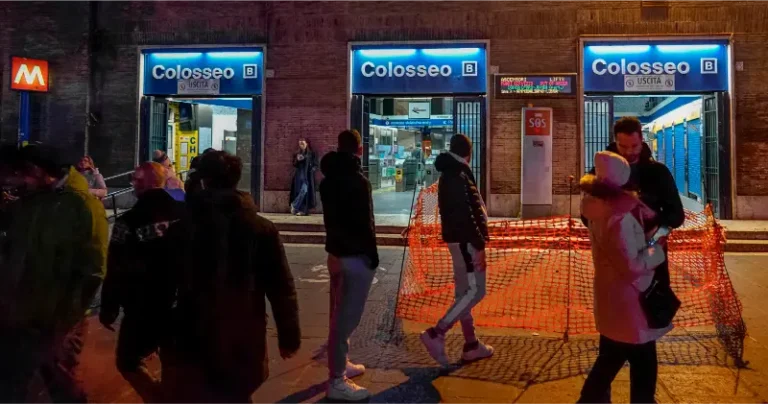
Metro, buses and trams continue to run, but holiday timetables and service changes can affect frequency. Weekend maintenance is also common on urban transport systems. Use current ATAC information rather than relying on a timetable saved months earlier.
Sunday can be a good day for a walking-heavy route because central Rome is lively but commuter pressure is different from a weekday. Keep footwear and distances realistic; a quieter road network does not make the historic center physically smaller.
A strong Sunday itinerary for first-time visitors
Start with a prebooked Colosseum or a relaxed walk through the historic center, depending on your reservations. Continue to the Capitoline Hill, Piazza Venezia, Pantheon, Piazza Navona and the Jewish Ghetto. Churches can be added when services allow.
Leave the Vatican Museums for another day unless it is the final Sunday of the month and you deliberately want the free opening. For evening, Trastevere or Monti provides atmosphere without adding another timed attraction.
When Sunday is actually the best day
Sunday works especially well for travelers who enjoy streets, piazzas, churches, parks and long meals rather than trying to maximize museum hours. It can also be a useful arrival day: you can learn the center on foot, enjoy viewpoints and save the most ticket-dependent museums for Monday or Tuesday.
If your Sunday is the first Sunday of the month, decide whether free-entry savings justify the extra crowd pressure. If it is the last Sunday, decide whether the Vatican Museums’ special morning opening is worth an early start and a potentially busier experience.
How to fit this into a Rome trip
Use Sunday as a day of contrast: one important archaeological or museum reservation, then flexible outdoor Rome. If your trip includes several days, place the Vatican Museums on a weekday and keep Sunday for the historic center, parks, churches and neighborhoods.
Rome is easier when you group sights by neighborhood instead of treating every landmark as an isolated pin. Leave time for security checks, church services, transport delays, cobblestones and the unplanned stops that often become the best part of the day. Keep one or two priorities fixed, then let nearby secondary sights remain flexible.
Practical tips before you go
For first-Sunday state museum rules use the Ministry of Culture’s official Domenica al Museo information. For the Vatican, verify the 2026 calendar on the official Vatican Museums site. For the Colosseum, use the official Parco archeologico del Colosseo ticketing and opening-hours pages.
For any attraction with tickets, seasonal hours or religious services, check the official website shortly before the visit. Rome changes more through temporary closures, restoration work, events and liturgical schedules than through dramatic permanent changes, so a final verification can save a wasted journey.
Frequently asked questions
Are things closed in Rome on Sunday?
No. Most of the city remains active, but individual shops, museums and restaurants can have different hours, and churches may restrict sightseeing during services.
Are the Vatican Museums open on Sunday?
Normally no. In 2026 they open on the last Sunday of each month under the official schedule, with exceptions when that Sunday coincides with specified holidays.
Is the Colosseum free on Sunday?
Not every Sunday. The archaeological park lists the first Sunday of the month among its free-admission days, subject to the site’s current access rules.
Final advice
Do not treat Sunday as a problem day. Treat it as a different kind of Rome day. Check the Vatican and free-museum calendar, respect church services, reserve any must-see attraction and leave enough open time for piazzas, neighborhoods and a long evening walk.

Protect the best hours of the day
Early morning and the period around sunset are unusually valuable in Rome. Outdoor landmarks are calmer early, while late afternoon gives softer light and a more comfortable atmosphere for piazzas, bridges and viewpoints. Use the middle of the day for lunch, churches, museums or transport when heat and crowds make exposed walking less pleasant.
Keep the route geographically realistic
Rome looks compact on a map, but repeated crossings of the center cost time and energy. A route works best when one major attraction anchors a cluster of nearby streets, churches, markets or viewpoints. If you finish early, add something close rather than traveling across the city for a minor stop.
Build in a small amount of flexibility
A strong itinerary has one essential priority, two or three desirable stops and several optional ideas. If a church closes for a service or a queue grows unexpectedly, drop an optional stop and continue in the same area. This keeps the day enjoyable instead of turning every delay into a problem.
Dress for the city you will actually walk
Supportive shoes matter more in Rome than elegant travel outfits because stone paving, slopes and long museum corridors add up quickly. Carry water, sun protection in warm months and a light layer for churches or cooler evenings. Small comfort decisions often determine how much of the city you can enjoy well.
Use official sources for the details that change
Ticket rules, free-entry days, opening hours and transport works can change. Save the official pages for your most important reservations and check them again shortly before the trip. This is particularly important on Sundays, Mondays, public holidays and days with major religious or civic events.