Best Churches in Rome: 18 Extraordinary Basilicas and Chapels to Visit
Rome’s churches are not simply religious buildings added around the famous archaeological sites; they are one of the main reasons the city feels so artistically dense. Masterpieces by Michelangelo, Caravaggio, Bernini and Raphael can be found in active places of worship, often with no museum-style entry ticket. Early Christian mosaics sit a few streets from baroque illusionistic ceilings, and a modest façade can hide an interior that changes your entire afternoon.
You do not need to visit every church below. Choose three or four that fit your route and interests. Always remember that these are active sacred spaces: masses, funerals and ceremonies take priority over sightseeing, appropriate clothing matters, and opening hours can change.
1. St. Peter’s Basilica
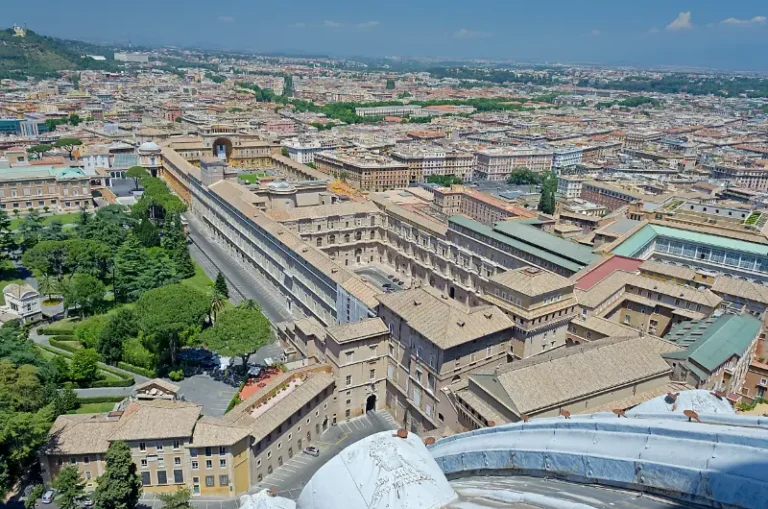
St. Peter’s is the largest and most overwhelming church experience for most first-time visitors. Michelangelo’s Pietà, Bernini’s baldachin, the vast nave and the tomb of St. Peter create a combination of art, architecture and religious significance that cannot be reduced to one highlight. Entry to the basilica itself is normally free, but security lines can be long and dome access is separate.
2. Basilica di San Giovanni in Laterano
St. John Lateran is the cathedral of Rome and the ecclesiastical seat of the Pope as Bishop of Rome. Its enormous interior, colossal apostle statues and layered history make it essential for travelers interested in the city beyond the Vatican. The nearby Scala Santa can be included in the same visit.
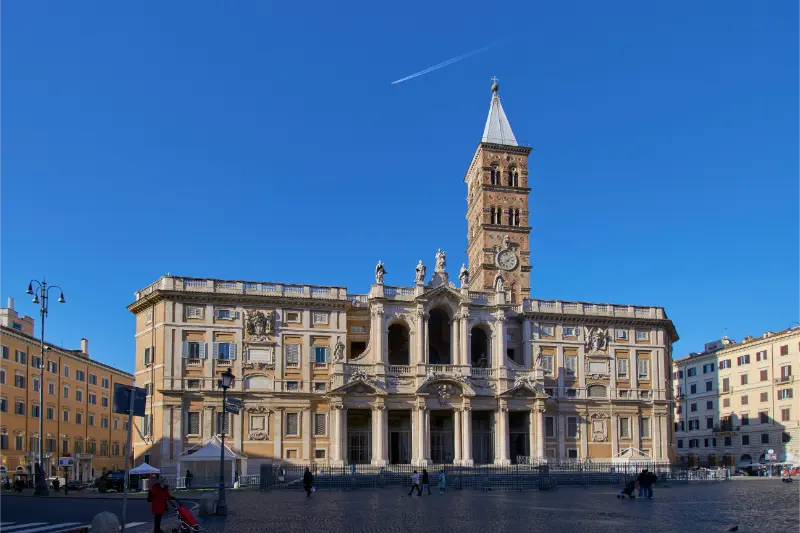
3. Santa Maria Maggiore
One of Rome’s four major papal basilicas, Santa Maria Maggiore combines early Christian mosaics, later chapels and a grand coffered ceiling. The building is particularly valuable because it shows how Rome’s religious architecture evolved across many centuries without losing its original basilican form.
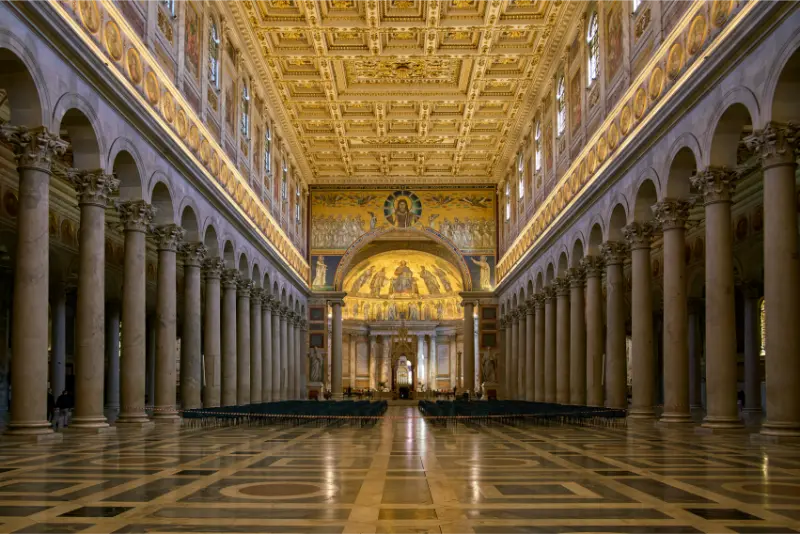
4. San Paolo fuori le Mura
St. Paul Outside the Walls feels more spacious and less compressed by the surrounding city than the central basilicas. Its long colonnaded nave and cloister reward visitors who make the metro journey. It is an excellent place to understand the scale of early Christian basilica architecture.
5. Pantheon / Santa Maria ad Martyres
The Pantheon is famous as an ancient Roman monument, but it is also an active Catholic basilica. This dual identity is part of what preserved the building. The oculus, concrete dome and perfect geometry are the headline features, while Raphael’s tomb and later altars connect ancient architecture to Renaissance and modern Italian history.
Current admission and visitor rules are covered in our Pantheon guide.
6. San Luigi dei Francesi
Near Piazza Navona, this French national church is a must for Caravaggio admirers. The Contarelli Chapel contains three paintings devoted to St. Matthew, including The Calling of Saint Matthew. Seeing them in the chapel for which they were conceived is very different from encountering a painting in a neutral museum gallery.

7. Sant’Agostino
A short walk away, Sant’Agostino contains Caravaggio’s Madonna di Loreto and works associated with Raphael’s circle. The church is easy to combine with Piazza Navona, making it one of the best “high-value” artistic stops in the historic center.
8. Santa Maria del Popolo
At Piazza del Popolo, Santa Maria del Popolo brings together Caravaggio, Raphael, Bernini and Renaissance architecture in one relatively compact church. Restoration work can affect individual chapels, so check access if a specific artwork is the reason for your visit.
9. Santa Maria della Vittoria
Bernini’s Ecstasy of Saint Teresa in the Cornaro Chapel is one of the defining works of Roman baroque sculpture. Architecture, colored marble, hidden light and theatrical staging combine to make the chapel feel like a complete performance rather than a single statue.
10. San Pietro in Vincoli
The main artistic reason to visit is Michelangelo’s Moses, created for the tomb of Pope Julius II. The basilica is close to Monti and the Colosseum, so it is easy to include without a special journey. The church also preserves the chains traditionally associated with St. Peter.
11. Santa Maria in Trastevere
At the heart of Trastevere, this basilica is one of the neighborhood’s most meaningful landmarks. Its medieval mosaics glow beautifully in the apse, while the piazza outside transforms throughout the day from local meeting place to busy evening social scene.
Combine it with our Trastevere guide rather than treating it as an isolated church stop.
12. Santa Cecilia in Trastevere
Santa Cecilia offers a quieter counterpoint to the busiest parts of Trastevere. Stefano Maderno’s sculpture of St. Cecilia is hauntingly restrained, and the church’s courtyard creates a sense of separation from the surrounding neighborhood.
13. Basilica di San Clemente
San Clemente is extraordinary because the visit continues underground. The present basilica stands above earlier Christian and Roman layers, allowing you to descend through the physical history of the city. The upper church alone is beautiful; the lower levels make it unforgettable.
14. Santa Prassede
The mosaics of Santa Prassede, especially in the Chapel of St. Zeno, are among the best early medieval works in Rome. Because the church is near Santa Maria Maggiore, it is easy to miss if you are rushing toward the larger basilica. Give it at least 20 minutes.
15. Santa Sabina
On the Aventine, Santa Sabina is valued for its restrained early Christian character and peaceful setting. Its simplicity can feel refreshing after several heavily decorated baroque churches. Pair it with the Orange Garden and the Aventine Keyhole.
16. Sant’Ignazio di Loyola
Sant’Ignazio is famous for Andrea Pozzo’s illusionistic ceiling, where painted architecture appears to open the roof toward heaven. A marked mirror is often positioned so visitors can photograph the illusion, but stand back and look with your own eyes before joining the phone queue.
17. Chiesa del Gesù
The mother church of the Jesuits is one of the key buildings for understanding the development of baroque church design. Its richly decorated interior and dramatic ceiling demonstrate how architecture, painting and sculpture were combined to produce emotional impact.
18. Santa Maria sopra Minerva
Near the Pantheon, Santa Maria sopra Minerva is one of Rome’s notable Gothic churches, although later alterations changed aspects of its appearance. It contains the tomb of St. Catherine of Siena and works by major artists. Its location makes it an easy addition to a historic-center walk.
Best churches for Caravaggio
- San Luigi dei Francesi: the St. Matthew cycle.
- Sant’Agostino: Madonna di Loreto.
- Santa Maria del Popolo: major Caravaggio works in the Cerasi Chapel, subject to current access/restoration.
Best churches for mosaics
- Santa Maria Maggiore: important early Christian and later mosaics.
- Santa Prassede: intense ninth-century mosaic decoration.
- Santa Maria in Trastevere: beautiful medieval apse mosaics.
- San Clemente: a richly symbolic apse mosaic in the upper church.
Dress code and respectful visiting
Cover shoulders and knees in major basilicas and sacred sites, particularly at the Vatican. Remove hats when appropriate, keep voices low and never walk through an active service simply to reach an artwork. Some chapels use coin-operated lights, so carrying a few coins can still be useful. Photography rules vary; flash is often inappropriate even where photos are allowed.
How to organize a church-focused day
Do not cross the entire city from one church to another. Build clusters: Santa Maria Maggiore + Santa Prassede + Santa Pudenziana; Piazza Navona area + San Luigi dei Francesi + Sant’Agostino + Pantheon; Aventine + Santa Sabina; Trastevere + Santa Maria + Santa Cecilia. This keeps the day walkable and leaves room for coffee and lunch.
Churches with children
Short visits work better than long art lectures. Ask children to find one detail—the biggest dome, a lion, a mosaic animal, a dramatic ray of light—and then move on. San Clemente’s underground levels and the giant scale of St. Peter’s are often more immediately engaging than a sequence of baroque chapels.
Final advice
Rome’s churches are at their best when you stop treating them as free museums. Notice the smell of incense, the shift in acoustics, the local worshippers, the architecture and the artwork together. Enter a few famous basilicas deliberately, but also walk through the next open church door you pass. That balance is one of the city’s great pleasures.
Extra planning notes before you go
Before finalizing any plan around best churches in Rome, check official opening calendars again a few days before the visit. Rome changes constantly: restoration projects, religious events, strikes, heat measures and temporary exhibitions can alter entrances or routes. Save the official page on your phone and take a screenshot of any timed reservation so you are not dependent on mobile data at the entrance.
Build at least 20 to 30 minutes of margin around timed admissions. Central Rome looks compact, but cobblestones, security queues, crowded pavements and hot weather slow people down. A schedule that works perfectly on a map can feel stressful on the ground. It is usually better to arrive early and have a coffee nearby than to spend the final ten minutes running through unfamiliar streets.
For meals, move one or two streets away from the most photographed landmark before choosing a restaurant. Read the menu before sitting, check whether service or cover charges are clearly listed, and avoid places where staff pressure you from the pavement. A simple bakery, pizza al taglio counter or neighborhood trattoria often fits a sightseeing day better than an elaborate lunch beside a major monument.
Finally, keep water and footwear in mind. Rome is a walking city even when you use metro and buses, and many archaeological or historic surfaces are uneven. In summer, refill at public drinking fountains where appropriate and schedule outdoor sections earlier or later in the day. In winter, carry a compact rain layer and remember that daylight disappears much earlier.