Rome Historic Center Walking Tour: Trevi, Pantheon and Piazza Navona
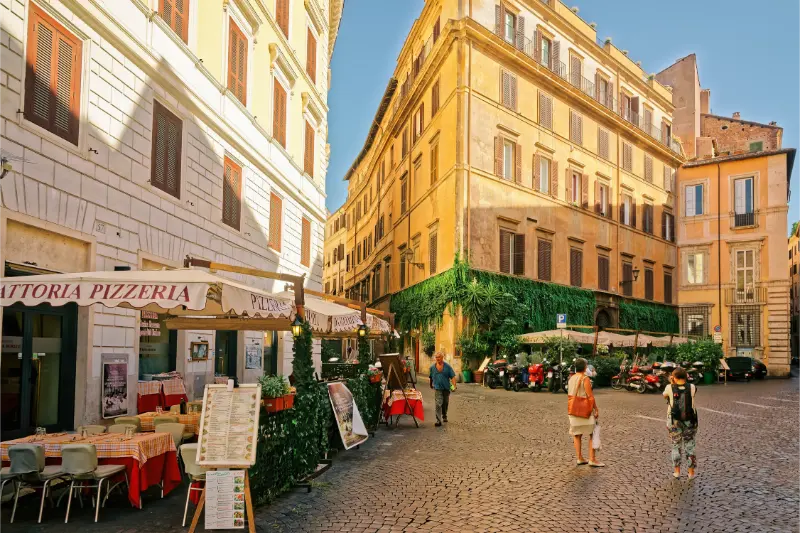
The historic center of Rome is best understood on foot, and one carefully planned walk can connect many of the city’s most famous places without turning the day into a race. This self-guided route links the Spanish Steps, Trevi Fountain, the Pantheon, Piazza Navona and Campo de’ Fiori, with optional detours to Galleria Doria Pamphilj, Largo Argentina and Via Giulia. The goal is not simply to collect landmarks. It is to notice how streets narrow and widen, how ancient structures disappear into later buildings, and how fountains, churches and palaces create a continuous urban experience. Allow at least half a day; a full day is better if you enter major sights.
At a glance
| Start | Piazza di Spagna / Spanish Steps |
| Finish | Campo de’ Fiori or Via Giulia |
| Pure walking time | Roughly 45–60 minutes without stops |
| Realistic duration | 4–7 hours with visits, coffee and lunch |
| Best strategy | Early start, timed tickets only where needed |
Stop 1: Spanish Steps and Piazza di Spagna
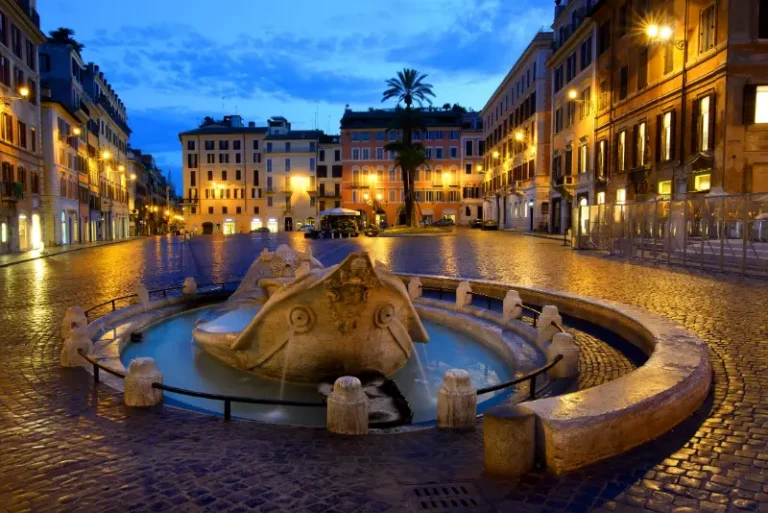
Start early at the Spanish Steps before the square becomes crowded. Look beyond the staircase: the Barcaccia fountain, Trinità dei Monti above and the elegant streets radiating from the piazza all help explain why this became one of Rome’s most recognizable urban spaces.
Do not spend half an hour trying to create an empty photograph. The square is a living transit point. After a short visit, head toward Trevi through the streets behind Via del Tritone. The distance is easy, and the transition from fashion district to dense historic lanes is part of the walk.
Stop 2: Trevi Fountain
The Trevi Fountain is at its best when you approach through a narrow street and the entire façade suddenly fills your view. Current visitor management rules can change, so use the dedicated Trevi guide for the latest access details rather than assuming the experience works exactly as it did in older travel videos.
Watch your belongings in the crowd and step away after seeing the basin rather than blocking the closest viewpoint. If you want coffee, walk several streets away from the fountain before choosing a bar; the immediate perimeter prioritizes convenience over atmosphere.
Stop 3: Via del Corso and optional Doria Pamphilj
From Trevi, move toward Via del Corso. If you have ninety minutes and enjoy Old Master painting, detour into Galleria Doria Pamphilj. Otherwise, use the palace exterior and nearby streets as a transition toward the Pantheon.
This section shows an important lesson about Rome itineraries: not every attraction needs to be entered on the same day. A walking route works because you can choose one or two interiors and let the streets connect them. Trying to add every museum destroys the rhythm.
Stop 4: Pantheon and Piazza della Rotonda
The Pantheon is the route’s most important ancient interior. If you plan to enter, check the current ticket and access system in advance. Inside, the dome and oculus are the essential experience; outside, take time to understand how the ancient building is compressed into the later city.
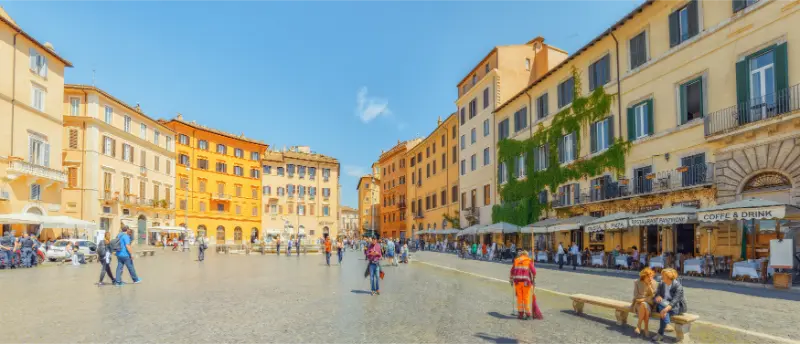
Piazza della Rotonda is also a good place to pause, but restaurants immediately facing the monument charge for the view. If food quality and value matter more than location, continue a few streets before sitting down.
Stop 5: Piazza Navona
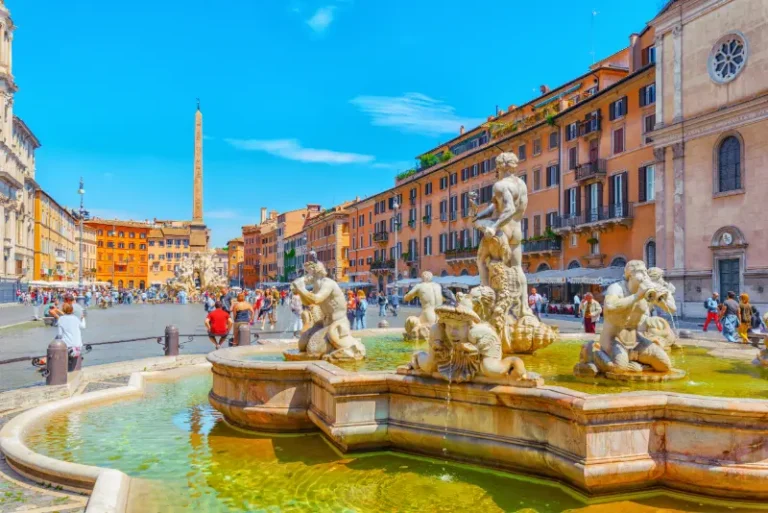
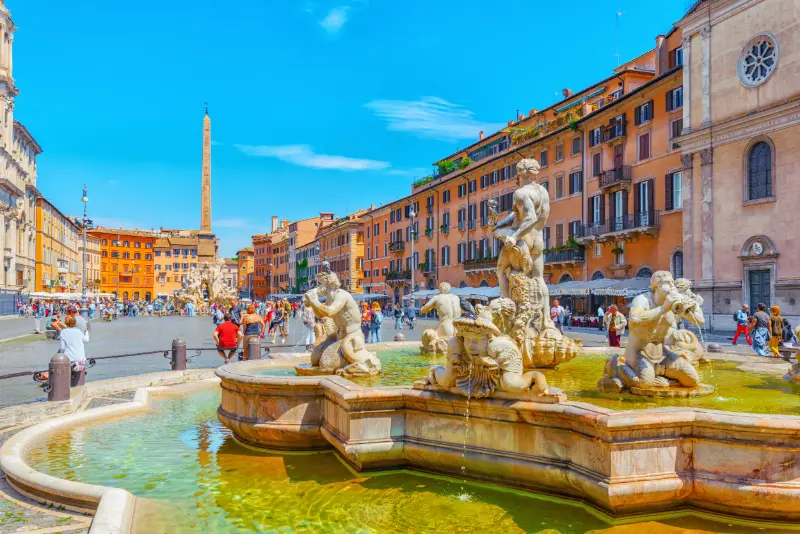
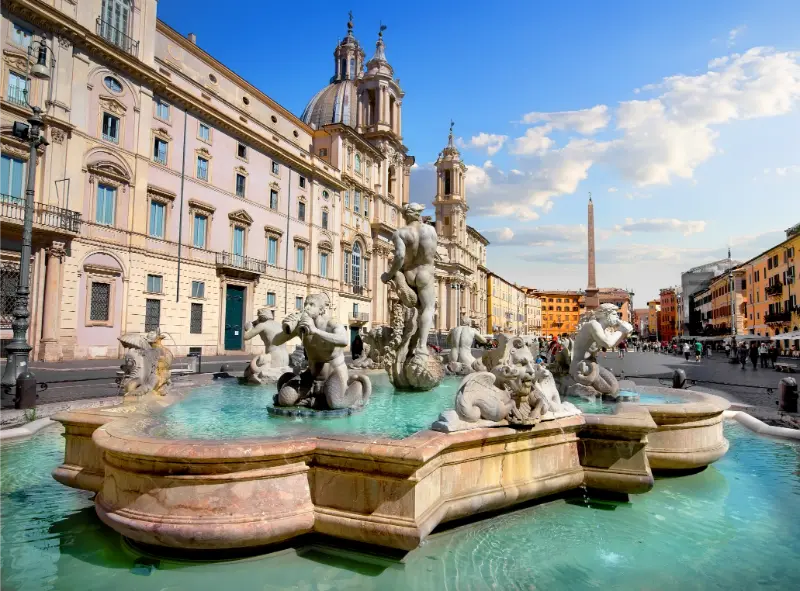
Walk west to Piazza Navona, where the shape of Domitian’s ancient stadium survives in the elongated square. Bernini’s Fountain of the Four Rivers and the façade of Sant’Agnese in Agone create one of Baroque Rome’s most theatrical spaces.
Walk the entire length rather than stopping only at the central fountain. The smaller fountains at each end and the curve of the buildings help reveal the ancient stadium beneath the modern piazza. Early morning and late evening offer the clearest sense of its shape.
Stop 6: Campo de’ Fiori, Largo Argentina and Via Giulia
From Piazza Navona, continue toward Campo de’ Fiori. Depending on the hour, you may find market activity, lunch crowds or evening social life. The square changes character dramatically across the day, which is why no single description captures it fully.
You can finish here, continue to Largo di Torre Argentina for archaeology, or turn toward Via Giulia for a quieter Renaissance street near the Tiber. This flexible ending prevents the itinerary from becoming unnecessarily rigid.
How to fit this into your Rome itinerary
If you have one full day, enter the Pantheon and choose only one additional paid interior—Doria Pamphilj, Largo Argentina or another nearby museum. Add lunch, a gelato stop and a slow coffee. You will still see more than enough.
If you have only three hours, skip major interiors and use the route as an orientation walk. Return on later days for the Pantheon, museums and churches. This is often more satisfying than constantly checking the time while standing in queues.
Common mistakes to avoid
- Trying to enter every museum and church along the route in one day.
- Underestimating how much time crowds and photos add to short walking distances.
- Eating at the first terrace directly beside a landmark without checking prices or menu quality.
- Following the map so closely that you stop noticing side streets, fountains and courtyards.
Frequently asked questions
How long does this Rome historic center walk take?
The walking itself is under an hour, but a realistic visit takes four to seven hours depending on interiors and breaks.
Can I do the route with children?
Yes, but shorten the number of interiors and add regular food, shade and restroom stops.
Where should I start?
Piazza di Spagna works well because Metro A reaches it easily and the route then moves naturally south and west.
Do I need tickets in advance?
Only for the attractions you plan to enter. Check each official or dedicated guide because access rules can change.
Final thoughts
A good historic-center walk should make Rome feel more connected, not more exhausting. The Spanish Steps, Trevi Fountain, Pantheon, Piazza Navona and Campo de’ Fiori are close enough to form one coherent urban story, but the day becomes much better when you leave room for coffee, side streets and one or two interiors. Use the route as a framework and let the city supply the details.
A more realistic way to plan the visit
Rome rewards travelers who leave buffers between fixed entries. Security checks, church services, queues, heat and simple walking fatigue can shift a schedule by thirty minutes or more. Keep one nearby alternative in mind and avoid booking another timed attraction immediately after this stop. The historic center is dense enough that a delayed entrance rarely ruins the day if the surrounding streets are part of your plan.
Decide before arriving what would make the visit successful for you. Art lovers may want to study only a handful of works; families may need a shorter circuit; photographers may care about exterior light; history travelers may spend more time reading the archaeological layers. A personal priority produces a better visit than copying a generic checklist.
Comfort, accessibility and practical pacing
Comfortable shoes matter even for short museum visits because the day around them usually includes cobbles, stairs and standing. Carry water when weather is warm, but expect food and drink restrictions inside cultural sites. Visitors with reduced mobility should verify the current accessible entrance rather than assuming the monumental doorway is step-free.
Morning visits generally give you more energy and more flexibility if access changes. Late afternoon can be atmospheric, but it raises the risk of arriving near last entry. The best time is therefore not universal: it is the time that fits the site’s opening rules and the geography of the rest of your day.
How to make the experience memorable instead of rushed
The most satisfying Rome visits usually leave you with one or two specific details rather than twenty names. Before leaving, identify the thing that surprised you most: a ceiling, a small sculpture, an unexpected view, a fragment of ancient wall or the way a street changes character. That habit turns sightseeing into memory instead of inventory.
After the visit, choose a simple transition—a coffee, a quiet square, lunch or a short walk—before opening another map search. Rome becomes tiring when every stop is treated as an isolated pin. The spaces between attractions are part of the trip, especially in neighborhoods where ordinary streets preserve more atmosphere than the formal monuments.
Who should prioritize this stop
Rome historic center walking tour is most rewarding when it fits the reason you came to Rome. First-time visitors should prioritize it when the subject strongly interests them or when it lies naturally beside attractions already planned in the same area. Repeat visitors have more freedom to slow down and compare details. Families, photographers and serious art or history travelers will each experience the same place differently, so build the stop around your own interest rather than an abstract ranking.
Season changes the experience as well. Summer favors early starts and shade; winter and rainy days make indoor sites especially valuable; spring and autumn offer comfortable walking weather but heavier demand. Check current access, keep the day geographically compact and leave enough space that one queue does not force you to rush everything that follows.