
Best Things to Do in Rome: 25 Essential Sights and Experiences
Rome is a city where the headline attractions really are extraordinary, but the best trip mixes them with quieter churches, panoramic hills, markets, neighborhoods and long walks. You can spend a morning among imperial ruins, eat lunch in a working-class district, step into a Baroque church in the afternoon and finish the day beside a Renaissance fountain.
This list of the best things to do in Rome is organized for first-time visitors but includes enough variety for repeat travelers. Some sights require reservations, while many of the city’s most beautiful experiences are free.
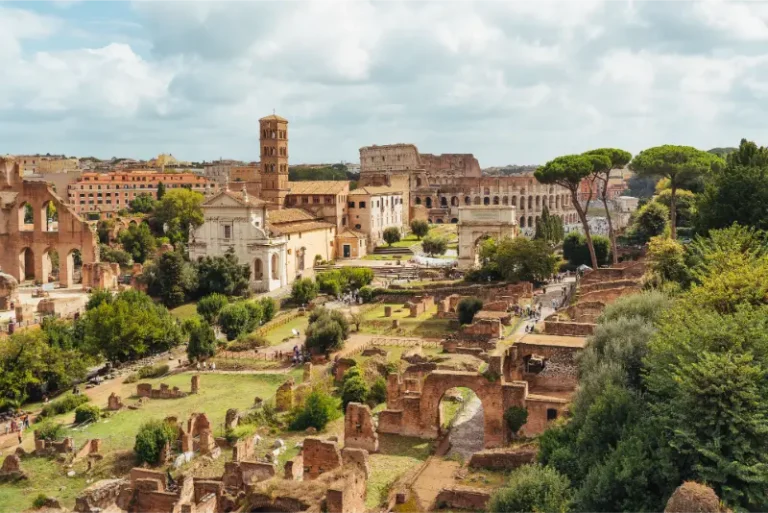
1. Visit the Colosseum
The Colosseum is Rome’s most recognizable ancient monument and one of the sites worth booking before anything else. A standard visit can be combined with the Roman Forum and Palatine Hill, while specialized tickets may include the arena, underground areas or other restricted spaces depending on availability. The official archaeological park currently requires a timed entry for the Colosseum, so do not rely on buying a last-minute ticket in peak season.
Read our complete Colosseum, Roman Forum and Palatine Hill guide before reserving.
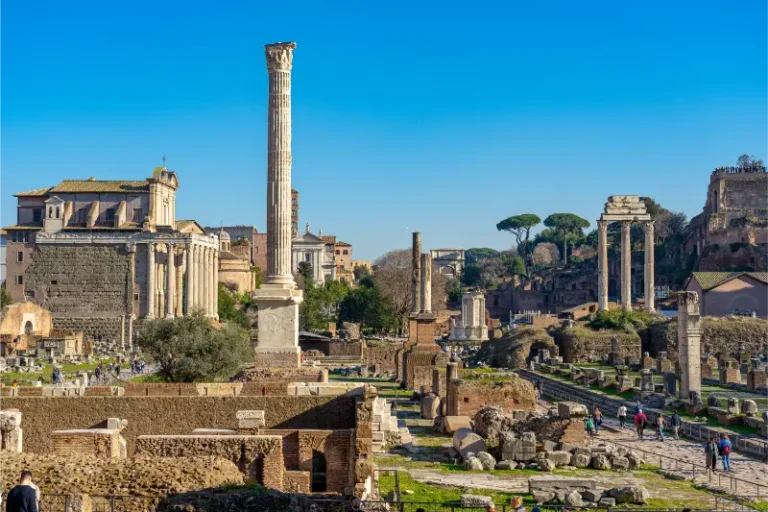
2. Walk through the Roman Forum
The Forum is not a single building but a layered archaeological landscape where temples, arches, basilicas and political spaces accumulated over centuries. It makes far more sense with a map, audio guide or guided tour. Allow enough time to stop rather than treating it as a corridor between the Colosseum and Palatine Hill.
3. Climb Palatine Hill
Palatine Hill combines archaeology with some of the best views over the Forum and Circus Maximus. According to Roman tradition, this is the hill associated with Romulus and the foundation of the city. In imperial times it became a prestigious residential and palace district. It is especially pleasant when you need a quieter contrast to the Colosseum crowds.

4. Stand beneath the Pantheon’s dome
The Pantheon is one of antiquity’s great engineering achievements. Its concrete dome and central oculus still create an extraordinary sense of space. The building is also a church, the Basilica of Santa Maria ad Martyres. As of September 2026, the official full-price admission is €7, following the July 2026 tariff change; reduced and free categories apply. Check current access rules on the official Pantheon page.
5. See the Trevi Fountain early or late
Trevi Fountain is beautiful at almost any hour, but the experience improves dramatically when the square is less crowded. Early morning gives you more physical space to appreciate the architecture, while late evening creates a theatrical atmosphere under artificial light. The famous coin-toss tradition is optional; what matters more is taking time to notice how the fountain is integrated into the façade of Palazzo Poli.
6. Explore Piazza Navona
Piazza Navona follows the long shape of the ancient Stadium of Domitian. Today it is one of Rome’s most elegant public spaces, anchored by Bernini’s Fountain of the Four Rivers and the church of Sant’Agnese in Agone. Visit once during the day and, if you can, return in the evening when the atmosphere changes.
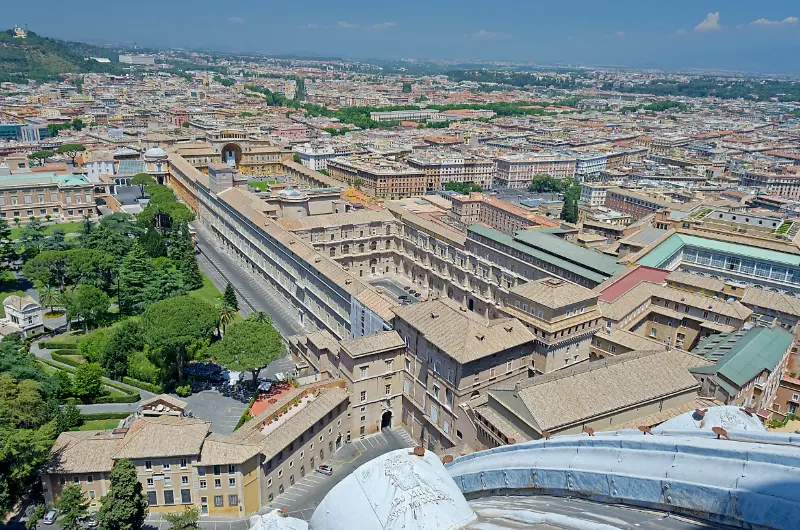
7. Visit the Vatican Museums and Sistine Chapel
The Vatican Museums are not one museum but a vast collection of galleries, courtyards, ancient sculpture, Renaissance rooms and papal collections culminating for many visitors in the Sistine Chapel. The scale is enormous. Reserve a timed ticket and decide before arrival whether you want a highlights route or a slower half-day visit.
The Vatican Museums currently open Monday to Saturday from 8:00 to 20:00 with final entry at 18:00, while the last Sunday of most months has special morning opening and free admission conditions. Always verify the calendar on the official Vatican Museums site.
8. Enter St. Peter’s Basilica
St. Peter’s Basilica is one of the world’s most important churches and a masterpiece of architecture and art. Entry to the basilica itself is generally free, but visitors pass security and queues can be long. Dress appropriately for a place of worship. The dome is a separate paid experience and gives a dramatic view over St. Peter’s Square and Rome.
9. Cross St. Peter’s Square
Bernini’s colonnade is designed to embrace the huge elliptical square, and the space is impressive even if you are not visiting the museums. The square is also an active religious and ceremonial setting, so access can change during audiences, Masses and major events.
10. See the Spanish Steps and Piazza di Spagna
The Spanish Steps connect Piazza di Spagna with the church of Trinità dei Monti. The area is busiest in the afternoon and early evening. Walk up for the view and continue toward Villa Borghese or Pincio rather than treating the steps as an isolated photo stop. Local rules are designed to protect the monument, so follow signage and avoid behavior that can damage the steps.
11. Watch sunset from Pincio Terrace
The Pincio terrace above Piazza del Popolo is one of Rome’s classic free viewpoints. From here, domes and rooftops stretch toward St. Peter’s. Arrive before sunset, then walk down into Piazza del Popolo or continue through Villa Borghese.
12. Spend time in Villa Borghese
Villa Borghese is Rome’s central green escape: gardens, museums, terraces and shaded paths spread above the historic center. It is especially useful for families, summer visitors and anyone who needs a break from archaeological sites. The Galleria Borghese inside the park is a separate, reservation-heavy museum and one of the best places in Rome for Bernini and Caravaggio.
13. Book the Galleria Borghese
The Galleria Borghese is smaller than the Vatican Museums but can be equally memorable. Its limited entry system keeps the visit structured, and the concentration of major works is exceptional. Art lovers should reserve well ahead, especially for weekends and high season.
14. Wander through Trastevere
Trastevere is famous for ivy-covered façades, cobbled lanes and evening restaurants, but it is worth seeing in the morning too. Start around Santa Maria in Trastevere, walk away from the busiest lanes and look for quieter residential streets. In the evening the district becomes one of Rome’s liveliest social areas.
15. Climb the Janiculum Hill
The Janiculum, or Gianicolo, is west of the Tiber and offers one of the widest views over central Rome. The walk can be combined with Trastevere. It is a good choice for repeat visitors who want a scenic break rather than another museum.
16. Discover Monti
Monti sits between Termini and the Colosseum but feels more intimate than either. Small squares, vintage shops, wine bars and neighborhood restaurants make it an easy place to spend an evening. Piazza della Madonna dei Monti is a natural gathering point.
17. Visit San Clemente
The Basilica of San Clemente is one of Rome’s best examples of historical layers stacked vertically. The medieval church stands above earlier structures, including ancient Roman levels. It turns the idea of ‘layers of Rome’ into something you can physically descend through.
18. See Michelangelo’s Moses at San Pietro in Vincoli
The church of San Pietro in Vincoli is best known to art lovers for Michelangelo’s Moses. It is close enough to Monti and the Colosseum to add to an ancient Rome day, but it feels very different from the giant archaeological complex.

19. Walk the Appian Way
The Via Appia Antica offers a completely different image of Rome: ancient paving stones, aqueduct landscapes, tombs and greenery. A bicycle can help cover more distance, but parts are rough and historic paving can be uncomfortable. Check access conditions and choose your route carefully, especially in hot weather.
20. Explore the Baths of Caracalla
The Baths of Caracalla help visitors understand the monumental scale of Roman public life. The surviving walls are enormous, and the site is generally easier to navigate than the Forum. It can be paired with Circus Maximus or the Aventine.
21. Look through the Aventine Keyhole
The famous keyhole at the Priory of the Knights of Malta frames St. Peter’s dome in the distance. The view itself is tiny and queues can form, so treat it as a fun detail rather than a major destination. The surrounding Aventine Hill is the real reward.
22. Visit the Orange Garden
Giardino degli Aranci, officially Parco Savello, is a peaceful terrace on the Aventine with a broad view toward St. Peter’s. It is one of the best free sunset spots and easy to combine with Santa Sabina and the keyhole.
23. Eat your way through Testaccio
Testaccio is one of the best neighborhoods for understanding Roman food culture. The market is useful for casual daytime eating, while the district’s trattorias are associated with classic Roman dishes and offal traditions. It is a good choice when you want an evening away from the monumental center.
24. Explore Campo de’ Fiori and the Jewish Ghetto
Campo de’ Fiori changes personality during the day, from market square to nightlife area. From there, walk toward Largo di Torre Argentina and the Jewish Ghetto, where archaeological remains, synagogues, bakeries and Roman-Jewish culinary traditions create another layer of the city.
25. Take a night walk through the historic center
Rome after dark is an attraction in itself. A simple route from Piazza di Spagna to Trevi Fountain, the Pantheon and Piazza Navona reveals monuments in a completely different atmosphere. Streets remain lively well into the evening, especially in warmer months.
How to choose what to do
Do not try to complete this list as a checklist. For a three-day visit, choose roughly two major ticketed attractions plus a set of walkable outdoor sights each day. For four or five days, add a neighborhood-focused half-day such as Testaccio, the Appian Way or Villa Borghese. The goal is to experience Rome, not simply accumulate entrances.
If this is your first trip, pair this article with our Rome travel guide and 3-day itinerary to build a route that avoids unnecessary backtracking.

4 Comments
Comments are closed.