Santa Maria in Trastevere: Mosaics, History and Visiting Guide
Santa Maria in Trastevere is the church that best explains why Trastevere is more than restaurants and nightlife. Its golden façade mosaics face one of the neighborhood’s liveliest squares, while inside the basilica preserves a quieter world of ancient columns, medieval mosaics and centuries of Christian history. The contrast between busy piazza and solemn interior is part of the experience.
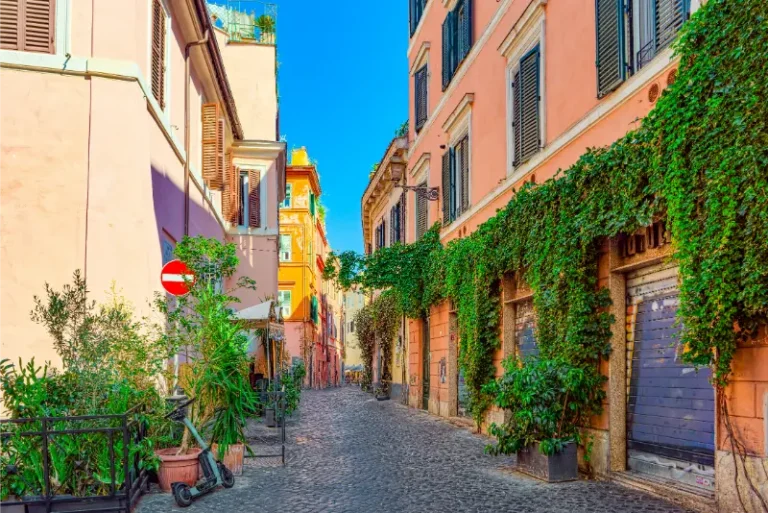
Because it sits at the heart of the neighborhood, the basilica is easy to include in the walking route described in our Trastevere guide. Visit it before dinner or early in the morning, then explore side streets rather than limiting your time to Piazza di Santa Maria in Trastevere.
Why the basilica is important
Tradition associates the site with one of Rome’s earliest Christian places of worship. The present building is largely the result of a twelfth-century rebuilding under Pope Innocent II, although later interventions changed the portico, chapels and decoration. What makes the church special is that it still communicates a medieval architectural identity despite those later layers.
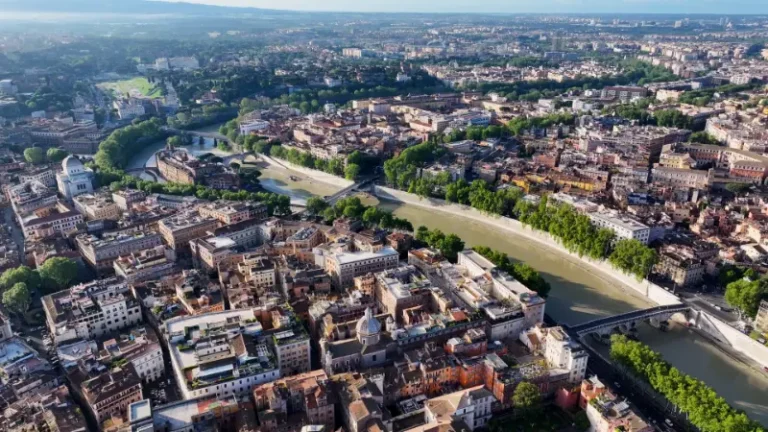
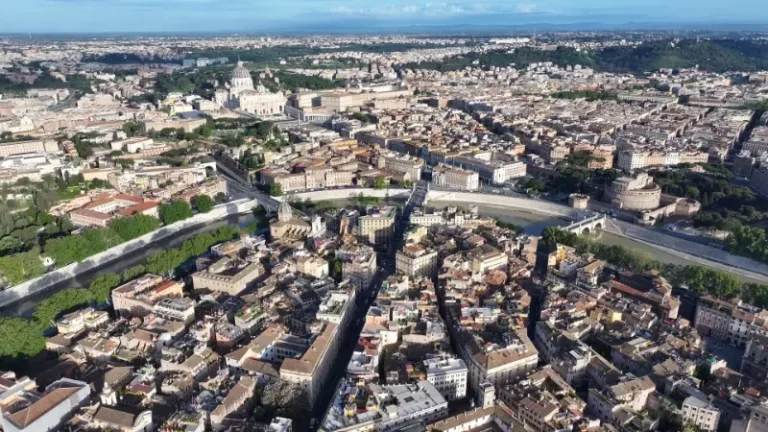
The basilica is also connected with the broader history of Trastevere, a district that developed across the Tiber from the monumental center. The church became a focal point for the local community and remains an active parish today. That living role is important: you are entering a place of worship, not only an art monument.
What to see on the façade
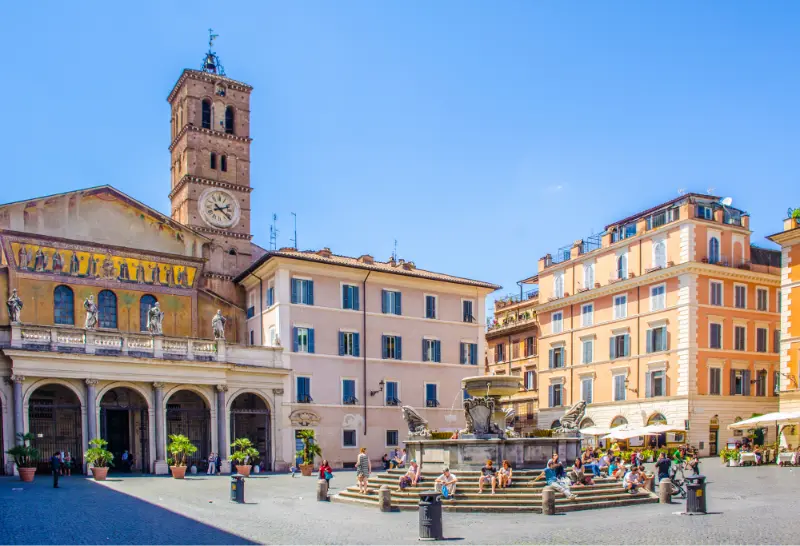
Before entering, look up at the medieval mosaic band on the façade. The image of the Virgin and Child surrounded by female figures is easy to miss if you are focused on the fountain or café tables. The bell tower and portico add later architectural layers, creating the visual mixture typical of Rome, where buildings are rarely the product of a single period.
The nave and ancient columns
Inside, the nave is lined with columns reused from ancient Roman buildings. Spolia such as these appear in many early and medieval churches, but here they are especially noticeable because capitals and shafts are not perfectly uniform. Instead of seeing that irregularity as a flaw, read it as physical evidence of a city constantly reusing its own material past.
The apse mosaics
The apse is the artistic focus. The large twelfth-century mosaic shows Christ and the Virgin seated together, while lower scenes by Pietro Cavallini depict episodes from the life of Mary. Cavallini’s work is important because it belongs to a moment when Roman painting and mosaic were moving toward greater volume, emotion and spatial realism before the fourteenth century.
Give the mosaics time. From the nave they appear as a single field of gold, but details become clearer as your eyes adjust. If a service is taking place, remain farther back and return later rather than walking close to the sanctuary.
The square outside
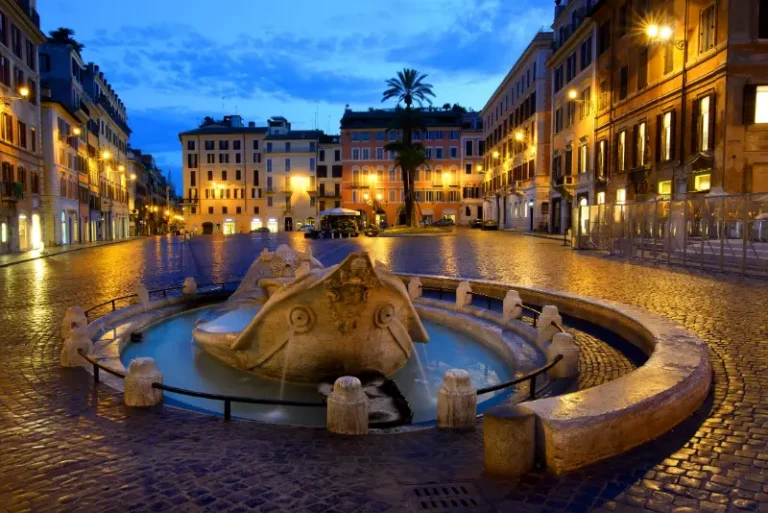
Piazza di Santa Maria in Trastevere is one of Rome’s most successful public spaces. Its fountain, church façade and surrounding buildings form a natural gathering place throughout the day. Morning feels local and calm; late afternoon brings more visitors; evening is lively. If you want architecture photographs, early morning is considerably easier than dinner time.
Opening hours and services
Opening hours can change around liturgies, weddings and religious events. The city tourism page for Santa Maria in Trastevere is useful for background, but for the exact day of your visit check parish notices posted at the church. Entry to the basilica itself is generally free.
Dress appropriately for a church: shoulders and knees should be reasonably covered, voices kept low and hats removed where expected. Photography may be allowed without flash in many areas, but always follow current signs. During Mass, sightseeing should stop.
How much time to allow
| Visit style | Suggested time |
|---|---|
| Quick look | 20 minutes |
| Art-focused visit | 40–60 minutes |
| Church + Piazza | About 1 hour |
| Trastevere walk including basilica | 2–3 hours |
The church is compact, so you do not need a museum-length visit. What matters is timing. Twenty quiet minutes in the morning can be more rewarding than an hour at peak evening time when the square is crowded and a service limits access to the front of the nave.
Best time to visit
Early morning is best for calm and photography. Late afternoon works well if you want to transition directly into dinner in Trastevere. Sunday can be meaningful if you are attending worship, but it is not ideal for unrestricted sightseeing. In summer, the cool interior also provides a welcome break from the heat.
How to get there
Trastevere has no metro station in its historic core. Most visitors arrive by tram, bus or on foot across the river. From Campo de’ Fiori, the walk via Ponte Sisto is scenic and straightforward. From the Vatican area, walking is possible but longer; from Termini, public transport is usually more practical.
What to see nearby
- Santa Cecilia in Trastevere
- Ponte Sisto and the Tiber
- Janiculum Hill for views
- Villa Farnesina
- Orto Botanico di Roma
- Piazza Trilussa and the lanes toward Via della Lungaretta
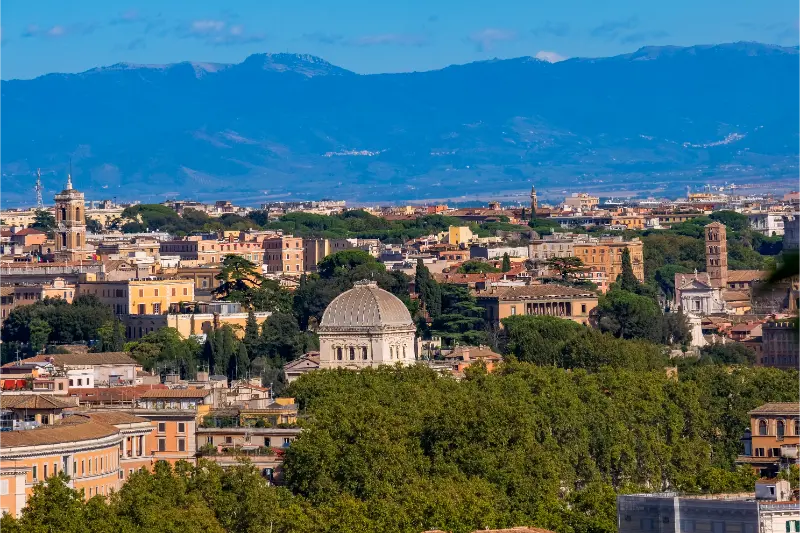
If you want a panoramic finish, continue toward the Janiculum using our Janiculum Hill guide. The climb adds effort but changes the scale of the day from intimate medieval streets to a broad view over Rome.
Eating nearby without choosing at random
The streets immediately around the square contain many tourist-oriented restaurants. That does not automatically mean they are poor, but location alone is not a quality guarantee. Walk a few blocks, compare recent menus and decide whether you want classic Roman dishes, pizza or a lighter aperitivo. Our {link(“rome-food”,”Rome food guide”)} explains dishes worth recognizing before you order.
Common mistakes
- Visiting Trastevere only at night and finding the basilica closed
- Photographing worshippers at close range
- Missing the façade mosaics
- Assuming the church is purely Baroque because of later additions
- Eating at the first restaurant facing the square without checking the menu
- Skipping nearby Santa Cecilia and the Janiculum
Why it belongs on a first Rome trip
Santa Maria in Trastevere gives you three experiences in one compact stop: a major historic church, important medieval art and one of Rome’s most characteristic neighborhood squares. It also slows down an itinerary dominated by ticketed monuments. You can enter, look carefully, then step back into ordinary city life without queues, timed slots or a long security process.
FAQ
Is Santa Maria in Trastevere free?
The basilica itself is generally free to enter. Donations are welcome, and special areas or events may have different arrangements.
Is it worth visiting if I am not religious?
Yes. The architecture, reused ancient columns and medieval mosaics are important parts of Rome’s art history. Visit respectfully because the building remains an active church.
Can I combine it with the Vatican?
Yes, but do not overload the day. A good rhythm is Vatican sights earlier, then a relaxed walk toward Trastevere for the basilica and dinner.

How to make the visit more rewarding
Do not try to absorb every date or label. Choose three anchors before you enter: the building itself, one artistic or historical feature, and the relationship with the surrounding neighborhood. This keeps the experience coherent and gives you something to remember beyond photographs. Rome can overwhelm visitors with layers of information; a selective approach usually produces better understanding than reading every panel while worrying about the next reservation.
Planning around crowds
Crowds in Rome are uneven rather than constant. Large tour groups often arrive in waves, while smaller sites may become almost empty between them. If a room or viewpoint is packed, move to another section and return later when possible. Carrying a flexible sequence is more useful than chasing a theoretical “perfect” minute. In warm months, also consider how sun exposure affects outdoor sections and save covered areas for the hottest part of the visit.
A note on changing information
Opening hours, ticket rules, restoration closures and access routes can change with little notice, especially at active churches, archaeological sites and state monuments. Treat the official website as the final source for operational details and check it shortly before leaving your accommodation. This is more reliable than saving an old screenshot months before the trip. If a small area is closed, do not assume the whole visit has lost its value; Rome’s major sites usually contain far more than one headline feature.
How to fit this stop into a Rome day
The easiest way to protect the quality of a visit is to group sights geographically. Put one major timed attraction at the center of the day, then use nearby churches, viewpoints, parks or streets as flexible additions. This avoids spending the best hours crossing the city and gives you room to respond to queues, weather or temporary closures. Leave at least thirty minutes between the end of this visit and any reservation in another district; central Rome looks compact on a map, but security exits, pedestrian diversions and crowded streets can consume that buffer quickly.
What to notice beyond the headline feature
Many visitors arrive knowing the single image that made a place famous and leave as soon as they have seen it. A better method is to look for three quieter details: how people move through the architecture, which materials change from one period to another, and what you can see of the surrounding city from the site. Those observations turn a famous attraction into part of Rome rather than an isolated object. They also make the visit more memorable because you leave with a spatial story, not only the same photograph that appears on thousands of travel pages.