
St Peter’s Dome Rome: Tickets, Steps, Elevator and Best Views
Climbing St Peter’s Dome is one of Rome’s most memorable viewpoints because the experience is not only the panorama. You first see the basilica’s immense mosaics from the inner ring, then move through curved passages inside the structure of the dome before emerging above Vatican City and central Rome. The final section is physically demanding and can feel narrow or claustrophobic, so it is worth understanding the route before buying a ticket.
Quick facts
| 2026 summer hours | 7:00–18:00 (29 Mar–25 Oct) |
| Winter period | Official site publishes seasonal hours |
| Elevator option | Lift to terrace, then about 320 steps to top |
| Stairs option | More climbing before the same upper section |
| Basilica entry | Included in current official dome products; check booked time instructions |
Dome opening hours in 2026
The official St Peter’s opening-hours page lists the dome from 7:00 to 18:00 during the 2026 summer period, 29 March to 25 October, with shorter winter hours. Check the official schedule before visiting because seasonal dates and special events matter.
Early morning is attractive for cooler temperatures and lighter crowds. The dome is exposed to sun and the upper staircases can become uncomfortable on very hot days, so summer visitors should avoid treating midday as the default.
Elevator versus stairs
The official booking system offers dome products with an elevator or stairs. The elevator takes you to terrace level, but it does not take you to the summit. From the terrace, the upper climb still involves around 320 steps. The stair-only choice adds more climbing before you reach that shared section.
Choose the elevator to reduce exertion, not to eliminate it. If you cannot comfortably manage the final staircase, the terrace and basilica may be the better experience.
What the climb actually feels like
The upper route becomes narrow and curves with the shape of the dome. There are sections where the wall leans inward, and the stair pattern changes. Travelers who are very uncomfortable in confined spaces should consider whether the view is worth the experience.
Wear stable shoes and keep both hands available rather than carrying loose bags or drinks. Move at a steady pace and allow faster visitors to pass where staff instructions permit.
The inner ring and Michelangelo’s dome
Before the summit, the route offers a close view of the mosaics that look like paintings from the basilica floor. This is one of the best reasons to climb even before the outdoor panorama. The scale becomes easier to understand when you are level with architectural details that seem small from below.
If you want context for the church beneath you, read the St Peter’s Basilica guide before the climb rather than treating the dome as a standalone observation deck.
The view from the top
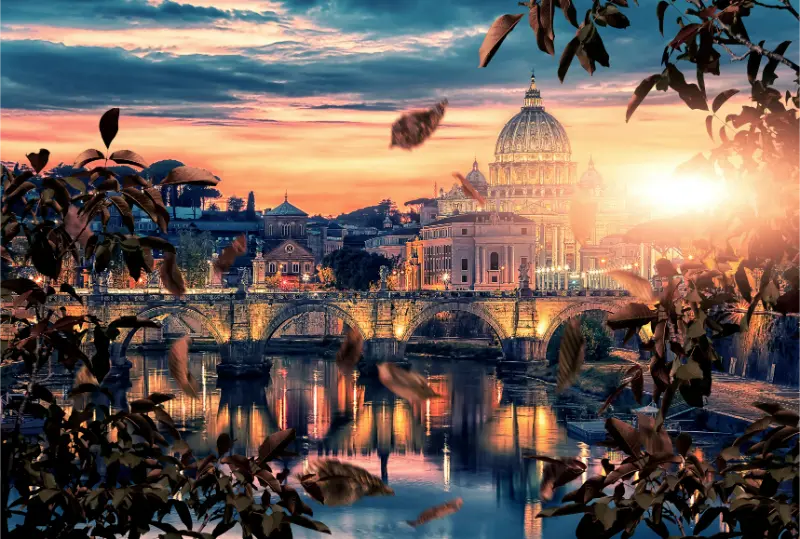
From the summit you can look down the axis of St Peter’s Square, across Vatican City and over Rome’s domes and neighborhoods. The view differs from the Janiculum or Vittoriano because you are looking from the symbolic center of the Vatican complex.
For other panoramas, compare our best views in Rome guide and Janiculum Hill guide. The dome is the most physically demanding of these options.
Tickets and current official booking
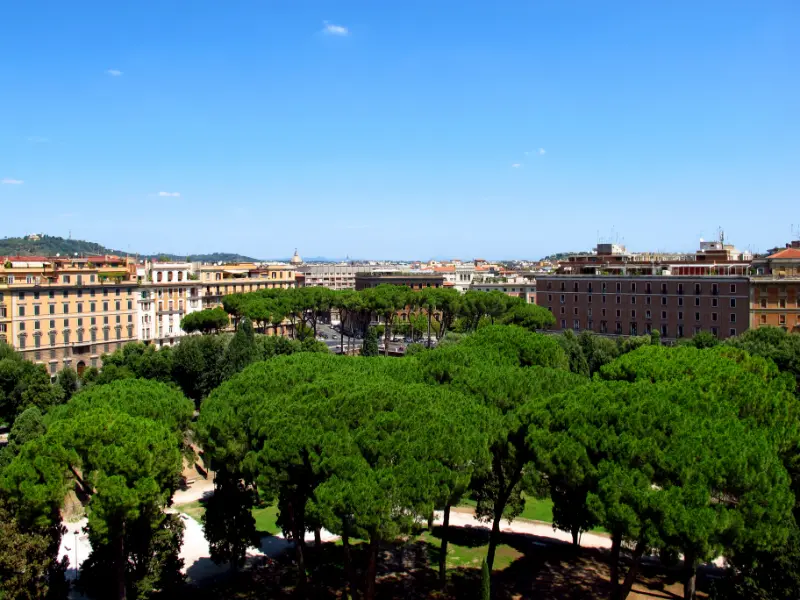
The official 2026 booking portal lists paid dome experiences and currently shows different prices for elevator and stairs products, often bundled with basilica access/audio content. Because products and prices can change, use the official St Peter’s booking portal for the exact date rather than relying on an old screenshot.
Ordinary entry to the basilica remains free; the fee here is for the dome experience and any included booking services. Read the product description carefully so you know the assigned time for the basilica relative to the dome.
Who should skip the summit?
Travelers with significant mobility limitations, heart or respiratory conditions, severe claustrophobia, vertigo or difficulty with stairs should evaluate the climb carefully. The upper staircase cannot be replaced by an elevator. When in doubt, seek appropriate medical advice before a strenuous climb rather than relying on a travel article.
Families should judge each child individually. Our Rome with kids guide emphasizes realistic pacing because a tired child on a narrow staircase is difficult for everyone.
Best way to combine the dome and basilica
If your energy is good in the morning, climb the dome first and visit the basilica afterward, following the instructions attached to your specific ticket. This avoids doing the most physical activity after a long period on your feet.
Do not schedule the Vatican Museums immediately afterward without a buffer. The museum entrance is separate, and Vatican days involve more walking and security than the map suggests.
Frequently asked questions
Does the elevator go to the top of St Peter’s Dome?
No. It reaches the terrace level; the final climb to the summit still involves roughly 320 steps.
What are the 2026 summer hours?
The official site lists 7:00–18:00 from 29 March through 25 October 2026.
Is the dome free?
No. The dome is a paid experience even though ordinary entry to St Peter’s Basilica is free.
Is the climb claustrophobic?
The upper route includes narrow, curved passages. Visitors who strongly dislike confined spaces should consider stopping at the terrace or skipping the climb.
How long should I allow?
Allow enough time for ticket procedures, security, the climb, the view and the basilica. A rushed dome visit is uncomfortable, especially in heat or crowds.
Plan the rest of your Rome trip
Continue planning with St Peter’s Basilica, Vatican Museums and best views in Rome. These guides work best together because Rome is easier to enjoy when transport, timing and sightseeing are planned as one itinerary rather than as separate decisions.

A simple planning strategy
The easiest way to use this information is to decide first what cannot move: a flight, a timed museum reservation, a train departure or a booked tour. Build the rest of the day around those fixed points. Rome rewards flexible planning because queues, traffic, heat, security checks and walking times can all change the rhythm of a day. Leaving a buffer is not wasted time; it is what keeps one delay from turning into a stressful chain of missed plans.
For most visitors, a good rule is to pair one demanding activity with one flexible activity. A museum reservation can be followed by a neighborhood walk; an airport transfer can be followed by an easy dinner near the hotel; a long Vatican morning can be followed by a slower afternoon across the river. This approach also gives you room to stop for coffee, water or an unexpected church without feeling that the itinerary is failing.
What to keep on your phone
Before leaving your accommodation, save the address of your hotel, a screenshot of any ticket or QR code, the route back, and the official page for the service you are using. Keep a payment card and some cash separate from your phone. If your battery is low, switch on power-saving mode before you need navigation. A small power bank is especially useful on days that involve airports, long museum visits or repeated use of digital tickets.
It is also worth saving the names of important places in Italian. Showing “Roma Termini”, “Aeroporto di Fiumicino”, “Basilica di San Pietro” or the exact metro station to staff can be faster than explaining the destination. Rome is a major international city, but a few precise names reduce misunderstandings when stations are crowded or when service changes require an alternative route.
How to avoid losing time
Do not schedule every transition at the shortest theoretical travel time. Walking through a large station, finding the correct platform, passing security or moving through a crowded square can add minutes that route planners do not show. At airports and the Vatican in particular, the distance between “arrival at the complex” and “arrival at the exact entrance” matters. Give yourself a realistic margin and use signs rather than following the crowd automatically.
If something changes, check the official operator first rather than relying on an old blog post or a screenshot from social media. Transport works, strikes, ceremonies and special events can alter normal patterns. The practical details in this guide are a planning baseline; the official service page should be the final check for the day you travel.
Choosing by neighborhood, not by landmark
Rome is large enough that the best transport choice often depends on the neighborhood where you are sleeping rather than the attraction you plan to visit first. A route that looks slightly slower on paper can be easier if it ends close to your hotel, while a nominally fast train to a major station can still require a second metro ride and a long walk with luggage. Compare the whole journey from terminal or platform to the accommodation door.
The same principle applies inside the city. Plan around the station or stop that minimizes awkward transfers, stairs and backtracking. This is particularly useful for families, travelers with large suitcases and anyone arriving after a long flight. Convenience has a real value on arrival day because fatigue makes small navigation problems feel much larger.
A final check before you leave
On the evening before a flight, train journey or major timed visit, check the official operator again and save the latest departure information. Charge your phone, place tickets and identification where you can reach them easily, and decide on a backup option if the primary route is disrupted. These small preparations take only a few minutes and are much more useful than trying to solve everything while standing in a crowded station.
If you are traveling with other people, make sure everyone knows the destination and meeting point in case the group becomes separated. One person should not be the only holder of every ticket, address and reservation detail. Sharing the essential information makes the day more resilient without adding complexity.