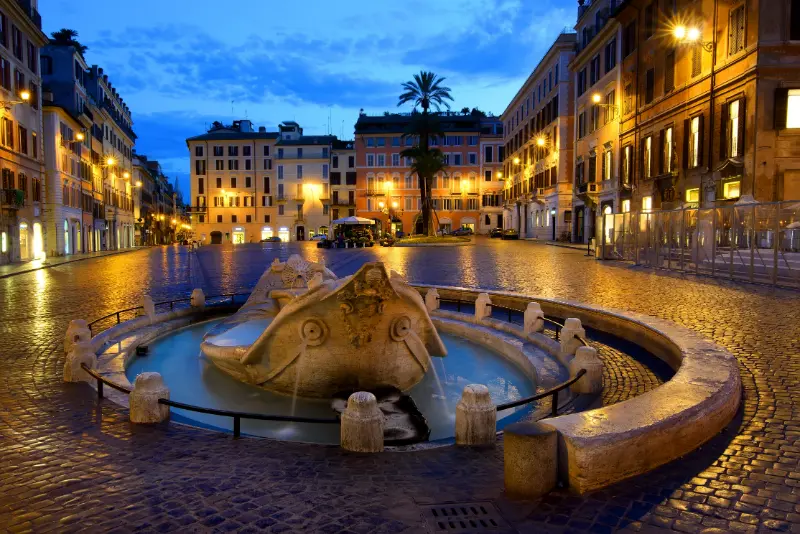
Via Margutta Rome: Artists, Galleries and a Beautiful Walk Near Piazza di Spagna
Via Margutta is one of the rare streets in central Rome that feels intimate even though it sits between two of the city’s busiest visitor zones. Running below the Pincian Hill, a few minutes from Piazza del Popolo and the Spanish Steps, it is lined with ivy-covered façades, art galleries, workshops and small courtyards rather than monumental traffic. The appeal is not a single must-see attraction: it is the texture of the street itself and the way art, architecture and everyday Rome overlap.
For first-time visitors, Via Margutta works best as a deliberate detour rather than a destination that consumes half a day. Walk it slowly, look through open gallery doors, notice the fountains and plaques, and then connect it with Piazza del Popolo or the Spanish Steps. That combination turns a famous sightseeing corridor into a more varied walk.
Via Margutta at a glance
| Area | Campo Marzio, between Piazza del Popolo and Piazza di Spagna |
| Best for | art lovers, couples, photographers and quiet central walks |
| Suggested time | 45–90 minutes, longer with galleries or nearby museums |
| Cost | Free to walk; galleries and exhibitions vary |
| Best moment | Morning for calm streets or late afternoon for soft light |
Why it deserves a separate stop
Rome’s historic center can feel like a sequence of monumental squares separated by busy commercial streets. Via Margutta offers a different scale. The street is narrow, green in places and associated for centuries with artists, craftsmen, restorers and studios. You do not need specialist art knowledge to enjoy it; the visual pleasure comes from doorways, plants, old façades and the contrast with nearby Via del Babuino.
It is also a useful route for travelers who want a quieter central walk without leaving the core. Because both ends connect quickly to major sights, you can add Via Margutta without complicated transport or backtracking.
History and context
Via Margutta began as a secondary lane behind the grander buildings facing Via del Babuino. Stables, workshops and service spaces occupied the area before artists and artisans increasingly established studios here. Over time, that practical backstreet identity evolved into the artistic reputation that defines the street today.
The street became internationally associated with painters, sculptors and cinema. Its fame was strengthened by twentieth-century artists and by films that used this part of Rome as a setting. The long-running “Cento Pittori Via Margutta” tradition reinforces the connection, although event dates and formats should always be checked for the year of your visit.
What to see and notice
The street itself
Start by resisting the temptation to rush from one named point to another. Via Margutta is short enough to walk several times, and details appear differently depending on direction: iron balconies, climbing plants, studio entrances, old signs and glimpses into courtyards. Early morning gives the cleanest sense of the architecture; later in the day the galleries and workshops add activity.
Fontana degli Artisti
One of the street’s most characteristic details is the Fontana degli Artisti, designed in the twentieth century by Pietro Lombardi. Its masks, easels and artists’ tools turn the local identity into sculpture. It is small, so many people pass it without stopping; take a minute to read the symbols rather than treating it only as a photo prop.
Galleries and workshops
Commercial spaces change over time, so a list of specific shops ages quickly. A better approach is to browse what is actually open when you arrive. Some galleries focus on contemporary work, others on design, antiques or decorative art. Enter only where visitors are clearly welcome and remember that these are working businesses rather than museum rooms.
Cinema and artistic memory
Via Margutta’s reputation is partly cultural mythology and partly real history. The street appears in the imagination of “Roman Holiday” fans and is linked with prominent creative residents. Instead of chasing one doorway, use that history as context for why this modest street became shorthand for a bohemian, artistic Rome.
The connection with the Pincio
The steep urban edge above the street explains much of its atmosphere. From nearby lanes you can climb toward the Villa Borghese and Pincio area, turning a short art walk into a longer route with gardens and views. This vertical connection is one of the most satisfying ways to understand the Tridente beyond its shopping streets.
A practical walking route
A simple route starts at Piazza del Popolo and ends near Piazza di Spagna. It keeps navigation easy and lets the street function as part of a wider central walk.

- Begin in Piazza del Popolo and briefly study the geometry of the square before entering the quieter street network.
- Walk south into Via Margutta, pausing at the Fontana degli Artisti and any galleries that are clearly open to visitors.
- Continue slowly toward the southern end rather than jumping back to Via del Babuino after the first block.
- Finish near Piazza di Spagna and decide whether to continue to the Spanish Steps or climb toward the Pincio and Villa Borghese.
- If you want a longer art theme, add the Keats-Shelley House or another small museum instead of crossing the city to a distant attraction.
The whole route is compact. The main planning mistake is adding too many extra stops simply because everything looks close on the map. Central Rome rewards time spent walking and looking, not only time spent entering attractions.
When to go
Morning is best if your priority is architecture and photography. The street feels quieter before the main shopping corridor fills, and you can appreciate façades without constantly moving around groups.
Late afternoon is more animated and can be beautiful when the light softens against the walls. If you want to browse galleries, avoid arriving too early or during the long midday pause that some independent businesses still keep.
How to combine it with nearby Rome
At the northern end, Piazza del Popolo gives you churches, fountains, the obelisk and an easy climb to the Pincio. At the southern end, Piazza di Spagna and the Spanish Steps lead into the luxury-shopping streets of the Tridente.

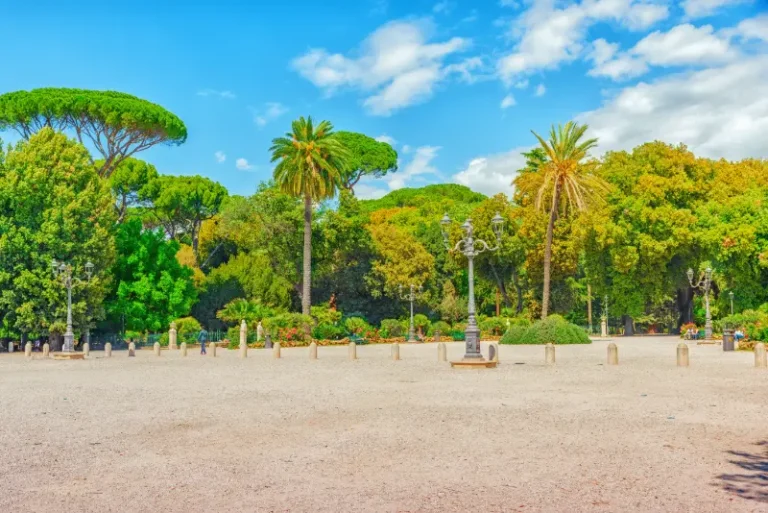
If you want green space after the historic center, continue into Villa Borghese. The change from narrow art street to broad park is especially pleasant after lunch or before sunset.
Practical tips that make the visit better
Wear shoes suitable for cobbles and uneven paving, especially if you plan to climb toward the Pincio afterward. The street itself is not demanding, but central-Rome walking days accumulate distance quickly.
Do not build the visit around a single gallery unless you have checked its current opening hours. Independent spaces change schedules, install exhibitions and close between shows.
Photography is easiest early in the day. Be discreet around residences, workshops and gallery interiors; a picturesque doorway can still be someone’s private entrance.
For accommodation, this is a premium central area. Staying nearby is excellent for walking but usually more expensive than outer neighborhoods, so compare location against budget rather than assuming “central” is automatically best.
Common mistakes to avoid
- Expecting a large attraction with a ticket desk and fixed route.
- Treating every doorway as public access.
- Visiting only at midday and concluding that the street has no artistic life.
- Walking it so quickly that you miss small architectural details.
- Planning a cross-city attraction immediately afterward instead of using the natural Piazza del Popolo–Piazza di Spagna cluster.
A simple itinerary around this stop
For a relaxed two-hour block, start in Piazza del Popolo, walk Via Margutta slowly and finish at Piazza di Spagna. Add coffee away from the most crowded terrace fronts, then decide whether your energy is better spent shopping or climbing into the park.
For a half-day art-and-walking plan, continue from the Spanish Steps toward the Keats-Shelley House and the surrounding streets, or reverse direction and finish at sunset on the Pincio. This keeps the day coherent and minimizes transport.
How Via Margutta fits a first-time Rome itinerary
On a first trip, place Via Margutta between larger sights rather than giving it a separate morning. A natural sequence is Piazza del Popolo, Via Margutta, Piazza di Spagna and then the Pincio or Villa Borghese. This keeps walking efficient and gives the day alternating scales: monumental square, intimate street, famous staircase and green space.
If your schedule already includes the Borghese Gallery, use Via Margutta before or after the museum instead of returning to the historic center by the same route. The detour adds little distance but makes the transfer feel like sightseeing rather than transit.
Where to stay nearby
The area around Piazza di Spagna and the Tridente is among Rome’s most convenient but expensive accommodation zones. It is excellent for travelers who prioritize walking, evening atmosphere and quick access to major sights. If budget matters more, stay near a metro line elsewhere and visit Via Margutta as part of a central day.
Use the Booking comparison button above to check actual dates because price differences between weekdays, weekends and major events can be significant. Do not pay a premium only for the Via Margutta name if the property is several blocks away and your main interests are elsewhere.
Official information and current access
Turismo Roma describes Via Margutta as an artists’ street between Piazza del Popolo and Piazza di Spagna and provides historical context and location information on the official Turismo Roma page for Via Margutta.
Opening conditions, security arrangements, religious services, restoration work and special events can change with little notice. Check the official source shortly before your visit rather than relying on an old screenshot or a timetable copied by a third-party site.
FAQ
Is Via Margutta free to visit?
Yes. It is a public street, so walking it costs nothing. Individual galleries, events or temporary exhibitions may have their own conditions.
How long do you need?
Around 45 minutes is enough for a simple walk, but 60–90 minutes is better if you browse galleries or take photographs.
Is Via Margutta worth visiting if I am not interested in art?
Yes, particularly if you enjoy quiet architecture, greenery and atmospheric streets. The artistic history adds context but is not required to appreciate the walk.
What is the best direction to walk?
Starting at Piazza del Popolo and finishing near Piazza di Spagna creates an easy southbound route, but the reverse works equally well.
Can I combine Via Margutta with Villa Borghese?
Very easily. The Pincio and Villa Borghese sit above the area and make a natural continuation, especially in the late afternoon.
Is it worth adding to your Rome itinerary?
Via Margutta is not one of Rome’s grand monuments, and that is precisely why it deserves space in a well-designed itinerary. It offers a short change of rhythm between blockbuster sights and shows how much of Rome’s appeal lives in ordinary streets shaped by long creative traditions.
Add it when you are already in the Tridente. Do not cross the city only for a photograph; use it as the connective tissue between Piazza del Popolo, the Spanish Steps and the Pincio.