Via dei Coronari Rome: Renaissance Street, Antiques and Walk to Castel Sant’Angelo
Via dei Coronari is one of the most logical and rewarding walking streets between Piazza Navona and the Tiber. Today it is known for elegant façades, antiques and a calmer rhythm than the nearby tourist arteries, but its identity comes from pilgrimage. For centuries, travelers heading toward St Peter’s moved along this axis and bought rosaries and devotional objects from the “coronari” who gave the street its name.
The best way to experience it is not to treat it as a shopping checklist. Walk from the Piazza Navona side toward Ponte Sant’Angelo, read the façades and side lanes, and use the street to connect Renaissance Rome with the river and Castel Sant’Angelo.
Via dei Coronari at a glance
| Area | Ponte district, between Piazza Navona and the Tiber |
| Best for | historic streets, Renaissance architecture, slow walks and antiques |
| Suggested time | 45–75 minutes; 2 hours with nearby churches and squares |
| Cost | Free to walk |
| Best moment | Morning for architecture; early evening for atmosphere |
Why it deserves a separate stop
Rome has many beautiful lanes, but Via dei Coronari is unusually easy to understand as an urban route. Its long, relatively straight alignment cuts through the medieval fabric and still reveals the movement of pilgrims toward the Vatican. That history gives the street a stronger narrative than a random collection of picturesque alleys.
It also works well for travelers who want a high-quality walk without another ticketed attraction. You can pair it with churches, small squares, cafés and the river, adjusting the route to your energy and the weather.
History and context
The street formed part of an important approach toward Ponte Sant’Angelo and St Peter’s. The concentration of sellers of rosaries and sacred objects followed the pilgrim traffic, especially around jubilee periods. The name “Coronari” preserves that commercial memory.
Renaissance urban interventions made the route straighter and more legible than many surrounding lanes. Noble houses, workshops and religious images accumulated along it. In later centuries the street became strongly associated with antique dealers; the commercial mix has evolved, but the historical identity remains visible in façades, plaques and courtyards.
What to see and notice
Casa di Fiammetta
Near the route is the house traditionally associated with Fiammetta Michaelis, a celebrated courtesan of Renaissance Rome. The story is part documented urban history and part the mythology that has grown around the neighborhood. Use it as a reminder that the area around the papal route was also a dense world of merchants, clerics, nobles, travelers and entertainers.
Immagine di Ponte
A Renaissance sacred aedicule associated with Antonio da Sangallo the Younger is one of the details that explains how devotional imagery shaped streets used by pilgrims. It is easy to pass while looking at shop windows, so slow down and look upward as well as at street level.
Renaissance façades and doorways
Many of the best elements are not “attractions” with signs. Stone portals, windows, inscriptions and internal courtyards reveal the wealth of the district. Keep to public space and admire courtyards only when gates are open and access is clearly allowed.
Antique tradition
Via dei Coronari became famous for antique shops and art dealers. The exact businesses change, and the street is no longer a frozen museum of antiquarian Rome. That evolution is worth accepting: browse what is present today while understanding why antiques became part of the street’s modern identity.
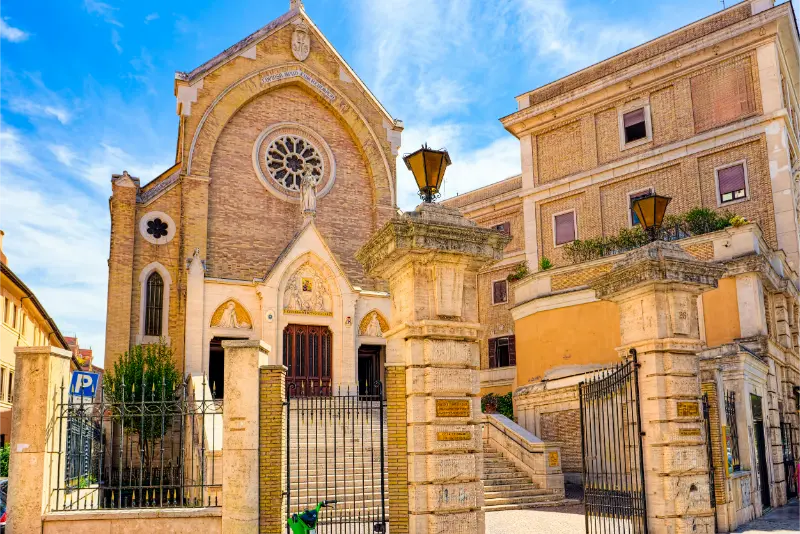
The approach to the Tiber
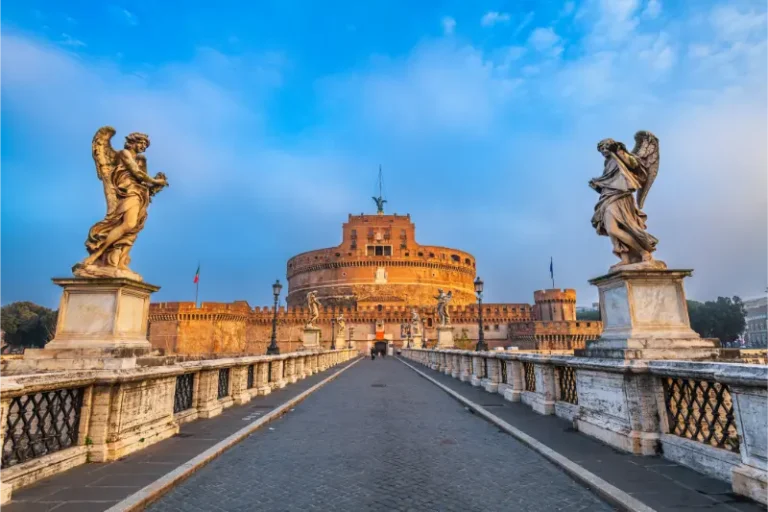
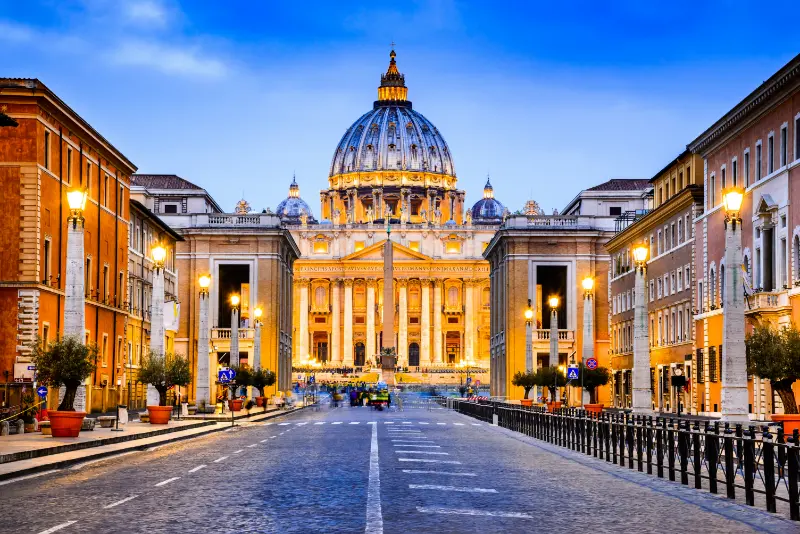
As you move west, the destination gradually becomes the river and Castel Sant’Angelo. This is the historical logic of the route. Finish by stepping out toward the bridge area and looking back toward the compact fabric you have just crossed.
A practical walking route
The most satisfying direction is east to west, beginning around Piazza Navona and finishing at the Tiber.
- Start at Piazza Navona and leave the square through the quieter northern-western streets.
- Enter Via dei Coronari and slow down for façades, shrines and shopfronts rather than treating it as a corridor.
- Detour briefly to Santa Maria della Pace if it fits your interests and current access.
- Continue west toward the river, noticing how the street becomes a natural pilgrimage axis.
- Finish near Ponte Sant’Angelo and decide whether to visit Castel Sant’Angelo or simply continue along the Tiber.
This route is short enough to fit between larger attractions. It is particularly good late in the day when you want to keep walking but no longer want another large museum.
When to go
Morning gives the clearest architectural experience and usually fewer people. It is also a good time if you want to continue into churches, which may close or reduce access around midday.
Early evening changes the atmosphere completely. The street becomes part of the dinner-and-stroll circuit between Navona, the river and Borgo. Shop opening varies, so choose morning or afternoon if antiques and galleries are your priority.
How to combine it with nearby Rome
The strongest cluster is Piazza Navona, Via dei Coronari and Castel Sant’Angelo. These places form a coherent line and avoid unnecessary transport.
You can also add Santa Maria della Pace for Renaissance art and architecture, or continue south after the river toward Campo de’ Fiori on another part of the day.
Practical tips that make the visit better
Cobbles can be slippery in rain, so footwear matters more than the short distance suggests.
Do not assume every antique shop keeps standard continuous hours. Independent businesses may close for lunch, appointments or holidays.
If you are walking with children, turn the route into a visual scavenger hunt for shrines, coats of arms and unusual doorways rather than expecting them to care about every historical name.
The street is central but not a good place to stop with large luggage. Store bags before sightseeing so you can enter shops and churches comfortably.
Common mistakes to avoid
- Rushing straight from Navona to Castel Sant’Angelo without looking at the street.
- Expecting the antique trade to look exactly as it did decades ago.
- Entering private courtyards without clear permission.
- Scheduling the walk at the hottest part of a summer afternoon without shade breaks.
- Opening multiple internal Rome links in new tabs instead of keeping a simple geographic route.

A simple itinerary around this stop
For a compact 90-minute walk, start in Piazza Navona, cross Via dei Coronari and finish at the river. Spend the remaining time on Ponte Sant’Angelo views rather than squeezing in the castle interior.
For a half day, add Santa Maria della Pace, Palazzo Altemps or Castel Sant’Angelo. Choose one major interior; the value of this area comes from alternating streets and buildings, not from staying indoors continuously.
What to look for beyond antiques
The most interesting details often sit above eye level: family coats of arms, carved lintels, small religious images and irregular masonry showing later alterations. Rome’s old center was rebuilt repeatedly, so a façade can combine Renaissance proportions with Baroque windows and modern shopfronts.
Use side streets as brief pauses, not as excuses to zigzag endlessly. The power of Via dei Coronari comes from maintaining the historical direction toward the river; detours should enrich that route rather than erase it.
Eating and stopping along the route
Because the street connects two heavily visited zones, food quality and prices vary. Do not choose only by the first menu board you see. Look a few streets away, compare recent menus and keep the main meal separate from the busiest photo stops.
A short coffee or gelato break suits the route better than a long formal lunch if you plan to continue to Castel Sant’Angelo. Save a longer meal for Trastevere or another neighborhood where you want to spend the evening.
Official information and current access
Visit Lazio summarizes the street’s pilgrimage origins, the coronari who sold rosaries and the historic route toward Ponte Sant’Angelo on the official Visit Lazio page for Via dei Coronari.
Opening conditions, security arrangements, religious services, restoration work and special events can change with little notice. Check the official source shortly before your visit rather than relying on an old screenshot or a timetable copied by a third-party site.
FAQ
Why is it called Via dei Coronari?
The name comes from sellers of rosary crowns and other devotional objects who served pilgrims traveling toward St Peter’s.
Is Via dei Coronari free?
Yes. Walking the street is free; any purchases or ticketed nearby attractions are separate.
Is it still an antiques street?
Antiques remain part of its identity, but the commercial mix changes. Visit for the architecture and history as well as for shops.
How far is it from Piazza Navona?
It begins only a short walk from Piazza Navona, making it one of the easiest extensions of a Navona visit.
Where should I go afterward?
Continue toward Ponte Sant’Angelo and Castel Sant’Angelo, or loop back through the lanes toward Campo de’ Fiori.
Planning this stop well
Rome rewards geographic planning. Before leaving your hotel, group this stop with places that sit in the same part of the city and keep only one or two timed reservations in the day. Moving repeatedly between distant neighborhoods wastes energy and makes delays feel more stressful than they need to be.
Allow a margin for churches, security controls, temporary closures and simple discoveries. A doorway, small exhibition or street scene may deserve ten minutes you did not schedule. Building that flexibility into the day produces a more realistic itinerary than trying to hit every saved map pin.
For lunch and dinner, read current menus and recent information rather than following a years-old recommendation blindly. Rome’s restaurant scene changes, while the best choice also depends on where you happen to be when you are hungry. Walking a few streets away from the most famous square often improves both atmosphere and value.
Carry a refillable bottle, sun protection in warm months and a compact layer in cooler seasons. Central Rome involves more outdoor time than many travelers expect, even on museum-heavy days, because the streets and squares between attractions are part of the experience.
If accessibility is important, verify the exact route rather than judging from distance alone. Cobblestones, steps, steep ramps, security barriers and historic thresholds can make a short walk more demanding than a longer modern street. Official accessibility information should take priority over general travel descriptions.
Is it worth adding to your Rome itinerary?
Via dei Coronari deserves a dedicated walk because it explains how pilgrimage, commerce and Renaissance urban design shaped the center of Rome. It is scenic without needing to manufacture a “hidden gem” story.
Use it as a route, not merely a photo location. The street makes most sense when you feel its direction from Piazza Navona toward the Tiber.