Best Fountains in Rome: 15 Beautiful Fountains Beyond Trevi
Rome’s relationship with water is much larger than the Trevi Fountain. Monumental fountains define piazzas, small Renaissance basins hide beside palaces, and thousands of public drinking fountains make water part of everyday city life. The official tourism portal describes Rome’s fountains as a central part of its artistic heritage and notes the city’s exceptional network of “nasoni” drinking fountains.
This guide is designed as a walking companion rather than a ranking based only on fame. Several of the best fountains can be linked naturally through the historic center, while others are worth noticing because they reveal how aqueducts, papal power and public space shaped Rome.
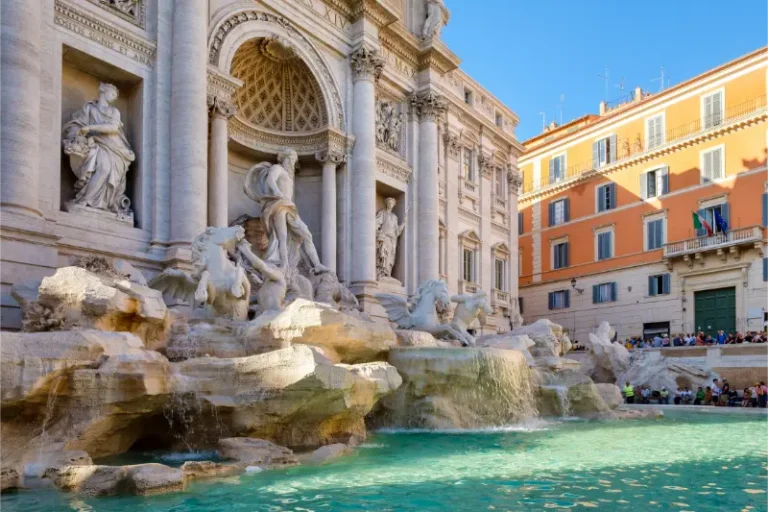
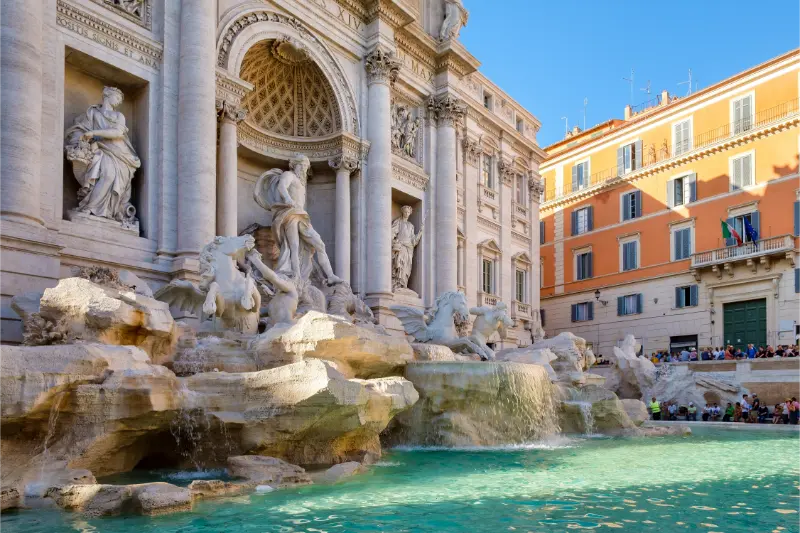
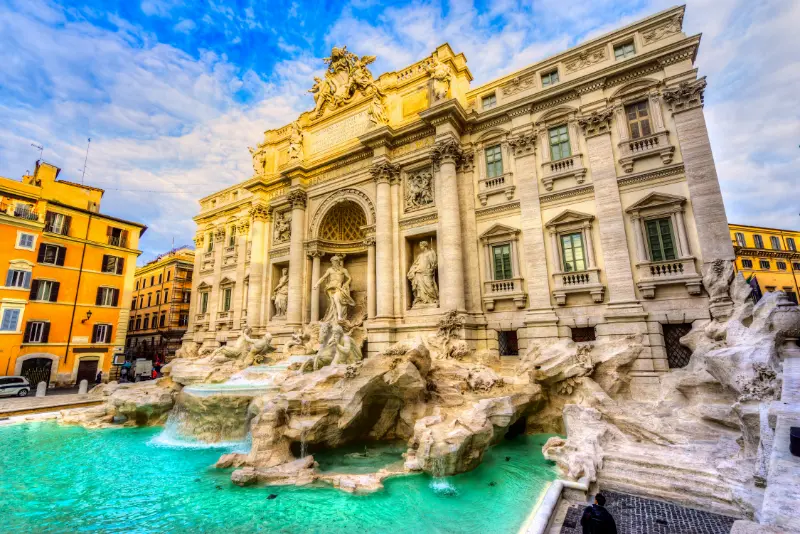
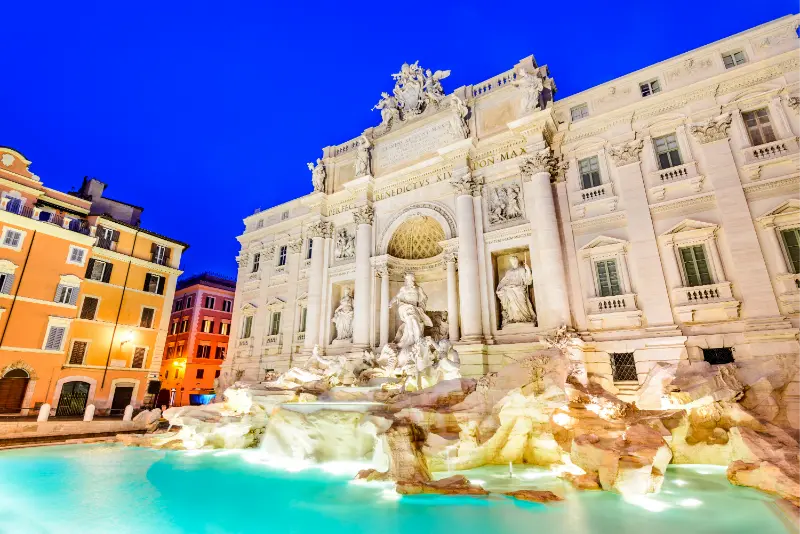
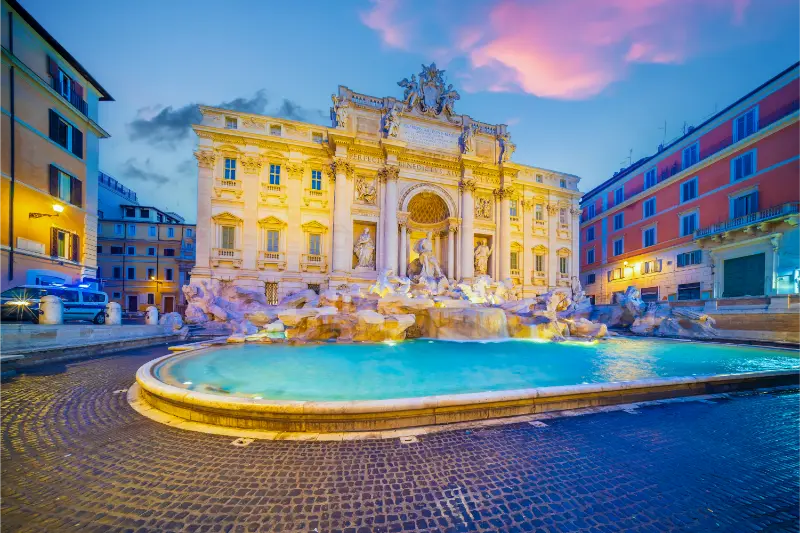
1. Trevi Fountain
Trevi remains the city’s most famous fountain and one of the most compressed visitor spaces in central Rome. Visit early if you want to appreciate the architecture rather than only the crowd.
Because access arrangements around the basin changed in 2026, check current official visitor rules before your trip. Our Trevi Fountain guide covers the practical details.
2. Fountain of the Four Rivers
Bernini’s Fontana dei Quattro Fiumi dominates Piazza Navona with theatrical movement, river personifications and an obelisk rising through the composition. It is one of the clearest examples of Baroque Rome using water as urban spectacle.
See it both from the center of the square and from the edges, where the relationship between the fountain, Sant’Agnese in Agone and the long shape of the piazza becomes clearer.
3. Fountain of Neptune, Piazza Navona
At the northern end of Piazza Navona, the Fountain of Neptune creates a different visual balance from Bernini’s central monument. It is easy to overlook because the Four Rivers fountain attracts most attention.
Walk the full length of the square instead of photographing only the center.
4. Fountain of the Moor
The southern fountain of Piazza Navona, commonly called the Fountain of the Moor, completes the square’s three-fountain sequence. Together they show how one public space can become a complete composition rather than a collection of isolated monuments.
Visit in the morning when delivery traffic and evening crowds are less dominant.
5. Barcaccia at the Spanish Steps
The low boat-shaped Fontana della Barcaccia sits at the foot of the Spanish Steps and is associated with Pietro and Gian Lorenzo Bernini. Its low profile makes sense in relation to historic water pressure and creates an unusually intimate fountain compared with Rome’s more vertical monuments.
Pair it with an early-morning Spanish Steps visit. Our Spanish Steps guide covers the surrounding area.
6. Fountain of the Turtles
The Fontana delle Tartarughe in Piazza Mattei is one of the most charming smaller fountains in central Rome. Its scale suits the compact square and makes it a natural stop while walking through the Jewish Ghetto.
Combine it with the Jewish Ghetto route rather than crossing the city only for the fountain.
7. Fountains of Piazza Farnese
Piazza Farnese contains two large granite basins associated with ancient Rome and later adapted into fountains. The official Turismo Roma page notes their connection with the Baths of Caracalla and the later arrival of water through the restored Acqua Paola system.
The symmetry of the fountains and Palazzo Farnese makes this one of the most elegant spaces near the much busier Campo de’ Fiori.
8. Fontana dell’Acqua Paola
The large Acqua Paola fountain on the Janiculum is a major destination because water, architecture and panorama come together. Its scale influenced later fountain design and the setting makes it feel very different from fountains enclosed by dense streets.
Pair it with the Janiculum rather than approaching only for a quick photograph.
9. Fountain of the Naiads
The fountain in Piazza della Repubblica marks a major urban space near Termini and demonstrates a later, more dynamic chapter in Rome’s fountain tradition.
It is useful to notice on a route between Termini, Santa Maria degli Angeli and Via Nazionale.
10. Triton Fountain
Bernini’s Triton Fountain in Piazza Barberini is one of the strongest examples of sculpture and water integrated into a traffic-heavy urban square. The surrounding roads can make the setting feel less romantic than Piazza Navona, but the work itself deserves attention.
Combine it with Palazzo Barberini or the climb toward Via Veneto.
11. Fountain of the Bees
The small Fontana delle Api near Piazza Barberini is easy to miss and offers a more intimate Bernini stop. It also reflects the Barberini family’s bee emblem.
Small monuments like this are a good reason to walk between major sights rather than taking a taxi for every short transfer.
12. Fountain of the Pantheon
The fountain in Piazza della Rotonda creates the foreground for one of Rome’s most famous views. The combination of fountain, obelisk and Pantheon façade explains why the square works so well visually.
Visit early morning for space, then return in the evening if you want atmosphere.
13. Fountain in Piazza Santa Maria in Trastevere
The fountain in front of Santa Maria in Trastevere anchors one of the neighborhood’s most important public spaces. Its history is complex and the current form reflects multiple interventions over time.
The fountain is also a reminder that piazzas function socially. Sit briefly and watch the square rather than treating it only as a monument.
14. Quattro Fontane
At the intersection known as Quattro Fontane, four late-Renaissance fountains occupy the corners. The location is busy, but the ensemble is unusual and pairs naturally with San Carlo alle Quattro Fontane.
Use caution when viewing and photographing because traffic is part of the intersection.
15. Rome’s nasoni
The “nasoni” are not monumental fountains, but they may become the fountains travelers use most. Turismo Roma traces their origins to 1874 and notes that the cast-iron design evolved over time.
Carry a refillable bottle and use them as part of Rome’s public-water culture. The official tourism site has a dedicated nasoni overview.
Practical planning tips
A fountain walk works best in the historic center, where Piazza Barberini, Trevi, the Pantheon, Piazza Navona, Piazza Farnese and the Jewish Ghetto can be connected on foot. Use Turismo Roma’s fountain itinerary as an additional official reference.
Rome rewards realistic pacing. Distances that look short on a map can take longer because of cobblestones, traffic lights, security checks, photographs and spontaneous stops. Keep some margin around reservations and do not build the day so tightly that one delayed bus or a longer lunch ruins everything that follows.
Who this guide is best for
This route is ideal for first-time visitors, photographers, architecture lovers and anyone looking for a free thematic walk between major sights.
Frequently asked questions
How many fountains are there in Rome?
Rome has an enormous number of monumental and drinking fountains. The official tourism portal notes more than two thousand public drinking fountains alone.
Can you drink from Rome’s nasoni?
The nasoni are public drinking-water fountains. Use common sense and follow any local notice if a specific fountain is temporarily marked otherwise.
What is the best fountain after Trevi?
For monumental impact, the Fountain of the Four Rivers in Piazza Navona is the strongest next choice.
Final advice
Trevi is only the beginning. The real pleasure of Rome’s fountains comes from seeing how differently water behaves across the city: theatrical in Piazza Navona, intimate in Piazza Mattei, panoramic on the Janiculum and completely practical at a neighborhood nasone.
Build the day around one clear priority
Choose one experience that would make the day feel successful even if the schedule changes. Once that priority is protected, the rest of the route can stay flexible. This is especially useful in Rome, where a church may close for a service, a bus may be delayed or a neighborhood may simply deserve more time than expected. The best travel plans are structured enough to prevent wasted time but loose enough to let the city surprise you.
Use neighborhoods, not isolated pins
Whenever possible, group stops by area. Crossing Rome repeatedly is one of the easiest ways to lose energy. A morning in the historic center, an afternoon around Villa Borghese or a focused walk through Trastevere usually works better than chasing individually famous places scattered across the city. This also creates more natural opportunities for coffee, lunch and small discoveries between the main sights.
Check only the details that can actually change
Before leaving, verify the few operational details that matter for that specific day: opening hours, timed-entry rules, transport disruptions and temporary closures. Keep the broader advice stable. This approach prevents overplanning and also protects you from relying on an old screenshot or a timetable that has changed since you first organized the trip.
Plan for comfort as well as sightseeing
A refillable water bottle, supportive shoes and a short seated break can improve a Rome day more than adding one extra attraction. In warm weather, move exposed walks toward early morning and evening. In cooler months, use the strongest daylight for parks and viewpoints. Families, older travelers and anyone with mobility concerns should judge routes by surfaces and elevation, not just distance.
Protect your best hours
The first hours of the morning and the period around sunset are unusually valuable in Rome. Early starts reduce crowd pressure at outdoor landmarks, while late afternoon gives better light and a more relaxed atmosphere for piazzas, bridges and viewpoints. Use the middle of the day for lunch, churches, museums or transport when weather and crowds make long outdoor walks less pleasant. This simple rhythm often improves both photographs and energy.