
Castel Sant’Angelo Rome: Tickets, History, Terrace and Visiting Tips
Castel Sant’Angelo is one of Rome’s most layered monuments. It began as Emperor Hadrian’s mausoleum, became a fortress, was incorporated into papal defenses, served as a prison and residence, and is now a national museum. From the outside it looks massive and almost severe; inside, the route climbs through corridors, courtyards, decorated rooms and terraces until the city opens below you.
For travelers visiting the Vatican, the castle is particularly easy to add because it sits beside the Tiber at the end of Via della Conciliazione. Yet it deserves more than a photo from Ponte Sant’Angelo. The interior explains centuries of Rome’s political and military history and offers one of the best central viewpoints.
Castel Sant’Angelo tickets and opening hours in 2026
The Ministry of Culture currently lists regular opening from Tuesday to Sunday, 09:00–19:30, with last entry at 18:30. The regular full-price ticket was adjusted to €18 from 1 July 2026. Standard national reductions and free-entry categories continue to apply under the published rules.
For 2026, the museum has also announced special first-Monday openings on certain terms under the ‘Lunedì di Castello’ initiative. Since special openings, exhibitions and ticket conditions can change, check the official Ministry of Culture page shortly before traveling.
| Quick fact | Current guidance |
|---|---|
| Regular opening | Tuesday–Sunday, 09:00–19:30 |
| Last entry | 18:30 |
| Full ticket | €18 from 1 July 2026 |
| Closed | Normally Monday, with published special-opening exceptions |
| Ideal visit time | About 90 minutes to 2 hours |
From Hadrian’s tomb to papal fortress
Hadrian ordered the construction of a monumental mausoleum for himself and his dynasty in the second century AD. The building later became part of Rome’s defensive system, and its strategic position near the Vatican increased its importance. Over centuries, popes transformed the ancient tomb into a fortified refuge and residence.
The famous Passetto di Borgo, a fortified elevated corridor linking the Vatican area with the castle, symbolizes this defensive role. Access arrangements to special areas are not always part of the standard museum route, so do not assume that every ticket includes every corridor or special space.
What to see inside
- Ancient core: the massive Roman structure reminds you that the castle began as a mausoleum, not a medieval fortress.
- Courtyards and defensive spaces: these show how the building changed from tomb to military stronghold.
- Papal apartments: decorated rooms reveal the castle’s more refined Renaissance side.
- Terraces: the upper levels provide broad views over the Tiber, Vatican dome and historic center.
- Archangel Michael: the statue crowning the monument reflects the tradition behind the castle’s current name.
The terrace view
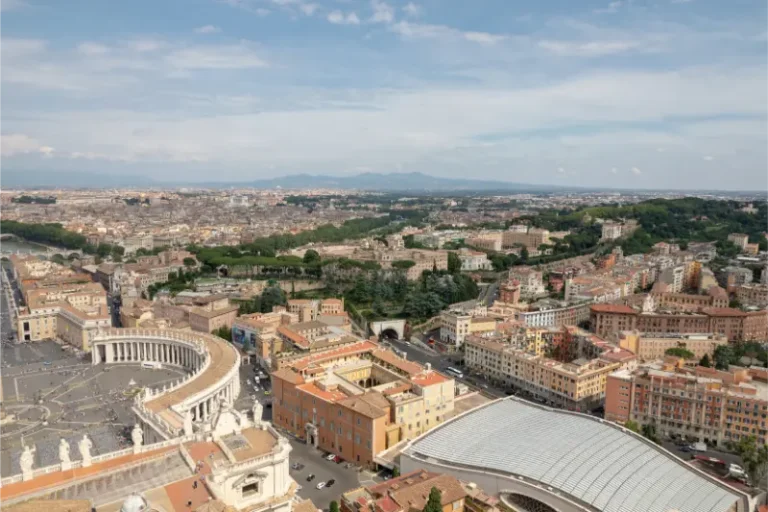
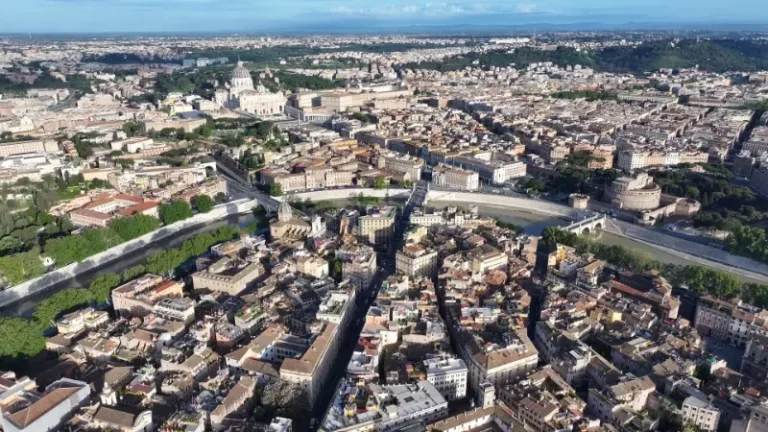
The terrace is the emotional high point for many visitors. St. Peter’s dome appears remarkably close, while the Tiber curves beneath the castle and central Rome stretches toward domes and rooftops. Late afternoon can provide beautiful light, although you should leave enough time to complete the internal route before closing.
If photography matters, a lens or phone with moderate zoom helps isolate St. Peter’s dome and river views. Wind and sun can be stronger on the upper terraces than at street level, so keep a light layer or sun protection depending on the season.
Ponte Sant’Angelo

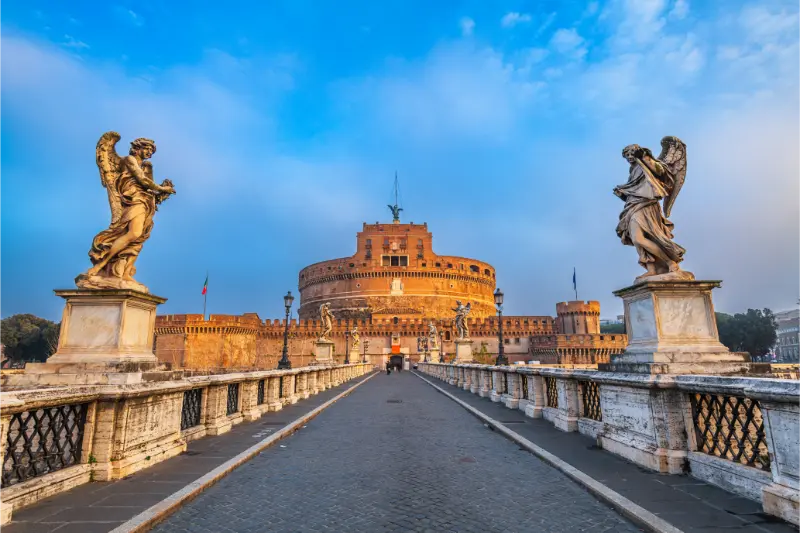
Before or after the museum, walk across Ponte Sant’Angelo. The bridge aligns directly with the fortress and is decorated with angel sculptures that create one of Rome’s most dramatic approaches. Early morning is best for wide photographs; sunset and evening are more crowded but highly atmospheric.
Combine the castle with the Vatican
A practical sequence is to visit the Vatican Museums early, have lunch in Prati, see St. Peter’s Basilica, then walk to Castel Sant’Angelo. This is a full day, so only add the castle if you still have energy for stairs and museum rooms. Alternatively, give the castle its own late-afternoon slot and pair it with a riverside walk.
Our Vatican Museums and St. Peter’s guide explains how to structure the Vatican portion of the day.
How difficult is the visit?
The route moves vertically through a historic fortress, so expect ramps, stairs, uneven surfaces and changes of level. Accessibility has improved in many heritage sites, but not every historic section can be experienced in exactly the same way by all visitors. If mobility is a concern, check the museum’s current accessibility information before buying tickets.
Castel Sant’Angelo with children
Older children often enjoy the castle more than a traditional art museum because the route includes defenses, narrow passages, courtyards and viewpoints. Younger children may tire on the climbs, so keep the visit shorter and use the terrace as the goal. The open areas require close supervision.
Best time to visit
Morning is easiest if you want quieter rooms. Late afternoon is best for views, especially outside the hottest summer months. If your trip falls in July or August, avoid turning a midday Vatican visit directly into a long exposed walk without a lunch and shade break.
What to see nearby
- St. Peter’s Square: about a fifteen-minute walk along Via della Conciliazione.
- Prati: useful for lunch, shopping and a more orderly neighborhood atmosphere.
- Piazza Navona: continue across the river through the historic center toward Piazza Navona.
- Trastevere: a longer but pleasant evening continuation along or across the river.
Is Castel Sant’Angelo worth the ticket?
It is most worthwhile for travelers who enjoy layered history, fortified architecture and city views. If your Rome trip is extremely short and you already have the Colosseum, Vatican Museums and Galleria Borghese booked, the castle may be the first major paid sight to postpone. With four days or more, it fits much more comfortably.
Common mistakes to avoid
- Assuming the castle is only a viewpoint and rushing past the historical route.
- Planning it immediately after a long Vatican Museums visit without allowing food and rest.
- Arriving too close to last admission to enjoy the upper terraces.
- Expecting every special corridor to be included with a standard ticket.
- Ignoring Ponte Sant’Angelo, which is part of the visual experience of the monument.

Final tip
If your schedule allows, time the upper terrace for late afternoon and then remain in the area as the city lights come on. The transition from Hadrian’s ancient mausoleum to a view of modern Rome is exactly what makes Castel Sant’Angelo so characteristic of the city: centuries are stacked on top of one another rather than separated into neat chapters.
Understanding the museum route
The internal route can feel confusing because it follows centuries of additions rather than a simple modern floor plan. That is part of the monument’s character. Pay attention to how spaces shift from massive Roman masonry to defensive corridors and then to decorated papal rooms. The building itself is the main exhibit; the collections make more sense when read as evidence of changing uses rather than as an independent art museum.
Castel Sant’Angelo at sunset
Travelers often aim for sunset, but remember that museum access and terrace availability follow opening hours rather than the exact sunset time. In winter, sunset occurs comfortably before closing; in high summer, it may be much later. Check the day’s sunset and museum schedule before building your plan around golden-hour photographs.
Food and rest in Prati
If you combine the castle with the Vatican, Prati is the logical place for a substantial break. The streets around Via Cola di Rienzo and the blocks north of the Vatican offer cafés, bakeries and restaurants away from the most congested approaches. A proper lunch can make the difference between enjoying the castle and dragging yourself through another two hours of stairs.
What if you do not enter?
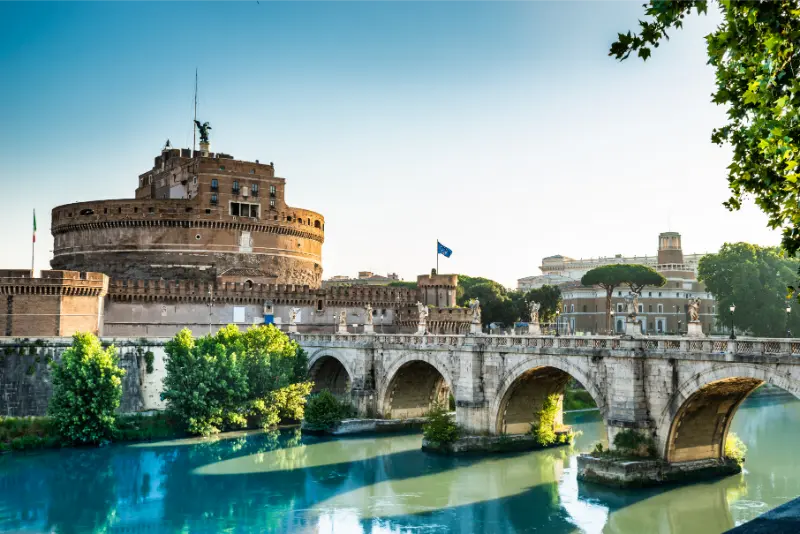
The exterior is still worth seeing. Walk Ponte Sant’Angelo, circle the riverfront and continue toward St. Peter’s Square or Piazza Navona. At night the fortress and bridge are particularly photogenic. If your budget or schedule cannot accommodate the €18 museum ticket, you can still experience one of Rome’s strongest urban compositions without paying.
A good choice for repeat visitors
On a first trip of only two days, the castle may lose out to the Colosseum and Vatican Museums. On a second visit—or a four- or five-day first trip—it becomes much more attractive. Its layered history connects imperial Rome, medieval fortification, Renaissance papal power and modern museum culture in a single building, making it especially rewarding once you already know the city’s headline sights.
What to wear and bring
Comfortable shoes matter more here than they do in a flat gallery. The route involves repeated changes of level, stone surfaces and open terraces. In summer, bring water and sun protection; in cooler months, keep a light layer because the upper levels can feel exposed to wind. Large bags can slow security checks, so travel light when possible.
Night views from outside the castle
Even if the museum is closed, the riverfront remains one of the most rewarding evening walks in Rome. Cross Ponte Sant’Angelo, look back at the illuminated fortress and then continue toward Piazza Navona or St. Peter’s Square. The area feels more spacious after the daytime tour groups disappear, and the reflections on the Tiber can make the exterior more photogenic than it is at noon.
How Castel Sant’Angelo fits into a second trip to Rome
Repeat visitors often appreciate the castle more because they already know the basic geography of Vatican City and the historic center. The terrace view then becomes a map of familiar places rather than a collection of anonymous domes. It also provides a bridge between imperial and papal Rome that is easy to miss when the first trip is dominated by the Colosseum and Sistine Chapel.
One Comment
Comments are closed.