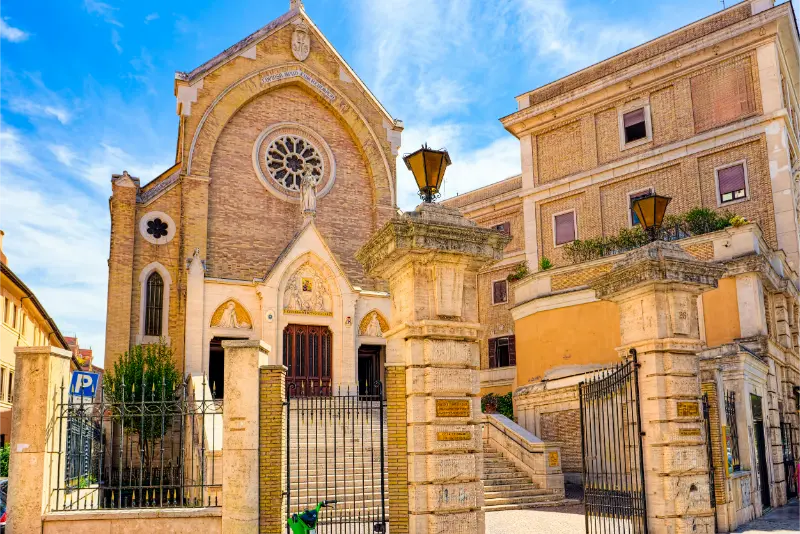
Santa Maria in Aracoeli Rome: Basilica, Frescoes and Visiting Guide
Santa Maria in Aracoeli is one of Rome’s most atmospheric churches, rising beside the Capitoline Hill above Piazza Venezia. Many travelers see its steep staircase while walking toward the Vittoriano and assume the interior will be secondary to the famous monuments around it. That is a mistake. Behind the plain brick façade lies a layered medieval basilica filled with reused ancient columns, Cosmatesque paving, Renaissance chapels, tombs, frescoes and one of the strongest senses of continuity between ancient, medieval and modern Rome.
The church is especially rewarding because it fits naturally into a day around the Capitoline Museums, the Vittoriano and Palazzo Venezia. You do not need to cross the city or reserve a large time slot. Instead, Santa Maria in Aracoeli works as a concentrated forty-five-minute stop that can completely change the mood of a busy sightseeing day.
Why Santa Maria in Aracoeli matters
The basilica occupies the northern summit of the Capitoline Hill, an area saturated with ancient and civic meaning. Its medieval development was tied to Franciscan presence and Roman public life. For centuries the church was associated with civic ceremonies and devotion, giving it a role different from Rome’s great papal basilicas. The result is a building that feels both monumental and local.
Its history is also visible materially. The nave is divided by ancient columns reused from earlier structures, and the columns are not uniform. That irregularity is not a flaw; it is one of the church’s most evocative features. It reminds you that medieval Rome was built by absorbing, moving and repurposing the physical remains of antiquity.
What to see inside
The nave and reused columns
Walk slowly down the central nave and look from column to column. Their different stones, proportions and capitals create a rhythm that no modern architect would design from scratch. This practice of spolia—reusing ancient architectural elements—appears throughout Rome, but here it is especially easy to read. The coffered ceiling above and patterned floor below create a vertical dialogue between later decoration and older material.
The Bufalini Chapel by Pinturicchio
The Bufalini Chapel is the artistic highlight for many visitors. Pinturicchio’s fresco cycle, dedicated to Saint Bernardino of Siena, brings Renaissance color and narrative clarity into the darker medieval interior. Give yourself time to examine expressions, architecture and small background details. It is easy to walk past chapels quickly in Rome because there are so many, but this one deserves focused attention.
Cosmatesque floor and funerary monuments
The floor is a beautiful example of Cosmatesque work, with geometric patterns created from colored stone. Tombs and funerary monuments are woven into the building, including works connected with important artists and families. Rather than trying to identify every name, notice how burial, worship and art occupy the same space. Roman churches often function as historical archives written in stone.
The Santo Bambino tradition
Santa Maria in Aracoeli is traditionally associated with the Santo Bambino, a revered image of the Christ Child that played an important role in Roman popular devotion. The original figure was stolen in the 1990s and has not been recovered; a replacement is now venerated. This story is worth knowing because it connects the basilica not only with art history but with living religious practice.
The staircase and the easiest way to enter
The monumental staircase facing the city is part of the experience, but it can be tiring, especially in summer. If mobility or heat is a concern, approach from the Capitoline side instead of treating the front steps as obligatory. The surrounding elevation also gives attractive views toward the historic center. Travelers planning an accessible route should consult current local accessibility information because historic approaches can involve gradients and level changes.
Opening and worship times
Santa Maria in Aracoeli is an active church, and visitor access must respect services. Turismo Roma currently lists daily Masses, with morning services on weekdays and additional Sunday services, while explicitly warning that times can change. The safest approach is to visit outside Mass, dress appropriately and keep conversation low. Entry to the church is generally free, though donations help maintain the building.
If a chapel is closed or a service is beginning, do not treat that as a tourism inconvenience. Churches in Rome are places of worship first. Build flexibility into your schedule and check current information through Turismo Roma’s basilica page or the church contacts before making a special trip.
How long to spend
Most visitors should allow 30 to 45 minutes. Art lovers may want an hour, particularly for the Bufalini Chapel and floor. Because the church is free and centrally located, there is no advantage in racing through. Sit for a few minutes near the back after looking closely at the chapels; the change in pace is part of what makes a church visit valuable during an intense day in central Rome.
Best nearby itinerary
A very efficient route begins at Piazza Venezia, continues through the Vittoriano or Palazzo Venezia, climbs to Santa Maria in Aracoeli and then crosses to Piazza del Campidoglio. From there, choose either the Capitoline Museums or descend toward the Roman Forum. This sequence keeps almost everything within a few hundred meters while moving through many centuries of history.
If ancient Rome is your priority, continue with Ancient Rome beyond the Colosseum or Trajan’s Markets. If churches interest you more, pair Aracoeli with Santa Maria sopra Minerva later in the historic center. The contrast between medieval, Gothic and Renaissance interiors makes the comparison meaningful.
Photography and etiquette
The dark interior can challenge phone cameras, and flash is inappropriate during worship. Instead of forcing bright images, use the available light and concentrate on details near windows and chapels. Keep aisles clear, avoid photographing people at prayer and respect any posted restrictions. The exterior staircase is better photographed from below in softer morning or late-afternoon light than under the harsh midday sun.
Mistakes to avoid
- Walking past because the brick façade looks plain compared with nearby monuments.
- Climbing the front staircase in extreme heat without considering the Capitoline approach.
- Ignoring the Bufalini Chapel or treating all side chapels as interchangeable.
- Visiting during Mass and moving around loudly for photographs.
- Trying to combine the church with distant Vatican sights instead of building a Capitoline-area itinerary.
Frequently asked questions
Is Santa Maria in Aracoeli free to visit?
General church entry is normally free, although donations are welcome. Special areas or temporary initiatives can have different arrangements, so check notices on site.
Is it next to the Capitoline Museums?
Yes. The basilica stands immediately beside the Capitoline Hill, making it one of the easiest additions to a Capitoline Museums visit.
Is the staircase the only entrance?
No. The dramatic front steps are the most visible approach, but access from the Capitoline side can be easier. Conditions can change, so travelers with mobility needs should verify the current route.
What is the most important artwork?
The Bufalini Chapel frescoes by Pinturicchio are the clearest single highlight, but the reused columns, Cosmatesque pavement and overall medieval interior are equally important to understanding the basilica.
How should I dress?
Dress as you would for other active Roman churches: shoulders and torso covered, respectful clothing and quiet behavior. Requirements may be enforced more strictly during services or major religious periods.
Final tips
Santa Maria in Aracoeli is a perfect example of why Rome rewards curiosity. The church does not announce itself with a marble Baroque façade, yet inside it compresses antiquity, medieval architecture, Renaissance painting, civic history and living devotion into one space. Give it enough time to notice those layers, and the surrounding Capitoline area will feel more connected rather than like a collection of separate attractions.
How to fit this stop into a realistic Rome day
A useful Rome itinerary should leave breathing room around Santa Maria in Aracoeli Rome. Walking distances on a map can look short while cobblestones, security checks, heat, traffic lights and spontaneous stops make the real day slower. Put this visit beside one or two nearby priorities, then leave a flexible meal or coffee break before the next major reservation. That structure protects the experience if you stay longer than expected and reduces the temptation to rush the final rooms or viewpoints.
If you are visiting in summer, schedule exposed outdoor walking before late morning and use churches or museums during the hottest hours. In winter, remember that daylight is shorter and some archaeological sites close earlier. Spring and autumn are comfortable for walking but can bring heavy demand, so reserve truly capacity-limited attractions first and build flexible free-entry stops around them. Rome rewards geographic planning more than ambitious checklists.
A note on current information
Opening hours, restoration closures, liturgical schedules, ticket prices and security procedures can change after publication. Use this article to understand what the place is and how it fits into a trip, then verify the official website shortly before the visit when a specific time or paid admission matters. That small check is especially important around public holidays, religious celebrations, strikes and major city events.
Also separate permanent facts from temporary conditions. A church’s mosaics or a forum’s history do not change because an entrance moves for restoration; a museum can remain worth visiting even when one room is closed. Flexible expectations help you respond to real conditions without feeling that the day has failed because a single detail differs from an older guide.