Vittoriano Rome: Piazza Venezia, Views and Visiting Guide
The Vittoriano is one of Rome’s most visible monuments, yet many travelers only cross Piazza Venezia, take a photograph and continue toward the Colosseum. That is a missed opportunity. The complex rewards a slower visit because it combines modern Italian history, monumental architecture, the Tomb of the Unknown Soldier and some of the clearest central views over the city.
Its location also makes it easy to build into a first-time itinerary. The monument sits between the historic center, the Capitoline Hill and the Imperial Forums, so you can combine it naturally with our Ancient Rome guide, Capitoline Museums guide or a walk toward the Colosseum without wasting time on transport.
What exactly is the Vittoriano?
The Vittoriano, also known as the Monument to Victor Emmanuel II or Altare della Patria, was conceived after Italian unification as a national monument dedicated to the first king of unified Italy. Its white marble terraces, broad staircases, equestrian statue and winged victories dominate Piazza Venezia. The monument was inaugurated in stages and became one of the defining architectural symbols of the new national capital.
Today the site has several layers of meaning. It is a national memorial, an architectural landmark and a viewing point. Visitors should approach it with the same respect they would bring to a war memorial: the Tomb of the Unknown Soldier is guarded continuously, and the changing of the guard takes place regularly during the day.
What to see at the Vittoriano
The monumental staircase and terraces
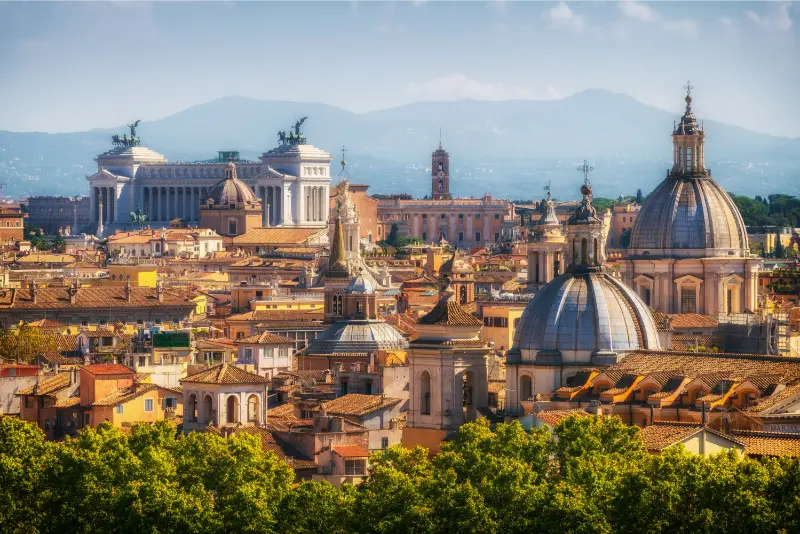
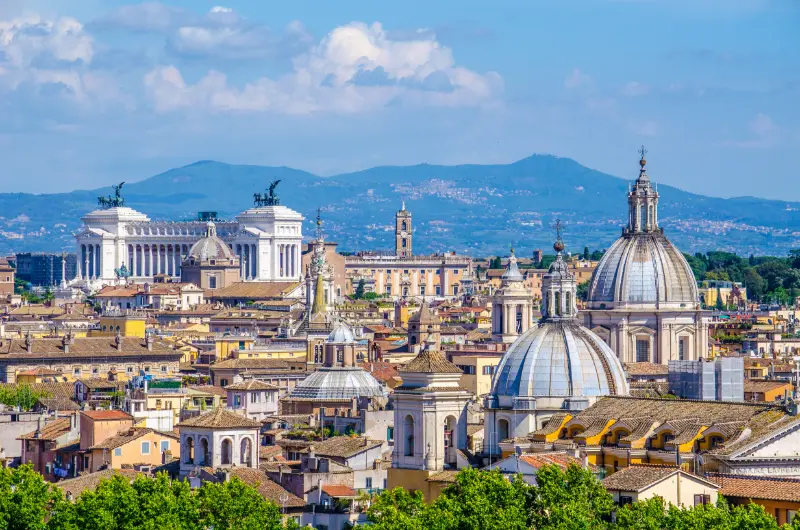
Start from Piazza Venezia and climb slowly. The monument becomes more interesting as you gain height because each landing opens a different perspective: Palazzo Venezia behind you, the churches and domes of the historic center, the Capitoline Hill to one side and the line of Via dei Fori Imperiali toward the Colosseum. Even before reaching the highest terrace, the intermediate levels provide excellent views.
The Tomb of the Unknown Soldier
At the heart of the monument is the Tomb of the Unknown Soldier, inaugurated in 1921 as a memorial to Italians who died in war without identification. An eternal flame burns beside it and guards stand watch. This is not a backdrop for playful photographs; keep a respectful distance from ceremonies and follow staff instructions if an area is temporarily closed.
The panoramic terrace
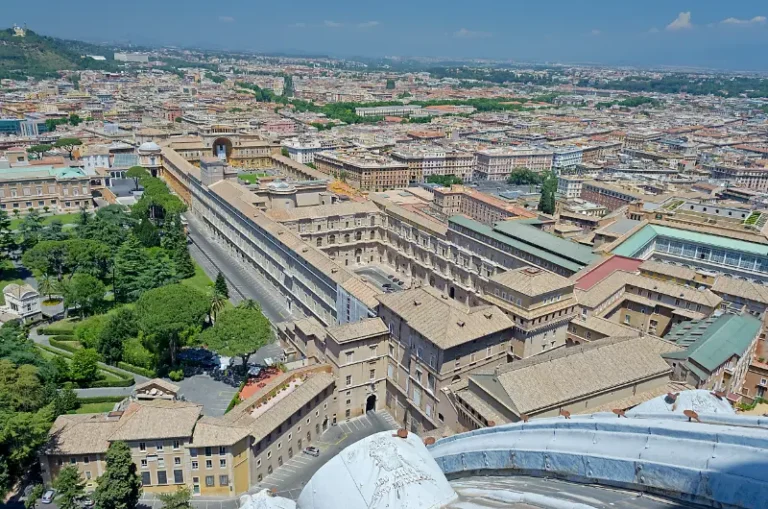
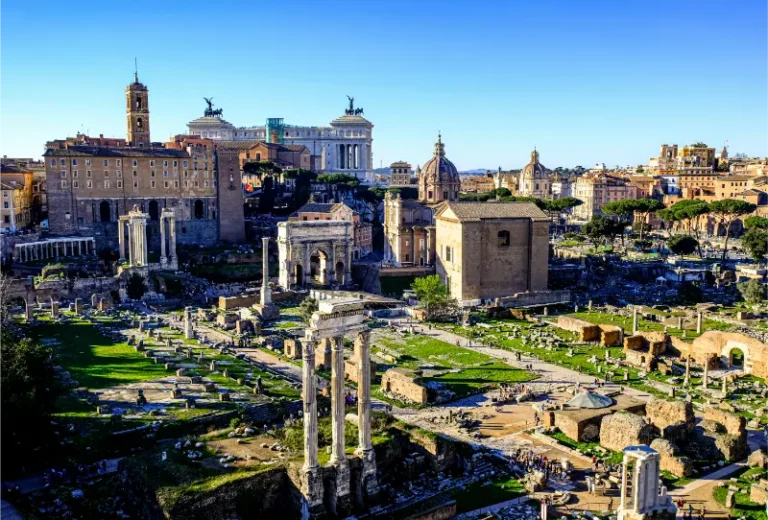
The upper panoramic area is one of the strongest viewpoints in central Rome because it sits almost exactly between the ancient city and the Renaissance-Baroque center. From above, the urban layers become easier to understand: domes rise from dense medieval streets while the Forum and Palatine form a completely different archaeological landscape to the southeast.
Opening hours and current visitor information
According to the official VIVE visitor information, the Vittoriano is normally open daily from 9:30 to 19:30, with last admission at 18:45. General access to the monument is free, although specific museum spaces, exhibitions or panoramic services can have separate conditions. In 2026 the VIVE also scheduled selected evening openings, so always check official notices before your visit.
Ceremonies at the Tomb of the Unknown Soldier can cause short temporary closures. This happens more often than many travelers expect because the monument has an active state and commemorative role. If access is paused, use the time to explore Piazza Venezia or the Capitoline area rather than assuming the site is closed for the whole day.
How long to spend here
| Visit style | Suggested time |
|---|---|
| Exterior and lower terraces | 30–45 minutes |
| Full monument and viewpoints | 60–90 minutes |
| Vittoriano plus museum/exhibition | About 2 hours |
| Piazza Venezia + Capitoline area | Half day |
The most common mistake is trying to squeeze the monument into ten minutes while walking from Trevi Fountain to the Colosseum. It is possible to see the façade quickly, but the value of the site lies in the changing views and the way the terraces help you read Rome spatially. An hour is a much better target if this is your first visit.
Best time to visit
Morning works well if you want cleaner sightlines and a quieter climb. Late afternoon is usually more atmospheric because the city softens in warmer light, although the highest viewpoints can be busier. In summer, avoid the most exposed terraces in the hottest part of the day. On hazy days, lower viewpoints can still be worthwhile even if the distant skyline is less sharp.
How to get to Piazza Venezia
Piazza Venezia is one of the easiest landmarks to reach on foot from central Rome. Trevi Fountain, the Pantheon, Campo de’ Fiori and the Colosseum are all within practical walking distance. Several buses also cross the square, but routes can be affected by construction, traffic management and major events, so walking is often the most predictable option if you are already in the center.
If you are using public transport more broadly, our getting around Rome guide explains metro, bus and tram basics. Remember that Piazza Venezia is a busy transport and construction zone at times, so allow a few extra minutes for pedestrian crossings and diversions.
What to combine with the Vittoriano
- Capitoline Hill and the Capitoline Museums
- Trajan’s Column and Trajan’s Markets
- Via dei Fori Imperiali and the Roman Forum viewpoints
- Palazzo Venezia and its courtyard
- Jewish Ghetto and Teatro di Marcello
- Trevi Fountain and the historic center
For a strong half-day, begin at the Vittoriano, continue to the Capitoline Hill and then descend toward the Roman Forum viewpoints before walking along Via dei Fori Imperiali. This route minimizes backtracking and creates a clear chronological story from ancient Rome to modern Italy.

Photography and viewpoints
A wide-angle lens is useful on the lower terraces because the architecture is enormous and close. For skyline photographs, a normal phone camera is enough. The more important technique is patience: wait for a gap in the crowd, frame domes against the city rather than the sky, and use the monument’s balustrades as visual lines. Tripods may be restricted in busy areas.
Accessibility and practical comfort
The complex includes long stairways, but lifts and accessible routes serve important visitor areas. Because access can change during ceremonies or works, travelers with reduced mobility should check the official VIVE accessibility information before arriving. There is limited shade on exposed terraces, so water, sunscreen and a hat are useful in warm weather.
Common mistakes to avoid
- Treating the monument only as a photo stop
- Standing in restricted ceremonial areas
- Assuming every exhibition or panoramic service is included in free access
- Arriving at midday in summer without sun protection
- Crossing Piazza Venezia inattentively because of traffic and works
- Skipping the Capitoline Hill even though it is next door
Is the Vittoriano worth visiting?
Yes, especially for first-time visitors who want to understand how Rome fits together geographically. It is free to enter the main monument, centrally located and different from the ancient ruins and churches that dominate most itineraries. The best reason to go is not simply the panorama: it is the combination of modern national history, ceremonial significance and a bird’s-eye view of Rome’s older layers.
FAQ
Is the Vittoriano free?
General access to the monument is free. Some exhibitions, museums or services may have separate tickets, so check the official VIVE site for the date of your visit.
Can you visit the Vittoriano at sunset?
Often yes, depending on the season and closing time. Arrive well before last admission so you are not rushed. Selected evening openings may also be scheduled.
Is Piazza Venezia close to the Colosseum?

Yes. You can walk from Piazza Venezia along Via dei Fori Imperiali toward the Colosseum. See our Colosseum guide if you plan to continue into the archaeological area.
How to make the visit more rewarding
Do not try to absorb every date or label. Choose three anchors before you enter: the building itself, one artistic or historical feature, and the relationship with the surrounding neighborhood. This keeps the experience coherent and gives you something to remember beyond photographs. Rome can overwhelm visitors with layers of information; a selective approach usually produces better understanding than reading every panel while worrying about the next reservation.
Planning around crowds
Crowds in Rome are uneven rather than constant. Large tour groups often arrive in waves, while smaller sites may become almost empty between them. If a room or viewpoint is packed, move to another section and return later when possible. Carrying a flexible sequence is more useful than chasing a theoretical “perfect” minute. In warm months, also consider how sun exposure affects outdoor sections and save covered areas for the hottest part of the visit.
A note on changing information
Opening hours, ticket rules, restoration closures and access routes can change with little notice, especially at active churches, archaeological sites and state monuments. Treat the official website as the final source for operational details and check it shortly before leaving your accommodation. This is more reliable than saving an old screenshot months before the trip. If a small area is closed, do not assume the whole visit has lost its value; Rome’s major sites usually contain far more than one headline feature.
How to fit this stop into a Rome day
The easiest way to protect the quality of a visit is to group sights geographically. Put one major timed attraction at the center of the day, then use nearby churches, viewpoints, parks or streets as flexible additions. This avoids spending the best hours crossing the city and gives you room to respond to queues, weather or temporary closures. Leave at least thirty minutes between the end of this visit and any reservation in another district; central Rome looks compact on a map, but security exits, pedestrian diversions and crowded streets can consume that buffer quickly.