
Getting Around Rome: Metro, Buses, Trams, Tickets and Walking
Rome is best explored with a combination of walking and public transport. The historic center is compact, but the Vatican, Termini, Appian Way area, Ostiense and some residential districts are far enough apart that smart transit choices can save your legs. The metro is simple, buses go almost everywhere, trams are useful on specific corridors, and taxis fill gaps late at night or with luggage.
This guide explains how to get around Rome, including current ATAC fares in September 2026, ticket validation, Tap & Go, metro lines, buses, trams and when a multi-day ticket is worth buying.
Rome public transport in one minute
- Metro: fastest for longer cross-city trips, but limited coverage in the ancient center.
- Buses: extensive network and often the only direct option to central streets.
- Trams: useful on selected routes, especially outside the tight historic core.
- Urban rail: helpful for some neighborhoods and connections.
- Walking: still the best transport between many central attractions.
- Taxis: useful with luggage, late at night or when several travelers share the cost.
ATAC ticket prices in September 2026
ATAC’s official ticket pages currently list the following common tourist fares:
| Ticket | Price | Validity |
|---|---|---|
| BIT | €1.50 | 100 minutes from first validation; metro conditions apply |
| ROMA 24H | €8.50 | 24 hours from first validation |
| ROMA 48H | €15.00 | 48 hours from first validation |
| ROMA 72H | €22.00 | 72 hours from first validation |
| CIS | €29.00 | 7 days under the ticket’s validity rules |
Always verify fares on the official ATAC website because prices and conditions can change after publication.
How the €1.50 BIT ticket works
The BIT is valid for 100 minutes from first validation. On the metro it is valid for a single journey, including permitted line changes without exiting the controlled area according to ATAC’s rules. On eligible regional rail services within the urban zone, additional conditions apply. The same BIT is not valid on the Leonardo Express airport train.
For many tourists who walk most of the day and take only one or two transit rides, individual BIT tickets are cheaper than a multi-day pass.
Tap & Go: contactless travel
ATAC’s Tap & Go system allows you to use a compatible contactless card or device at enabled gates and validators. The system can apply a best-fare mechanism when the same payment device is used consistently. ATAC warns that switching between a physical card and a virtualized version on a phone can interfere with fare calculation, even when they represent the same underlying account.
If you use Tap & Go, choose one card or one device for the entire day’s travel and use it consistently.
Rome Metro: lines and useful stops
Rome’s metro network is smaller than those of Paris or London, partly because building underground in an archaeologically dense city is difficult. For visitors, the most useful lines are A and B/B1, with Line C increasingly relevant in eastern districts.
- Line A: useful for Ottaviano/Vatican area, Spagna, Barberini, Repubblica, Termini and San Giovanni.
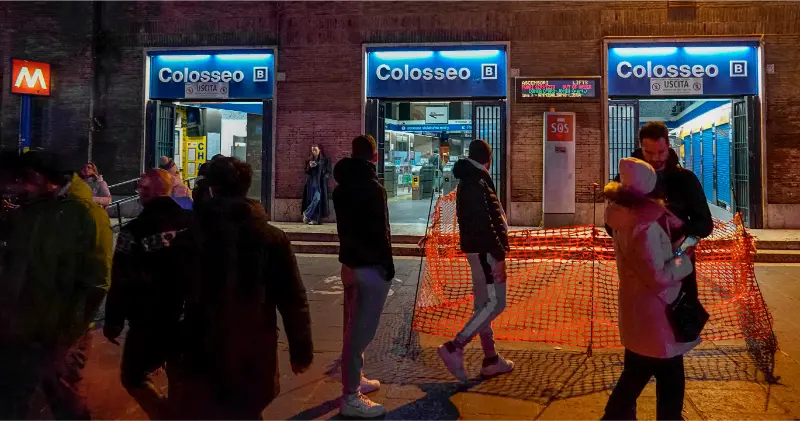
- Line B/B1: useful for Colosseo, Circo Massimo, Piramide/Ostiense, Basilica San Paolo and EUR, with the B1 branch toward the northeast.
- Line C: serves eastern Rome and connects with Line A at San Giovanni under the current network configuration.
The Pantheon, Piazza Navona and Campo de’ Fiori are not directly served by metro. Walking or buses are more practical there.
Buses: essential but less predictable
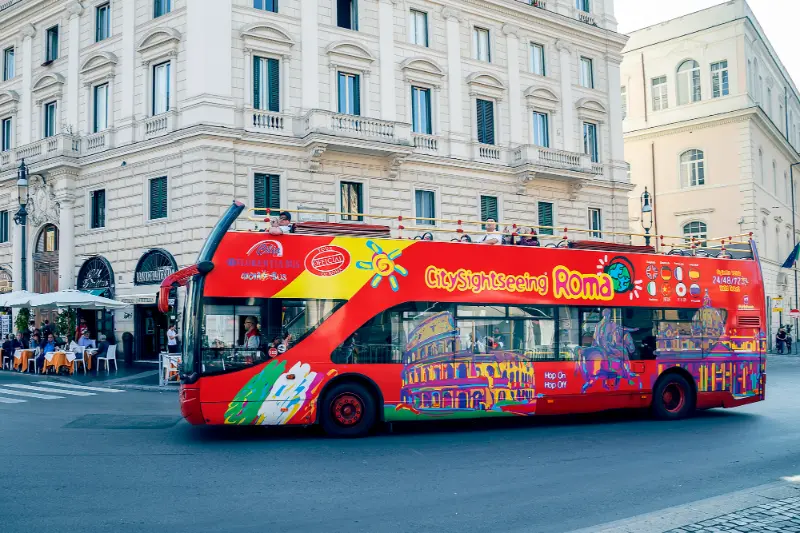
Buses reach places the metro does not, including many streets in the center. Traffic, roadworks, demonstrations and special events can affect journey times, so never plan a tight airport or train connection around an optimistic bus ETA. Real-time transport apps help, but allow buffer.
Validate a paper ticket when required. Inspectors can request a valid ticket and identification. ATAC publishes penalties for traveling without a valid ticket, and tourist unfamiliarity is not an exemption.
Trams
Rome’s tram network is limited compared with the bus system but can be very useful, particularly around Trastevere and routes outside the historic core. Tram services are also more visible and easier for visitors to understand than some bus routes. Temporary construction can alter lines, so check live information.
Walking: the transport you will use most
A map can make Rome look larger than it feels. Trevi Fountain to the Pantheon is roughly a central-city walk; the Pantheon to Piazza Navona is even shorter. Walking also avoids the problem of finding the correct bus stop on complex one-way streets.
The downside is cumulative fatigue. Cobblestones, heat and long museum visits mean that a 20-minute walk at 9 a.m. may feel very different at 7 p.m. Use transit for one or two strategic jumps so you still enjoy the evening.
Taxis
Official Rome taxis are white and should display licensing information. Use taxi ranks, official dispatch services or reputable apps rather than accepting unsolicited rides from people approaching travelers inside stations or airports. For airport trips, official fixed fares apply to defined zones and conditions; see our airport transfer guide.
Is the Roma Pass worth it for transport?
The official Roma Pass combines public transport with cultural benefits. Turismo Roma currently lists the digital Roma Pass 48h at €38 and 72h at €62.90, though official pages and legacy Roma Pass pages can show different product generations, so verify the current card at purchase.
Do not buy Roma Pass only because you need metro rides. Compare the card’s museum benefits with a normal ATAC 48- or 72-hour transit ticket. Roma Pass makes the most sense when the included/discounted attractions match your actual itinerary.
Children on Rome public transport
ATAC and Turismo Roma publish age-based free-travel rules that can change, so families should check the official conditions before arrival. Do not assume the same child policy applies to airport trains, national trains and urban transit; they are separate fare systems.

Traveling with a stroller
Strollers are manageable on metro and lower-floor vehicles when space allows, but elevators can be out of service and buses can be crowded. A compact folding stroller is much easier than a large travel system in the historic center. Cobblestones are the bigger challenge than transit itself.
Night transport
When metro service ends, night buses and taxis take over. Routes and frequencies are less intuitive for visitors, so check your return plan before a late dinner or event. If your hotel is in a central walkable area, evening walking may be simpler than waiting for a night bus.
Getting to the Colosseum
Metro Line B’s Colosseo station is directly beside the archaeological area, making it one of Rome’s easiest major monuments to reach by metro. From Termini, Line B is usually the simplest public transport option.
Getting to the Vatican
For the Vatican Museums, Ottaviano and Cipro on Line A are common metro approaches depending on your route. St. Peter’s Square can also be reached by buses and on foot from the historic center. The museum entrance and basilica entrance are on different sides of the Vatican complex, so map the correct destination.
Getting to Trastevere
Trastevere does not have a central metro stop. Buses and trams serve the neighborhood, while Roma Trastevere railway station is south of the most touristic lanes. Many visitors simply walk across the Tiber from Campo de’ Fiori or the Jewish Ghetto.

Getting to the Appian Way
The Appian Way requires more planning because different sections have different access points. Buses, metro-plus-bus combinations, taxis and bicycles are all possible. Decide which specific site—catacombs, Cecilia Metella, aqueduct area or another section—you are visiting before choosing transport.
A simple ticket strategy for 3 days
- If you stay centrally and enjoy walking: start with individual BIT tickets or contactless Tap & Go.
- If you expect four or more transit rides every day: compare the 72-hour ticket with individual fares.
- If you are using museums included in Roma Pass: calculate the cultural savings separately, then treat transport as an added benefit.
- If you are arriving from Fiumicino: remember that normal urban tickets do not cover the Leonardo Express.
Public transport mistakes to avoid
- Forgetting to validate a paper ticket.
- Using different cards/devices with Tap & Go and expecting one daily cap.
- Assuming Google Maps arrival times are guaranteed in traffic.
- Confusing Roma Termini with a generic ‘Rome station’ when booking trains.
- Taking the metro for a journey that is faster and more interesting on foot.
- Waiting until the airport trip to learn that a normal ATAC ticket does not cover the Leonardo Express.
Once you understand the basics, transport in Rome is not complicated. Use the metro for long hops, buses for gaps, taxis selectively and your feet for the historic center. That combination gives you more time for the city and less time staring at transit maps.
Accessibility on public transport
Accessibility varies by station, vehicle and route. Some metro stations have lifts or step-free access, but outages can happen, and historic-center sidewalks can be as challenging as the transport itself. Travelers who rely on step-free routes should check current station accessibility before each important journey and keep a taxi alternative in mind. When booking accommodation, being close to a reliably accessible station can matter more than being a few hundred meters closer to a famous square.
Using transport apps without becoming dependent on them
A live journey planner is extremely useful for buses, but save the names of a few anchor stops—Termini, Colosseo, Ottaviano, Spagna, San Giovanni, Piramide and your hotel stop—so you can recover quickly if your phone battery dies or a route is diverted. Download an offline map and screenshot the final walking route to your accommodation. Rome is easier when technology supports your sense of direction rather than replacing it.




2 Comments
Comments are closed.