Piazza Navona Rome: Fountains, Churches and Best Things to See
Piazza Navona is Rome at its most theatrical. The long oval square is lined with palaces, café terraces and church façades, but the real stage is the open center, where fountains and street life fill a space that still follows the shape of an ancient Roman stadium. It is beautiful in daylight, lively at sunset and especially atmospheric after dark.
Unlike a museum, the piazza is not something you ‘enter’. It is a public urban space that rewards several short visits: one to understand the fountains and architecture, another to see the evening atmosphere, and perhaps a final pass on the way between the Pantheon and Campo de’ Fiori. This guide shows what deserves attention and how to avoid reducing Piazza Navona to a quick photograph.
From Roman stadium to Baroque square
The shape of Piazza Navona comes from the Stadium of Domitian, built in the first century AD for athletic contests. Over time, medieval and Renaissance buildings filled the edges while the basic footprint survived. The result is one of Rome’s clearest examples of how the modern city grew directly over the ancient one.
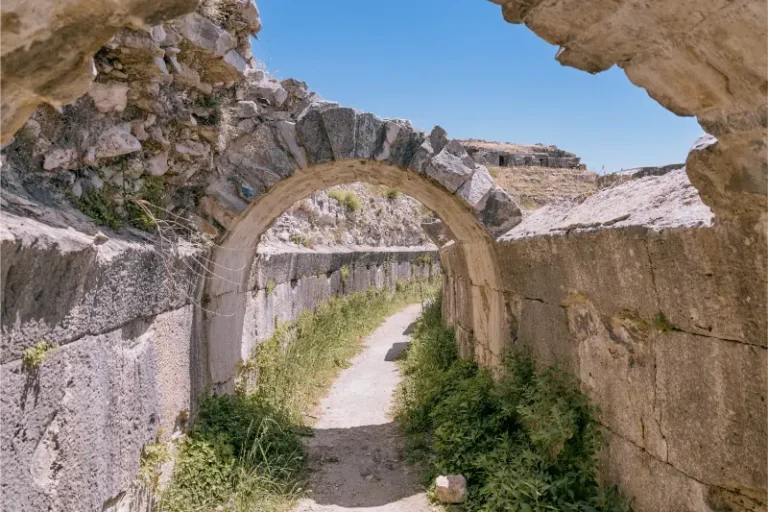
If you are interested in the archaeology beneath the square, look for access to the remains of the Stadium of Domitian around the northern end. Even without going underground, knowing that the curved end of the piazza follows the stadium helps you read the space differently.
Fountain of the Four Rivers
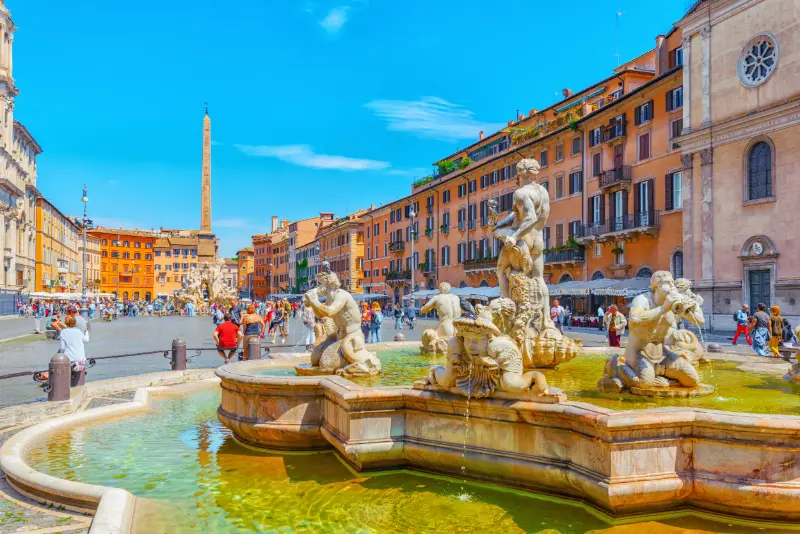
The centerpiece is Gian Lorenzo Bernini’s Fontana dei Quattro Fiumi, completed in the seventeenth century. Four monumental river figures symbolize major waterways associated with different parts of the known world, while an ancient obelisk rises above the rocky center. Walk all the way around the fountain; each side changes the composition.
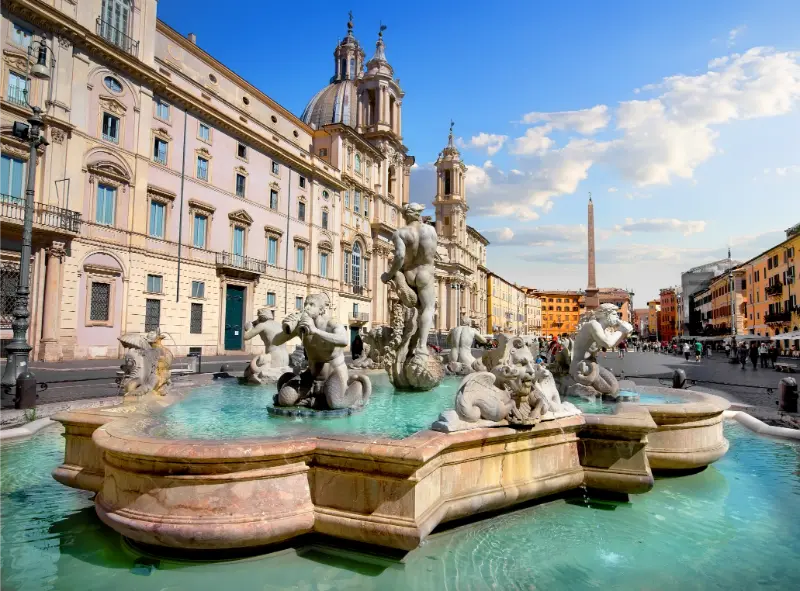
The fountain is often framed in photographs with the church of Sant’Agnese in Agone behind it, creating one of the defining images of Baroque Rome. The popular story of artistic rivalry encoded in the statues is entertaining, but many simplified versions do not survive close historical scrutiny. Enjoy the drama without treating every gesture as a secret insult.
The other fountains
At the southern end is the Fountain of the Moor, while the northern end is marked by the Fountain of Neptune. Because visitors naturally cluster around Bernini’s central masterpiece, the two end fountains offer useful places to slow down and observe the full length of the piazza.
Sant’Agnese in Agone
The church of Sant’Agnese in Agone dominates the western side of the square. Its Baroque façade and dome are inseparable from the visual identity of Piazza Navona. If the church is open and access is permitted, step inside respectfully; the interior offers a quieter counterpoint to the movement outside.
Best time to visit Piazza Navona
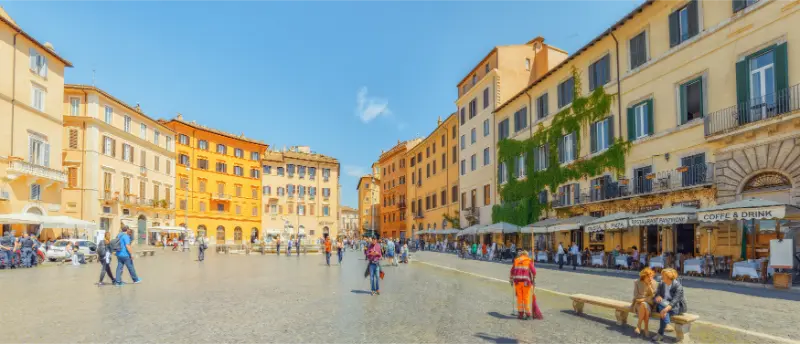
Early morning is the calmest time to study the fountains and photograph the oval space. Late afternoon is more animated, with the façades catching warmer light. Evening is arguably the most atmospheric moment, especially if you are walking from the Pantheon or dining in the surrounding streets.
The Christmas and Epiphany period can bring seasonal traditions and extra activity, but exact event arrangements vary from year to year. Check official city information if a specific market or event is important to your plans.
Piazza Navona to Pantheon
The Pantheon is only a short walk away. Rather than follow the most direct path without looking around, wander through the lanes between the two monuments. This compact zone contains small churches, courtyards, cafés and architectural details that are easy to miss when you are following a navigation arrow.
Piazza Navona to Campo de’ Fiori
Walk south toward Campo de’ Fiori for a change in atmosphere. Piazza Navona is monumental and ceremonial; Campo de’ Fiori feels more commercial and lived-in, especially during its daytime market. The route also passes close to Piazza Farnese and Palazzo Farnese.
Where to eat around Piazza Navona
The restaurants directly facing the square charge for one of Rome’s most famous views, which can be worthwhile if the setting matters more than value. For a more food-focused meal, walk a few streets away toward Via del Governo Vecchio, Parione or the lanes between the piazza and Campo de’ Fiori. Read recent menus before sitting down rather than assuming that a busy terrace guarantees quality.
If your priority is traditional dishes, use our Roman food guide to recognize classics such as carbonara, amatriciana, gricia, artichokes and supplì.
Photography and crowd tips
- Use the curved northern end to show the full shape of the square.
- Circle the Fountain of the Four Rivers instead of taking every photo from the same church-facing angle.
- Visit before 09:00 for the quietest broad views.
- Return after dark for illuminated fountains and a completely different mood.
- Keep valuables secure in dense crowds and avoid placing bags on the ground while taking photographs.
Piazza Navona with children
The open space makes Piazza Navona easier for families than many narrow central streets, but it is still busy and there are no barriers separating children from fountain edges or constant pedestrian movement. Use the visit as a flexible stop between longer attractions rather than asking younger children to study every sculpture.
How long do you need?
A quick pass takes 20 minutes. Allow 45–60 minutes if you want to circle the fountains, visit the church when open and explore side streets. Add more time for lunch, an underground visit or a longer evening break.
A half-day historic-center route
Start at the Spanish Steps, walk to Trevi Fountain, continue to the Pantheon, then reach Piazza Navona. From here, choose Campo de’ Fiori, the Jewish Ghetto or a riverside walk toward Castel Sant’Angelo. This sequence is one of the most efficient ways to experience central Rome.
For more structure, see our 4-day Rome itinerary or the shorter 3-day plan.
Common mistakes to avoid
- Eating at the first restaurant you see simply because it faces the fountain.
- Missing the northern and southern fountains because all attention goes to Bernini’s center.
- Ignoring the ancient stadium shape beneath the Baroque architecture.
- Visiting only at midday and never seeing the square after dark.
- Scheduling Piazza Navona as a separate cross-city trip instead of pairing it with the Pantheon.
Final tip
Stand near the center, turn slowly through 360 degrees and notice how carefully the space is composed: fountain, obelisk, church dome, palaces, curved ends and constant movement. Piazza Navona is not one monument but an entire room of the city, and it becomes much more memorable once you treat it that way.
The underground story beneath the piazza
Modern Piazza Navona preserves the outline of Domitian’s stadium so clearly that you can almost trace the ancient seating from the surrounding façades. Archaeological remains accessible near the northern end make this connection more concrete. If you enjoy Ancient Rome but have already spent hours at the Forum, a shorter underground stop here can show a different aspect of Roman entertainment and urban planning.
Churches and small detours
Sant’Agnese in Agone is the obvious church on the square, but the surrounding Parione district contains other churches and palaces that are easy to add without turning the day into a museum marathon. Keep a little flexibility: Roman churches can close around lunchtime or for services, so treat an unexpected open door as an opportunity rather than relying on a rigid sequence.
Eating well without leaving the neighborhood
The wider area around Piazza Navona has excellent food, but location matters. Walk toward Via del Governo Vecchio, Via dei Coronari or the lanes toward Campo de’ Fiori and compare menus. A simple rule is to choose a place because the food looks good, not because a host promises a ‘traditional’ menu beside the fountain. For a special occasion, paying for a terrace view can still be worthwhile if you understand that the setting is part of the price.

Accessibility and comfort
The piazza itself is flat and easier than many hilly Roman sights, but the historic paving can be uneven and the crowd density can complicate movement. Wheelchair and stroller users often have a better experience early in the day. Shade is limited in the central open space, so in summer use the surrounding streets and churches for breaks.
Why Piazza Navona deserves a return visit
A morning visit emphasizes shape and architecture; an evening visit emphasizes sound, light and social life. Because the square is free and centrally located, returning costs almost nothing in time if you are staying nearby. Seeing the same space twice can be more rewarding than adding a minor attraction simply to increase the number of places on your itinerary.
Piazza Navona in different seasons
Spring and autumn are the easiest seasons for lingering in the square because temperatures are comfortable and evening walks remain pleasant. Summer brings the largest contrast between harsh midday light and beautiful late-evening atmosphere; if you visit in July or August, use the shaded side streets during the hottest hours and return after sunset. Winter is quieter outside the holiday period and can be excellent for photography after rain, when the paving reflects the fountains and façades.
Seasonal events can change the feel of the piazza considerably. Christmas and Epiphany traditions are historically associated with the square, but the exact stalls, dates and programming are managed year by year. If a seasonal market is important to your trip, check Roma Capitale or Turismo Roma rather than relying on an old blog post.
A note for architecture lovers
Piazza Navona is a useful place to compare different Baroque approaches in a single view. Bernini’s sculptural fountain creates movement in the center, while the church façade and surrounding palaces define the edges. Walk to each end of the piazza and look back rather than remaining at the central fountain. The proportions change dramatically, and you can see how the long stadium shape controls every later architectural intervention.