Santa Maria della Pace Rome: Raphael, Baroque Façade and Visiting Guide
Santa Maria della Pace is one of the most rewarding small churches near Piazza Navona. Tucked into a bend of narrow streets behind the great square, it compresses several layers of Roman art into a surprisingly intimate visit: Renaissance painting by Raphael, a theatrical Baroque façade by Pietro da Cortona and the atmosphere of a church that feels discovered rather than announced.
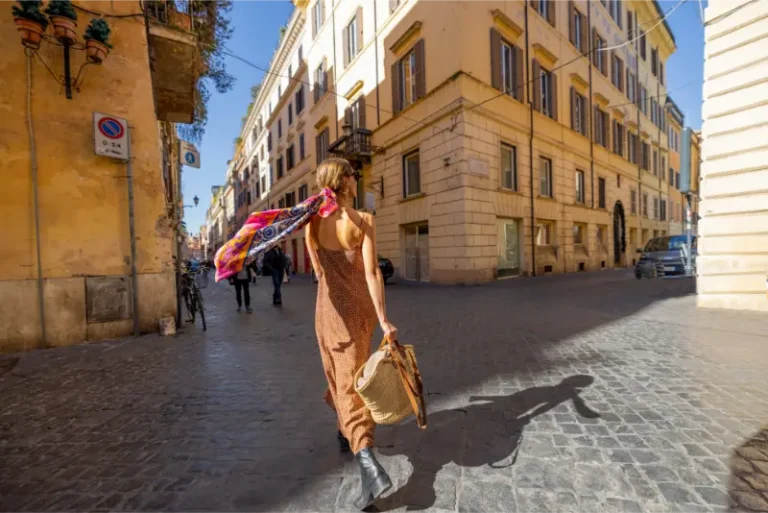
The pleasure is partly spatial. You approach through lanes that hide the building almost until the last moment, then the curved façade suddenly organizes the tiny piazza like a stage set. Inside, the scale becomes quieter and the focus shifts to chapels, painted surfaces and details that are easy to overlook if you rush. For travelers already seeing the Pantheon and Piazza Navona, this is an excellent example of how Rome rewards short detours.
| Planning point | Useful detail |
|---|---|
| Location | Arco della Pace area, a few minutes on foot from Piazza Navona |
| Access | Active church; access can change for liturgies, conservation work and special events, so verify locally before making a dedicated trip. |
| Cost | Church entry is normally free; adjacent cultural spaces can have separate rules. |
| Suggested time | 35–55 minutes, longer if you also visit the Bramante cloister when accessible |
| Best for | Raphael, Renaissance painting, Baroque architecture and quiet discoveries near Piazza Navona |
Why Santa Maria della Pace is worth visiting
Many visitors know Raphael through the Vatican Rooms, where the scale and crowds can be overwhelming. Here the encounter is different. His Sibyls and Prophets belong to a side chapel and must be read as part of an actual devotional setting. The compact environment makes it easier to notice gesture, rhythm and the relationship between painted figures and architecture.
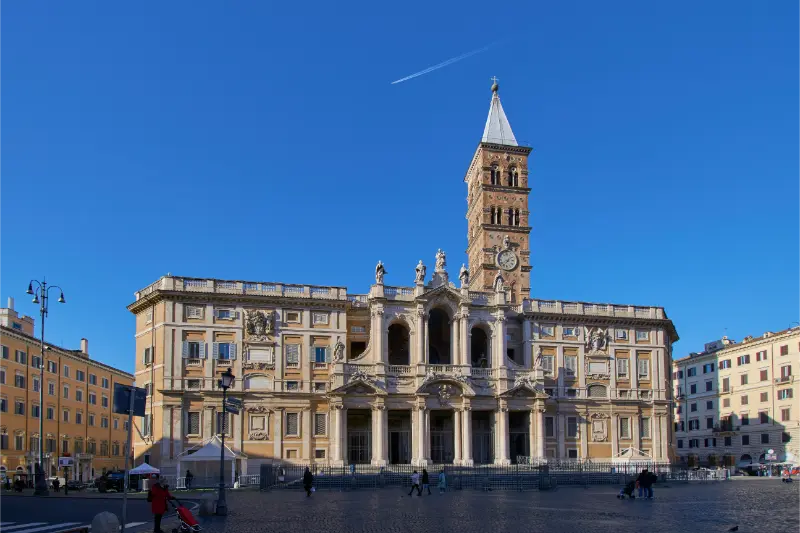
The exterior is equally important. Pietro da Cortona’s seventeenth-century façade does not merely decorate the church; it reshapes the small square in front of it. Concave and convex movement, projecting columns and a semicircular porch make the façade feel almost like scenery. Seeing this tiny urban space after the openness of Piazza Navona is a useful lesson in how Baroque Rome manipulated streets and piazzas to create surprise.
History and context
A church existed on the site before the Renaissance rebuilding. The present building is associated with a late-fifteenth-century campaign promoted under Pope Sixtus IV, in a period when Rome was being reshaped for pilgrims, court life and papal prestige. Its dedication to peace became part of the building’s identity, while later patrons continued to enrich its chapels.
The church then acquired two major layers that define the visit today. Raphael’s frescoes belong to the early sixteenth century, when Rome was the center of High Renaissance experimentation. More than a century later, Pietro da Cortona transformed the façade and surrounding forecourt in a Baroque language based on movement, theatricality and controlled views. The result is not a single-period monument but a compact timeline of Roman artistic ambition.
What to see
Raphael’s Sibyls and Prophets
The best-known work inside is Raphael’s cycle of Sibyls and Prophets in the Chigi Chapel. Look for the alternation between monumental female figures, putti and prophetic imagery. Their bodies have sculptural weight, but the arrangement remains elegant and readable even in the chapel’s limited space.
Do not judge the work from one angle. Step back as far as the chapel allows, then move closer and look at the hands, turning heads and way the figures respond to the curved architectural frame. If you have recently seen Michelangelo in the Vatican, the visual conversation between Roman masters becomes especially interesting.
Pietro da Cortona’s façade
Outside, the façade is one of the clearest examples of a Baroque architect designing both a building and the space around it. The projecting porch, curved forms and paired columns generate movement before you even enter.
Walk to the opposite side of the little piazza rather than photographing it from directly below. From there you can see how the façade turns a cramped urban pocket into a carefully composed forecourt.
The Renaissance interior
The interior is calmer than the exterior suggests. Chapels, altars and painted decoration preserve the layered character of a church used and modified over centuries rather than frozen as a museum.
Give attention to the transition between nave and chapels. Small changes in light and framing help individual works stand out, and the restrained scale is one reason the church remains satisfying even after a day filled with larger monuments.
The Bramante connection
Beside the church is the famous cloister designed by Donato Bramante, one of the landmarks of early-sixteenth-century Roman architecture. It functions today as a cultural venue and should be treated as a separate visit with its own opening conditions.
If access is available, compare Bramante’s measured geometry with Cortona’s animated façade. Few corners of central Rome allow such a concise contrast between Renaissance order and Baroque movement.
How to plan your visit
Because the church is small, timing matters more than duration. Arrive outside major service periods when possible, keep your visit quiet and be prepared for temporary restrictions around chapels. Churches in Rome are living religious spaces, and the visitor experience can change without the kind of notice expected from a museum.
The site works best as part of a walking day rather than as a stand-alone expedition. Use Piazza Navona as the anchor, add Santa Maria della Pace before or after the busiest part of the square, then continue toward the Pantheon or Campo de’ Fiori. This avoids unnecessary transport and lets the neighborhood itself become part of the visit.
A practical way to protect the quality of the visit is to keep some flexibility around Santa Maria della Pace. In central Rome, church ceremonies, maintenance, special exhibitions and crowd patterns can alter what is accessible even when the building itself is open. Build a small buffer into the day, avoid placing a non-refundable timed ticket immediately afterward, and use the surrounding neighborhood as a fallback rather than treating a temporary closure as lost time. Because the site is especially useful for Raphael, Renaissance painting, Baroque architecture and quiet discoveries near Piazza Navona, a slower visit usually gives more value than trying to squeeze it between two distant attractions.
- Wear clothing appropriate for an active church.
- Keep phones silent and avoid flash photography.
- Check whether the adjacent cloister is open separately; its schedule is not the same as church access.
- Visit earlier in the day for a calmer atmosphere in the surrounding lanes.
- Allow a few minutes outside to study the façade from different positions.
What to see nearby
A compact route can connect Piazza Navona, the Pantheon, Campo de’ Fiori. All are close enough to combine on foot without turning the day into a race.
A good sequence is Piazza Navona first, Santa Maria della Pace second, then the Pantheon. Continue south toward Campo de’ Fiori if you still have energy. The order gives you a progression from grand public space to intimate church, ancient monument and market district.
Who will enjoy this stop most?
Art lovers who already know the Vatican Museums will get the most from the church because it places Raphael in a completely different scale. Architecture enthusiasts will appreciate the façade and the urban choreography of the little piazza, while repeat visitors to Rome may simply enjoy the feeling of finding a major work without entering a large museum.
Families can manage the stop because it is short, but younger children may need a simple visual task: find the curved façade, identify an angel or compare the painted figures. Travelers with very limited time should prioritize the church only when they are already in the Piazza Navona area.
For a first visit to Santa Maria della Pace, it helps to choose one theme before you enter rather than trying to absorb everything at once. You might follow architecture, devotional history, painting, sculpture or the relationship between the building and the streets outside. After that first pass, make a second, shorter circuit and notice details you missed. This two-stage approach is particularly effective in Rome, where interiors accumulated over centuries and a visitor can easily confuse works from very different periods. It also makes the visit easier to remember later because you leave with a few clear visual anchors rather than a long list of names.
If your schedule allows, return to the exterior after the interior visit and spend five minutes looking at Santa Maria della Pace in its neighborhood context. The surrounding paving, street width, nearby façades and movement of pedestrians often explain why an entrance, dome, tower or courtyard feels the way it does. Rome’s monuments were designed inside a living city, not as isolated museum objects. That final outside look often turns a good visit into a more coherent understanding of the site.
Photography, accessibility and respectful visiting
Photography rules can change, especially around services and special installations. Where photos are permitted, avoid flash and do not block worshippers. Outside, a wider view from the edge of the square usually works better than a close-up because the façade was designed to be understood together with its urban setting.
The surrounding streets are historic and can be uneven. Step-free access conditions may change with doors and temporary arrangements, so visitors with mobility needs should verify the current entrance before arrival. Even if interior access is limited, the façade and the approach through the neighborhood still provide architectural value.
One more practical point is to separate seeing from documenting. At Santa Maria della Pace, spend the first few minutes looking without taking photographs or checking a map. Notice the direction of light, the way visitors naturally move and which details attract your attention. Only then decide what is worth recording. This reduces screen time, keeps narrow interiors calmer and usually produces better photographs because you understand the space before framing it. In active churches, this approach is also more respectful; in museums, it helps prevent the common mistake of collecting images without remembering the actual visit.
FAQ
Is Santa Maria della Pace free to enter?
The church is normally entered without a standard museum ticket, although donations are welcome and adjacent cultural spaces may have separate ticketing. Access can be restricted during services or events.
Where are Raphael’s Sibyls?
They are inside the church in the Chigi Chapel. Give your eyes time to adjust and look upward rather than walking directly through the nave.
Is the Bramante cloister part of the church visit?
It is physically adjacent but operates as a separate cultural venue. Treat its opening hours and exhibitions independently from access to the church.
How long do I need?
About 35 to 55 minutes is enough for the church and façade. Add more time if you also visit the cloister or build a slower art walk around Piazza Navona.
What is the best nearby attraction?
Piazza Navona is the natural companion because it is only a few minutes away and provides a striking contrast between monumental public space and the church’s intimate setting.
Final planning advice
Visit Santa Maria della Pace as a carefully chosen pause, not another checkbox. Look at Raphael slowly, step back outside to understand Cortona’s façade, and then continue on foot through the historic center. The church is small, but it explains a great deal about how Renaissance and Baroque Rome coexist in the same streets.