Santa Maria in Via Lata Rome: Underground Crypt, Baroque Façade and Visiting Guide
Santa Maria in Via Lata hides one of central Rome’s most interesting archaeological layers beneath a polished Baroque church on Via del Corso. At street level, the building is easy to read as another elegant seventeenth-century church. Below it, however, are ancient and early-medieval spaces connected with a diaconia, fragments of old decoration and a long tradition associating the site with Saint Paul. The contrast between busy shopping street and underground history is the main reason to visit.
The church also helps explain the name of Via del Corso itself. The ancient “Via Lata” formed part of the urban continuation of the Via Flaminia, and the modern street follows that historic axis. Visiting the church therefore turns a familiar central-Rome route into a lesson about how ancient roads continue to structure the contemporary city.
| Planning point | Useful detail |
|---|---|
| Location | Via del Corso 306, between Piazza Venezia and the northern part of the historic center |
| Access | Church and crypt can operate on different schedules; crypt visits may require specific booking or managed access. |
| Cost | Upper church is normally free; underground access can have separate arrangements. |
| Suggested time | 45–70 minutes if the crypt is available |
| Best for | Underground Rome, early Christianity, Baroque architecture and Via del Corso walks |
Why Santa Maria in Via Lata is worth visiting
The strongest reason to stop is vertical history. Rome often survives in stacked layers rather than separate districts. Here ancient structures, early-Christian use, medieval rebuilding and Baroque redesign occupy the same footprint. You can understand that idea far more clearly by moving through one building than by reading a timeline.
The location makes the visit especially efficient. Most travelers walk Via del Corso at some point, often simply as a connection between major sights. Santa Maria in Via Lata turns that transit into meaningful sightseeing and gives you a quieter interior between crowded outdoor landmarks.
History and context
The church developed over ancient Roman structures that were later adapted for Christian charitable and religious functions. A diaconia associated with assistance to the poor is traditionally linked to the site, showing how late-antique and early-medieval Rome reused existing urban fabric rather than abandoning it completely.
Repeated rebuilding raised the church above older levels, partly in response to flooding and changing street conditions. The Baroque phase brought a new visual identity, including the façade associated with Pietro da Cortona. Some early frescoes from the lower spaces were removed for conservation and are now connected with the collections of the National Roman Museum at Crypta Balbi.
What to see
The underground rooms
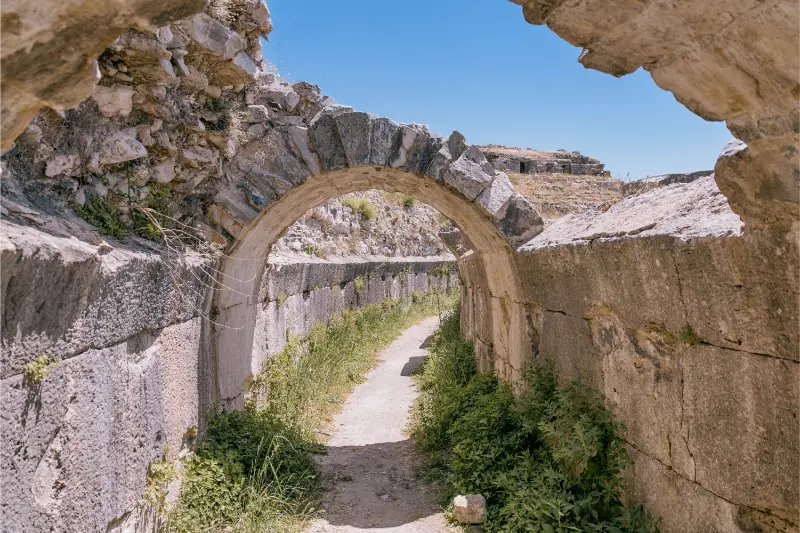
The lower level is the defining feature of the visit. Masonry, columns and adapted rooms reveal structures that predate the present church and show how practical Roman spaces could acquire new religious functions.
Do not expect a single dramatic “catacomb” experience. The value lies in reading walls, floor levels and changes in construction. A guided or well-explained visit is especially useful because the archaeology is subtle.
The tradition of Saint Paul
A long-standing tradition connects the underground area with Saint Paul and includes a column and well associated with stories of his presence. These traditions are part of the devotional history of the site even when archaeology cannot confirm every element literally.
Treat the tradition as evidence of how Romans interpreted sacred geography over centuries. The stories helped make ancient rooms meaningful to later communities and influenced how the spaces were preserved.
Pietro da Cortona’s façade
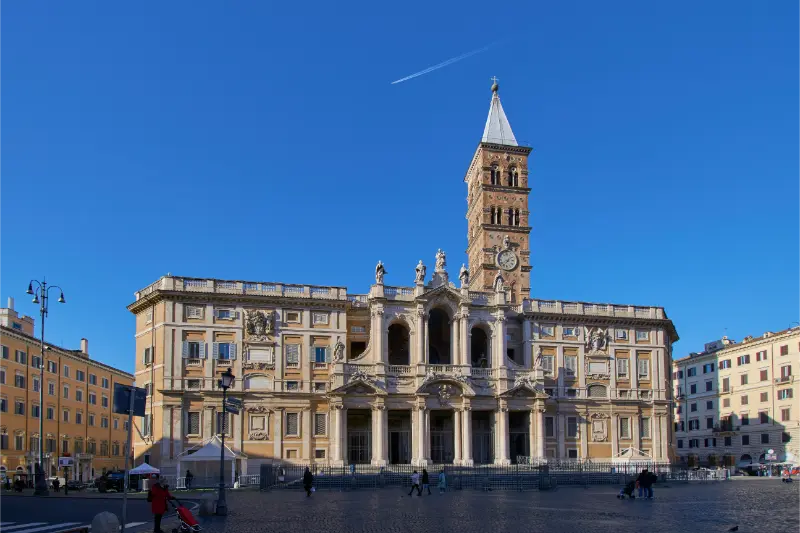
The seventeenth-century façade gives the church a formal presence on Via del Corso. Its columns, upper loggia and controlled Baroque composition create a dignified transition from commercial street to sacred interior.
Step across the street where safe and compare the façade with the longer perspective of Via del Corso. It is a good example of Baroque architecture working within a narrow, already-established urban axis.
The upper church
The interior offers a quieter counterpart to the archaeology below. Altars, chapels and devotional images belong to later centuries and demonstrate that the site never became merely an archaeological exhibit.
Visit the upper church first if possible. Understanding the living building makes the descent more meaningful because you can visualize the chronological layers directly beneath your feet.
How to plan your visit
The main practical issue is that crypt access does not necessarily follow the same rhythm as the upper church. Current visitor information can change, and managed visits may be handled by a separate organization. If the underground level is your priority, verify arrangements before you build the day around it.
Even without crypt access, the upper church is worth a short stop when walking Via del Corso. If you have a confirmed underground visit, allow enough buffer time before and after because central Rome can be crowded and pedestrian movement around major intersections is slow.
A practical way to protect the quality of the visit is to keep some flexibility around Santa Maria in Via Lata. In central Rome, church ceremonies, maintenance, special exhibitions and crowd patterns can alter what is accessible even when the building itself is open. Build a small buffer into the day, avoid placing a non-refundable timed ticket immediately afterward, and use the surrounding neighborhood as a fallback rather than treating a temporary closure as lost time. Because the site is especially useful for Underground Rome, early Christianity, Baroque architecture and Via del Corso walks, a slower visit usually gives more value than trying to squeeze it between two distant attractions.
- Confirm crypt access separately from ordinary church opening.
- Bring a light layer; underground spaces can feel cooler than the street.
- Avoid scheduling a tight museum reservation immediately afterward.
- Use the visit to connect Piazza Venezia with the Pantheon or Trevi area on foot.
- Respect worshippers in the upper church even if you are mainly interested in archaeology.
What to see nearby
After the visit, continue with the Pantheon, Trevi Fountain, our historic-center walk. Because the church sits directly on a major pedestrian axis, you can create a full half-day without using public transport.
A practical route begins near Piazza Venezia, visits Santa Maria in Via Lata, then turns west toward the Pantheon or east toward Trevi Fountain. If crowds are heavy, use the smaller side streets rather than remaining on Via del Corso for the entire walk.
Who will enjoy this stop most?
The site is particularly good for travelers fascinated by underground Rome but who do not have time for distant catacombs. It is also valuable for anyone studying early Christianity, urban continuity or Baroque façades.
Shoppers and casual walkers can enjoy the upper church in a brief stop, while archaeology enthusiasts should plan around the crypt. Children who like hidden spaces may find the lower level more engaging than a conventional art museum, provided the visit format is suitable.
For a first visit to Santa Maria in Via Lata, it helps to choose one theme before you enter rather than trying to absorb everything at once. You might follow architecture, devotional history, painting, sculpture or the relationship between the building and the streets outside. After that first pass, make a second, shorter circuit and notice details you missed. This two-stage approach is particularly effective in Rome, where interiors accumulated over centuries and a visitor can easily confuse works from very different periods. It also makes the visit easier to remember later because you leave with a few clear visual anchors rather than a long list of names.
If your schedule allows, return to the exterior after the interior visit and spend five minutes looking at Santa Maria in Via Lata in its neighborhood context. The surrounding paving, street width, nearby façades and movement of pedestrians often explain why an entrance, dome, tower or courtyard feels the way it does. Rome’s monuments were designed inside a living city, not as isolated museum objects. That final outside look often turns a good visit into a more coherent understanding of the site.
Photography, accessibility and respectful visiting
Lighting below ground can be low and photography may be restricted. Follow the instructions of staff and never use flash where prohibited. On the street, photographing the façade is easiest from an oblique angle that also captures the long line of Via del Corso.
Underground archaeological spaces frequently involve stairs and uneven surfaces, even when the upper church is more accessible. Visitors with limited mobility should confirm the exact route and lift availability before booking any crypt visit.
One more practical point is to separate seeing from documenting. At Santa Maria in Via Lata, spend the first few minutes looking without taking photographs or checking a map. Notice the direction of light, the way visitors naturally move and which details attract your attention. Only then decide what is worth recording. This reduces screen time, keeps narrow interiors calmer and usually produces better photographs because you understand the space before framing it. In active churches, this approach is also more respectful; in museums, it helps prevent the common mistake of collecting images without remembering the actual visit.
FAQ
Can I visit the crypt without booking?
Sometimes access is managed separately and may require advance arrangements. Because this is the main reason many travelers visit, check the current system before arrival.
Is the church connected with Saint Paul?
A long devotional tradition associates the underground spaces with Saint Paul. It is best understood as part of the site’s religious memory rather than a simple archaeological proof.
Is the upper church worth seeing without the crypt?
Yes. The Baroque façade, interior and position on the ancient Via Lata make it a worthwhile short stop even when the lower level is unavailable.

How long do I need?
Allow 45 to 70 minutes if you can visit the crypt. For the upper church alone, 20 to 30 minutes can be sufficient.
What can I combine nearby?
The Pantheon, Trevi Fountain and the central section of Via del Corso all fit naturally into the same walking itinerary.
Final planning advice
Santa Maria in Via Lata is a compact demonstration of Rome’s vertical history. Plan carefully if you want the underground rooms, but even a shorter visit reveals how ancient streets, early Christian institutions and Baroque architecture occupy the same urban line.