Arch of Titus Rome: Menorah Relief, History and Roman Forum Visiting Guide
Arch of Titus deserves more than a quick photograph. It is one of those places where a few minutes of historical context completely changes what you see. Many travelers pass it while concentrating on the Colosseum or the headline monuments of the Forum, but understanding its function, later transformations and position in the ancient city makes the surrounding ruins far easier to read.
This guide focuses on what is actually useful on site: what the monument was, what survives, which details are easy to miss, how access works in 2026, and how to place it inside a sensible walking route. If this is your first time in the archaeological area, also keep our Roman Forum guide and Colosseum, Roman Forum and Palatine guide open, because the Forum is much easier to understand when individual monuments are tied back to the larger topography.
Why Arch of Titus is worth your time
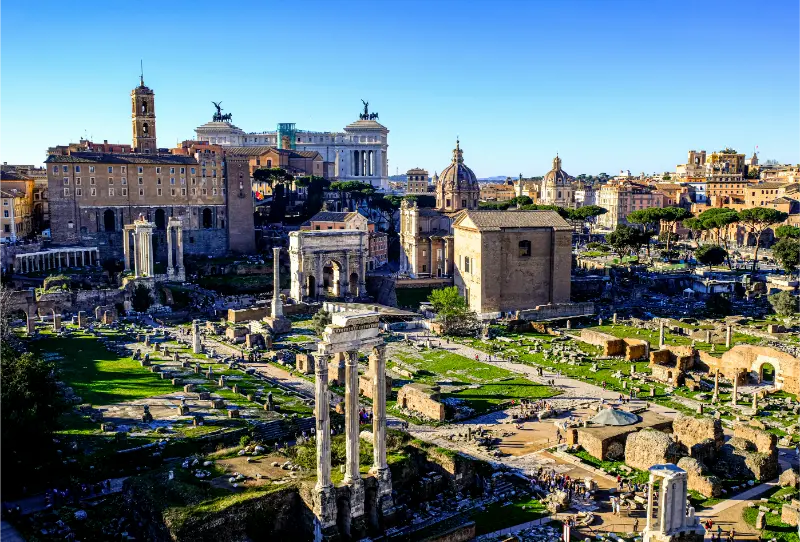
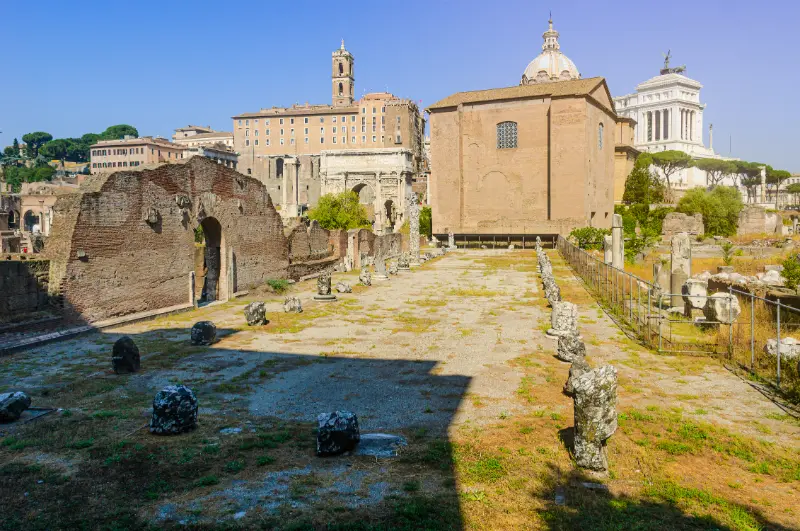
The arch stands at the eastern end of the Forum’s monumental route, where the Via Sacra rises toward the Velia. Its position made it a ceremonial gateway between the Forum and the imperial-palace zone and still gives visitors one of the clearest orientation points in the archaeological park.
The most common mistake in the Roman Forum is to treat every ruin as an isolated object. Ancient Romans experienced streets, temples, halls, arches and houses as parts of a continuous ceremonial and political landscape. The best way to visit this monument is therefore to understand both its own story and the buildings immediately around it.
History of Arch of Titus
The Arch of Titus was erected after the death and deification of Emperor Titus, who ruled from 79 to 81 AD. The attic inscription names the “divine Titus,” indicating that the dedication belongs to the period after his death, generally associated with the reign of his brother Domitian. The monument transformed dynastic memory into a permanent presence on the principal ceremonial route of Rome.
Titus had played a central role in the Roman suppression of the Jewish revolt and the capture of Jerusalem in 70 AD. Inside the passage, one relief famously shows Roman soldiers carrying spoils from the Jerusalem Temple, including the seven-branched menorah. The panel is one of the best-known visual documents of Flavian triumphal ideology and has a complex afterlife in Jewish and Roman cultural memory.
On the opposite side, another relief represents Titus in a triumphal chariot accompanied by personifications and divine figures. Above, in the center of the vault, a small panel depicts the apotheosis of Titus, shown being carried to the heavens on an eagle. These images turn the interior of the passage into a carefully staged sequence moving from earthly victory toward divine status.
The arch did not survive untouched. During the Middle Ages it became part of the fortifications associated with the Frangipane family and was later connected with a monastic complex. In the early nineteenth century, Giuseppe Valadier carried out a major restoration. Missing portions were completed in travertine rather than imitating the ancient marble, making the intervention legible and influential in the history of architectural conservation.
Conservation has continued into the modern period. The archaeological park announced a major intervention beginning in 2025 to address weathering and stone deterioration. For a visitor today, the important point is that the arch is both an ancient monument and a case study in how successive generations have decided what to preserve, replace and display.
What to look for on site
The first detail to seek is the menorah relief inside the passage. Because the carving is above eye level and the contrast changes with the sun, it may be clearer at one time of day than another. Let your eyes adjust before judging the relief from a single angle.
Look across to the triumphal chariot panel, then look up to the center of the coffered vault for the apotheosis scene. This vertical sequence is easy to miss if you simply walk under the arch while following the crowd.
Outside, compare the ancient Pentelic marble with the lighter, plainer travertine used in Valadier’s restoration. The difference is intentional and helps distinguish original fabric from nineteenth-century reconstruction.
Step away toward the Forum and then toward the Colosseum side. The arch changes character depending on whether it frames the Via Sacra, the Palatine slopes or the Colosseum valley.
Tickets and access in 2026
The Arch of Titus is inside the archaeological area of the Roman Forum, close to the access point on Via Sacra and the route toward the Palatine. You therefore need a valid ticket that includes the Forum. It is an outdoor monument, so what matters most is planning your Forum route rather than trying to book a separate visit.

Opening arrangements inside the archaeological park can change because of restoration, events, weather or conservation limits. Before setting out, check the official Parco archeologico del Colosseo page and the official opening-times and ticket page. This is particularly important for protected interiors and SUPER sites, where capacity can be lower than in the open-air Forum.
How much time to allow
If you are following a highlights route, allow around 15–25 minutes specifically for this monument, in addition to the time needed to walk between sites. Archaeology enthusiasts should budget closer to 30–45 minutes because the most interesting details are often not visible from the first viewpoint. Protected interiors may also involve short waits or controlled entry.
For the Roman Forum as a whole, rushing is usually false economy. A two-hour visit can cover major landmarks, but three hours gives you enough time to stop, read the landscape and take a few detours. If you also plan a serious visit to the Palatine, consider half a day. See our dedicated Palatine Hill guide for route planning.
Best route and nearby sights
If you enter the Forum near the Arch of Titus, resist the temptation to hurry downhill immediately. Spend time on the arch, then follow the Via Sacra past the Basilica of Maxentius and the Temple of Antoninus and Faustina toward the Forum’s central basin. If you approach from the Capitoline side, the arch works well as the final Forum monument before continuing toward the Colosseum.
For a coherent eastern-Forum cluster, combine this stop with the Basilica of Maxentius, then continue toward the Temple of Antoninus and Faustina. The Colosseum, Roman Forum and Palatine guide explains how to connect this side of the archaeological park with the Colosseum without unnecessary backtracking.
Best time of day and photography
Morning light is often useful for broader architectural photographs, but the internal reliefs can benefit from softer or angled light. A phone’s automatic exposure may brighten the sky and darken the carving, so tap on the relief and lower the exposure slightly if needed.
The Forum has little continuous shade, so comfort matters as much as light. In warm months, early morning is usually the easiest time for careful viewing. Bring water, sun protection and footwear suitable for uneven stone and gravel. In winter, low sun can be excellent for reliefs and architectural texture, but surfaces may be slippery after rain.
Accessibility and practical realities
The archaeological park has improved accessible routes, but the Forum and Palatine remain historic landscapes with slopes, cobbles, thresholds and occasional route changes. Visitors with reduced mobility should consult the official accessibility information before arrival and ask staff which entrances and paths are operating on the day.
Toilets, water points and exits are not always exactly where first-time visitors expect them, so do not wait until the last moment to look for facilities. Keep your ticket accessible on your phone and avoid leaving the archaeological area until you are certain your ticket permits re-entry; most products are designed around a single access to defined zones.
Is it worth seeing if you are short on time?
Yes, especially if you are already visiting the Forum. Arch of Titus adds a specific piece of the story that the broader ruins cannot communicate on their own. Even a short stop becomes meaningful if you identify two or three key details before moving on. If you only have a few hours in ancient Rome, prioritize the Colosseum, Forum and Palatine first, then use monuments like this one to give the route depth rather than adding a distant attraction.
FAQ
Where is the Arch of Titus?
It stands on the Via Sacra at the eastern side of the Roman Forum, between the central Forum area and the route toward the Colosseum and Palatine.

What does the menorah relief show?
It depicts Roman triumphal spoils from Jerusalem, including the seven-branched menorah associated with the Temple.
Is the Arch of Titus included with the Roman Forum ticket?
Yes. It is inside the Forum archaeological area and is seen as part of a normal Forum visit.
Why does part of the arch look different?
The nineteenth-century restoration by Giuseppe Valadier used travertine for reconstructed sections so that newer work could be distinguished from ancient marble.
Final tips for visiting Arch of Titus
Read a little before you arrive, but save detailed interpretation for the monument itself. Stand back for the overall form, move closer for material and carving, then turn around and study the neighboring buildings. That three-step method—whole monument, details, context—is one of the simplest ways to make the Roman Forum feel legible rather than overwhelming.
For current access, closures and ticket inclusions, always rely on the official monument information rather than an old screenshot or cached travel blog. Then use our Roman Forum guide to integrate this stop into a larger itinerary.