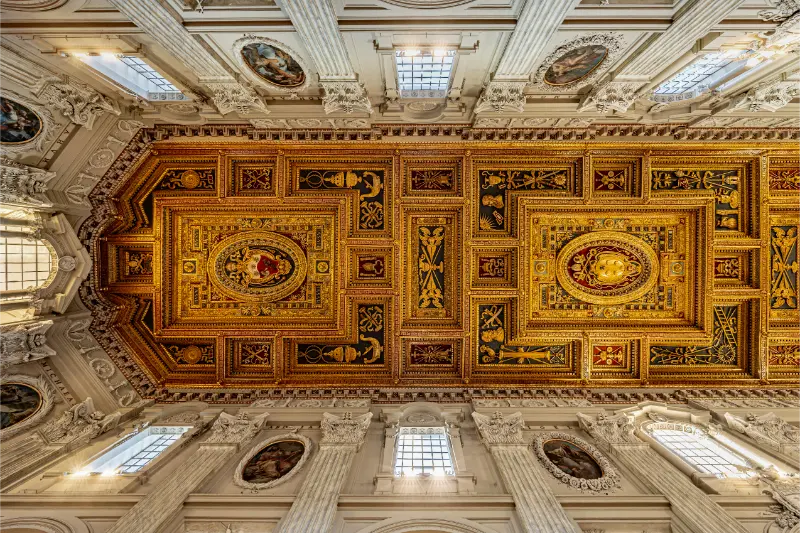
St John Lateran Rome: Basilica, Cloister and Holy Stairs Guide
St John Lateran is the cathedral of Rome and one of the city’s four papal basilicas, yet many visitors know far less about it than St. Peter’s. That makes it a valuable stop: the church has enormous religious importance, a monumental interior, a medieval cloister, an ancient baptistery nearby and the Holy Stairs complex across the road.
For travelers interested in Christian Rome, it deserves more than a hurried detour. The area is also easier to understand when visited together with other major basilicas, so use our best churches in Rome guide to place it within a broader church itinerary.
Why St John Lateran is so important
The Archbasilica of the Most Holy Savior and Saints John the Baptist and John the Evangelist at the Lateran holds the title of Rome’s cathedral because it is the episcopal seat of the Bishop of Rome, the pope. That status surprises visitors who naturally associate the papacy only with St. Peter’s Basilica in Vatican City. Understanding the distinction gives the Lateran a clearer place in the story of Rome.
The basilica’s origins go back to the age of Constantine in the fourth century. Fires, earthquakes and extensive rebuilding transformed the church over time, so the present interior is not an untouched ancient structure. Instead, it is a layered monument where early Christian importance, medieval memory and Baroque redesign coexist.
What to see in the basilica
The vast nave is lined with monumental statues of the apostles, set within Francesco Borromini’s seventeenth-century architectural framework. The scale can feel austere compared with more decorative Roman churches, but the sequence is deliberate: the saints create a powerful ceremonial route toward the transept and papal altar.
Look beyond the nave. The apse preserves important mosaics, while the Cosmatesque floor introduces a very different medieval vocabulary of colored stone. Tombs, chapels and the papal cathedra add further layers. If you enjoy architecture, notice where Borromini’s baroque interventions frame or reinterpret older elements rather than simply replacing them.
The cloister
The medieval cloister is one of the most beautiful quieter spaces in the complex. Twisted columns, mosaic decoration and a small garden create a completely different atmosphere from the monumental basilica. It requires a paid ticket, but visitors who appreciate medieval art often consider it one of the highlights.
Give yourself time to walk the perimeter slowly. The visual effect comes from repetition and variation: columns that appear similar at first reveal different shapes, materials and inlaid patterns. The cloister works especially well after the vast nave because the human scale makes the craftsmanship easier to notice.
The Lateran Baptistery
A short walk from the basilica stands the Baptistery of San Giovanni in Fonte, one of the most historically important baptismal buildings in Rome. Its octagonal form influenced later baptisteries, and the site preserves centuries of Christian architectural history. It is easy to overlook because it is outside the main church, so add it deliberately to your route.
The official basilica information currently lists the baptistery as open daily from 09:00 to 19:00. The same official page lists the basilica itself as open every day from 07:00 to 18:30, the museum from 09:00 to 17:30 and the cloister from 09:00 to 17:00. Check the official St John Lateran visitor page for any changes before you go.
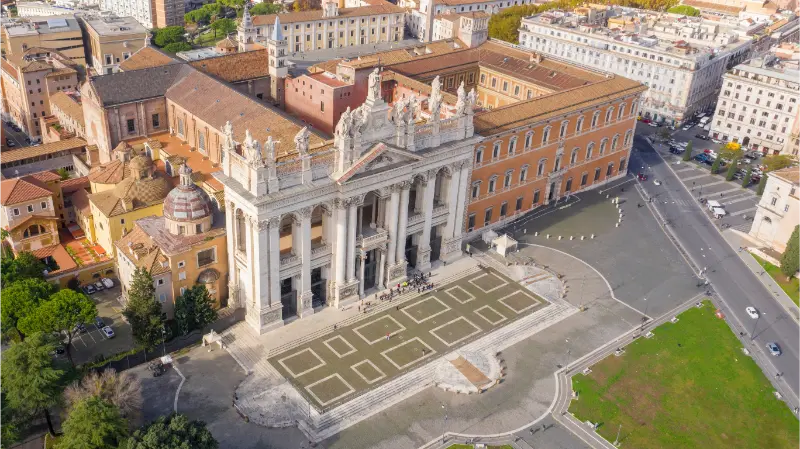
The Holy Stairs across the road
The Scala Santa, or Holy Stairs, is in a separate sanctuary near the basilica. According to Christian tradition, the staircase is associated with the steps climbed by Jesus in Jerusalem and later brought to Rome. Pilgrims traditionally ascend the central staircase on their knees, while visitors who do not wish to do so use adjacent stairs.
Whether or not you share the religious tradition, approach the space respectfully. It is an active devotional site, not a theatrical attraction. Avoid standing in the path of pilgrims for photographs and allow extra time if a group or liturgy is taking place.
How long to spend
| Area | Typical planning time |
|---|---|
| Main basilica | 45–60 minutes |
| Cloister | 20–30 minutes |
| Baptistery | 15–25 minutes |
| Holy Stairs complex | 20–40 minutes |
| Full Lateran area | About 2–3 hours |
The full complex is ideal for a half-day if Christian art and history are important to you. For a first visit with limited time, the basilica plus cloister and baptistery provide the strongest overview. Add the Holy Stairs if you are interested in pilgrimage traditions.
How to get to St John Lateran
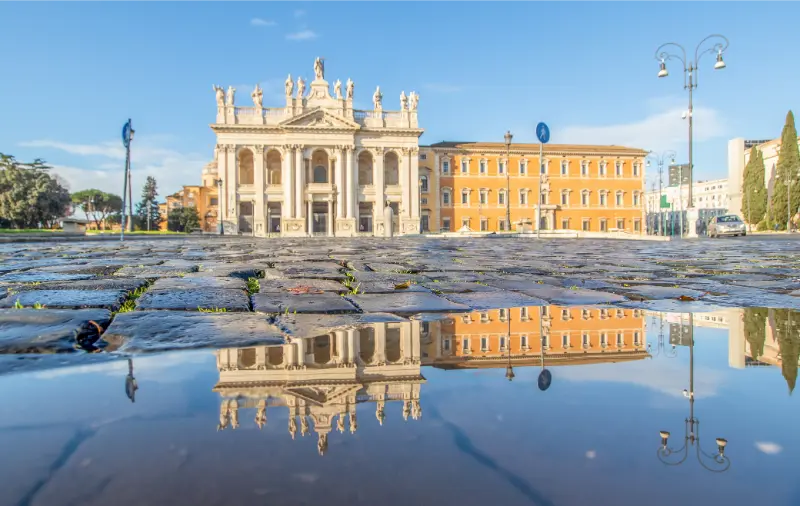
Metro Line A serves San Giovanni, making the basilica straightforward to reach from Termini, the Spanish Steps and Prati. The walk from the station is short but exposed, so in summer you may prefer an early visit. Buses are useful from the Colosseum and other parts of central Rome, though traffic can make journey times variable.
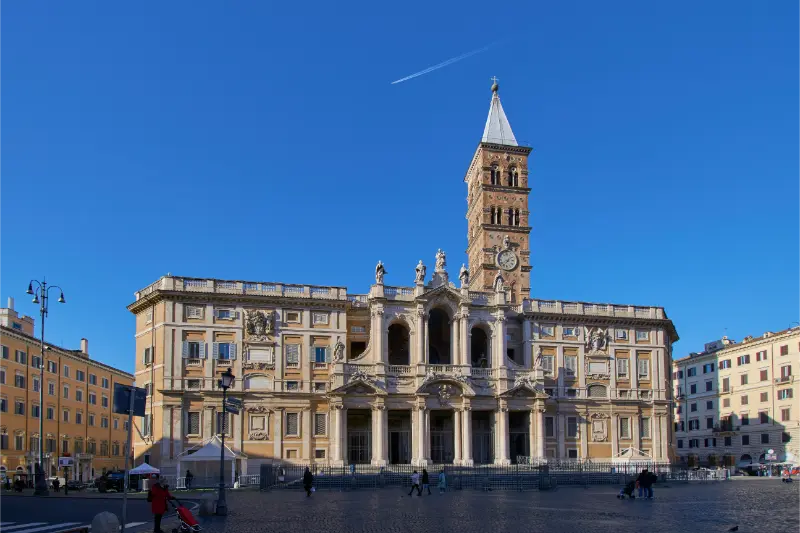
If you are building a day around several churches, Santa Maria Maggiore combines naturally with the Lateran. Read our Santa Maria Maggiore guide and travel between the two without returning to the historic center.
What to combine with the Lateran
- Basilica of Santa Croce in Gerusalemme
- Santa Maria Maggiore and Santa Prassede
- Colosseum and San Clemente
- Aurelian Walls near Porta San Giovanni
- A walk toward Celio for quieter streets and churches
San Clemente is particularly useful if you want to connect Christian Rome with archaeology. Its underground levels reveal how later churches were built over earlier structures; our San Clemente guide explains the visit.
Best time to visit
Morning is usually best for a calm visit and gives you more flexibility if a chapel or area closes temporarily. The church remains active throughout the day, and liturgical events have priority. Sundays and feast days may be more crowded or have more restricted tourist movement.
Dress code, security and accessibility
Dress for a major church: shoulders and knees should be covered, hats removed where appropriate and voices kept low. Security checks may be in place. The main basilica is much easier for reduced-mobility visitors than many archaeological sites, but historic areas such as the cloister or auxiliary spaces can involve thresholds or route limitations, so check current accessibility information if this is essential.
Common mistakes
- Assuming St. Peter’s is Rome’s cathedral
- Skipping the cloister because it has a separate ticket
- Missing the baptistery outside the basilica
- Treating the Holy Stairs as a photo opportunity rather than a devotional site
- Scheduling a tight timed entry immediately after a church visit
Frequently asked questions
Is St John Lateran free?
Entry to the main basilica is free. The cloister and some additional areas require paid admission.
Is the Lateran worth it if I have already seen St. Peter’s?
Yes. The architecture, historical role and atmosphere are different, and the surrounding complex adds the baptistery and Holy Stairs.
Can I visit the Lateran and Colosseum on the same day?
Yes. They are relatively close by Rome standards, but avoid placing a non-refundable Colosseum time slot so close that a church service or transport delay makes the day stressful.
Final advice
St John Lateran becomes much more meaningful once you understand that it is Rome’s cathedral rather than simply another large church. Visit the basilica first, add the cloister and baptistery, then cross to the Holy Stairs if the religious tradition interests you. The area is especially valuable for a second or third day in Rome, when you are ready to move beyond the Vatican–Colosseum axis.
How to make the Lateran meaningful for non-religious visitors
Even if you are not visiting for faith reasons, the Lateran is a key urban-history site. Use it to compare forms of power across Rome: imperial authority at the Colosseum, papal authority at the Lateran and modern civic life along the surrounding avenues. The building also demonstrates how major monuments are repeatedly rebuilt rather than frozen in one historical period. Looking for those transitions — ancient origins, medieval floor and cloister, Baroque nave — gives the visit a clear structure without requiring detailed knowledge of Catholic history.
Planning the Lateran with the Holy Stairs
If you want to see both the basilica and the Scala Santa, do not think of them as one continuous museum visit. Visit the basilica first while you are fresh, then the cloister and baptistery if they interest you. Cross to the Holy Stairs only after checking the atmosphere and opening access. Pilgrims may be moving slowly through the sanctuary, and your role as a visitor is to fit around that religious use. If you still have energy afterward, walk toward Santa Croce in Gerusalemme rather than returning immediately to the center. This keeps the day coherent and gives you a stronger sense of Christian Rome beyond the Vatican.
For photography, the best memories often come from architectural relationships rather than close-ups: the vast nave, the rhythm of apostle statues, the contrast between basilica and cloister, and the open space between the church and the Baptistery. Keep your camera secondary during services and devotional moments. A respectful visit is also a better visit, because you can spend time observing how a major Roman basilica still functions rather than treating it as a frozen historic interior.