Palazzo Colonna Rome: Baroque Gallery, Tickets and Visiting Guide
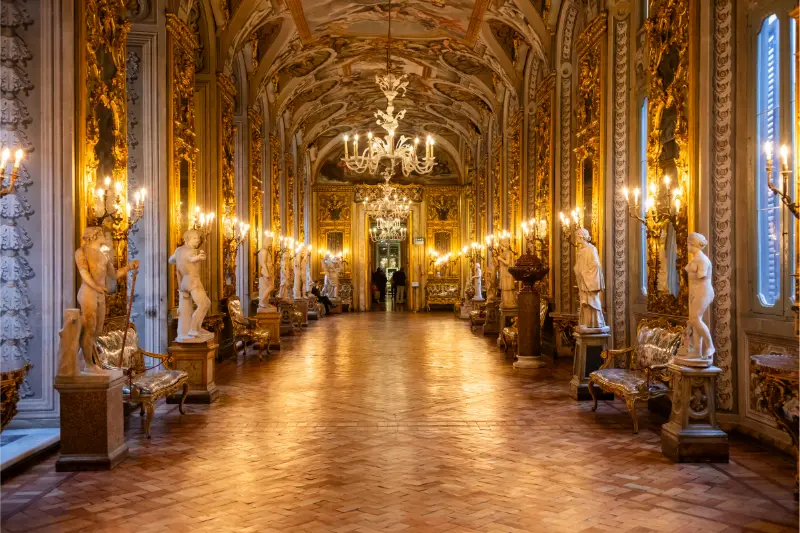
Palazzo Colonna contains one of Rome’s most spectacular Baroque gallery interiors, yet its limited public opening makes it feel very different from the city’s everyday museums. The Colonna family has been associated with the palace for centuries, and the grand gallery was designed to celebrate dynastic prestige as much as to display paintings. Gilded decoration, mirrors, ceiling frescoes, sculpture and views toward the gardens create a theatrical ensemble that is as important as the individual artworks. Because ordinary public access is concentrated on Saturday morning, Palazzo Colonna rewards advance planning more than spontaneous sightseeing.
At a glance
| Best for | Baroque interiors, historic collections and palace architecture |
| Public opening | Saturday mornings |
| 2026 Saturday hours | 9:15–13:15 last access |
| Current tickets | €15 short route; €25 complete route |
| Suggested time | 90 minutes–2 hours |
Why the Great Hall is one of Rome’s Baroque highlights
The long gallery is the visual climax of the palace. Ceiling frescoes, polished floors, paintings and sculptural decoration turn the space into a celebration of the Colonna family and particularly Marcantonio II Colonna’s role in the Battle of Lepanto. The result is not a neutral museum room but a political and social statement in architecture.
The official Palazzo Colonna visitor page confirms the unusual schedule: public opening every Saturday morning, including holidays, with admission from Via della Pilotta and last access at 13:15. This limited window is the first thing to consider when planning.
Paintings, sculpture and the historic collection
The collection includes works by major Italian and European artists, but the dense palace setting means it is better to follow themes and rooms than to search only for famous signatures. Paintings, furniture and sculpture reinforce one another and preserve the sense of a historic family collection.
If you enjoyed Galleria Doria Pamphilj, Palazzo Colonna makes an excellent comparison. Both are aristocratic collections in historic palaces, but Colonna feels even more ceremonial and spatially dramatic.
The cannonball and the memory of 1849
One of the gallery’s most memorable details is a cannonball embedded in the steps, traditionally linked to fighting during the Roman Republic of 1849. It is easy to miss among the grandeur, but it adds a later historical layer to a palace often discussed mainly through Baroque art.
Details like this are why the visit benefits from slowing down. The rooms contain evidence of different centuries, and the palace has continued to evolve rather than remaining frozen at one decorative moment.
Short route versus complete route
The current Saturday options include a €15 short route covering the gallery apartments, Pio apartments and gardens, and a €25 complete route that adds the Princess Isabelle apartments. The complete route gives a broader sense of the palace, but the shorter ticket can still be satisfying if time or budget is limited.
Private and guided visits outside ordinary public hours are available under separate conditions and pricing. For most independent travelers, Saturday morning is the realistic option. Buy ahead if your Rome dates include only one Saturday and this is a priority.
Location and what to combine nearby
Palazzo Colonna is close to Piazza Venezia, the Trevi area and the Imperial Forums. A strong route is Palazzo Colonna first thing Saturday, then the Vittoriano or Trajan’s Markets later in the day.
Do not schedule another dense palace collection immediately afterward unless you are an art specialist. The grandeur of Colonna deserves time to settle; a walk, lunch or outdoor monument is a better transition.
How to fit this into your Rome itinerary
If Saturday falls within your trip, place Palazzo Colonna at the start of that day because its public opening window is limited. Arrive early, choose the route that fits your interest, then continue into the nearby historic center after lunch.
On a longer art trip, compare Colonna with Doria Pamphilj, Palazzo Barberini and Galleria Spada on separate days. This reveals different forms of aristocratic collecting and Baroque display without creating museum fatigue.
Common mistakes to avoid
- Assuming the palace has normal daily museum hours.
- Arriving late on Saturday and expecting a long afternoon visit.
- Focusing only on paintings and ignoring the gallery as a designed architectural ensemble.
- Booking the complete route without allowing enough time to enjoy the extra apartments.

Frequently asked questions
When can the public visit Palazzo Colonna?
The standard public opening is Saturday morning, with last access currently at 13:15.
How much is admission?
The official 2026 page lists €15 for the short route and €25 for the complete route.
Is Palazzo Colonna near Piazza Venezia?
Yes. It is centrally located and easy to combine with the Vittoriano and Imperial Forums area.
How long should I allow?
Around 90 minutes is comfortable for the shorter route; allow longer for the complete visit.
Final thoughts
Palazzo Colonna is worth organizing a Saturday around because the building itself is one of Rome’s great works of Baroque display. The paintings matter, but the lasting impression is the unity of architecture, family history and ceremonial space. Plan around the limited opening, arrive with time, and resist the urge to rush through the gallery simply because the rest of Rome is waiting outside.
A more realistic way to plan the visit
Rome rewards travelers who leave buffers between fixed entries. Security checks, church services, queues, heat and simple walking fatigue can shift a schedule by thirty minutes or more. Keep one nearby alternative in mind and avoid booking another timed attraction immediately after this stop. The historic center is dense enough that a delayed entrance rarely ruins the day if the surrounding streets are part of your plan.
Decide before arriving what would make the visit successful for you. Art lovers may want to study only a handful of works; families may need a shorter circuit; photographers may care about exterior light; history travelers may spend more time reading the archaeological layers. A personal priority produces a better visit than copying a generic checklist.
Comfort, accessibility and practical pacing
Comfortable shoes matter even for short museum visits because the day around them usually includes cobbles, stairs and standing. Carry water when weather is warm, but expect food and drink restrictions inside cultural sites. Visitors with reduced mobility should verify the current accessible entrance rather than assuming the monumental doorway is step-free.

Morning visits generally give you more energy and more flexibility if access changes. Late afternoon can be atmospheric, but it raises the risk of arriving near last entry. The best time is therefore not universal: it is the time that fits the site’s opening rules and the geography of the rest of your day.
How to make the experience memorable instead of rushed
The most satisfying Rome visits usually leave you with one or two specific details rather than twenty names. Before leaving, identify the thing that surprised you most: a ceiling, a small sculpture, an unexpected view, a fragment of ancient wall or the way a street changes character. That habit turns sightseeing into memory instead of inventory.
After the visit, choose a simple transition—a coffee, a quiet square, lunch or a short walk—before opening another map search. Rome becomes tiring when every stop is treated as an isolated pin. The spaces between attractions are part of the trip, especially in neighborhoods where ordinary streets preserve more atmosphere than the formal monuments.
Who should prioritize this stop
Palazzo Colonna Rome is most rewarding when it fits the reason you came to Rome. First-time visitors should prioritize it when the subject strongly interests them or when it lies naturally beside attractions already planned in the same area. Repeat visitors have more freedom to slow down and compare details. Families, photographers and serious art or history travelers will each experience the same place differently, so build the stop around your own interest rather than an abstract ranking.
Season changes the experience as well. Summer favors early starts and shade; winter and rainy days make indoor sites especially valuable; spring and autumn offer comfortable walking weather but heavier demand. Check current access, keep the day geographically compact and leave enough space that one queue does not force you to rush everything that follows.
One final practical rule helps with almost every Rome visit: do not judge the value of a place only by the time spent inside it. A compact museum, church or archaeological area can be memorable because it clarifies the neighborhood around it and makes later sights easier to understand. Leave a few minutes afterward to look back at the façade, read the square, notice nearby streets and decide what you actually learned. That short pause often creates a stronger memory than adding another rushed stop simply because it appears close on the map. When the day is already full, choosing one meaningful experience over two hurried ones is usually the better decision.
It also helps to save the exact official visitor page before leaving your accommodation. Opening hours, last admission, temporary room closures, special events and access rules can change even when the monument itself is centuries old. A quick check on the morning of the visit takes less time than reorganizing a day after finding a closed entrance. Keep the rest of the schedule simple, and remember that nearby streets, cafés and public spaces can turn an unexpected change into a useful part of the trip rather than a problem.