Santa Croce in Gerusalemme Rome: Relics, Basilica and Visiting Guide
Santa Croce in Gerusalemme is one of Rome’s most important pilgrimage churches and one of the clearest places to see how imperial property became Christian sacred space. The basilica stands on the ancient Sessorian complex associated with Helena, mother of Constantine, and is famous for relics traditionally connected with the Passion of Christ.
Even travelers who approach relic traditions historically rather than devotionally will find the site valuable. The church links the archaeology of a late-Roman imperial residence, medieval rebuilding, Baroque redesign and the long history of pilgrimage. It also sits within walking distance of St John Lateran, making the two a natural pair.
| Planning point | Useful detail |
|---|---|
| Address | Piazza di Santa Croce in Gerusalemme 12, Rome |
| Current opening pattern | The relic chapel follows the basilica’s opening and closes shortly before services; the museum currently lists visitor reception 10:00–12:00 and 16:30–18:30, subject to change. |
| Tickets / cost | General church entry is normally free; donations support the active basilica and associated spaces. |
| Suggested time | 45–75 minutes, longer if adding the museum and nearby Lateran sites. |
| Best for | Pilgrimage history, relic traditions, late-antique imperial Rome and Baroque church architecture. |
From the Sessorium to a pilgrimage basilica
The area formed part of the Sessorium, an imperial residential complex that included palatial buildings and entertainment structures. Helena is traditionally associated with the transformation of part of the complex into a Christian worship space and with relics brought from Jerusalem. The basilica’s title reflects this symbolic relocation of the Holy Land to Rome.
Over centuries the church was repeatedly rebuilt. Medieval work reshaped the basilica, while the eighteenth-century façade produced the elegant late-Baroque appearance seen today. Reading these layers together is more useful than trying to identify one “original” Santa Croce.
The Chapel of the Relics
The relic chapel is the main devotional destination. It contains objects traditionally associated with the True Cross and Passion narrative. Visitors should approach the display with sensitivity: for believers these objects are not curiosities, while historians distinguish devotional tradition from the standards of modern archaeological proof.
The chapel is generally accessible during basilica opening but can close shortly before Masses, weddings or funerals. That is a practical reason to avoid planning the stop with only a ten-minute margin. Give yourself enough flexibility to visit another part of the church first if the chapel is temporarily unavailable.
Art, architecture and the Chapel of Saint Helena
The basilica interior contains ancient columns, later decoration and important Renaissance and Baroque interventions. The Chapel of Saint Helena is especially significant because it concentrates the memory of the empress and the Jerusalem tradition. The church’s art makes more sense when viewed as part of a functioning pilgrimage landscape rather than as a standalone gallery.
Outside, the surviving components of the Sessorian area help reconnect the church with imperial Rome. This is one of those locations where a short amount of historical preparation greatly improves the visit, because otherwise the ancient urban context is easy to overlook.
The basilica museum and practical timing
Tourism Rome currently lists the basilica museum as accessible from the sacristy during visitor-reception periods around 10:00–12:00 and 16:30–18:30, while warning that schedules can change. Treat those times as a useful planning guide and check directly with the basilica if the museum is a priority.
The church remains an active religious site. Dress modestly, silence phones and avoid photographing worshippers. A morning visit is often easiest for combining the basilica with other Lateran-area monuments before the middle of the day.
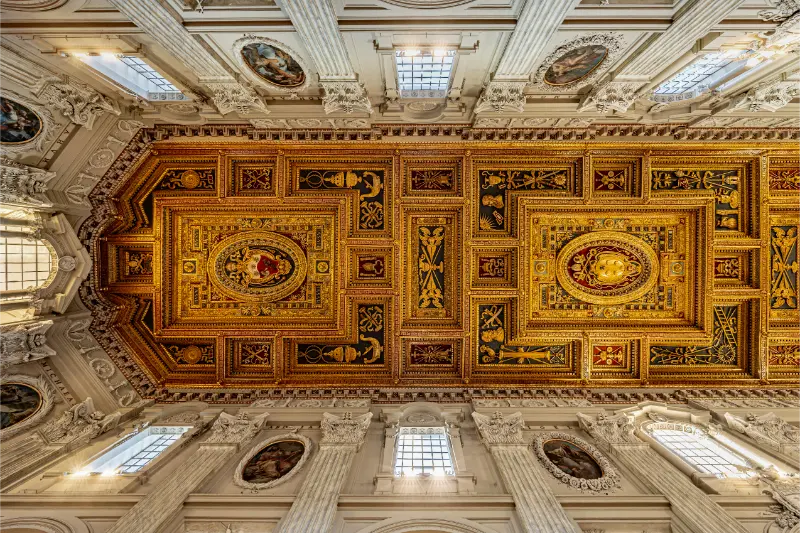
A Lateran-area itinerary
Pair Santa Croce with St John Lateran and the surrounding San Giovanni district. The two basilicas represent different aspects of Christian Rome: one is the cathedral of the city, while the other grew around relic traditions and the Sessorian complex.
If you still have time, continue toward Santo Stefano Rotondo or the Colosseum area. The key is not to overload the day with too many churches; two or three carefully visited interiors will be more memorable than a checklist of ten.
How to get there
The easiest route depends on where you are staying, but do not judge the journey only by straight-line distance on a map. Rome combines metro, bus, tram and walking, and the final approach to Santa Croce in Gerusalemme Rome can be part of the experience. Use live transit information on the day because diversions, road works and strikes occasionally affect surface transport.
If you are using taxis or ride-hailing, enter the full address rather than only the attraction name, especially for churches and archaeological complexes with more than one entrance. Travelers with reduced mobility should check the official accessibility information before departure because historic paving, stairs, underground sections and monastic buildings can create barriers that are not obvious from a map.
Best time to visit
For most travelers, the best time is early in the day or in the later afternoon outside the hottest summer hours. Churches are usually quietest between major liturgies; open-air sites are more comfortable when the sun is lower; neighborhood walks work best in daylight. On Sundays and religious feast days, worship takes priority and tourist access may be reduced even when the building itself is open.
Rome changes dramatically by season. From June to September, heat and strong sun can make exposed archaeological areas tiring, so carry water and use shaded breaks. In winter, shorter daylight matters more for parks, cemeteries and street-art walks. Spring and autumn usually provide the easiest balance, but they can also bring school groups and special events.
How long should you allow?
A realistic visit is 45–75 minutes, longer if adding the museum and nearby lateran sites. The most common planning mistake is to budget only the time spent inside the headline space and forget the approach, security, a possible queue, a closed chapel, a guided-tour start time or simply the desire to sit and look. Add buffer time if this is a priority sight rather than something you would be happy to skip.
If you are building a full sightseeing day, pair this stop with one or two nearby places rather than crossing Rome repeatedly. The city rewards geographic clustering: you save transport time, reduce fatigue and notice connections between neighborhoods that disappear when every attraction is treated as a separate destination.
A sensible nearby itinerary
The most natural nearby extensions are St John Lateran, San Giovanni, Santo Stefano Rotondo. Choose the combination that fits your interests rather than trying to include all of them automatically. A strong half-day usually contains one main site, one secondary stop and time for coffee or lunch.
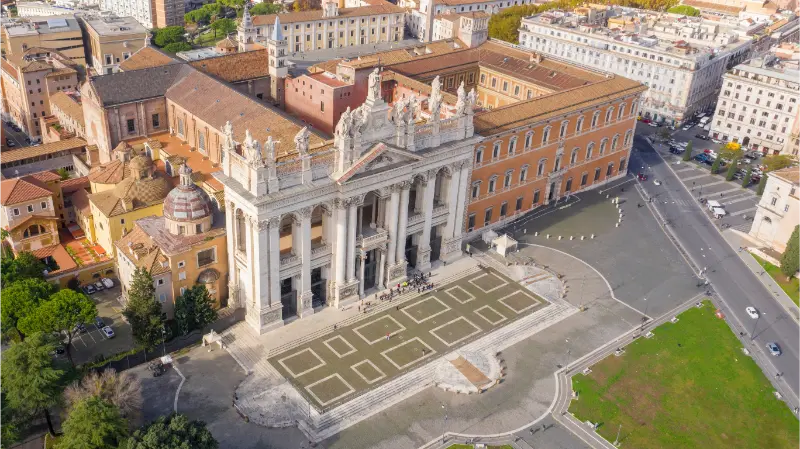
When you link the places on foot, check the terrain rather than only the distance. Rome’s hills, cobblestones and busy road crossings can turn a short route into a slower walk than expected. In hot weather, use public transport for the least interesting segment and save your energy for the historic areas themselves.
Tickets, reservations and changing information
Use the official website or official visitor page shortly before your visit. Opening hours, admission rules and temporary closures can change for restoration, religious celebrations, staff availability or special events. The information in this guide reflects the current 2026 situation, but a same-week check is always the safest habit.
Do not buy an expensive third-party ticket simply because a search result makes the site look sold out. First establish whether the attraction actually requires advance booking. Many Rome churches are free, some municipal museums sell ordinary tickets at the door, and several specialist spaces operate only by guided visit. Paying more does not necessarily buy better access.
Who will enjoy this stop most?
This stop is particularly strong for travelers interested in pilgrimage history, relic traditions, late-antique imperial rome and baroque church architecture. It is also useful for repeat visitors who already know the Trevi Fountain–Colosseum–Vatican circuit and want a more layered picture of the city. First-time visitors can include it too, but only if the subject genuinely interests them; Rome has too much to see for obligation-driven sightseeing.
Families should consider the attention span of children rather than the prestige of the monument. Outdoor archaeology and street art often work well with school-age children, while long church or cemetery visits may need a clear story or scavenger-hunt approach. For any underground space, check age, mobility and temperature considerations before promising the visit.
Visitor etiquette and practical mistakes to avoid
- Check current opening information on the same week as your visit, not months in advance.
- For churches, avoid sightseeing during Mass and dress with shoulders and knees appropriately covered.
- Do not photograph worshippers, mourners or residents without permission.
- Carry water in warm weather, but never eat inside churches, chapels or protected archaeological areas.
- Use the exact entrance address; large complexes and parks may have several gates.
- Leave a time buffer so a short queue, service or temporary closure does not disrupt the entire day.
FAQ
Is Santa Croce in Gerusalemme Rome worth visiting?
Yes if you are interested in pilgrimage history, relic traditions, late-antique imperial rome and baroque church architecture. It offers a different layer of Rome from the major headline attractions and works especially well when combined with nearby sights.
Do I need to book in advance?
Not always. The requirement depends on the specific space, guided tour or temporary exhibition. Check the official page shortly before travel and book only when the site actually requires or strongly recommends it.
How much time should I plan?
45–75 minutes, longer if adding the museum and nearby Lateran sites. Add extra time if you are combining the stop with a guided underground visit, a cloister, a museum section or a longer neighborhood walk.
Can I visit with children?
Usually yes, but the experience depends on the child and the site. Outdoor spaces tend to be easier, while quiet churches and cemeteries require respectful behavior. Underground sites may have stairs and narrow passages.
What should I see nearby?
The strongest nearby choices are St John Lateran, San Giovanni, Santo Stefano Rotondo. Keep the day geographically compact rather than crossing the city after every stop.
Final planning advice
Santa Croce in Gerusalemme Rome is most rewarding when you treat it as part of Rome’s wider urban story rather than an isolated checklist item. Read a little before arrival, verify the current access rules, give the site enough time and then continue through the surrounding neighborhood. That combination of context and slow observation is what turns a lesser-known stop into one of the memorable parts of a Rome trip.