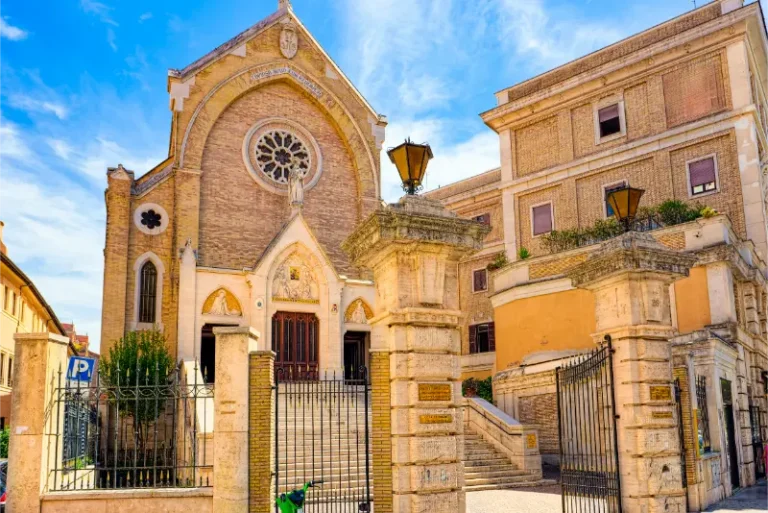
Galleria Doria Pamphilj Rome: Caravaggio, Velázquez and Visiting Guide
Galleria Doria Pamphilj offers one of Rome’s richest combinations of Old Master painting and aristocratic palace atmosphere. Hidden behind a long façade on Via del Corso, the gallery contains works by Caravaggio, Velázquez, Titian, Raphael, Bernini and many others, displayed in rooms that still feel connected to the Doria Pamphilj family. It is particularly rewarding for travelers who want a major collection without the scale and crowd intensity of the Vatican Museums. The long mirrored galleries, private apartments and dense hanging style create an experience closer to entering a historic collection than walking through a modern museum.
At a glance
| Best for | Old Masters, palace interiors and Baroque Rome |
| Location | Via del Corso, close to Piazza Venezia |
| 2026 weekly closing | Wednesday |
| Current standard ticket | €16 at the museum; €17 online |
| Suggested time | 90 minutes–2 hours |
Why the gallery feels different from Rome’s larger museums
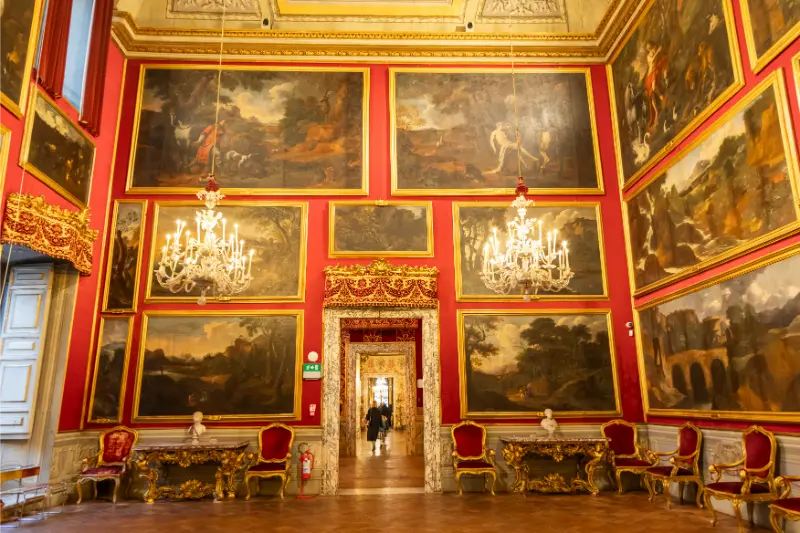
What makes Doria Pamphilj memorable is not simply the number of famous names. Paintings are still presented within a palace environment, often in dense groupings that echo historical collecting habits. That changes how you look. Instead of moving through white galleries organized only by chronology, you are also reading family taste, status and domestic display.
The official Doria Pamphilj ticket page currently lists opening on Monday, Tuesday and Thursday from 9:00 to 19:00, and Friday through Sunday from 10:00 to 20:00, with Wednesday as the weekly closing day. The current standard ticket is €16 at the museum and €17 with online booking.
The portrait of Pope Innocent X by Velázquez
The portrait of Pope Innocent X is one of the gallery’s essential works. Velázquez created an image that is both official and psychologically penetrating, and seeing it in the family collection connected to the pope gives it additional force. Do not rush past after recognizing the famous face; pay attention to the red fabrics, the hands and the directness of the sitter’s expression.
Nearby works connected with the Pamphilj family help frame the portrait as more than a standalone masterpiece. This is one of the museum’s strengths: famous art remains embedded in the history of the people who commissioned, inherited and displayed it.
Caravaggio, Titian and the pleasure of close looking
Caravaggio is another major reason to visit, with works that demonstrate his dramatic handling of light and physical presence. If you are following the artist around the city, connect this gallery with the Caravaggio in Rome route and Santa Maria del Popolo. Seeing paintings in both museums and active churches reveals how differently they function in each setting.
Titian, Raphael, Carracci and many other artists can turn the gallery into an exhausting name hunt if you try to “collect” every masterpiece. A better strategy is to choose five to eight works to study carefully and let the rest build atmosphere. The collection rewards attention rather than speed.
The Hall of Mirrors and palace interiors
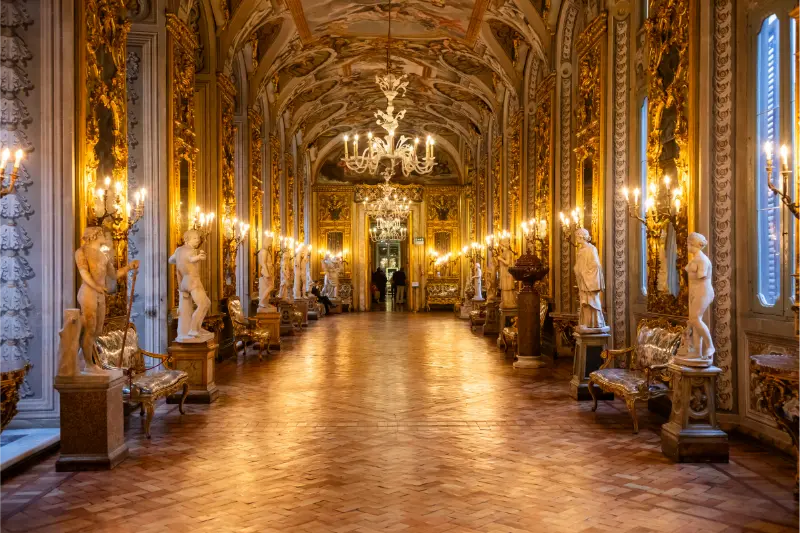
The grand gallery spaces are as memorable as many individual paintings. Mirrors, gilded decoration, ceiling paintings and long perspectives produce the theatrical quality associated with aristocratic Baroque Rome. These rooms also provide a useful contrast with the more archaeological collections elsewhere in the city.
If your itinerary already includes Palazzo Barberini or Galleria Borghese, Doria Pamphilj is still worthwhile because the experience is different. Barberini feels like a state museum in a grand palace, Borghese is a tightly controlled masterpiece collection, while Doria Pamphilj preserves a more private-family character.
Booking, timing and practical advice
Online booking is recommended by the gallery and gives direct entry at the booked time, although tickets are also sold at the ticket office while capacity remains. Because the gallery closes on Wednesday, it can be a useful alternative on Monday, when several other museums in Rome close. Always confirm holiday closures before finalizing your day.
Allow at least ninety minutes. The dense display makes visual fatigue a real issue, so pause in the longer galleries instead of trying to read every label continuously. Small bags and normal museum etiquette are the safest plan; check the official rules if you are carrying luggage or professional photographic equipment.
How to fit this into your Rome itinerary
Doria Pamphilj fits beautifully into a historic-center day. Start around Piazza Venezia, visit the gallery, then continue toward the Pantheon and Piazza Navona. Because the museum is indoors and centrally located, it is also an excellent rainy-day anchor.
For an art-focused itinerary, pair Doria Pamphilj conceptually with Palazzo Colonna or Palazzo Barberini rather than physically forcing several large museums into one day. One substantial palace collection per half day is usually enough if you want to enjoy the art rather than simply count rooms.
Common mistakes to avoid
- Assuming the gallery is open on Wednesday.
- Racing through the rooms only to find the most famous names.
- Ignoring the palace architecture and focusing only on canvases.
- Scheduling another major art museum immediately afterward without a break.
Frequently asked questions
How much is the Doria Pamphilj Gallery?

The current official standard price is €16 at the museum and €17 online.
What day is it closed?
Wednesday is the weekly closing day under the current schedule.
How long should I spend?
About 90 minutes to two hours works well for most visitors.
Is it close to the Pantheon?
Yes. It is centrally located on Via del Corso and can be combined with Piazza Venezia, the Pantheon and Piazza Navona.
Final thoughts
Galleria Doria Pamphilj is a strong choice for travelers who want world-class painting without losing the sense of place. The combination of Velázquez, Caravaggio, family history and sumptuous interiors gives the visit a distinctive identity. Treat it as a palace collection, not a checklist, and it can become one of the most memorable indoor experiences in central Rome.

A more realistic way to plan the visit
Rome rewards travelers who leave buffers between fixed entries. Security checks, church services, queues, heat and simple walking fatigue can shift a schedule by thirty minutes or more. Keep one nearby alternative in mind and avoid booking another timed attraction immediately after this stop. The historic center is dense enough that a delayed entrance rarely ruins the day if the surrounding streets are part of your plan.
Decide before arriving what would make the visit successful for you. Art lovers may want to study only a handful of works; families may need a shorter circuit; photographers may care about exterior light; history travelers may spend more time reading the archaeological layers. A personal priority produces a better visit than copying a generic checklist.
Comfort, accessibility and practical pacing
Comfortable shoes matter even for short museum visits because the day around them usually includes cobbles, stairs and standing. Carry water when weather is warm, but expect food and drink restrictions inside cultural sites. Visitors with reduced mobility should verify the current accessible entrance rather than assuming the monumental doorway is step-free.
Morning visits generally give you more energy and more flexibility if access changes. Late afternoon can be atmospheric, but it raises the risk of arriving near last entry. The best time is therefore not universal: it is the time that fits the site’s opening rules and the geography of the rest of your day.
How to make the experience memorable instead of rushed
The most satisfying Rome visits usually leave you with one or two specific details rather than twenty names. Before leaving, identify the thing that surprised you most: a ceiling, a small sculpture, an unexpected view, a fragment of ancient wall or the way a street changes character. That habit turns sightseeing into memory instead of inventory.
After the visit, choose a simple transition—a coffee, a quiet square, lunch or a short walk—before opening another map search. Rome becomes tiring when every stop is treated as an isolated pin. The spaces between attractions are part of the trip, especially in neighborhoods where ordinary streets preserve more atmosphere than the formal monuments.
Who should prioritize this stop
Galleria Doria Pamphilj Rome is most rewarding when it fits the reason you came to Rome. First-time visitors should prioritize it when the subject strongly interests them or when it lies naturally beside attractions already planned in the same area. Repeat visitors have more freedom to slow down and compare details. Families, photographers and serious art or history travelers will each experience the same place differently, so build the stop around your own interest rather than an abstract ranking.
Season changes the experience as well. Summer favors early starts and shade; winter and rainy days make indoor sites especially valuable; spring and autumn offer comfortable walking weather but heavier demand. Check current access, keep the day geographically compact and leave enough space that one queue does not force you to rush everything that follows.
One final practical rule helps with almost every Rome visit: do not judge the value of a place only by the time spent inside it. A compact museum, church or archaeological area can be memorable because it clarifies the neighborhood around it and makes later sights easier to understand. Leave a few minutes afterward to look back at the façade, read the square, notice nearby streets and decide what you actually learned. That short pause often creates a stronger memory than adding another rushed stop simply because it appears close on the map. When the day is already full, choosing one meaningful experience over two hurried ones is usually the better decision.