Galleria Spada Rome: Borromini Perspective, Art and Visiting Guide
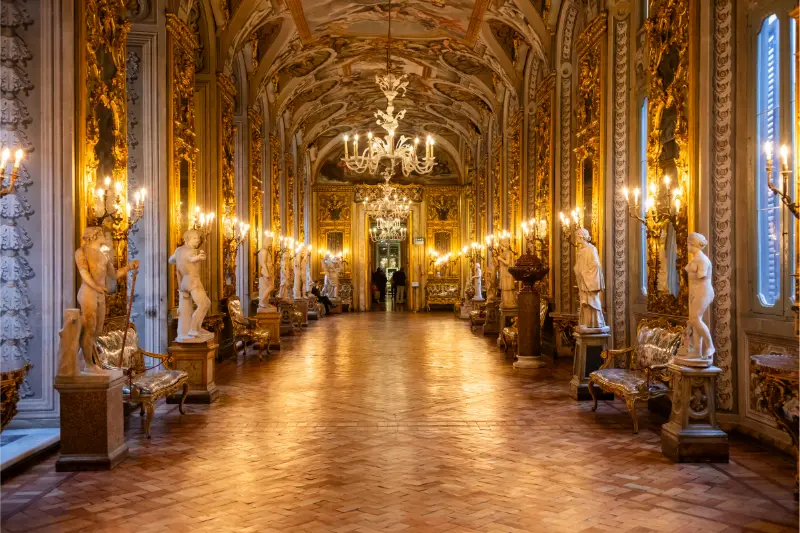
Galleria Spada is one of central Rome’s best small museums, combining a compact Baroque painting collection with Francesco Borromini’s famous forced-perspective colonnade. Housed in Palazzo Capodiferro near Campo de’ Fiori, the gallery can be visited without surrendering half a day, yet it offers both serious art and one of the city’s cleverest architectural illusions. The museum’s scale is a major advantage: four gallery rooms retain the feel of a seventeenth-century collection, while the secret garden leads to Borromini’s perspective, which makes a short corridor appear dramatically longer than it really is.
At a glance
| Best for | Baroque art, Borromini and small museums |
| Address | Piazza Capo di Ferro 13 |
| 2026 hours | Mon & Wed–Sun 8:30–19:30; Tuesday closed |
| Current full ticket | €6 |
| Suggested time | 60–90 minutes |
Why Galleria Spada is such a useful Rome museum
Rome’s biggest museums can be tiring because the collections are enormous. Galleria Spada offers the opposite experience. The rooms are dense but few, so you can look carefully without feeling that you have failed if you leave after an hour. It is ideal for travelers who want a meaningful art stop inside a broader walking day.
The official Galleria Spada visitor page lists opening from 8:30 to 19:30 on Monday and Wednesday through Sunday, with Tuesday closed. The standard full ticket is €6, making it one of the more affordable state museum experiences in the historic center.
Borromini’s forced-perspective colonnade
The best-known feature is the perspective gallery designed by Francesco Borromini in the seventeenth century. Through a carefully calculated combination of narrowing walls, rising floor, decreasing column size and shrinking proportions, a passage only a few meters deep appears far longer. A small statue at the far end looks life-size from the entrance.
The illusion is more impressive when you understand the method before looking. It is not a digital trick or optical device: architecture itself manipulates perception. Access into the colonnade is restricted for conservation, but the viewpoint from the garden is enough to appreciate the effect.
The paintings: what to look for
The collection includes Guido Reni, Guercino, Orazio and Artemisia Gentileschi, Titian, Parmigianino and artists connected with Caravaggism. The historical hanging is dense, so choose a few works to study instead of reading every label in sequence.
If Baroque painting is a major interest, connect this museum with Palazzo Barberini and Doria Pamphilj. Spada is smaller and more intimate, which can actually make individual pictures easier to remember.
Tickets, first Sundays and practical details
Single visitors do not normally have to reserve. The ticket office closes at 19:00, and the last access to the Secret Garden with Borromini’s colonnade is earlier, currently 18:30. This distinction matters if you arrive late in the day specifically for the perspective.
Admission is free on the first Sunday of the month under the current state-museum policy, with special conditions on groups and reservations. Free days can be busier, so paying €6 on another day may be worth it if you value a calmer visit.
What to combine nearby
Galleria Spada is steps from Campo de’ Fiori and close to Via Giulia. You can also continue toward Piazza Navona, Largo Argentina or the Jewish Ghetto. The central location is one of the museum’s biggest practical advantages.
A good sequence is Spada in the morning, coffee or lunch near Campo de’ Fiori, then a walk along Via Giulia toward the Tiber. This gives the day variety and keeps almost everything on foot.
How to fit this into your Rome itinerary
Use Galleria Spada as a compact cultural anchor in a historic-center walking day. Because it is usually open Monday, it is also valuable on a day when some other museums are closed.
If architecture is your priority, combine Borromini’s perspective with Bernini sites elsewhere in Rome and use the Bernini guide to understand the broader Baroque context. Avoid trying to turn the comparison into a rivalry; the two architects solved very different spatial problems.
Common mistakes to avoid
- Arriving after the final access to the Secret Garden when the Borromini perspective is your main goal.
- Assuming Tuesday opening without checking; Tuesday is the weekly closing day.
- Treating the perspective as a quick photo trick and ignoring how the architecture creates it.
- Skipping the painting rooms after seeing the famous colonnade.
Frequently asked questions
How much is Galleria Spada?
The current full ticket is €6, with the usual state-museum reductions and free categories.
What day is Galleria Spada closed?
Tuesday.
How long does the visit take?
About 60–90 minutes is enough for most visitors.
Can you walk through Borromini’s perspective corridor?
No. Access to the interior of the colonnade is restricted for conservation, but it can be viewed from the Secret Garden.
Final thoughts
Galleria Spada proves that a small museum can deliver a very complete Rome experience. You get a historic palace, Baroque painting, a celebrated architectural illusion and a location that fits naturally into the center. It is especially good for travelers who want depth without committing several hours to another giant collection.
A more realistic way to plan the visit
Rome rewards travelers who leave buffers between fixed entries. Security checks, church services, queues, heat and simple walking fatigue can shift a schedule by thirty minutes or more. Keep one nearby alternative in mind and avoid booking another timed attraction immediately after this stop. The historic center is dense enough that a delayed entrance rarely ruins the day if the surrounding streets are part of your plan.
Decide before arriving what would make the visit successful for you. Art lovers may want to study only a handful of works; families may need a shorter circuit; photographers may care about exterior light; history travelers may spend more time reading the archaeological layers. A personal priority produces a better visit than copying a generic checklist.
Comfort, accessibility and practical pacing
Comfortable shoes matter even for short museum visits because the day around them usually includes cobbles, stairs and standing. Carry water when weather is warm, but expect food and drink restrictions inside cultural sites. Visitors with reduced mobility should verify the current accessible entrance rather than assuming the monumental doorway is step-free.

Morning visits generally give you more energy and more flexibility if access changes. Late afternoon can be atmospheric, but it raises the risk of arriving near last entry. The best time is therefore not universal: it is the time that fits the site’s opening rules and the geography of the rest of your day.
How to make the experience memorable instead of rushed
The most satisfying Rome visits usually leave you with one or two specific details rather than twenty names. Before leaving, identify the thing that surprised you most: a ceiling, a small sculpture, an unexpected view, a fragment of ancient wall or the way a street changes character. That habit turns sightseeing into memory instead of inventory.
After the visit, choose a simple transition—a coffee, a quiet square, lunch or a short walk—before opening another map search. Rome becomes tiring when every stop is treated as an isolated pin. The spaces between attractions are part of the trip, especially in neighborhoods where ordinary streets preserve more atmosphere than the formal monuments.
Who should prioritize this stop
Galleria Spada Rome is most rewarding when it fits the reason you came to Rome. First-time visitors should prioritize it when the subject strongly interests them or when it lies naturally beside attractions already planned in the same area. Repeat visitors have more freedom to slow down and compare details. Families, photographers and serious art or history travelers will each experience the same place differently, so build the stop around your own interest rather than an abstract ranking.
Season changes the experience as well. Summer favors early starts and shade; winter and rainy days make indoor sites especially valuable; spring and autumn offer comfortable walking weather but heavier demand. Check current access, keep the day geographically compact and leave enough space that one queue does not force you to rush everything that follows.
One final practical rule helps with almost every Rome visit: do not judge the value of a place only by the time spent inside it. A compact museum, church or archaeological area can be memorable because it clarifies the neighborhood around it and makes later sights easier to understand. Leave a few minutes afterward to look back at the façade, read the square, notice nearby streets and decide what you actually learned. That short pause often creates a stronger memory than adding another rushed stop simply because it appears close on the map. When the day is already full, choosing one meaningful experience over two hurried ones is usually the better decision.
It also helps to save the exact official visitor page before leaving your accommodation. Opening hours, last admission, temporary room closures, special events and access rules can change even when the monument itself is centuries old. A quick check on the morning of the visit takes less time than reorganizing a day after finding a closed entrance. Keep the rest of the schedule simple, and remember that nearby streets, cafés and public spaces can turn an unexpected change into a useful part of the trip rather than a problem.