Porta Pinciana Rome: Aurelian Walls, Belisarius and Villa Borghese
Porta Pinciana Rome is the kind of place that changes how you read the city. It is not simply another item to add to a checklist: it explains how roads, walls, water systems, burial customs and neighborhoods evolved around one another. Because the monument sits inside modern Rome rather than in an isolated archaeological park, the surrounding streets are part of the experience.
This 2026 guide focuses on what is genuinely useful for an independent visit: what the monument was, what survives, how long to allow, how current access works and which nearby places make the strongest combination. Conditions at archaeological sites can change because of conservation projects, special openings and safety work, so always verify the official source shortly before a visit.
Porta Pinciana at a glance
| Location | At the edge of Villa Borghese near Via Veneto |
| Time to allow | 15–25 minutes |
| Best for | Ancient Rome, archaeology, urban history and travelers who enjoy less obvious monuments |
| 2026 access | Porta Pinciana is an outdoor city gate and can be viewed freely from the surrounding public streets. Modern traffic passes through adjacent openings, so choose viewpoints carefully. |
| Planning tip | Visit as part of a geographic cluster instead of making a long cross-city trip for one small monument. |
Why Porta Pinciana is worth seeing
Rome’s most famous attractions are impressive because of scale, but smaller monuments often explain the city more clearly. At Porta Pinciana, you can see how an ancient structure was tied to the practical geography of roads, defenses, water, burial or elite property. That context helps turn scattered ruins into a connected city rather than a collection of isolated masterpieces.
The visit is also efficient. You do not need half a day to understand the site, and in most cases the surrounding district contains enough additional material to build a rewarding walk. Travelers on a second or third trip to Rome often enjoy these places precisely because they require observation rather than queueing.
Another advantage is perspective. Many Roman monuments were reused, buried, fortified, attached to churches, crossed by modern roads or reinterpreted by later generations. The visible structure therefore tells several histories at once. Look for changes in masonry, street level and orientation; they are often as informative as decorative details.
History and archaeology
Porta Pinciana began as a modest postern in the Aurelian Walls at the end of the third century AD. Its position near the Pincian Hill gave it strategic importance, and under Honorius the entrance was strengthened with towers and a more substantial defensive arrangement.
The gate is closely associated with the Gothic War. During the siege of Rome in 537–538, the Byzantine general Belisarius defended this sector against the Ostrogoths of King Witiges. The surviving structure therefore provides a tangible link with the dramatic period when imperial control of Italy was being contested centuries after the fall of the western Roman emperors.
The name derives from the gens Pincia, a family associated with property on the hill. Medieval tradition produced alternative names, including Porta Belisaria, while repeated closures and reopenings reflected the changing military and traffic needs of the city.
Today the gate sits between two very different Roman experiences: the greenery of Villa Borghese and the urban elegance of Via Veneto. This contrast makes it one of the easiest ancient defensive monuments to integrate into a broader sightseeing day.
What to look for during your visit
- The original central arch and later defensive towers
- The asymmetry created by different construction phases
- The relationship between the gate and the Aurelian curtain wall
- The topography of the Pincian Hill
- The transition from Villa Borghese greenery to Via Veneto streets
Do not worry if the monument initially looks fragmentary. Ancient structures are easiest to understand when you separate three questions: what was the original function, which parts belong to that first phase, and what later additions changed the appearance. Reading the site in that order prevents modern streets and later walls from becoming visual noise.
Spend a few minutes looking at the monument from more than one angle. Rome’s archaeological remains were designed in relation to roads and approaches, so the “best” front view is not always the only useful one. Side views can reveal blocked arches, different building materials, old ground levels and connections that disappear in a standard photograph.
How to visit in 2026
Porta Pinciana is an outdoor city gate and can be viewed freely from the surrounding public streets. Modern traffic passes through adjacent openings, so choose viewpoints carefully. If access is important to you, check again on the morning of the visit. Rome’s municipal and state archaeological authorities sometimes adjust opening calendars for restoration, staffing, heat or special events, and old blog posts can remain online long after conditions change.
Check the official visitor information before setting out. For monuments that are normally viewed from public streets, an official page is still useful because it can report conservation scaffolding, temporary barriers or guided-opening dates that are not obvious on general map listings.
Best time of day
Morning is usually the easiest choice, especially from late spring through early autumn. Light is softer, temperatures are lower and pavements are less crowded. For outdoor monuments, late afternoon can also be excellent, but remember that tall modern buildings may cast the site into shade earlier than expected.
Weekdays are preferable when your route passes offices, schools or transport hubs. Sunday can feel calmer in residential areas, while major basilica districts may become busier around services. If photography matters, check the orientation on a map before you go rather than assuming midday sun will improve the view.
How long should you allow?
For Porta Pinciana, allow approximately 15–25 minutes. That is enough for a careful look without turning a compact monument into an artificially long stop. The better strategy is to add two or three nearby places and turn the area into a thematic walk.
If you are following a guided opening, arrive early. Small archaeological sites often have stricter group sizes and meeting procedures than major museums because corridors, stairs or underground rooms are narrow. Build at least fifteen minutes of buffer into the plan and do not schedule a timed Colosseum or Vatican entry immediately afterward.
What to see nearby
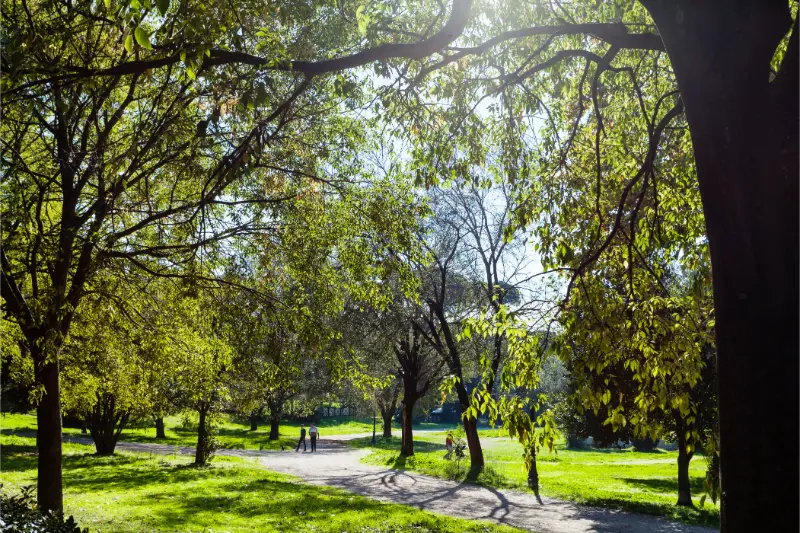
Combine Porta Pinciana with a walk through Villa Borghese, the Pincio terraces and Via Veneto. This route mixes ancient fortifications, landscaped parkland and twentieth-century Rome without requiring public transport between stops.
Useful MyRomeTrip guides for building that route include Aurelian Walls; Villa Borghese; Via Veneto. Internal links are more helpful here than a long list of unrelated attractions because the aim is to keep your day geographically compact and reduce unnecessary transport.
A simple self-guided route
- Start at the nearest major landmark or transport stop and approach on foot so you can understand the topography.
- Walk around Porta Pinciana once before reading details; note road direction, ground level and later buildings.
- Return to the most informative side and identify the structural features described above.
- Continue to one nearby ancient site rather than crossing the city immediately.
- Finish in a neighborhood square, park or café where you can review the route and decide whether to add another stop.
This sequence sounds simple, but it solves a common Rome-planning problem: rushing directly from one “must-see” entrance to another and missing the urban relationships between them. Ancient Rome is often more legible while walking between sites than when standing inside a single monument.
Photography and responsible visiting
Use a normal or slightly wide lens rather than an extreme wide angle if you want architecture to look proportionate. Include part of the modern street in at least one frame: the contrast helps communicate why this monument is interesting today. At busy gates and road junctions, never step into traffic for a centered photograph.
Do not climb, sit on ancient masonry or reach through barriers. Even apparently robust stone can contain fragile surfaces, mortar and conservation sensors. If a site is closed, respect the closure and view it from legal public areas rather than searching for an unofficial access point.
Accessibility and visiting with children
Outdoor viewing is generally easier than underground archaeology, but Rome’s pavements, curbs, traffic islands and cobbles can still create obstacles. For reserved sites, accessibility may differ sharply between the entrance zone and the interior chambers. Ask the official booking service about the exact route if step-free access is essential.
With children, keep the stop short and give them one concrete task: find an inscription, identify a blocked arch or compare ancient and modern street levels. A twenty-minute observation challenge often works better than a long historical explanation. Pair the monument with a park, gelato stop or larger attraction afterward.
Where to stay for exploring ancient Rome
If archaeology is a major theme of your trip, staying in the historic center, Monti, Celio or the Esquilino can reduce daily travel. Do not choose accommodation only by neighborhood label: check the exact walking route to metro stops and the monuments you care about, because hills and large road junctions can make short map distances feel longer.
Frequently asked questions
Is Porta Pinciana worth visiting?
Yes if you enjoy ancient history, urban archaeology or less crowded parts of Rome. It is best treated as one stop in a local cluster rather than as the only reason to cross the city.
Do I need a ticket?
Access depends on the monument. For this site, the current 2026 situation is: Porta Pinciana is an outdoor city gate and can be viewed freely from the surrounding public streets. Modern traffic passes through adjacent openings, so choose viewpoints carefully. Always verify shortly before visiting because restoration projects can change the arrangement.
How much time do I need?
Plan around 15–25 minutes. Add extra time if you are joining a guided opening, taking detailed photographs or combining the stop with several nearby archaeological sites.
Can I visit with children?
Usually yes, especially for exterior monuments. Keep the visit focused and connect the structure to an easy story—city gates, aqueducts, tombs, soldiers or ancient roads—rather than trying to explain every chronological phase.
What should I combine it with?
The strongest combinations are nearby rather than famous. Combine Porta Pinciana with a walk through Villa Borghese, the Pincio terraces and Via Veneto. This route mixes ancient fortifications, landscaped parkland and twentieth-century Rome without requiring public transport between stops.
Final tips
Porta Pinciana is most rewarding when you arrive with one clear question: what job did this structure perform in the ancient city, and how did later Rome change it? Once you have that question in mind, masonry that might otherwise look modest becomes evidence for roads, defenses, social status, water engineering or neighborhood growth.
Keep the visit flexible, verify current access, and resist the temptation to fill the day with distant attractions. A compact route through one district usually produces a better understanding of Rome—and a less exhausting trip—than racing between isolated landmarks.