Via Veneto Rome: Dolce Vita History, Hotels, Cafés and Walking Guide
Via Veneto carries one of the strongest myths in twentieth-century Rome. The elegant avenue became internationally associated with La Dolce Vita, luxury hotels, cafés, film stars and paparazzi, especially in the postwar decades. Today it is not a preserved movie set, and visitors who expect nonstop glamour may be disappointed. The better reason to walk it is to compare the legend with the modern city while exploring a strategic corridor between Piazza Barberini, the Capuchin Crypt, Villa Borghese and the upper center.
The street is also a useful lesson in how travel reputation changes over time. Some addresses remain upscale, but the experience now depends on architecture, history and location more than celebrity spectacle. A 45-minute walk is enough for the street itself, while two or three hours lets you combine it with nearby churches, galleries or Villa Borghese.
Quick facts
| Best known for | La Dolce Vita and luxury-hotel history |
| Lower end | Piazza Barberini |
| Nearby attraction | Capuchin Crypt |
| Upper connection | Villa Borghese area |
| Typical walk | 45–90 minutes |
The La Dolce Vita story
Via Veneto’s global image was shaped by the nightlife, cafés, hotels and media culture of mid-twentieth-century Rome. The street became shorthand for a period when international cinema, Italian fashion and celebrity journalism overlapped in the capital. Federico Fellini’s La Dolce Vita amplified that association even when individual scenes and memories extended beyond the avenue itself.
Walk with that history in mind, but do not expect the street to reproduce the 1950s or 1960s. Modern Rome has moved on. The value lies in recognizing how a real urban avenue became a cultural symbol and then comparing old photographs with today’s façades, traffic and hospitality scene.
Start at Piazza Barberini
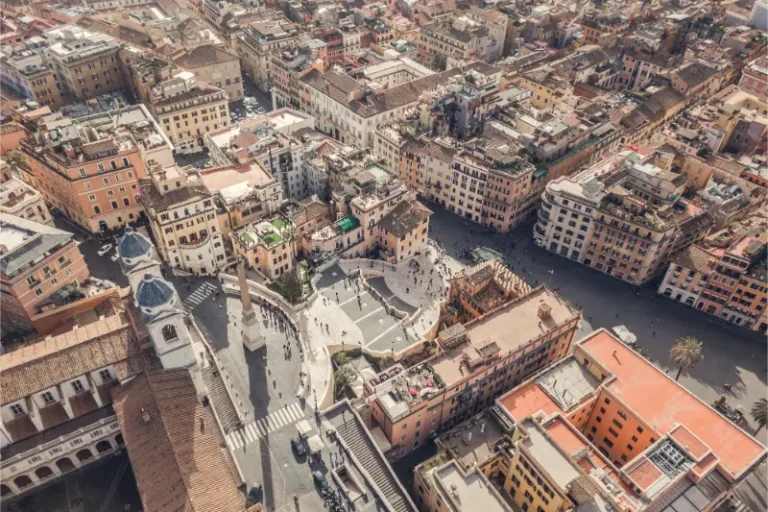
The lower end of Via Veneto begins near Piazza Barberini, where Bernini’s Triton Fountain provides a strong baroque contrast to the twentieth-century image of the avenue. This makes Barberini an excellent starting point because you can connect the walk with Palazzo Barberini, Sant’Andrea delle Fratte, Trevi or the Spanish Steps depending on the rest of the day.
Before heading uphill, look at the shape of the street. Via Veneto curves rather than running as a rigid axis, so views unfold gradually. This contributes to its character and helps explain why cafés and hotel entrances historically became places for watching the street itself.
Capuchin Crypt and Santa Maria della Concezione
Near the lower section, the Capuchin church and crypt create one of the most unusual stops in central Rome. The museum and bone chapels are very different from the glamorous Via Veneto narrative, but that contrast is exactly what makes the area interesting. Rome rarely stays within one historical theme for more than a few steps.
If you plan to enter, allow enough time rather than squeezing the crypt between restaurant reservations. Dress respectfully because the complex includes a church, and follow photography rules inside the museum spaces. Our dedicated Capuchin Crypt guide covers tickets and expectations.
Historic hotels and architecture
The avenue’s large hotels are part of its visual identity, even if you are not staying in them. Look at entrances, balconies and the relationship between buildings and the tree-lined street. Luxury hospitality helped shape the social function of Via Veneto and remains one of the strongest continuities with its celebrated past.
You do not need to book an expensive drink to appreciate the street. Walk slowly, use side streets for quieter perspectives and compare the formal avenue with nearby residential blocks. The most interesting impressions often appear one street away from the most photographed addresses.
Cafés, restaurants and what to expect
Eating directly on a famous street usually means paying partly for location. That is not automatically a problem if the setting is the point, but check menus and prices before sitting down. For better value, compare nearby side streets and use our Rome restaurant guide rather than assuming that historic reputation guarantees the best meal.
If you want a symbolic Dolce Vita pause, choose one drink or coffee and enjoy the people-watching without turning it into a full expensive meal. Travelers who care primarily about Roman food will often find stronger options in Testaccio, Trastevere or neighborhoods outside this tourist corridor.
Continue toward Villa Borghese
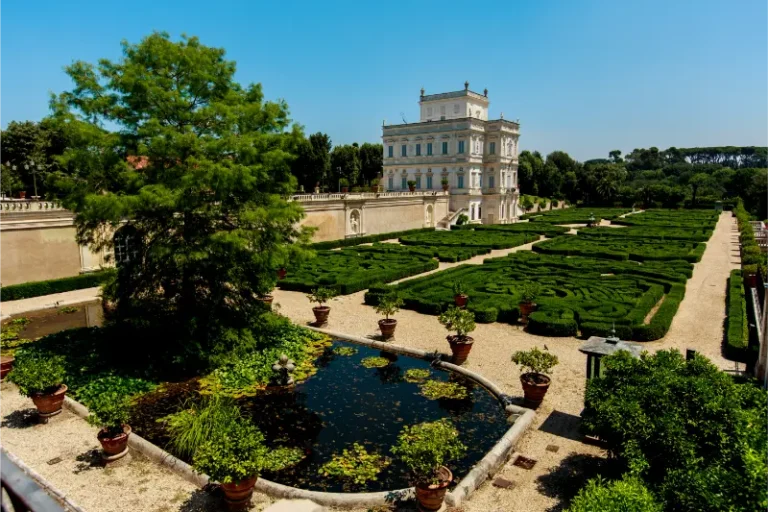
The upper end of the Via Veneto area brings you close to Villa Borghese, making the avenue a natural transition from dense center to green space. This is useful in warm weather, when a park break after churches and museums can reset the day. It also creates a route toward the Pincian Hill and Piazza del Popolo.
If you have a timed Galleria Borghese entry, do not underestimate the final walk through or around the park. Build a buffer rather than lingering over coffee until the reservation time. Museum entry procedures are less forgiving than a flexible outdoor route.
Where to stay around Via Veneto
The neighborhood suits travelers who want a polished central base with access to Barberini Metro, the historic center and Villa Borghese. It can be quieter at night than some streets around Trevi while still remaining walkable to major sights. Hotel prices are often high, reflecting the area’s location and reputation.
Before booking, check the exact address rather than relying on a hotel name that includes ‘Via Veneto’. Properties can market themselves as being in the area while sitting several streets away. Our where-to-stay guide explains how the zone compares with Monti, Prati, Trastevere and the Spanish Steps area.
Common mistakes
The main mistake is expecting Via Veneto to be a major attraction in the same way as the Colosseum or Pantheon. It is a street with cultural history, not a single blockbuster monument. Another mistake is visiting only for an expensive café stop and missing nearby Barberini, the Capuchin Crypt or Villa Borghese.
Treat the avenue as part of a route. When combined with strong neighboring sights, it becomes a meaningful chapter in a day rather than a disappointing detour made solely because of a famous film-era reputation.
Frequently asked questions
Is Via Veneto worth visiting?
Yes if you enjoy twentieth-century Rome, La Dolce Vita history, architecture or are already visiting Barberini and Villa Borghese.
How long does Via Veneto take?
About 45 minutes for a simple walk, or two to three hours with nearby attractions.
Is Via Veneto still glamorous?
It remains an upscale central avenue, but its legendary celebrity culture belongs mainly to an earlier period.
What is near Via Veneto?
Piazza Barberini, the Capuchin Crypt, Palazzo Barberini and Villa Borghese are close.
Is it a good area to stay?
Yes for a central and generally polished base, although accommodation can be expensive.
Plan the rest of your Rome trip
Pair Via Veneto with the Capuchin Crypt, Palazzo Barberini and Villa Borghese.
A practical way to fit this into your itinerary
A practical morning route starts at Barberini, visits Palazzo Barberini or the Capuchin Crypt, walks Via Veneto and ends in Villa Borghese. An afternoon version can reverse the direction and finish near Trevi or the historic center for dinner.
If you are staying nearby, Via Veneto is also useful as a transport and orientation spine. Barberini Metro connects the area efficiently, while the upper end places you close to the park. This balance can reduce daily transit even if the street itself is not your main sightseeing goal.
What makes this stop worth your time
Via Veneto is worth understanding because it represents modern Rome’s international image as strongly as many ancient monuments represent imperial Rome. Cinema, journalism, fashion and tourism all helped transform an ordinary street into a global idea.
For travelers who enjoy cultural context, that makes the walk more interesting than a list of former celebrity addresses. The question is not ‘where exactly did a star sit?’ but how a particular place came to represent an entire era of Italian style and postwar optimism.
Final planning tips before you go
Before setting out, check the day’s weather, transport conditions and any official notices that could affect access. Rome rewards flexible planning: keep one or two priorities fixed, but avoid filling every hour. Leave enough time to walk between nearby sights, refill water, sit down for a proper break and change the route if crowds or heat make the original plan less enjoyable. For this stop in particular, comfortable footwear and a charged phone are more useful than an over-detailed timetable, because the surrounding streets and viewpoints often become part of the experience.
If you are visiting Rome for the first time, place this experience inside a neighborhood-based itinerary rather than crossing the city only to tick it off. Combine it with the related places linked in this guide, then move on when your attention starts to fade. Repeat visitors can do the opposite: slow down, read more of the interpretation, photograph details and compare the site with other periods of Roman history. That difference in pace is often what turns a famous stop into a memorable one.
It is also worth checking how this stop fits with meal times and the return journey to your accommodation. A central attraction may need no transport at all, while an archaeological or neighborhood visit can involve a longer walk than the map suggests. Save the address of your next destination, keep a backup route, and avoid committing to a distant reservation immediately afterward. A small buffer makes the day more resilient when entrances, church services, roadworks or simple fatigue change the pace.