Bernini in Rome: The Best Sculptures, Fountains and Churches to See
Few artists shaped the experience of Rome as completely as Gian Lorenzo Bernini. His work is not confined to a museum: you encounter it in fountains, churches, tombs, chapels, bridges, public squares and the enormous spatial theatre of St. Peter’s Square.
Following Bernini is therefore one of the best ways to understand Baroque Rome. The route moves between intimate sculpture and city-scale design, showing how he used stone, light, architecture and movement to control what a visitor feels.
At a glance
| Bernini stop | Why it matters |
| Galleria Borghese | Early masterpieces in marble |
| Piazza Navona | Fountain of the Four Rivers |
| Santa Maria della Vittoria | Ecstasy of Saint Teresa |
| St. Peter’s Square and Basilica | Colonnade, Baldachin and papal monuments |
| Piazza Barberini | Triton Fountain |
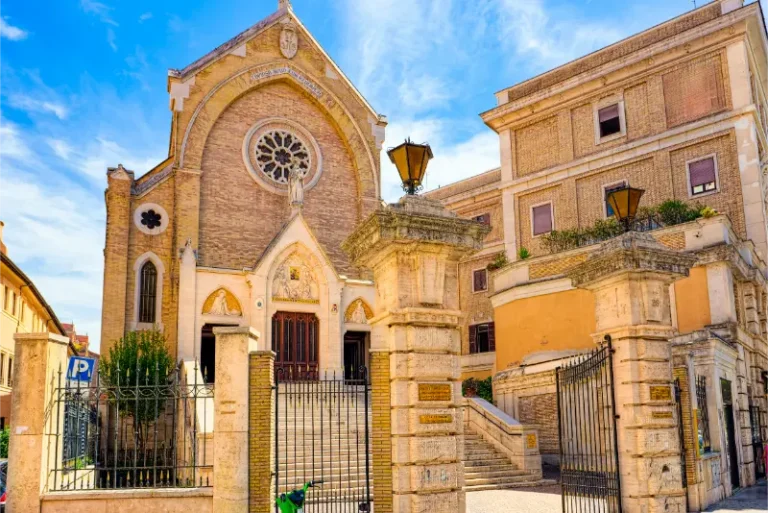
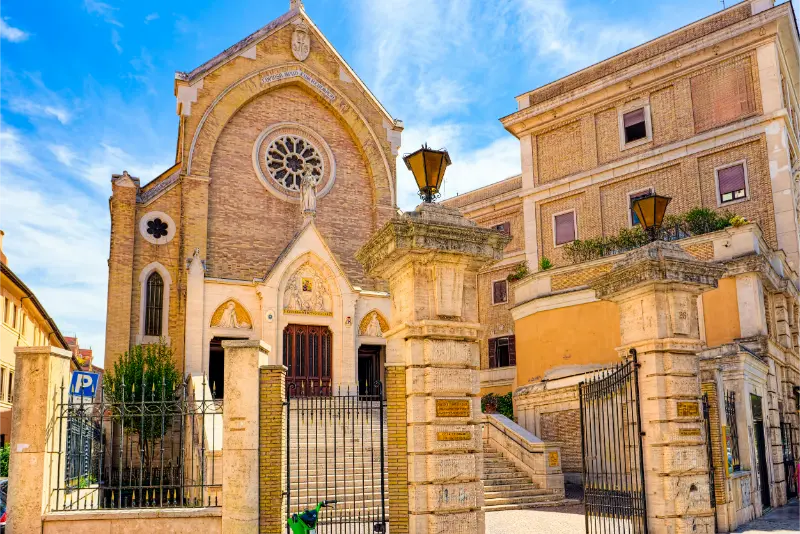
| Sant’Andrea al Quirinale | Architecture as theatrical space |
Galleria Borghese: begin with sculpture
The Galleria Borghese is the strongest place to understand Bernini as a sculptor. Works such as Apollo and Daphne, David and the Rape of Proserpina turn marble into hair, skin, leaves, tension and movement. They reward slow viewing from multiple angles.
Because the gallery uses timed reservations, plan this stop first. The museum currently opens Tuesday through Sunday and closes Monday. Our Galleria Borghese guide explains the visit structure.
Piazza Navona and the Fountain of the Four Rivers
At the center of Piazza Navona, Bernini’s Fountain of the Four Rivers combines sculpture, water, rock and obelisk into a public spectacle. The figures represent great rivers associated with the continents known to seventeenth-century Rome.
Walk around the fountain rather than photographing it from one fixed position. The changing silhouette is part of the design, and the surrounding piazza turns the work into urban theatre.
Santa Maria della Vittoria and the Ecstasy of Saint Teresa
The Cornaro Chapel is one of Bernini’s most famous achievements because sculpture, architecture, hidden light and staged spectators work together. The Ecstasy of Saint Teresa is not simply a statue placed in a chapel; the entire space is the artwork.
Visit respectfully and be prepared for church services to affect access. The church is near the Repubblica/Termini area, making it easy to combine with other central sights.
St. Peter’s Square: architecture at the scale of a city
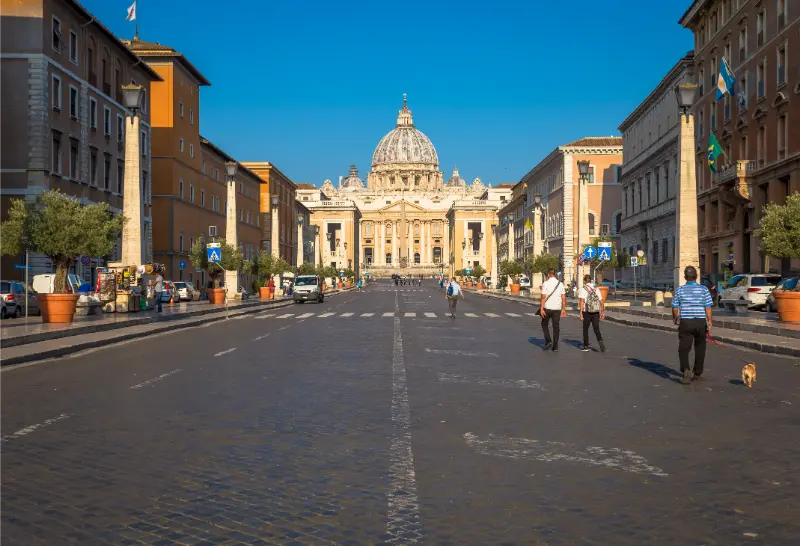
Bernini’s colonnade embraces St. Peter’s Square with four rows of columns arranged around the great oval. The design manages enormous crowds while creating a symbolic gesture of welcome.
Look for the marked viewpoints where the rows visually align. Then enter the basilica, when access allows, to see how Bernini continues the experience indoors.
Inside St. Peter’s Basilica
The bronze Baldachin rises above the papal altar and the traditional location of St. Peter’s tomb, while Bernini also created major papal monuments and contributed to the spatial drama of the crossing and apse.

The scale of the basilica can make enormous works appear smaller than they are. Use people and columns as reference points and give your eyes time to adjust before moving on.
Piazza Barberini and the Triton Fountain
The Triton Fountain transforms a traffic-filled city square into another Bernini stage. The muscular sea figure, shells, dolphins and water create upward movement that is very different from the broader composition at Piazza Navona.
It is a useful outdoor stop between the Trevi/Spanish Steps area and Santa Maria della Vittoria. This makes it easy to build a Baroque walking route without adding a ticket.
Sant’Andrea al Quirinale
Sant’Andrea al Quirinale shows Bernini as an architect. The oval plan, colored marble, light and sculptural program create a carefully directed sequence from earthly space toward the saint’s ascent.
The church is smaller than St. Peter’s, which makes its design easier to read. It is one of the best places to understand that Bernini did not separate architecture from sculpture and theatre.
Santa Maria del Popolo and other Bernini layers
Bernini contributed to the transformation of Santa Maria del Popolo, including work on the Chigi Chapel. The church is also essential for Caravaggio, making it one of Rome’s richest places for connecting different artists in a single building.
Other Bernini works appear across the city, from funerary sculpture to fountains and church façades. Trying to see all of them in one day is less useful than selecting a route that shows different scales of his work.
A self-guided Bernini day
Start with a reserved morning at Galleria Borghese, then walk through the park toward Piazza del Popolo. Continue through the center toward Piazza Navona and, if energy permits, finish around Piazza Barberini and Santa Maria della Vittoria.
Keep St. Peter’s for another half-day unless the Vatican is already part of your route. Combining every Bernini site in one day creates too much cross-city travel.
How to fit this into a Rome trip
For most visitors, divide Bernini between two areas: Galleria Borghese plus central fountains on one day, and St. Peter’s Basilica/Square on the Vatican day. This lets you see both intimate sculpture and monumental urban design without rushing.
Rome is easier when you group sights by neighborhood instead of treating every landmark as an isolated pin. Leave time for security checks, church services, transport delays, cobblestones and the unplanned stops that often become the best part of the day. Keep one or two priorities fixed, then let nearby secondary sights remain flexible.
Practical tips before you go
Outdoor fountains are easy to visit, but churches can pause tourist access during worship. Galleria Borghese requires reservations. St. Peter’s can involve security queues and special-event closures. Check current official information and avoid scheduling church art as a rigid timed entry.
For any attraction with tickets, seasonal hours or religious services, check the official website shortly before the visit. Rome changes more through temporary closures, restoration work, events and liturgical schedules than through dramatic permanent changes, so a final verification can save a wasted journey.
Frequently asked questions
Where can I see the best Bernini sculptures in Rome?
Galleria Borghese is the essential museum for Bernini’s marble masterpieces, while Santa Maria della Vittoria contains the Ecstasy of Saint Teresa.
Which fountains in Rome are by Bernini?
The Fountain of the Four Rivers in Piazza Navona and the Triton Fountain in Piazza Barberini are among his most famous public fountains.
Did Bernini design St. Peter’s Basilica?
The basilica involved many architects across generations. Bernini designed the great colonnade of St. Peter’s Square and created major interior works including the Baldachin and important monuments.
Final advice
Bernini makes Rome feel choreographed. Follow him from a marble figure in Galleria Borghese to a fountain in a piazza and then to the scale of St. Peter’s Square, and Baroque Rome stops being a style label: it becomes a physical experience of movement, light and surprise.
Protect the best hours of the day
Early morning and the period around sunset are unusually valuable in Rome. Outdoor landmarks are calmer early, while late afternoon gives softer light and a more comfortable atmosphere for piazzas, bridges and viewpoints. Use the middle of the day for lunch, churches, museums or transport when heat and crowds make exposed walking less pleasant.
Keep the route geographically realistic
Rome looks compact on a map, but repeated crossings of the center cost time and energy. A route works best when one major attraction anchors a cluster of nearby streets, churches, markets or viewpoints. If you finish early, add something close rather than traveling across the city for a minor stop.
Build in a small amount of flexibility
A strong itinerary has one essential priority, two or three desirable stops and several optional ideas. If a church closes for a service or a queue grows unexpectedly, drop an optional stop and continue in the same area. This keeps the day enjoyable instead of turning every delay into a problem.
Dress for the city you will actually walk
Supportive shoes matter more in Rome than elegant travel outfits because stone paving, slopes and long museum corridors add up quickly. Carry water, sun protection in warm months and a light layer for churches or cooler evenings. Small comfort decisions often determine how much of the city you can enjoy well.
Use official sources for the details that change
Ticket rules, free-entry days, opening hours and transport works can change. Save the official pages for your most important reservations and check them again shortly before the trip. This is particularly important on Sundays, Mondays, public holidays and days with major religious or civic events.
A simple planning rule that works in Rome
At the start of each day, decide which single experience would make the day feel successful. Protect that reservation or location first. Then place flexible sights nearby and leave a buffer before any second timed entry. This structure works particularly well in Rome because the city is dense: if one doorway is closed, another church, piazza, archaeological fragment or café is usually close enough to keep the route interesting. Avoid scheduling every hour. A little breathing room lets you notice the details that make Rome memorable rather than simply completing a list.
What to do when the plan changes
Rome rewards travelers who keep a backup option in the same area. If a museum closes unexpectedly, do not immediately cross the city. Look for a nearby church, archaeological viewpoint, market, park or neighborhood street that can fill the time naturally. If transport is delayed, protect the reservation that cannot move and shorten the flexible part of the route. If the weather becomes unpleasant, switch an outdoor block with an indoor one rather than abandoning the entire day. This approach matters because many Roman attractions operate inside historic or religious buildings where temporary changes are normal. A flexible plan is not a weaker plan: it is the version most likely to survive real travel conditions. Keep screenshots of essential tickets, save the official notice page for your main attraction, and know which part of the day can be dropped without regret. The result is a trip that feels organized without becoming fragile.