
Rome on a Rainy Day: 20 Things to Do When the Weather Turns
Rain changes the rhythm of Rome, but it does not have to waste a day of your trip. The city has extraordinary museums, basilicas, archaeological interiors, covered food stops and neighborhoods where short walks can be broken into comfortable indoor stages. The real problem is not the weather itself; it is following an itinerary designed for blue skies when the streets are wet and queues move more slowly.
This guide helps you rebuild the day around places that genuinely work in poor weather. It also explains which famous attractions are less pleasant in heavy rain, how to move around without crossing the city unnecessarily, and how to keep one or two outdoor highlights if the forecast includes dry windows. For broader planning, see our guide to getting around Rome.
Start with the forecast, but do not plan by the hour
Rome showers can be brief, persistent or highly local. Instead of reacting to every weather icon, identify the wettest part of the day and place your most reliable indoor reservation there. Keep churches, cafés and smaller museums as flexible options around it. This prevents you from spending the morning constantly checking your phone and changing direction.
If thunderstorms are expected, avoid building the day around long exposed walks on the Palatine, Appian Way or panoramic hills. Wet cobbles and polished stone can become slippery, especially around old steps and sloping streets. Comfortable shoes with grip matter more than carrying a large umbrella.
1. Capitoline Museums
The Capitoline Museums are one of the strongest rainy-day choices because they combine major ancient sculpture, paintings, historic rooms and views over the Roman Forum from protected or partly sheltered spaces. They also sit close to several central churches and monuments, so you can create an efficient indoor cluster around Piazza Venezia. Read our Capitoline Museums guide before choosing your route through the collections.
2. Galleria Borghese
If you already have a timed reservation, the Galleria Borghese can turn a wet morning into one of the best parts of the trip. Bernini, Caravaggio and classical sculpture reward close attention, and the controlled visit format gives the day structure. Do not assume you can simply arrive because it is raining: advance booking is normally essential. Our Galleria Borghese guide explains the visit in more detail.
3. Vatican Museums
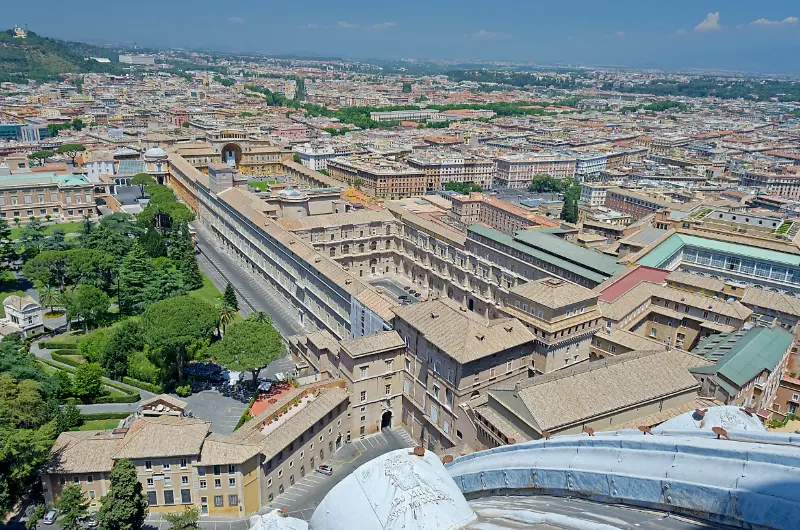
The Vatican Museums are an obvious indoor option, but they are not an emergency shelter: they are one of Rome’s most in-demand attractions and should be planned in advance. Rain can also make the entrance area and the walk from the metro less comfortable, so arrive with enough time and avoid carrying an oversized umbrella or unnecessary bag. See the Vatican Museums guide for a realistic strategy.
4. Basilica di San Clemente and its underground levels
San Clemente is especially atmospheric in poor weather because the visit descends through layers of Roman and medieval history beneath the present basilica. The archaeological area requires an admission ticket and online reservation, so check availability rather than treating it as a spontaneous stop. It pairs naturally with the Colosseum district without requiring a long cross-city journey. Our dedicated San Clemente guide covers the layers and practical details.
5. Rome’s major basilicas
Large churches can provide both shelter and some of the city’s greatest art, but remember that they remain places of worship. Masses, liturgical events and security procedures can temporarily affect tourist access. Dress appropriately, keep voices low and never build a tight schedule that assumes every chapel will be accessible at every moment.
- St. Peter’s Basilica for scale, mosaics and Michelangelo
- Santa Maria Maggiore for its layered architecture and mosaics
- San Giovanni in Laterano for papal and Christian history
- Santa Maria del Popolo for major Renaissance and Baroque art
- Sant’Agostino and San Luigi dei Francesi for important Caravaggio works
6. Palazzo Massimo and the National Roman Museum
Palazzo Massimo is a very good option when you want ancient Rome without spending hours outdoors among ruins. Sculpture, frescoes, mosaics and objects from Roman daily life provide context that makes the Forum and other archaeological sites more meaningful when the weather improves. It is also convenient for Termini, which can simplify the day if your hotel is nearby.
7. Centrale Montemartini
Centrale Montemartini mixes classical sculpture with the machinery of a former power station, creating one of Rome’s most distinctive museum settings. It is outside the densest historic-center circuit, so it works best when you deliberately pair it with Ostiense or Garbatella rather than making a special cross-city dash between showers.
8. Pantheon — useful, but not completely weatherproof
The Pantheon is covered, yet its open oculus means rain can enter the building. That is part of the monument’s character, but it also means the floor may be managed differently during wet conditions. Because the surrounding piazza is exposed and queues can form, treat the Pantheon as one stop in a compact historic-center route, not your entire rainy-day plan. See our Pantheon guide.
9. Covered food breaks in Testaccio or central Rome
A rainy day is a good excuse to slow lunch down. Instead of moving from attraction to attraction under an umbrella, choose a neighborhood and build a proper meal into the schedule. Testaccio is particularly useful if you want Roman food culture away from the most compressed tourist streets, while central Rome has plenty of cafés and restaurants that can bridge the gap between museums.
10. Bookshops, galleries and small museums
Rome has many smaller cultural stops that rarely appear on first-time itineraries. A wet afternoon is ideal for a house museum, temporary exhibition, specialist gallery or independent bookshop. Check opening days before traveling across town; Monday closures are common among museums, while private spaces can keep very different schedules.
A practical rainy-day itinerary
| Time | Plan |
|---|---|
| Morning | Capitoline Museums or a pre-booked Galleria Borghese/Vatican Museums visit |
| Lunch | Stay in the same district and take a longer indoor break |
| Early afternoon | Major basilica, Palazzo Massimo or San Clemente |
| Late afternoon | Short historic-center walk during a dry interval |
| Evening | Trattoria, wine bar, concert or another indoor cultural activity |
The important principle is geographic compression. If your morning reservation is near the Vatican, spend the rest of the wet period in Prati and the Vatican area. If you start around Piazza Venezia, stay in the historic center. Crossing Rome repeatedly for “the best” indoor attraction usually costs more time than it saves.
What not to prioritize in heavy rain
The Roman Forum, Palatine Hill, Appian Way, long panoramic walks and large parks are much less rewarding during sustained rain. They are not necessarily closed, but the surfaces, exposure and limited shelter can turn a memorable experience into endurance. If your trip has several days, move these activities rather than forcing them.

The Trevi Fountain, Piazza Navona and Spanish Steps can still be beautiful after rain, especially when the pavement reflects the city lights. Use them during a dry break or in the evening, when a short visit is easier to manage than a long sightseeing route.
Transport strategy when it rains
Buses can become slower when traffic builds, while metro stations may require a walk from the attraction you actually want to visit. Do not assume public transport eliminates exposure. Sometimes a short taxi ride between two indoor clusters is worth more than an hour spent transferring. If you use a taxi, take an official licensed vehicle or a reputable app-supported service and confirm how the fare is calculated.
What to carry
- A compact umbrella rather than a large rigid one
- A light waterproof outer layer
- Shoes with grip and quick-drying socks
- A small bag that closes securely
- A reusable water bottle
- Offline copies of timed-entry tickets
- A microfiber cloth for glasses or camera lenses
Rain with children
Families should reduce the number of transitions. One museum plus a relaxed meal and one easy indoor attraction is often more successful than trying to maintain the original schedule. Leave time for snacks and avoid long queues in the rain. For age-specific ideas, combine this article with our Rome with kids guide.
Rain for travelers with limited mobility
Wet stone, ramps, curbs and older pavements can become more difficult when mobility is limited. Prioritize modern or well-adapted museums, verify accessible entrances in advance and use taxis when they meaningfully reduce exposure. Accessibility conditions can differ between the main entrance and the accessible route, so consult the attraction’s official page rather than relying only on map directions.
Frequently asked questions
Does Rome shut down when it rains?
No. Museums, churches, restaurants, shops and most transport continue to operate, although outdoor archaeological areas may be less comfortable and exceptional weather can cause temporary closures.
Is the Colosseum worth visiting in the rain?

It can be, especially in light rain, but parts of the route are exposed. If the forecast is severe and your ticket is flexible, a drier period is preferable.
What is the best area for a rainy afternoon?
The historic center around Piazza Venezia, the Pantheon and nearby churches offers a high concentration of indoor stops. The Vatican/Prati area also works well if you have a museum reservation.
Final advice
A rainy day in Rome is not a lost day; it is a different itinerary. Protect one strong indoor reservation, group everything else by neighborhood, wear shoes that can handle wet stone and keep outdoor icons for short dry windows. The result can feel calmer than a standard sightseeing day because you stop chasing every landmark and spend more time actually looking at what is inside.