
Rome Etiquette: Local Customs, Restaurants, Churches and Everyday Tips
Rome is easy to enjoy without memorizing a long list of cultural rules, but a little local etiquette makes restaurants, churches, cafés and everyday interactions smoother. Most mistakes visitors worry about are minor. The bigger issues are usually simple ones: blocking entrances, treating churches like theme parks, ignoring queues or expecting service customs to work exactly as they do at home.
This guide focuses on practical behavior rather than stereotypes. Rome is a modern capital with many different residents and social styles, so think in terms of respect, awareness and context rather than rigid “Italian rules.”
| Situation | Good habit | Avoid |
|---|---|---|
| Small shops | Say hello and thank you | Walking in without acknowledgement |
| Restaurants | Ask for the bill when ready | Assuming slow pacing is bad service |
| Churches | Keep quiet and dress respectfully | Touring through an active Mass |
| Transport | Let passengers exit first | Blocking doors with luggage |
| Neighborhoods | Respect homes and doorways | Treating streets as a photo set |
Greetings, personal space and everyday courtesy
Italian social interaction can feel warm and expressive, but visitors do not need to imitate local mannerisms. A simple buongiorno in the morning or afternoon and buonasera later in the day is appreciated when entering a small shop, café, hotel desk or restaurant. Saying grazie and arrivederci costs nothing and often changes the tone of an interaction, especially outside the most tourist-heavy places.
Do not worry if your Italian is limited. Start politely, then ask whether the person speaks English rather than opening with a rapid question. In busy transport hubs or crowded bars, service can seem direct rather than unfriendly. Rome is a large working city, and efficiency during a rush is not necessarily a sign that you have done something wrong.
Coffee-bar etiquette is different from table service
Roman coffee culture is built around speed. At many traditional bars you order, pay and drink at the counter, although the exact sequence varies by venue. Sitting at a table can involve a different service price, especially in famous central squares. Our Rome coffee guide explains espresso terminology, ordering habits and the difference between counter and table service.
Do not feel pressured to follow imaginary rules such as never ordering cappuccino after a particular hour. Locals may have habits, but you are a visitor paying for what you enjoy. The useful etiquette is simpler: understand where to order, keep the counter moving when it is busy and do not occupy a tiny table indefinitely after buying one coffee.
Restaurants: reservations, pacing and the bill
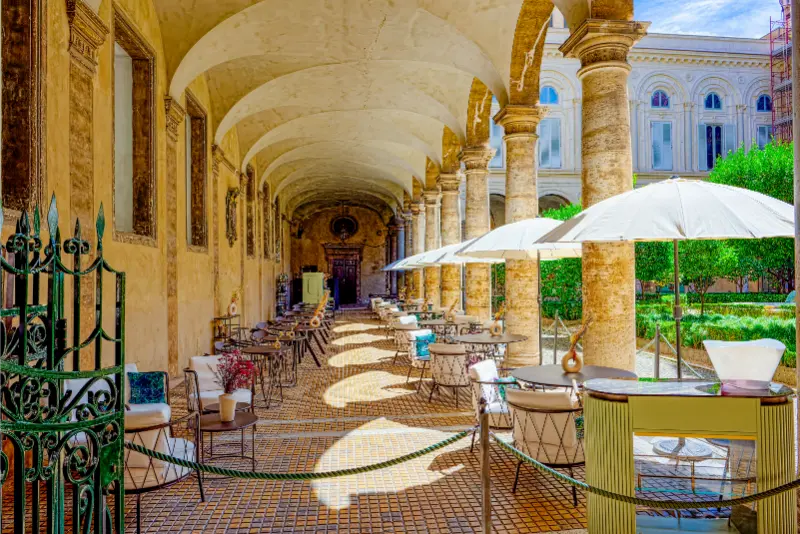
Meals in Rome often move at a more relaxed pace than visitors from fast-service cultures expect. Staff may not bring the bill until you ask because rushing a table can be considered impolite. Say il conto, per favore when you are ready. Our Rome restaurant guide covers ordering, menu signals and tourist-trap warning signs.
Reservations are worth making for popular restaurants, particularly on Friday and Saturday evenings. If your plans change, cancel rather than simply not showing up. In many places it is normal for bread, water or a coperto/service element to appear according to the menu and local practice; read the menu rather than assuming every small charge is a scam.
Tipping without importing another country’s rules
Tipping culture in Rome is not identical to the United States or other high-tip markets. A large percentage tip is not automatically expected in ordinary situations, especially when a service charge is already included. Our tipping in Rome guide explains common situations for restaurants, taxis, hotels and guides.
Round up or leave something extra when service has been genuinely good, but do not let anxiety about tipping dominate every interaction. Check the bill, distinguish service charges from optional gratuity and remember that different contexts have different norms. A private guide who spends hours with you is not the same situation as a quick espresso at the counter.
Churches are active places of worship

Rome’s churches contain extraordinary art, but they are not ordinary museums. Masses, funerals, weddings and prayer take priority over sightseeing. Enter quietly, silence your phone and avoid walking through a service simply to reach a side chapel. Clothing expectations are especially important at major basilicas; see our Rome dress code guide for practical guidance.
Photography rules vary. Even when photos are allowed, avoid flash where prohibited, do not stage elaborate photo shoots in front of worshippers and never treat a religious ceremony as tourist entertainment. If an area is temporarily closed for a service, return later rather than arguing with staff.
Public fountains, monuments and historic spaces
Rome’s fountains and ruins are public heritage, not props. Do not climb on monuments, enter fountain basins, carve names into stone or sit where signs prohibit it. Rules around eating, drinking, sitting and access can change at heavily visited monuments, so follow posted instructions rather than relying on what you saw in an old travel video.
Respect barriers even when another visitor ignores them. Much of Rome’s appeal comes from fragile surfaces that have survived for centuries. Responsible behavior is not complicated: stay on permitted routes, dispose of litter properly and do not remove stones or fragments from archaeological areas.
Queues, timed tickets and security lines
Cutting into a queue is one of the quickest ways to create tension. If you are unsure where a line begins, ask staff rather than assuming a group of people is standing around randomly. Major sites often have separate lines for security, ticket holders, guided groups or different entry times, so a long queue is not always your queue.
Arrive before timed reservations but not absurdly early. Being thirty or forty minutes ahead can be sensible for security, whereas arriving hours ahead may create crowding around the entrance. Keep tickets ready, remove prohibited items from your bag in advance and follow staff directions.
Public transport: small habits that help
Validate or activate the correct ticket when required, let passengers exit before boarding and avoid blocking doors with luggage. On buses and metro trains, offer priority seating to people who need it and move deeper into the vehicle when the entrance becomes crowded. Our getting around Rome guide explains the basic system.
Keep backpacks under control in a packed carriage. A bag worn on your back can hit people without you noticing and is also harder to monitor. Move it in front of you when the vehicle is crowded. Loud phone calls and speaker audio are best avoided in enclosed public spaces.
Photography and residential neighborhoods
Trastevere, Monti, Garbatella and other photogenic districts are real neighborhoods. Doorways, laundry, scooters and balconies may look charming, but residents are not part of a set. Do not block building entrances, lean equipment against private property or photograph people closely without permission.
Early-morning photography is a good way to reduce crowds, but keep voices down in residential streets. Our Rome photography guide suggests locations and light while emphasizing practical behavior around busy public places.
Dress, style and looking like a visitor
Romans dress in many different ways, and there is no need to buy a special wardrobe to blend in. Clean, comfortable clothes are enough for sightseeing, while a slightly smarter outfit can be useful for nicer restaurants or bars. The most obvious visitor behavior is usually not a pair of sneakers; it is stopping suddenly in the middle of a narrow pavement while looking at a phone.
Prioritize comfort and situational awareness over trying to imitate fashion. If you are entering a church, adjust your clothing respectfully. If you are going to a high-end venue, check its policy. For everything else, practical city clothing works.
Language mistakes are less important than tone
You do not need fluent Italian to be respectful. Learn a few basics, speak clearly and avoid shouting English slowly as if volume creates translation. Translation apps can help with menus or specific questions, but face-to-face politeness still matters.
Names, neighborhoods and dishes may be pronounced differently from what you expect. If someone corrects you, take it lightly. Rome receives millions of visitors; a sincere attempt at courtesy usually matters more than perfect grammar.
Common etiquette mistakes visitors can easily avoid
- Speaking loudly in churches or enclosed historic spaces.
- Blocking a narrow pavement while checking a map.
- Expecting the bill to appear immediately without asking.
- Assuming every restaurant follows another country’s tipping system.
- Touching, climbing or sitting on protected monuments.
- Photographing residents at close range without permission.
Frequently asked questions
Is it rude to speak English in Rome?
No. Many people working with visitors speak some English. Begin politely, ask if English is possible and keep your request clear rather than assuming everyone is fluent.
Do I need to tip in every restaurant?
No. Tipping is more situational than in some countries. Check the bill and leave extra when you want to reward good service rather than treating a fixed percentage as compulsory.
Is Rome very formal?
Generally no for ordinary sightseeing. Respectful clothing matters at religious sites, while specific upscale restaurants or clubs may have their own dress expectations.
Final advice
The most useful Rome etiquette is ordinary city awareness: greet people, respect worship, do not block public space, follow ticket and monument rules, and adapt to a slower meal when the situation calls for it. You do not need to perform being Italian; you simply need to be an attentive guest.