
Rome Dress Code: Vatican, Churches, Restaurants and Summer Clothing
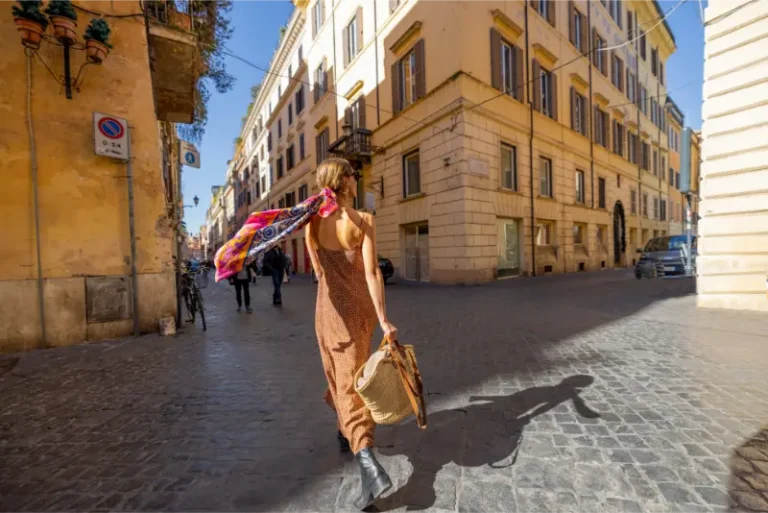
The Rome dress code is generally relaxed for sightseeing, but religious sites require more care. The Vatican Museums, Sistine Chapel, St Peter’s Basilica and many churches expect modest clothing, especially around shoulders and knees. In summer, the easiest solution is to dress for the heat while carrying one light layer that lets you enter churches without changing your entire outfit.
Comfort matters just as much as appearance. Rome involves uneven paving stones, stairs, standing and long walking days, so footwear is more important than trying to look formal from breakfast to dinner.
Vatican dress code
The Vatican Museums’ official visitor guidance states that entry is permitted only to appropriately dressed visitors. It specifically excludes sleeveless or low-cut garments, shorts above the knee, miniskirts and hats. St Peter’s Basilica similarly requires clothing appropriate to a sacred place, with shoulders covered and knees covered.
If the Vatican is on your itinerary, build your outfit around those requirements rather than hoping security will make an exception. Check the official Vatican Museums visitor advice before your visit.
Other churches in Rome
Most Catholic churches expect modest clothing even when enforcement is less formal than at the Vatican. Cover shoulders, avoid very short shorts or skirts and remove hats when appropriate. Remember that many churches are active places of worship with Masses, funerals and weddings.
What to wear in summer
Lightweight breathable fabrics are essential in July and August. A practical combination is a T-shirt or top that covers the shoulders, lightweight trousers or a skirt/shorts reaching around the knee, comfortable walking shoes and a hat for outdoor use that you can remove inside churches.
If you prefer sleeveless clothing for the heat, carry a light scarf or overshirt. Make sure it genuinely covers the shoulders and is not so sheer that it defeats the purpose.
What to wear in winter
Winter dress is easier for religious sites because shoulders and knees are naturally covered. The challenge is changing temperatures between outdoor walks, warm museums and churches. Layers work better than one heavy coat if you plan to move indoors and outdoors repeatedly.
Shoes for Rome
Choose shoes you have already worn for long walks. Cobblestones, irregular pavements and archaeological surfaces can be uncomfortable in thin soles or unstable heels. Stylish shoes are fine for dinner, but sightseeing shoes should prioritize grip and support.
Restaurants and evening dress
Most trattorias and casual restaurants do not require formal clothing. Clean smart-casual clothes are enough. High-end restaurants, hotel bars and special rooftop venues may have their own policies, so check when booking. Beachwear or extremely casual gym clothing can feel out of place in more polished evening settings.
Museums and archaeological sites
There is generally no special modesty rule at secular museums, but practical clothing still matters. At the Colosseum, Forum and Appian Way, sun protection and sturdy shoes are more important than fashion. Security rules can also affect bags and prohibited items.
A simple packing formula
- Two or three breathable tops that cover the shoulders or can be layered.
- Bottoms that work for both sightseeing and church entry.
- One lightweight overshirt or scarf.
- Comfortable walking shoes already broken in.
- A smarter casual outfit for a special dinner if needed.
- A compact rain layer outside the hottest months.
Frequently asked questions
Can I wear shorts at the Vatican?
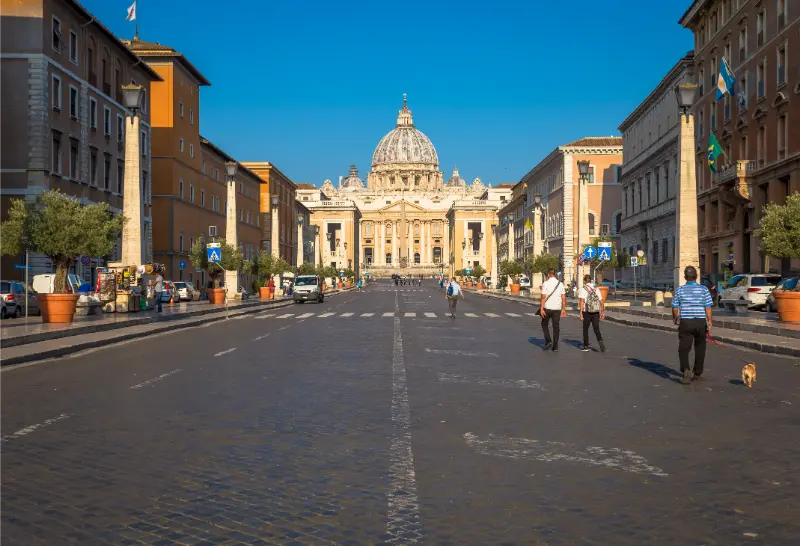
Shorts that expose the knee can be refused. The Vatican’s official guidance requires clothing that covers appropriately and specifically excludes shorts above the knee.
Do men need long trousers at St Peter’s?
The Basilica’s official guidance calls for long trousers for men and covered shoulders. Dress conservatively if you want to avoid problems at security.
Can I wear sandals?
Open shoes are not generally the main dress-code issue, but comfort matters. Choose sandals only if they are supportive enough for long walks on uneven surfaces.
Do restaurants have a dress code?
Most do not have a formal code, but upscale restaurants and hotel venues may specify smart-casual or other requirements.
How to fit this into a Rome itinerary
When planning Rome dress code, think in neighborhoods rather than isolated attractions. Rome is easier when each half day contains places that are genuinely close together. Check walking time on the map, add a realistic pause for coffee or lunch, and avoid placing another fixed reservation immediately afterward unless the transfer is short and predictable.
A useful rhythm is one major commitment in the morning, a flexible lunch, and one or two nearby secondary stops in the afternoon. This gives you room for security queues, temporary church closures, heat, rain or simply finding a place more interesting than expected. The most memorable Rome days are rarely the ones with the highest number of tickets.
Best time of day and seasonal considerations
Morning usually offers cooler temperatures and more energy, while late afternoon can provide softer light and a calmer atmosphere after tour groups move on. In summer, protect the middle of the day for indoor spaces or a long lunch whenever possible. In winter, remember that daylight is shorter and some archaeological sites close earlier.
Religious buildings can change visitor access around Masses, feast days, weddings and funerals. Museums may close rooms for conservation or installations. Outdoor sites are affected by weather. Always check the official page shortly before visiting instead of relying only on the timetable you saved months earlier.
What to bring
- A small refillable water bottle unless the site prohibits it inside.
- Comfortable shoes suitable for cobblestones and long standing.
- A charged phone with the reservation or address saved offline.
- A light layer for churches and air-conditioned museums.
- Only the bag size you actually need, especially at security-controlled attractions.
A more rewarding way to visit
Before entering, spend two minutes identifying the one or two details you most want to understand. That might be an architectural plan, a specific fresco, a practical local habit or the way a neighborhood developed. Having a question in mind makes the visit more memorable than trying to absorb every label.
Afterward, connect what you saw with another place in Rome. Compare artistic styles, building materials, urban scale or visitor experience. The city becomes easier to understand when attractions stop feeling like separate checklist items and begin to form a network of periods, neighborhoods and everyday routines.
Budget and reservation strategy
Do not reserve every hour of the day. Book only the experiences that genuinely require a time slot, then leave flexible spaces around them. For paid attractions, buy through the official website whenever practical and read cancellation conditions before payment. For free churches, treat opening hours as guidance rather than a guarantee of uninterrupted tourist access.
Keep small expenses in perspective. A short metro ride, public toilet fee, luggage locker or coffee break can save substantial walking time and make the rest of the day more comfortable. A good Rome budget should include these practical costs rather than accounting only for headline museum tickets.
Final advice
Rome rewards curiosity but punishes overplanning. Give yourself enough time to notice details, change direction and sit down occasionally. If the day becomes too crowded, remove the least important stop instead of rushing the places you care about most. You can always save another church, museum or neighborhood for a future visit.
Who should prioritize this experience
This guide to Rome dress code is most useful for travelers who want more than a photo stop. First-time visitors can use it to add context around the famous sights, while repeat visitors will appreciate the chance to explore a more specific layer of Rome. Families should adjust the pace to attention spans, and travelers with mobility needs should verify the exact accessible route because historic sites can change lift or entrance arrangements.
If your itinerary is already full, do not add this simply because it appears on a list. Add it when it matches your interests or sits naturally beside another planned stop. Relevance is more important than quantity, and a focused hour often creates a stronger memory than a rushed sequence of three attractions.
Before you leave your hotel
Check the latest opening information, save the address, verify any ticket or ID requirement, and look at the walking route from your previous stop. Rome has streets with stairs, hills and uneven surfaces that can make a short distance slower than it appears. A five-minute check in the morning can prevent a wasted cross-city journey later in the day.
Carry as little as possible. Security lines move more smoothly with a compact day bag, and walking is more enjoyable without unnecessary weight. Keep essential medication, identification and payment methods with you, and store large luggage before sightseeing when the day falls between check-in and departure.
A final practical perspective
One of the easiest ways to improve a Rome itinerary is to leave a buffer before and after this stop. A short delay at security, a service inside a church, a room temporarily closed for conservation or simply a longer-than-expected walk can otherwise create unnecessary stress. Ten or fifteen unscheduled minutes often make the difference between a comfortable day and a sequence of rushed appointments.
Use the visit as a reason to explore the immediate streets rather than jumping directly onto public transport. Look for a nearby square, fountain, small church, bakery or café that was not part of the original plan. These unscripted details give context to the famous attraction and help the neighborhood feel like a real part of Rome rather than a backdrop between tickets.
If you are writing notes or taking photographs for later, record the practical details that future-you will actually want to remember: how crowded it felt, how long the visit really took, whether the walk was steep, where the entrance was and what detail surprised you. Those observations are often more useful than trying to document every object or room.