Rome Metro Guide: Lines, Tickets, Stations and Practical Tips
The Rome Metro is smaller than the underground systems of London, Paris or Madrid, but it is extremely useful for crossing long distances quickly. Visitors rely most heavily on Lines A and B/B1, while Line C is increasingly relevant as the network develops. The metro will not take you to every piazza in the historic center, so the best strategy is to combine it with walking, buses and trams rather than trying to force every journey underground.
Quick facts
| Ticket | Current price | Validity |
| BIT | €1.50 | 100 minutes; one metro journey within the rules |
| ROMA 24H | €8.50 | 24 hours |
| ROMA 48H | €15 | 48 hours |
| ROMA 72H | €22 | 72 hours |
| CIS weekly | €29 | 7 days |
Rome Metro lines at a glance
ATAC operates Metro A, Metro B/B1 and Metro C. The official ATAC maps page provides downloadable network maps. Line A is particularly useful for the Vatican area, Piazza di Spagna and connections toward Termini; Line B serves the Colosseum area, Piramide/Ostiense and EUR; B1 branches north; Line C serves eastern Rome and connects with Line A at San Giovanni.
The historic center itself is highly walkable, which is why a metro station is not beside every famous sight. Piazza Navona, Campo de’ Fiori and the Pantheon are better approached on foot or with surface transport from the nearest practical station.
Tickets and Tap & Go in 2026
ATAC currently lists the BIT at €1.50 for 100 minutes, ROMA 24H at €8.50, 48H at €15, 72H at €22 and the weekly CIS at €29. The BIT permits a single metro journey under ATAC’s transfer rules. Current details are on the official BIT page.
Contactless Tap & Go can be convenient because you use the same card or device at the gates. ATAC’s best-fare system can cap eligible use at the 24-hour product when the conditions are met. The important rule is consistency: use the same physical card, phone or watch for all taps if you want the system to recognize the journey history correctly.
The most useful stations for sightseeing
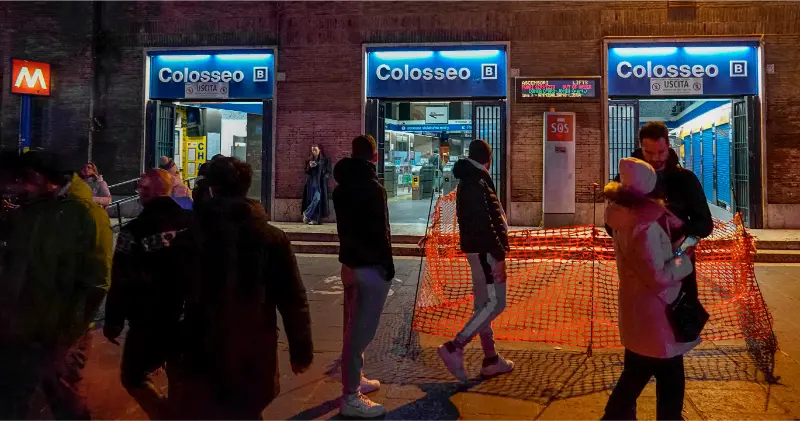
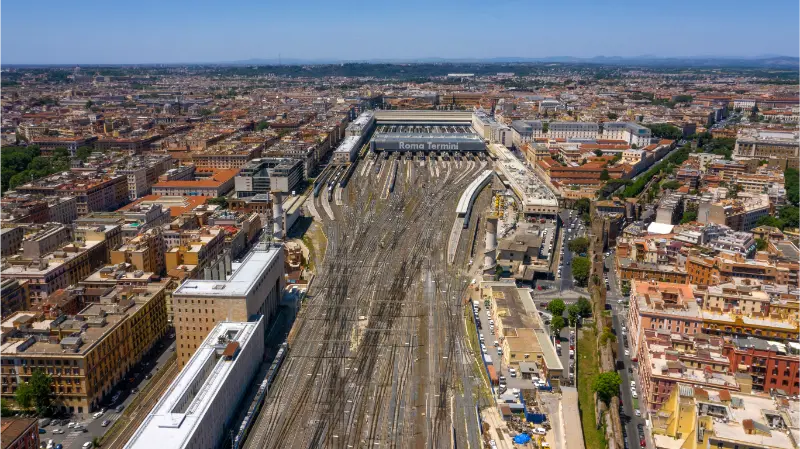
For the Vatican, many visitors use Ottaviano or Cipro on Line A depending on the exact destination. Spagna serves the Spanish Steps; Flaminio is useful for Piazza del Popolo; Termini is the main interchange between A and B; Colosseo on Line B serves the Colosseum; Circo Massimo serves the Circus Maximus and Aventine area; Piramide is useful for Ostiense and Testaccio.
Do not choose a hotel solely because a metro station appears nearby on a map. Consider the actual walking route, stairs, neighborhood atmosphere and whether your main interests are clustered elsewhere.

Operating hours, works and service changes
Metro operating hours can change for planned engineering, events and replacement-bus programs. Rome has had significant infrastructure work in recent years, so a static timetable printed months earlier should never be treated as definitive. Check ATAC’s real-time service information on the day you travel.
If a metro section closes earlier than expected, surface transport or a taxi may be the practical alternative. Our getting around Rome guide explains how buses, trams and walking fit with the metro.
Safety on the metro
The metro is widely used by residents and tourists, but crowded trains and platforms are environments where pickpocketing can occur. Keep your phone and wallet out of easy-access back pockets, close bags properly and be especially attentive while boarding, exiting or dealing with luggage.
Crowding does not mean you should be fearful; it means you should use ordinary city awareness. Read the Rome safety guide and Rome scams guide for practical prevention rather than alarmist advice.
Accessibility, luggage and families
Accessibility varies by station and lift or escalator availability can change with maintenance. Travelers who depend on step-free access should check current station information before starting the journey and have an alternative route in mind.
Children up to ten can travel free on ATAC services within Roma Capitale when accompanied by a fare-paying adult under the published conditions, although Trenitalia has different age rules. Families may also find our Rome with kids guide useful for planning realistic daily distances.
Mobile reception underground
ATAC currently reports full mobile coverage on Metro A and B, no coverage on B1, and coverage on Line C only on open-air sections. This can change with network upgrades, but it is a useful reminder to save your destination and route before going underground.
If you are relying on a digital ticket, make sure the required ticket or wallet can still be accessed when connectivity is poor. A screenshot is helpful for reference, but it does not replace any live validation required by the ticketing system.
Frequently asked questions
How much is a metro ticket in Rome?
ATAC currently lists the BIT at €1.50, valid for 100 minutes under its stated rules.
How many metro lines does Rome have?
ATAC operates Lines A, B/B1 and C.
Can I tap a contactless card at the metro?
Yes, Tap & Go is available. Use the same card or device consistently if relying on best-fare calculations.
Is the metro good for the Pantheon?
There is no metro station immediately beside the Pantheon. Walking or surface transport from a useful nearby point is normally better.
Is the Rome Metro safe?
It is a normal urban transport system, but crowded tourist routes require sensible precautions against pickpocketing.
Plan the rest of your Rome trip
Continue planning with getting around Rome, Roma Pass guide and Rome train stations. These guides work best together because Rome is easier to enjoy when transport, timing and sightseeing are planned as one itinerary rather than as separate decisions.
A simple planning strategy
The easiest way to use this information is to decide first what cannot move: a flight, a timed museum reservation, a train departure or a booked tour. Build the rest of the day around those fixed points. Rome rewards flexible planning because queues, traffic, heat, security checks and walking times can all change the rhythm of a day. Leaving a buffer is not wasted time; it is what keeps one delay from turning into a stressful chain of missed plans.
For most visitors, a good rule is to pair one demanding activity with one flexible activity. A museum reservation can be followed by a neighborhood walk; an airport transfer can be followed by an easy dinner near the hotel; a long Vatican morning can be followed by a slower afternoon across the river. This approach also gives you room to stop for coffee, water or an unexpected church without feeling that the itinerary is failing.
What to keep on your phone
Before leaving your accommodation, save the address of your hotel, a screenshot of any ticket or QR code, the route back, and the official page for the service you are using. Keep a payment card and some cash separate from your phone. If your battery is low, switch on power-saving mode before you need navigation. A small power bank is especially useful on days that involve airports, long museum visits or repeated use of digital tickets.
It is also worth saving the names of important places in Italian. Showing “Roma Termini”, “Aeroporto di Fiumicino”, “Basilica di San Pietro” or the exact metro station to staff can be faster than explaining the destination. Rome is a major international city, but a few precise names reduce misunderstandings when stations are crowded or when service changes require an alternative route.
How to avoid losing time
Do not schedule every transition at the shortest theoretical travel time. Walking through a large station, finding the correct platform, passing security or moving through a crowded square can add minutes that route planners do not show. At airports and the Vatican in particular, the distance between “arrival at the complex” and “arrival at the exact entrance” matters. Give yourself a realistic margin and use signs rather than following the crowd automatically.
If something changes, check the official operator first rather than relying on an old blog post or a screenshot from social media. Transport works, strikes, ceremonies and special events can alter normal patterns. The practical details in this guide are a planning baseline; the official service page should be the final check for the day you travel.
Choosing by neighborhood, not by landmark
Rome is large enough that the best transport choice often depends on the neighborhood where you are sleeping rather than the attraction you plan to visit first. A route that looks slightly slower on paper can be easier if it ends close to your hotel, while a nominally fast train to a major station can still require a second metro ride and a long walk with luggage. Compare the whole journey from terminal or platform to the accommodation door.
The same principle applies inside the city. Plan around the station or stop that minimizes awkward transfers, stairs and backtracking. This is particularly useful for families, travelers with large suitcases and anyone arriving after a long flight. Convenience has a real value on arrival day because fatigue makes small navigation problems feel much larger.
A final check before you leave
On the evening before a flight, train journey or major timed visit, check the official operator again and save the latest departure information. Charge your phone, place tickets and identification where you can reach them easily, and decide on a backup option if the primary route is disrupted. These small preparations take only a few minutes and are much more useful than trying to solve everything while standing in a crowded station.
If you are traveling with other people, make sure everyone knows the destination and meeting point in case the group becomes separated. One person should not be the only holder of every ticket, address and reservation detail. Sharing the essential information makes the day more resilient without adding complexity.