Rome Fiumicino Airport Guide: Trains, Buses, Taxis and Arrival Tips
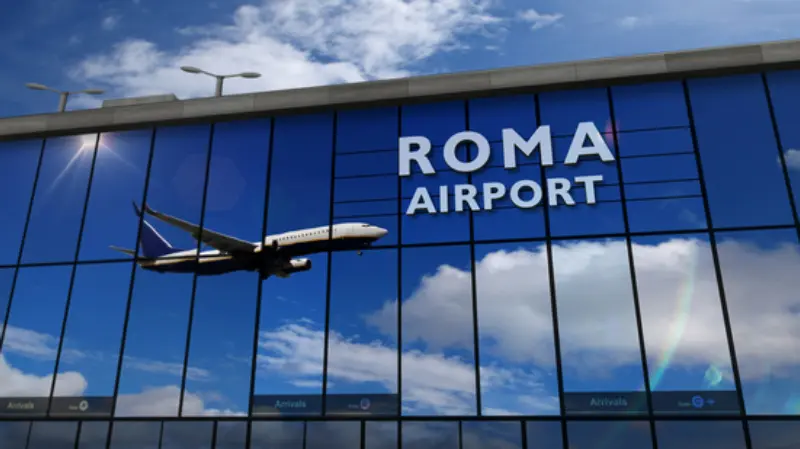
Rome Fiumicino Airport (FCO), officially Leonardo da Vinci International Airport, is the main air gateway to Rome. It is large but relatively straightforward once you know which transport option matches your destination. The key decision is not simply “train or taxi”; it is whether you are staying near Termini, in a neighborhood served by the FL1 railway, somewhere awkward for public transport, or travelling with enough people and luggage to make a car more convenient. This guide explains the choices without assuming that the fastest option is automatically the best one.
Quick facts
| Best for | Option | Typical planning point |
| Termini | Leonardo Express | Non-stop railway service |
| Trastevere/Ostiense/Tiburtina | FL1 regional train | Useful without going through Termini |
| Door-to-door convenience | Licensed taxi or pre-booked transfer | Useful with luggage or late arrival |
| Lower-cost direct ride | Airport coach | Allow extra time for road traffic |
Where Fiumicino Airport is and how it is organized
Fiumicino is southwest of central Rome and is connected to the city by road and rail. The airport has its own railway station inside the complex, which is one reason train travel is so convenient. The official Aeroporti di Roma website publishes terminal maps, live flight information and transport notices. Do not assume that the terminal printed in an old itinerary is still correct: always confirm the terminal and check-in area with your airline before departure.
For an arriving passenger, the sequence is simple: passport control if required, baggage reclaim, customs, then the public arrivals area. Signs for trains, buses, taxis and rental cars are clearly separated. If you are meeting a driver, confirm the exact meeting point in advance rather than relying on a generic “arrivals hall” description.
Leonardo Express to Roma Termini
The Leonardo Express is the easiest rail option for travelers whose hotel is near Termini or who need to connect to the metro and long-distance trains. Trenitalia currently advertises a 32-minute non-stop journey, departures generally every 15 minutes, and a single fare of €14. Metrebus/ATAC city tickets are not valid on this service.
Choose the Leonardo Express when you value simplicity. You do not have to work out which urban station is closest to your neighborhood, and there are no intermediate stops. Once at Termini, however, you may still need the metro, a taxi or a walk to your accommodation. Travelers staying in Trastevere, Ostiense or near Tiburtina should compare the FL1 regional service before automatically going to Termini.
FL1 regional trains and when they are better
Regional FL1 trains link Fiumicino Airport with several useful Roman stations, including Trastevere, Ostiense and Tiburtina, without serving Termini in the same way as the Leonardo Express. This can be a smarter route if your accommodation is south or east of the historic center. Trenitalia’s airport tariff information should be checked before travel because fares and service patterns can change.
For Trastevere in particular, the FL1 can eliminate an unnecessary trip into Termini and back out again. At Ostiense you can connect toward the metro at Piramide; at Tiburtina you can connect with Metro B and long-distance trains. Compare the entire door-to-door route, not just the train time.
Airport buses, taxis and private transfers
Coach services can be useful for budget travelers who want a direct ride toward Termini and do not mind road traffic. Schedules, boarding points and fares vary by operator, so buy from the operator or an authorized counter and leave a generous time buffer when returning to the airport. A cheap coach becomes poor value if a traffic delay puts a flight at risk.

Licensed taxis are the simplest door-to-door option. Use the official taxi rank, ignore unsolicited approaches inside the terminal and confirm whether your destination falls within any fixed-fare arrangement in force on the day. A pre-booked transfer can make sense for larger families, travelers with mobility needs, very late arrivals or groups carrying bulky luggage.
Arriving late at night or very early
A late flight changes the calculation because rail frequency can be lower and the last departures matter. Check the exact timetable for your date rather than assuming trains run all night. If you land close to the last useful train, have a taxi or coach fallback in mind before the aircraft touches down.
If your next step is a hotel check-in, send the property your expected arrival time. Rome accommodations often have different reception arrangements, especially apartments and small guesthouses. Our Rome airports to city center guide helps compare Fiumicino and Ciampino at a broader level.
Departing from Fiumicino without stress
For departure, work backward from the airline’s recommended airport arrival time. Add the journey to the station, waiting time, the train or road trip, the walk to your terminal and a margin for disruption. International or long-haul flights can involve longer formalities than a short Schengen trip.
If you are leaving from Termini, the Rome train stations guide explains the station layout and connections. Keep your passport, boarding pass and valuables in a small accessible bag instead of opening your main suitcase repeatedly in the station.
Frequently asked questions
Is the Leonardo Express the only train from Fiumicino to Rome?
No. The Leonardo Express runs non-stop to Termini, while regional trains can be more convenient for stations such as Trastevere, Ostiense and Tiburtina.
How long does the Leonardo Express take?
Trenitalia currently advertises a 32-minute non-stop journey between Fiumicino Airport and Roma Termini.
Can I use a Rome metro ticket on the Leonardo Express?
No. ATAC/Metrebus integrated city tickets are not valid on the Leonardo Express.
Is a taxi better with children?
It can be, especially with several bags, strollers or a hotel that is inconvenient from a station. Compare total group cost and convenience.
How early should I leave central Rome for Fiumicino?
Work backward from your airline’s airport-arrival guidance and add a generous transport buffer. The correct margin depends on flight type, time of day and current service conditions.
Plan the rest of your Rome trip
Continue planning with Rome airports guide, Leonardo Express guide and Rome train stations guide. These guides work best together because Rome is easier to enjoy when transport, timing and sightseeing are planned as one itinerary rather than as separate decisions.
A simple planning strategy
The easiest way to use this information is to decide first what cannot move: a flight, a timed museum reservation, a train departure or a booked tour. Build the rest of the day around those fixed points. Rome rewards flexible planning because queues, traffic, heat, security checks and walking times can all change the rhythm of a day. Leaving a buffer is not wasted time; it is what keeps one delay from turning into a stressful chain of missed plans.
For most visitors, a good rule is to pair one demanding activity with one flexible activity. A museum reservation can be followed by a neighborhood walk; an airport transfer can be followed by an easy dinner near the hotel; a long Vatican morning can be followed by a slower afternoon across the river. This approach also gives you room to stop for coffee, water or an unexpected church without feeling that the itinerary is failing.
What to keep on your phone
Before leaving your accommodation, save the address of your hotel, a screenshot of any ticket or QR code, the route back, and the official page for the service you are using. Keep a payment card and some cash separate from your phone. If your battery is low, switch on power-saving mode before you need navigation. A small power bank is especially useful on days that involve airports, long museum visits or repeated use of digital tickets.
It is also worth saving the names of important places in Italian. Showing “Roma Termini”, “Aeroporto di Fiumicino”, “Basilica di San Pietro” or the exact metro station to staff can be faster than explaining the destination. Rome is a major international city, but a few precise names reduce misunderstandings when stations are crowded or when service changes require an alternative route.

How to avoid losing time
Do not schedule every transition at the shortest theoretical travel time. Walking through a large station, finding the correct platform, passing security or moving through a crowded square can add minutes that route planners do not show. At airports and the Vatican in particular, the distance between “arrival at the complex” and “arrival at the exact entrance” matters. Give yourself a realistic margin and use signs rather than following the crowd automatically.
If something changes, check the official operator first rather than relying on an old blog post or a screenshot from social media. Transport works, strikes, ceremonies and special events can alter normal patterns. The practical details in this guide are a planning baseline; the official service page should be the final check for the day you travel.
Choosing by neighborhood, not by landmark
Rome is large enough that the best transport choice often depends on the neighborhood where you are sleeping rather than the attraction you plan to visit first. A route that looks slightly slower on paper can be easier if it ends close to your hotel, while a nominally fast train to a major station can still require a second metro ride and a long walk with luggage. Compare the whole journey from terminal or platform to the accommodation door.
The same principle applies inside the city. Plan around the station or stop that minimizes awkward transfers, stairs and backtracking. This is particularly useful for families, travelers with large suitcases and anyone arriving after a long flight. Convenience has a real value on arrival day because fatigue makes small navigation problems feel much larger.