Via Giulia Rome: Renaissance Street, Palaces and Self-Guided Walk
Via Giulia is one of the best streets in Rome for travelers who want to understand the Renaissance city at walking speed. Created under Pope Julius II in the early sixteenth century, it runs roughly parallel to the Tiber through a zone of palaces, churches, courtyards and quiet architectural details. Unlike the Colosseum or Trevi Fountain, there is no single moment when you can say you have “seen” Via Giulia. The experience comes from walking slowly, looking through doorways, noticing façades and connecting the street with Campo de’ Fiori, Palazzo Farnese, Ponte Sisto and the river.
At a glance
| Best for | Architecture, Renaissance Rome, photography, quiet walking |
| Cost | Free to walk; individual churches or sites have their own access rules |
| Suggested time | 60–90 minutes for Via Giulia itself |
| Best pairing | Campo de’ Fiori, Palazzo Farnese exterior, Ponte Sisto, Jewish Ghetto or Trastevere |
| Best time | Morning for quieter streets; late afternoon for warmer light |
Why Via Giulia matters in the history of Rome
The street was conceived as part of an ambitious urban project under Pope Julius II, who wanted a more ordered administrative and monumental city. Bramante is closely associated with the plan. The straight axis was unusual in a medieval urban fabric of twisting lanes, and it expressed the Renaissance idea that power could reshape the city through geometry and controlled perspective.
Today the project is easier to understand if you compare Via Giulia with nearby medieval streets. Walk one block away, then return. The contrast between the long deliberate line and the irregular side lanes makes the original urban intervention much clearer.
Where to start the walk
You can walk Via Giulia in either direction. Starting near the Ponte Sisto and Campo de’ Fiori side works well because the surrounding area is easy to reach from central Rome. Another approach begins farther north near the area behind Castel Sant’Angelo and moves south. The best direction depends on where you want to finish for lunch or sunset.
Do not worry about following an exact turn-by-turn script. The street rewards detours. If an open church catches your attention or a courtyard is visible from a public entrance, pause. Renaissance Rome is often discovered through these small visual invitations.
Palazzo Farnese and the powerful families around the street
The Via Giulia zone is inseparable from the great families and church institutions that shaped sixteenth-century Rome. Palazzo Farnese, facing its grand piazza just off the street, is one of the clearest symbols of that world. Even when you are only seeing the exterior, its scale and controlled façade provide useful context for the more intimate palaces along Via Giulia.
Look for coats of arms, portals and differences in stonework. These details tell you who wanted to be seen and how social status was communicated architecturally. The street becomes more interesting when you stop thinking of palaces as anonymous “beautiful buildings.”
Churches and religious institutions
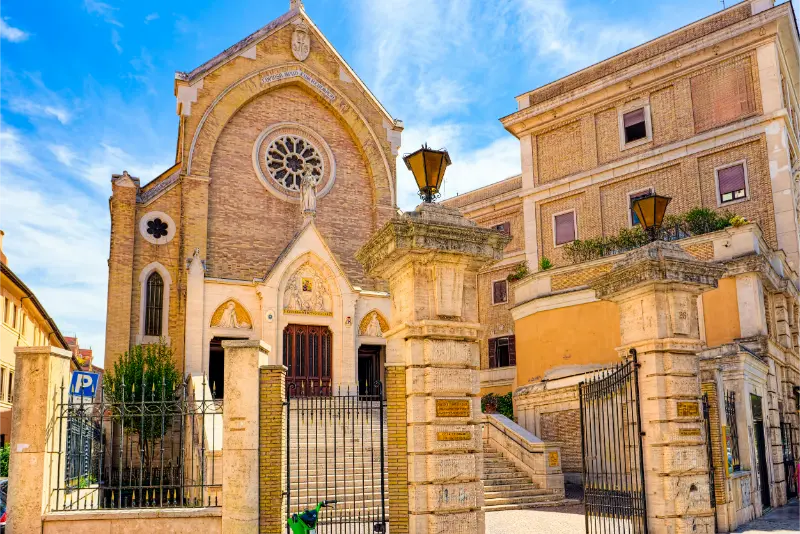
Several churches and former religious complexes punctuate the route. Their opening hours can be irregular because many remain active places of worship rather than tourist attractions. If a door is open, enter respectfully; if it is closed, appreciate the façade and keep moving instead of building the whole walk around uncertain access.
This flexibility is one reason Via Giulia works well on a day when you do not want timed tickets. The core experience—the street itself, architecture and urban connections—remains available even if individual interiors are closed.
The Farnese arch and unfinished ambitions
One of the street’s most photogenic elements is the ivy-covered Farnese arch spanning Via Giulia. It is often described as part of a larger uncompleted idea connecting Farnese properties toward the Tiber. Whether you arrive with the full architectural history or simply notice it while walking, the arch captures a recurring Roman theme: grand projects were modified, interrupted or left incomplete, and those fragments became part of the city’s character.
Photograph it, but also walk beneath it and look back from both directions. Perspective is the real subject on a street designed around a long visual axis.
Courtyards, fountains and details to watch for
The most rewarding Via Giulia walk is detail-oriented. Notice fountains set into walls, heavy wooden doors, rusticated stone portals, fragments of ancient material reused in later buildings and glimpses of internal courtyards. Some façades are restrained enough to look almost plain until you compare their proportions and stonework.
Do not enter private property simply because a doorway is open. Enjoy what is visible from the public street. Rome’s residential heritage is living space, not an open-air museum without boundaries.
How to connect Via Giulia with Campo de’ Fiori and Trastevere
At the southern end of the walk, Campo de’ Fiori and Piazza Farnese are natural extensions. From there, Ponte Sisto takes you across the Tiber into Trastevere. This creates one of central Rome’s best low-ticket afternoons: Renaissance streets, a major piazza, river crossing and evening neighborhood atmosphere.
You can also continue toward the Jewish Ghetto or Piazza Navona. Because everything is close, resist using buses for tiny hops; walking is what reveals the urban relationships.
Best time, photography and crowd strategy
Morning is usually best if you want the street to feel architectural rather than social. Deliveries and local traffic still exist, but tourist groups are fewer than around nearby headline squares. Late afternoon produces warmer light on stone and works well if you intend to finish in Trastevere for dinner.
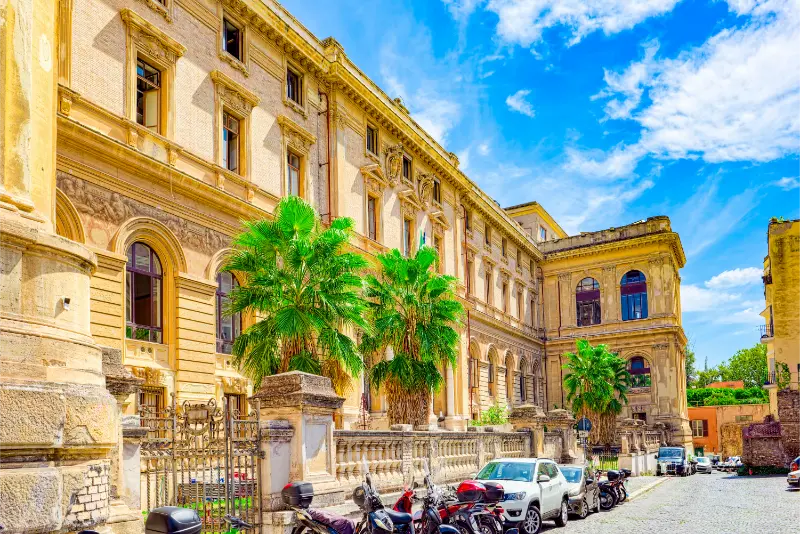
A normal phone camera is enough. Use the long street line, arches and repeated windows as compositional tools. Wide-angle lenses can exaggerate façades; stepping farther back often produces a more natural architectural image.
Frequently asked questions
Is Via Giulia free to visit?
Yes. Walking the street is free. Individual churches, exhibitions or special interiors may have separate rules.
How long is a good Via Giulia walk?
Allow 60–90 minutes if you want to stop for architecture and photographs. Add more time for Campo de’ Fiori, Piazza Farnese or Trastevere.
Is Via Giulia worth it on a first trip?
Yes if you have at least three or four days and enjoy walking. On a one-day itinerary, the major ancient and Vatican sights will usually take priority.
What should I combine with it?
Piazza Farnese, Campo de’ Fiori and Ponte Sisto are the easiest combination, with Trastevere as a natural finish.
Final thoughts
Via Giulia is a strong antidote to checklist tourism. There is no ticket gate and no single masterpiece that announces the visit is complete. Instead, the street teaches you to read Rome through alignments, palaces, portals, arches and side lanes. Walk slowly, allow detours, and use it to connect the Renaissance center with the river and Trastevere.

Extra planning notes for a smoother visit
For Via Giulia Rome, the most reliable plan is to keep one part of the visit flexible. Rome and Lazio sites can change access because of worship, exhibitions, restoration work, weather or transport disruption. Check the official source on the morning of travel, keep a screenshot of any reservation, and avoid building a chain of appointments with no buffer. If you arrive earlier than expected, use nearby streets, a coffee stop or a public square rather than entering another paid attraction you do not have time to enjoy. This approach is especially useful in Rome because short map distances can hide queues, cobblestones, security checks and crowded public transport. A well-paced day usually produces better memories than a longer checklist, and it also gives you room to react when a church is temporarily closed, a museum route changes or the weather makes an outdoor plan less comfortable.
Extra planning notes for a smoother visit
For Via Giulia Rome, the most reliable plan is to keep one part of the visit flexible. Rome and Lazio sites can change access because of worship, exhibitions, restoration work, weather or transport disruption. Check the official source on the morning of travel, keep a screenshot of any reservation, and avoid building a chain of appointments with no buffer. If you arrive earlier than expected, use nearby streets, a coffee stop or a public square rather than entering another paid attraction you do not have time to enjoy. This approach is especially useful in Rome because short map distances can hide queues, cobblestones, security checks and crowded public transport. A well-paced day usually produces better memories than a longer checklist, and it also gives you room to react when a church is temporarily closed, a museum route changes or the weather makes an outdoor plan less comfortable.
A final practical perspective
For Via Giulia Rome, the most reliable plan is to keep one part of the visit flexible. Rome and Lazio sites can change access because of worship, exhibitions, restoration work, weather or transport disruption. Check the official source on the morning of travel, keep a screenshot of any reservation, and avoid building a chain of appointments with no buffer. If you arrive earlier than expected, use nearby streets, a coffee stop or a public square rather than entering another paid attraction you do not have time to enjoy. This approach is especially useful in Rome because short map distances can hide queues, cobblestones, security checks and crowded public transport. A well-paced day usually produces better memories than a longer checklist, and it also gives you room to react when a church is temporarily closed, a museum route changes or the weather makes an outdoor plan less comfortable.