San Bernardo alle Terme Rome: Round Church, Roman Baths and Visiting Guide
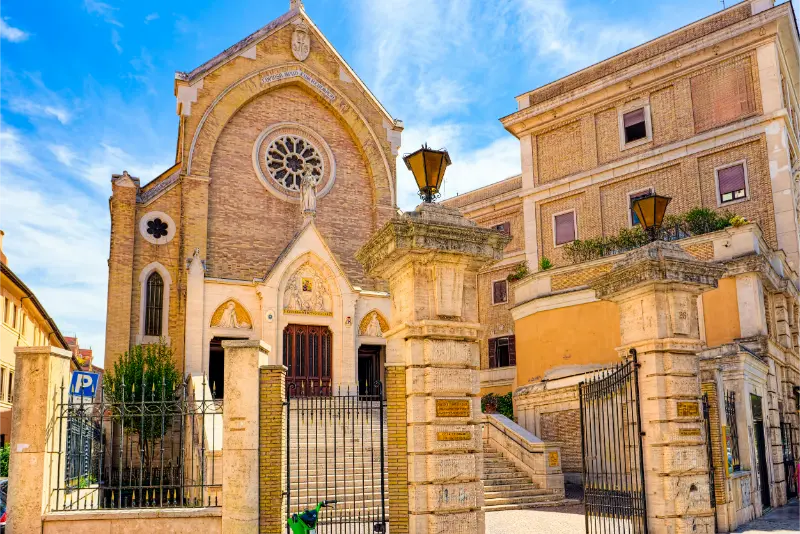
San Bernardo alle Terme is one of Rome’s most surprising examples of ancient architecture reused for Christian worship. The church occupies a circular structure connected with the Baths of Diocletian and feels almost like a miniature Pantheon, with a coffered dome and a centralized interior unlike the long basilican plan visitors encounter in most Roman churches.
Its location near Termini and Piazza della Repubblica makes it particularly useful for travelers with limited time. Within a short walk you can compare an ancient imperial bath complex, Michelangelo’s Santa Maria degli Angeli and this compact seventeenth-century transformation of a Roman structure.
| Planning point | Useful detail |
|---|---|
| Location | Piazza San Bernardo, 105, near Repubblica and Termini |
| Access | Turismo Roma advises contacting the church directly for current Mass times and visiting arrangements. Tourist access can vary because it remains an active church. |
| Suggested time | 35–55 minutes |
| Best for | architecture, adaptive reuse, Diocletian’s Baths, quiet churches and unusual circular interiors |
Why this place is worth adding to your Rome itinerary
San Bernardo alle Terme earns its place in an itinerary because it adds context rather than just another photo stop. Rome can become exhausting when every hour is built around a headline attraction; a focused museum, church or cultural complex gives you time to understand one theme properly and often reveals a side of the city that the major monuments cannot show.
The best strategy is to place the visit inside a compact neighborhood route. Walking between related sites makes the history easier to understand and reduces time lost to traffic, transfers and long cross-city journeys.
History and context
The circular building formed part of the enormous Baths of Diocletian complex, constructed around the turn of the fourth century. Its exact ancient function is debated, but the surviving structure became one of the peripheral elements later absorbed into the post-antique city.
At the end of the sixteenth century Caterina Sforza Cesarini promoted the conversion of the ancient rotunda into a church. It was associated with French Cistercian reformers before later passing to another congregation dedicated to Saint Bernard.
The adaptation preserved the powerful centralized geometry of the Roman shell while adding chapels, sculpture and Christian furnishings. This layered transformation is the main reason the church is so valuable for understanding how Rome reused ancient architecture.
What survives today is the result of several historical phases rather than one frozen moment. That layered character is central to Rome: buildings change function, collections move, religious practices evolve and modern institutions reinterpret older spaces. Reading those layers is more rewarding than searching for a single ‘original’ appearance.
What to see
The circular Roman structure
The round plan immediately distinguishes San Bernardo from nearby churches. Thick ancient masonry creates a sense of mass and enclosure that remains visible despite later decoration.
Walk slowly around the interior perimeter. The spatial effect is strongest when you notice how the chapels and statues have been fitted into the ancient geometry rather than replacing it.
The coffered dome and oculus effect
The dome is decorated with octagonal coffers and receives dramatic light from above, encouraging comparisons with the Pantheon even though the two buildings differ greatly in scale and history.
Visit when daylight is reasonably strong if possible. Light is an architectural material here, changing the depth of the coffers and the modeling of the statues.
Monumental statues
Large stucco figures of saints occupy niches around the circular wall and create a rhythmic Baroque counterpoint to the ancient shell.
Stand near the center to see how the statues form a ring around the visitor. Their scale makes the small church feel more monumental than its footprint suggests.
Federico Overbeck’s tomb
The church also contains the tomb of German painter Friedrich Overbeck, a leading figure of the Nazarene movement in Rome.
This creates a useful link with the city’s nineteenth-century international artistic communities and can be paired conceptually with Casa di Goethe or other sites connected with foreign artists in Rome.
How to plan your visit
San Bernardo alle Terme is an active religious site, so sightseeing access can pause for Masses, ceremonies, funerals, maintenance or community activity. Check the official information shortly before leaving and avoid building an inflexible schedule around a church opening time copied months earlier.
Dress and behave for worship: shoulders and knees should be covered, hats normally removed, conversations kept quiet and photography rules respected. If a service begins, move away from the liturgical area or return later.
A little preparation helps. Choose two or three details to look for before entering, then give yourself time to notice the architecture and devotional use of the building instead of treating every chapel as a checklist.
For most travelers, 35–55 minutes is realistic. Leave a modest buffer before your next reservation so a queue, service, security check or temporary closure does not create stress.
Getting there and moving around
The location is Piazza San Bernardo, 105, near Repubblica and Termini. In central Rome, walking is often the most reliable final connection. If you use public transport, check the live route on the day because diversions, traffic and strikes can affect buses and trams.
Save the address and one nearby landmark offline. Rome’s historic streets can be confusing even when two places are geographically close, and a short wrong turn can add unnecessary stairs or busy-road crossings.
A practical nearby itinerary
Visit San Bernardo after the Baths of Diocletian and Santa Maria degli Angeli, then continue toward Palazzo Massimo or Santa Maria della Vittoria. All of these sites lie within a compact area around Repubblica and Termini.
Useful MyRomeTrip guides for the same area are Baths of Diocletian, Santa Maria degli Angeli, Palazzo Massimo and Santa Maria della Vittoria. Keeping these stops together creates a more coherent day and reduces unnecessary transport.
Practical tips before you go
- Check the official access information on the day or the evening before your visit.
- Wear comfortable shoes because cobblestones, stairs and uneven surfaces are common even in central Rome.
- Keep valuables secure on crowded transport and in busy tourist corridors.
- Carry water in warm weather and use fountains to refill a reusable bottle where appropriate.
- Avoid stacking several timed reservations with no buffer between them.
- Internal links on MyRomeTrip open in the same tab so you can build a compact route without losing your place.
For the latest access details, use the official or municipal visitor information. Opening hours and temporary restrictions are the details most likely to change.
Where to stay for this part of Rome
A central base is usually more valuable than choosing a hotel beside one individual attraction. Before booking, test the real walking route to the nearest useful metro, tram or bus connection and think about where you expect to spend your evenings.
For a first visit, areas around the historic center, Monti, Prati, Trastevere or Termini can all work depending on budget and priorities. Repeat visitors may prefer to stay closer to the specific neighborhood cluster they plan to explore.
Who will enjoy this stop most?
This stop is especially suitable for travelers interested in architecture, adaptive reuse, diocletian’s baths, quiet churches and unusual circular interiors. It is also useful for repeat visitors who want to move beyond Rome’s essential monuments without sacrificing historical depth.
If you only have one or two days in Rome, protect time for your personal must-sees first. Add this stop when it falls naturally on the route rather than crossing the city simply to collect another attraction.
Frequently asked questions
Is San Bernardo alle Terme part of the Baths of Diocletian?
The church occupies an ancient circular structure that belonged to the baths complex, later converted for Christian use.
Is it really like a small Pantheon?
The comparison comes from the circular plan and domed interior, though the building has a different history, scale and architectural system.
Is there an entrance fee?
Ordinary church entry is generally free, but access depends on worship and current opening arrangements.
How long should I stay?
Around 35 to 55 minutes is enough to appreciate the architecture, statues and historical context.
Final advice
San Bernardo alle Terme is most rewarding when you arrive with one or two historical questions rather than a long checklist. Notice how the site relates to its neighborhood, which parts belong to different periods and how people still use the space today.
Keep the rest of the itinerary geographically simple. A strong cluster of nearby places, a relaxed meal and enough time to walk usually produces a better day in Rome than racing between attractions on opposite sides of the city.
How this stop changes the way you see Rome
A visit to San Bernardo alle Terme adds value because it changes the scale of the city. After a major monument, a smaller institution or church encourages you to notice street levels, materials, local memory, changing uses and the way historical buildings still function inside ordinary neighborhoods. Those details explain why Rome is not simply an archaeological park but a living city built through continuous adaptation.
Use the stop as a reference point for the rest of the day. Compare crowd levels, architecture and urban space with the next attraction, and notice how quickly the character of Rome changes within a ten-minute walk. This type of comparison is one of the easiest ways to turn a list of sights into a coherent travel experience.
If you are traveling with companions who have different interests, agree on one shared detail to look for—an architectural feature, a historical object, a viewpoint or a story connected with the site. A simple visual goal often keeps a specialist visit engaging for everyone without forcing the group through a long lecture.