Best Playgrounds in Rome: Parks and Family Breaks Between Sightseeing
Playgrounds and parks can completely change a family trip to Rome. Children who spend all day in queues, churches and museums eventually stop enjoying even the attractions adults consider essential. A well-timed hour to run, climb or simply play can reset the day.
Rome has large historic parks, neighborhood play areas and open landscapes rather than one single must-visit playground. Because equipment and maintenance can change, this guide focuses on reliable green spaces, practical family planning and how to fit play into sightseeing.
| Area | Best for | Planning note |
|---|---|---|
| Villa Borghese | Central break + easy family time | Good between historic-center sights |
| Villa Doria Pamphilj | Longer park afternoon | Choose entrance carefully |
| Parco degli Acquedotti | Running + landscape | Best in cooler hours |
| Neighborhood parks | Quick local reset | Ask locally about current condition |
Villa Borghese: the easiest central family reset
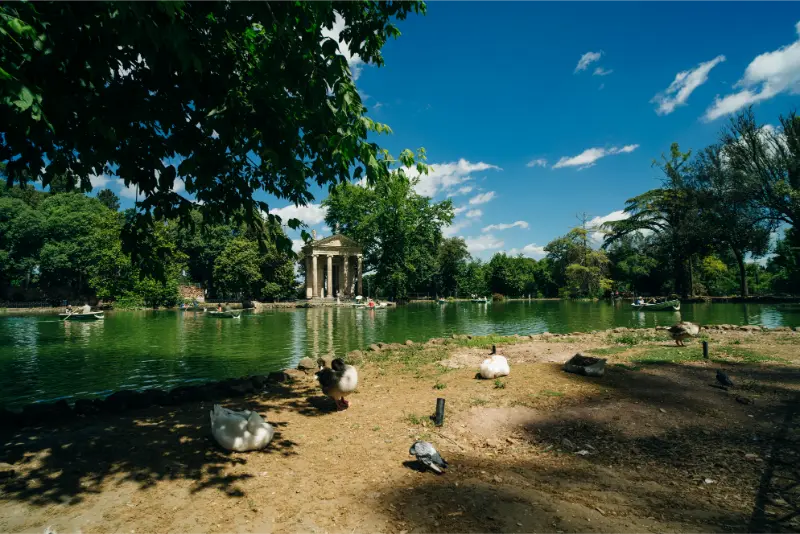
Villa Borghese is one of the most useful family spaces in central Rome because it sits between major sightseeing areas yet gives children room away from traffic. The park is large enough for a real break, but still close to Piazza del Popolo, the Spanish Steps and several museums. Families can use it as a planned midday reset rather than a separate excursion.
Our Villa Borghese guide explains the broader park. Playground equipment and individual facilities can change over time, so treat the park itself as the reliable attraction and check the condition of specific play areas when you arrive. Open lawns, paths and shaded sections are useful even when one structure is temporarily unavailable.
Villa Doria Pamphilj: space for a longer break
Villa Doria Pamphilj is one of Rome’s largest green spaces and works well when your family needs more than twenty minutes on a bench. There is room for walking, running, scooters and a slower picnic-style afternoon, and the park feels far removed from the dense historic center.
Read our Villa Doria Pamphilj guide before deciding which entrance makes sense. The park is large, so choosing the wrong side can add unnecessary walking with children. Bring water and snacks, and remember that a park afternoon can be the main activity rather than filler between monuments.
Parco degli Acquedotti: play with a sense of Rome
Parco degli Acquedotti is not a classic playground destination in the same way as a small neighborhood park, but it is one of the best places for children who simply need space to move. The monumental aqueducts make the outing feel connected to Rome’s history while adults get a memorable landscape.
Our Parco degli Acquedotti guide covers access and walking ideas. Choose cooler hours in summer because large sections are exposed. This is particularly good for school-age children who are bored by another museum but can enjoy seeing ancient infrastructure in an open landscape.
Local neighborhood playgrounds can be more useful than famous parks
Small municipal playgrounds are scattered through residential districts and can be invaluable if one is near your accommodation. Equipment quality and maintenance vary, so do not cross the city based only on an old photo or review. A modest play area ten minutes from the hotel is often more useful than a famous park requiring forty minutes of transport.
Ask your hotel or host which nearby park families currently use. Local information is especially helpful because temporary maintenance, construction or damaged equipment can change quickly. Build your trip around reliable neighborhoods and green spaces, then treat individual playground structures as a bonus.
What makes a good playground stop in Rome
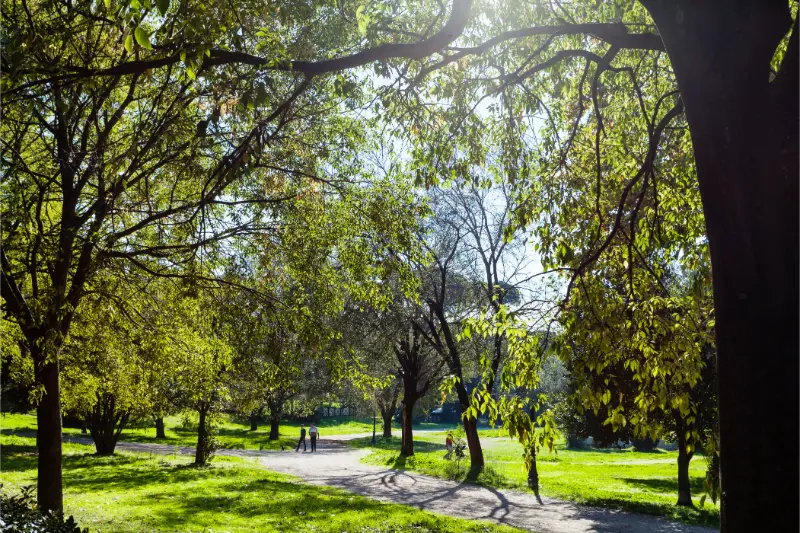
Shade is almost as important as equipment, particularly from late spring through early autumn. Look for seating, space to run, a nearby bathroom option and a café or supermarket within walking distance. A beautiful play structure with no shade can be unpleasant at 14:00 in July.
Also consider the route. Crossing several lanes of traffic or pushing a stroller uphill may erase the benefit of the break. The best family stop is usually the one that fits naturally between two attractions rather than the one with the longest list of equipment.
Combine playground time with major attractions
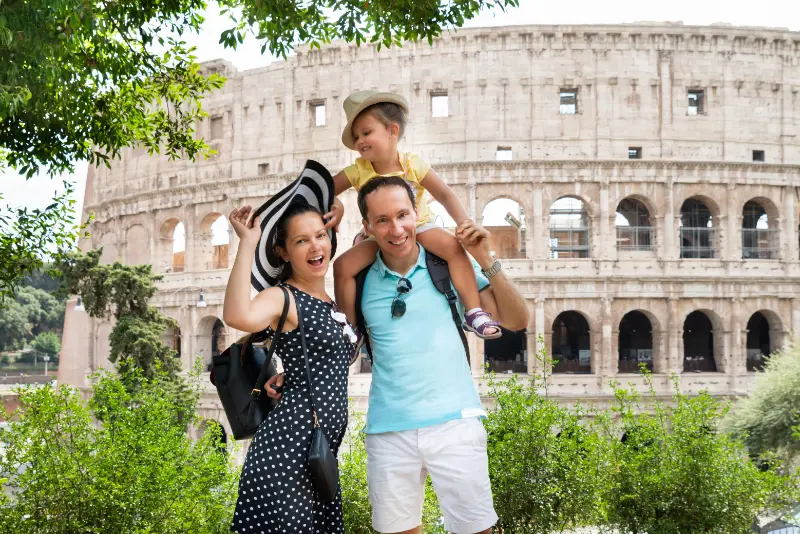
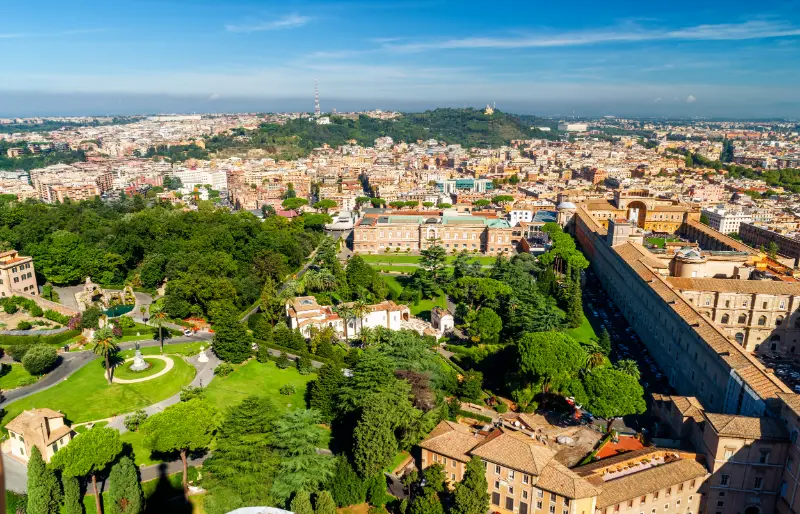
A playground break works best when it is placed before a child becomes overtired. After a morning at the Colosseum, for example, move toward a green area or relaxed lunch rather than adding another indoor attraction. After the Vatican, a neighborhood pause in Prati can be more realistic than crossing Rome for a specific park.
Our Rome with kids guide suggests broader combinations. Think in pairs: one adult-interest attraction and one child-led break. This keeps the whole family from feeling that every hour belongs to one person’s priorities.
For toddlers: simple spaces beat elaborate attractions
Very young children often need a safe place to walk, climb a little and repeat the same movement rather than a complex themed playground. Grass, low equipment and shade can be enough. Our Rome with toddlers guide covers naps, meals and pacing.
Bring a small ball or one familiar toy if it fits easily in your bag, but avoid carrying bulky play gear all day. Rome already provides visual stimulation; the break should reduce complexity, not create another schedule.
For older children: use parks for independence
School-age children may enjoy bicycles, open lawns, treasure-hunt style walks or simply having space away from queues. A park visit can also be a good time to give them a small role in planning: choose the snack, pick the next viewpoint or decide whether to stay twenty more minutes.
Older children who no longer need conventional playgrounds may prefer the aqueduct park, Appian Way or large villas. The principle is the same: give them a physically active part of the day after long periods of listening and waiting.
Bathrooms, snacks and changing needs
Do not assume every park has a clean, open public toilet close to the playground. Plan around cafés, museums or larger facilities nearby and review our Rome public toilets guide if bathroom access is a major concern.
Carry water and one emergency snack, especially with small children, but buy fresh food locally rather than hauling a full picnic every day. In warm weather, choose foods that travel safely and keep the stop simple.
Heat, rain and seasonal planning
In summer, playgrounds are most useful in the morning or later afternoon. Metal and dark surfaces can become hot, and exposed parks can feel far warmer than shaded streets. Use our Rome in summer guide to plan around heat.
After rain, some play surfaces and lawns may stay wet or muddy. Keep an indoor backup nearby and use our rainy-day guide rather than forcing an outdoor stop because it was on the plan. Children usually care more about moving than about visiting one specific playground.
Strollers, scooters and getting there
A compact stroller makes park days easier for younger children, but rough paths can still be tiring. Our Rome with a stroller guide should be used together with this article once published. For now, prioritize routes with fewer changes and avoid carrying a scooter onto packed public transport at rush hour.
Rome’s public transport can get you close to many parks, but the final walk matters. Check the entrance rather than just the center point of the park on a map. Large villas often have several gates separated by a significant distance.
A simple family day built around play
Start with one major sight early, have lunch before everyone is exhausted, then spend an hour or two in a park. Add a small evening walk or gelato rather than another ticketed attraction. This rhythm is especially effective on the middle days of a longer trip when children need recovery time.
If accommodation choice is still open, compare family bases in our family hotels guide. Staying near a park or pedestrian-friendly area can make spontaneous play breaks much easier than living beside a major monument with little open space.
Playground mistakes to avoid
- Crossing the city for one small play area when a local park is nearby.
- Arriving at exposed equipment in the hottest part of a summer day.
- Assuming toilets or cafés are inside every park.
- Waiting until a child is already overtired before offering a break.
- Choosing the park center on a map instead of the best entrance.
- Scheduling playground time so tightly that it becomes another obligation.
Frequently asked questions
Which Rome park is easiest with children?
Villa Borghese is one of the easiest central choices because it is large, accessible from major sightseeing areas and offers space beyond specific playground equipment.
Are Rome playgrounds free?
Public parks and municipal play areas are generally free, while individual attractions or rentals inside larger parks may cost extra.
How much playground time should I plan?
For younger children, an hour can transform the day. On a longer trip, one full slow park afternoon can also help everyone recover from intensive sightseeing.
Final advice
Use play strategically, not as an afterthought. Choose parks that fit the neighborhood you are already visiting, prioritize shade and bathrooms, and let children stop before they are exhausted. The best family itineraries in Rome are not the ones with the most attractions; they are the ones everyone can still enjoy at the end of the day.