Tiber Island Rome: Bridges, Basilica, History and Walking Guide
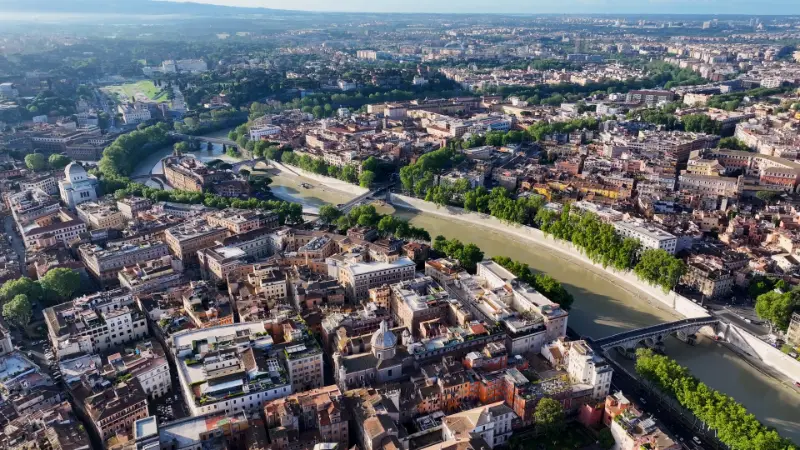
Tiber Island is a small piece of Rome that works as both a destination and a bridge between neighborhoods. Set in the river between the Jewish Ghetto and Trastevere, it is only about 300 meters long and roughly 90 meters wide, yet it carries more than two thousand years of religious, medical and urban history. Ancient Romans associated the island with healing and the cult of Aesculapius, while its two historic bridges still make it one of the most atmospheric pedestrian crossings of the Tiber.
The island does not require an admission ticket or a formal sightseeing plan. The official Rome tourism page highlights Ponte Fabricio on the Ghetto side and Ponte Cestio toward Trastevere, as well as the island’s ancient sacred character. The best visit is therefore a slow walk that uses the bridges, basilica, river views and nearby neighborhoods as one continuous route.
| Planning point | Current practical detail | What it means for your visit |
|---|---|---|
| Location | In the Tiber between the Jewish Ghetto and Trastevere | Approach on foot via Ponte Fabricio or Ponte Cestio. |
| Tickets / cost | Public outdoor areas are free | You can include the island spontaneously without a reservation. |
| Best use | Short walk, bridge views, Basilica of San Bartolomeo and neighborhood connection | Combine with the Ghetto and Trastevere rather than treating it as a stand-alone half-day attraction. |
Why the island became sacred
A famous Roman tradition connects the island with a plague in the early third century BC. According to the story, Roman envoys traveled to Epidaurus, a major sanctuary of Aesculapius, and returned with a sacred serpent associated with the healing god. When the serpent left the ship at the island, the location was chosen for a sanctuary. Whether every detail is historical or legendary, the association between the island and healing became deeply rooted.
The island was eventually shaped and monumentalized in ways that evoked a ship, an image still suggested by surviving stonework near the downstream end. The symbolic connection is powerful: a vessel carrying healing to Rome becomes fixed in the river itself. Later hospitals and religious institutions continued the medical character of the place, creating one of the city’s most remarkable examples of a function persisting across very different historical periods.
The two ancient bridges
Ponte Fabricio
Ponte Fabricio links the island to the left bank and Jewish Ghetto side. Built in 62 BC, it is one of the oldest Roman bridges still serving pedestrians in the city. Its long survival is part engineering achievement and part urban luck. Walk slowly enough to notice the inscriptions and the famous four-faced stone herms that gave the bridge its popular name, Ponte dei Quattro Capi.
Ponte Cestio
Ponte Cestio connects the island toward Trastevere. Its origins also go back to the late Roman Republic, although the structure has undergone major rebuilding. Crossing both bridges in one visit turns the island into a natural hinge between two very different neighborhoods: the compact lanes and monuments of the Ghetto and the lively streets of Trastevere.
Basilica of San Bartolomeo all’Isola
The basilica at the eastern side of the island stands on ground associated with the ancient sanctuary of Aesculapius. The current church has medieval origins and later restorations, and it is dedicated to Saint Bartholomew. Even travelers who do not plan a detailed church visit should step inside when it is open, both for the architectural atmosphere and for the way Christian worship continued the island’s sacred identity.
Remember that this is an active religious site, not simply a tourist interior. Services can limit sightseeing, clothing should be respectful and silence is appropriate. If the doors are closed when you arrive, do not consider the visit a failure—the bridges, river edges and urban setting are the island’s essential experience.
A simple self-guided walking route
Start in the Jewish Ghetto near Portico d’Ottavia and walk to Ponte Fabricio. Cross slowly, pause for upstream and downstream river views, then enter the island’s central space and visit San Bartolomeo if open. Continue across Ponte Cestio into Trastevere, where you can continue toward Santa Cecilia or Santa Maria in Trastevere.
The same route works in reverse if you are staying in Trastevere. It is particularly good in the late afternoon because the river light softens, the stone bridges become more photogenic and you can finish with dinner on either bank. Avoid over-planning: the pleasure of the island comes from its position between places, not from collecting a long list of interior attractions.
A low-stress visit plan
- 24–48 hours before: recheck the official website for closures, restoration notices, services or event changes.
- Before leaving: save tickets or reservation details offline and confirm the exact entrance, not only the attraction name.
- On arrival: identify the two or three details you most want to understand instead of trying to absorb everything at once.
- During the visit: take a short pause before attention drops; even five minutes can improve the second half of a museum or church visit.
- Afterward: keep the next stop flexible whenever possible and use the surrounding neighborhood rather than immediately crossing Rome.
The difference between a good Rome itinerary and an exhausting one is often the number of fixed commitments. One timed ticket in a half-day is usually easy to manage; three can make every bus delay or security line feel like a problem. Keep free churches, squares, viewpoints and walks around the ticketed anchor so the day can expand or contract naturally.
Save screenshots of reservations and official notices. Mobile data is usually reliable in central Rome, but basements, thick historic walls and crowded networks can make loading a confirmation surprisingly slow at the worst moment. A simple offline copy also protects you if a booking email is difficult to find at the entrance.
How much time to allow
Thirty minutes is enough to cross both bridges, look around the public spaces and enter the basilica briefly if it is open. Allow 60–90 minutes if you want photographs, time by the river and a slower church visit. The island becomes a much richer experience when included within a two- or three-hour Jewish Ghetto–Tiber Island–Trastevere walk.
Leave a buffer of at least 20–30 minutes before the next fixed reservation. Rome looks compact on a map, but security checks, crowded pavements, uneven surfaces and public-transport delays can turn an optimistic connection into a stressful sprint. A slower schedule also gives you room to stop for a coffee, look at a church that catches your attention or simply stay longer when a place is better than expected.
Best time of day and season
Early morning is quiet and gives clear views along the bridges. Late afternoon and the hour before sunset are more atmospheric, especially if you plan to continue into Trastevere for the evening. After heavy rain or high river conditions, lower riverbank access can be restricted, so stay on the bridge and street-level routes when barriers are in place.
Season changes the feel of almost every Rome visit. In July and August, place exposed outdoor sections early or late and use museums and churches during the hottest hours. In winter, remember that daylight disappears much earlier. Spring and autumn usually give the easiest balance, but weekends, school holidays and major religious or civic events can still change crowd patterns.
Visiting with children
The island works well with children because distances are short and the bridges give an obvious sense of movement and discovery. Turn the visit into a story about an island shaped like a ship and a sacred snake connected with healing. Keep close control near road edges and river access points, and avoid descending to lower embankments when surfaces are wet.
For a wider family plan, compare our Rome with kids guide and keep the day varied. Children usually respond better when one detailed cultural stop is followed by a park, gelato break or open-air walk rather than another long interior immediately afterward.
Accessibility and comfort
The main island streets and bridge approaches can be reached without a museum-style staircase, but historic paving is uneven and some lower riverbank paths are not suitable for wheelchairs or strollers. Use the street-level crossing as the core accessible experience and check church access separately if step-free entry is essential.
Historic Rome has no single accessibility standard. A site can be technically accessible while a specific staircase, crypt, basement or temporary route remains difficult. Use our accessible Rome guide for city-level planning, but contact the venue directly when step-free access, an accessible toilet, lift dimensions or companion policies are essential.
What to combine nearby
The strongest combination is Jewish Ghetto + Tiber Island + Trastevere. You can also add the Theatre of Marcellus and Capitoline area on the Ghetto side, creating a compact route with very little transport time.
Geographic combinations usually create better Rome days than thematic ones. Two famous sights on opposite sides of the city may look attractive on a checklist but waste time in transit. A lesser-known church, square, market or neighborhood beside your main stop often creates a more memorable route and leaves enough energy for the evening.
Food, water and practical breaks
Do not wait until you are exhausted to think about food. Around central monuments, walk one or two streets away from the busiest viewpoint before choosing a café or restaurant, read the menu before sitting and avoid places that pressure passers-by. For a quick sightseeing day, a bakery, pizza al taglio counter or simple trattoria is often more useful than a long lunch immediately beside a landmark.
Carry water in warm weather and refill responsibly where public drinking fountains are available; our Rome drinking water guide explains the city’s nasoni. Churches and museums may require bottles to stay closed or be stored, so finish drinks before entering sensitive spaces and follow staff instructions.
Common planning mistakes
- Treating the island as a major ticketed attraction and allocating half a day to it alone.
- Walking across quickly without noticing Ponte Fabricio and Ponte Cestio as monuments in their own right.
- Descending to the riverbank when barriers or wet conditions make the lower path unsafe.
- Forgetting that San Bartolomeo is an active basilica with worship taking priority over sightseeing.
Is it worth it on a first trip?
Yes, because it is beautiful, free and extremely easy to integrate into central sightseeing. A first-time visitor does not need to prioritize it over the Colosseum or Vatican, but anyone walking between the Jewish Ghetto and Trastevere should choose the island route instead of a less interesting bridge.
If you are still building the overall schedule, use our best things to do in Rome page as a framework and then replace one generic stop with the places that match your interests. Rome becomes much more rewarding when an itinerary reflects what you actually enjoy rather than trying to reproduce every top-ten list.
Frequently asked questions
Do you need a ticket for Tiber Island?

No ticket is required to walk across the island and its public bridges. Individual religious or cultural events can have their own rules.
Which bridge is the oldest?
Ponte Fabricio, on the Jewish Ghetto side, dates to 62 BC and is one of Rome’s best-preserved ancient bridges still in use.
How long does Tiber Island take to visit?
About 30 minutes for a simple crossing and look around; 60–90 minutes if you include the basilica, photos and a slower walk.
Is Tiber Island closer to Trastevere or the Jewish Ghetto?
It sits directly between them, connected to the Ghetto side by Ponte Fabricio and toward Trastevere by Ponte Cestio.
Final advice
Use Tiber Island as Rome intended it to function: a crossing, a meeting point and a place where layers of history touch the river. Walk both bridges, look back at the skyline from the water, enter San Bartolomeo respectfully if it is open, and continue into the neighborhoods on either side rather than rushing away.