Villa Sciarra Rome: Fountains, Gardens and Quiet Walk Above Trastevere
Villa Sciarra is one of Rome’s most atmospheric small historic parks, tucked on the slope between Trastevere and the Janiculum. It combines Mediterranean planting, clipped hedges, playful fountains, statues, an old aviary and shaded paths in a space that feels far more intimate than Villa Borghese or Villa Doria Pamphilj.
The park is especially useful for travelers who need a break from churches and museums without leaving the historic city. Families can use the playground, couples can add it to a Janiculum walk, and repeat visitors will find a side of Rome that is decorative and theatrical without being crowded.
| Planning point | Useful detail |
|---|---|
| Address / location | Main entrances include Via Dandolo and Viale delle Mura Gianicolensi, Rome |
| Access | Public historic park; municipal opening hours can vary seasonally. |
| Tickets / cost | Free |
| Suggested time | 45–75 minutes |
| Best for | Quiet gardens, fountains, families and a slower walk above Trastevere |
From private villa to public park
The site has older associations, but its best-known garden character developed through aristocratic ownership and later transformations. In the modern period, Henrietta Wurts and George Washington Wurts played a major role in shaping the decorative landscape. Sculptures and fountains from a Lombard villa were incorporated, giving the park its unusual collection of woodland-themed figures and water features.
The property eventually passed into public hands. Today the main building, often called Casino Barberini, is used by the Italian Institute of Germanic Studies rather than functioning as a tourist museum. The garden is therefore the primary attraction.
Fountains and sculptural details
Villa Sciarra rewards wandering rather than a rigid route. Look for the Fountain of the Satyrs, Fountain of Diana and Endymion, the Sphinx fountain, putti, turtles and other playful details distributed through the planting. The repeated woodland imagery gives the garden a storybook quality.
Many visitors move too quickly because none of the features is individually famous. Slow down and notice how hedges frame statues and how fountains appear at the end of short visual axes. The park was designed for strolling and surprise, not for checking off a single masterpiece.
The aviary and topiary
The iron aviary recalls the period when ornamental birds formed part of the garden experience. Nearby, formal hedges and topiary introduce a controlled, almost stage-like quality that contrasts with the more natural slopes of larger Roman parks.
The so-called arboreal exedra, with vegetation forming niches for figures representing the months, is another good example of garden architecture created from living material. Seasonal maintenance can affect how sharply these forms read, so the park changes more than a stone monument does.
Practical visit and entrances
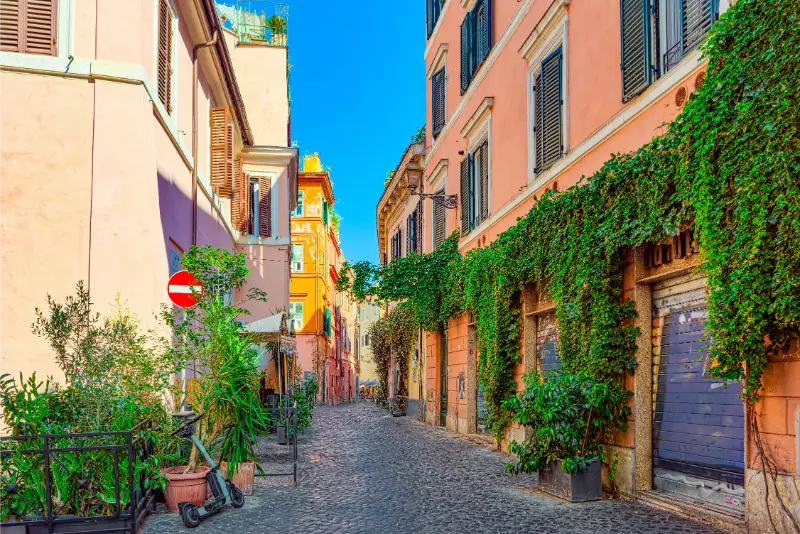
Tourism Rome lists multiple access points, including Via Dandolo, Viale delle Mura Gianicolensi and Via Calandrelli. Because the park is on a slope, the entrance you choose changes how much climbing you do. If you are arriving from Trastevere, expect an uphill approach; if you are already on the Janiculum side, the park can become part of a downhill route.

Municipal park hours can change by season, so check current city information if you plan to visit near opening or closing time. Entry is free. Daylight is preferable because the decorative features and planting are the main reason to come.
Combine Villa Sciarra with the Janiculum
A strong route begins in Trastevere, climbs through Villa Sciarra and continues to Janiculum Hill for panoramic viewpoints. From there, descend toward San Pietro in Montorio or continue to Villa Doria Pamphilj if you want a longer green-space day.
Families can shorten the route and use Villa Sciarra as a dedicated break between sightseeing blocks. The park’s scale is manageable, and the play area makes it more practical than forcing young children through another church after lunch.
When Villa Sciarra is most enjoyable
Spring and autumn generally provide the easiest temperatures for walking, while summer visits are best early or late in the day. Shade can make the park comfortable, but fountains and planted areas should not be treated as guaranteed cooling facilities. Carry water and use the park as a pause rather than a substitute for heat planning.
After rain, paths can be damp and some decorative areas may be under maintenance. That unpredictability is part of visiting a living garden. If a fountain is dry or a section closed, the park still works as a pleasant connector between neighborhoods.
How to get there and plan the route
Central Rome is compact on a map but not always quick on foot. Choose the route based on the attractions immediately before and after this stop rather than on your hotel alone. Live public-transport information is useful because buses and surface routes can change with road works, demonstrations and special events. If you use a taxi, enter the full address rather than only the attraction name, especially for churches, parks and archaeological complexes with more than one entrance.
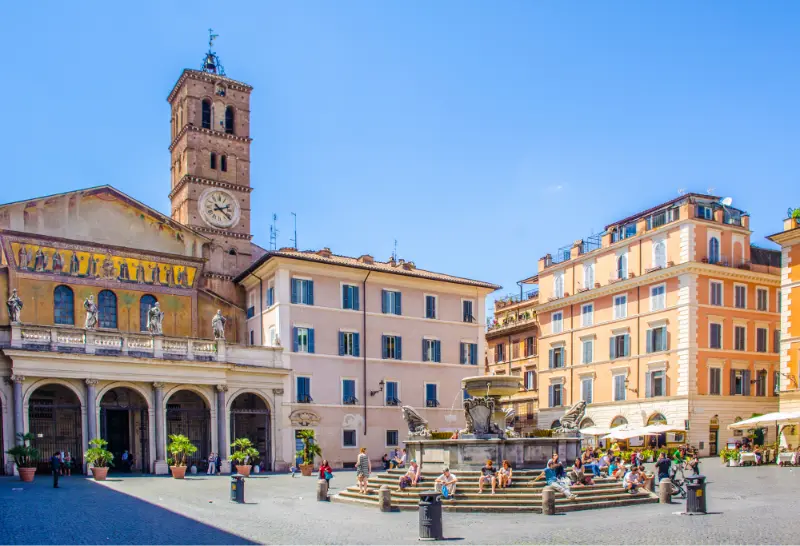
The best itineraries keep one district together. Nearby options include Trastevere, Janiculum Hill, Villa Doria Pamphilj. Linking these stops reduces wasted travel time and gives you a better sense of how each monument fits into Rome’s urban fabric.

What to bring and common mistakes to avoid
- Check same-week access information when the site is religious, archaeological or subject to maintenance.
- Wear comfortable shoes: cobbles, stairs and uneven historic surfaces are common even in the center.
- Carry water in warm weather, but do not eat or drink inside churches and protected museum spaces.
- Avoid scheduling a minor site immediately before a fixed-time Colosseum, Vatican or gallery reservation.
- Do not rely on third-party ticket sellers before confirming whether the site actually requires a paid ticket.
- Keep photography respectful and follow local signs on flash, tripods and restricted areas.
Is it worth adding to a first trip?
For a first visit to Rome, Villa Sciarra Rome makes sense when its subject matches your interests and it fits naturally into the neighborhood you are already exploring. It should not replace the Colosseum, Vatican or Pantheon for most first-time travelers, but it can make a busy sightseeing day feel more personal and less predictable.
Repeat visitors will get even more from the stop because they already understand the city’s basic geography. Smaller churches, specialized museums and neighborhood parks often become highlights on a second or third trip precisely because there is no pressure to race through them.
Why this stop adds depth to a Rome itinerary
Rome can be overwhelming because the city contains several different histories in the same street. A small monument often makes those layers easier to read than a vast museum does. Here, the useful approach is to identify one or two specific features before arrival, understand what period they belong to and then compare them with the surrounding neighborhood. That method turns a short visit into context for everything else you see during the trip.
It also helps to think in terms of connections rather than rankings. A site does not need to be one of Rome’s ten most famous attractions to deserve time. If it explains medieval reuse of an ancient building, the movement of goods through the city, a particular artistic commission or the evolution of a neighborhood, it can become the missing link between larger monuments. This is particularly true for travelers who have already visited Rome once and want a trip built around themes rather than a standard checklist.
Photography can support that way of looking. Instead of taking only a wide image, record a detail—a reused column, inscription, masonry joint, fountain figure or change in floor level—then photograph the surrounding street. The pair of images will often explain the site better later than a dozen identical façade shots. Where photography is restricted, take a few notes immediately after leaving while the details are fresh.
Finally, leave room for uncertainty. Religious buildings can close for services, archaeological routes can change after conservation work and public gardens respond to maintenance and weather. A resilient itinerary includes a nearby alternative and treats access updates as normal, not as a failure of planning. Rome is at its best when a closed door leads you to another church, courtyard, market or view a few streets away.
FAQ
Is Villa Sciarra Rome worth visiting?
Yes, especially for travelers interested in quiet gardens, fountains, families and a slower walk above trastevere. The strongest reason to visit is not simply adding another attraction to a list but seeing a part of Rome that explains the city from a different angle.
Do I need to book in advance?
It depends on the site. Active churches normally do not require a tourist reservation, while specialized archaeological monuments may use scheduled access. Museums can have capacity limits even when tickets are free. Check the current official information shortly before your visit.
How much time should I allow?
Plan about 45–75 minutes. Add extra time if you are combining the stop with a nearby museum, archaeological level, park or longer neighborhood walk.
What should I see nearby?
Good nearby choices are Trastevere, Janiculum Hill, Villa Doria Pamphilj. Keeping the day geographically compact is usually more rewarding than crossing Rome after every attraction.
Is the site suitable for children?
It can be, but the answer depends on the child and the type of site. Parks and visible architectural features are easier for younger visitors; quiet churches and detailed museums work better when children have a simple story or visual goal to follow.
Final planning advice
Villa Sciarra Rome is most rewarding when you treat it as part of a neighborhood rather than an isolated pin on a map. Verify current access, arrive with enough time to look carefully, then continue on foot to one or two nearby places. That slower pattern is one of the best ways to experience Rome beyond the headline attractions.