
Forum Holitorium Rome: Ancient Vegetable Market, Temples and Visiting Guide
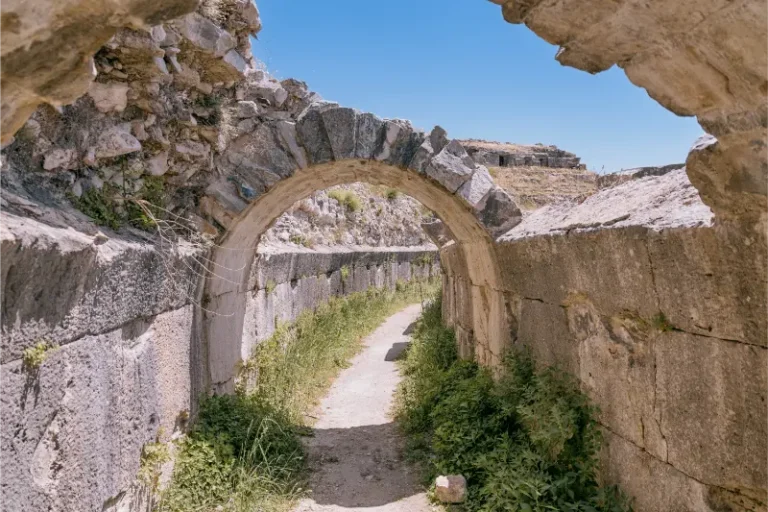
Forum Holitorium is a compact Republican market district where three temple remains survive embedded in and around San Nicola in Carcere. It is easy to pass through this part of Rome while concentrating on larger landmarks, but a focused stop adds context that the headline monuments alone cannot provide. The site helps connect architecture, politics, religion and everyday movement within the ancient city.
This guide is designed for an independent visit in 2026. Archaeological routes, conservation works and temporary closures can change, so use the historical sections to prepare your visit and then verify current access on the official source shortly before you go.
Forum Holitorium at a glance
| Location | between the Capitoline slopes, Theatre of Marcellus and the former Tiber port area |
| Why see it | a compact Republican market district where three temple remains survive embedded in and around San Nicola in Carcere |
| Time to allow | 30–60 minutes from outside; longer if you visit San Nicola in Carcere |
| 2026 access | The archaeological remains of the forum are mainly visible from outside. Interior access to structures incorporated into San Nicola in Carcere follows the church’s arrangements. |
| Best approach | Visit it as part of the surrounding archaeological cluster rather than as an isolated stop. |
Why Forum Holitorium is worth seeing
The strongest reason to include Forum Holitorium in your itinerary is context. Rome’s most famous monuments can make the ancient city look like a sequence of disconnected highlights, while smaller sites often explain how those monuments were linked by streets, ceremonies, services and institutions. Here, the surrounding topography is as important as the surviving masonry.
For travelers who enjoy archaeology, Forum Holitorium rewards slow observation. You do not need specialist training, but it helps to arrive knowing what function the site served, which parts are ancient, and how later rebuilding changed what is visible. A few minutes of preparation turns fragmentary remains into a readable piece of urban history.
Historical background
The Forum Holitorium was Rome’s vegetable and produce market, positioned close to the Tiber and the routes that carried goods into the city. Its location near the river port, Capitoline slopes and Theatre of Marcellus made it part of a busy commercial and religious zone rather than a monumental civic square like the Roman Forum.
Several Republican temples occupied the area. The best-known surviving group consists of sanctuaries traditionally identified with Janus, Spes and Juno Sospita, whose remains were incorporated into the fabric of San Nicola in Carcere. A further temple dedicated to Pietas stood nearby but was removed when the Theatre of Marcellus was constructed.
The combination of market and temple functions is important. Roman commercial districts were not secular spaces in the modern sense. Religious buildings, porticoes and public routes structured daily activity, and traders operated within a landscape marked by ritual and civic identity.
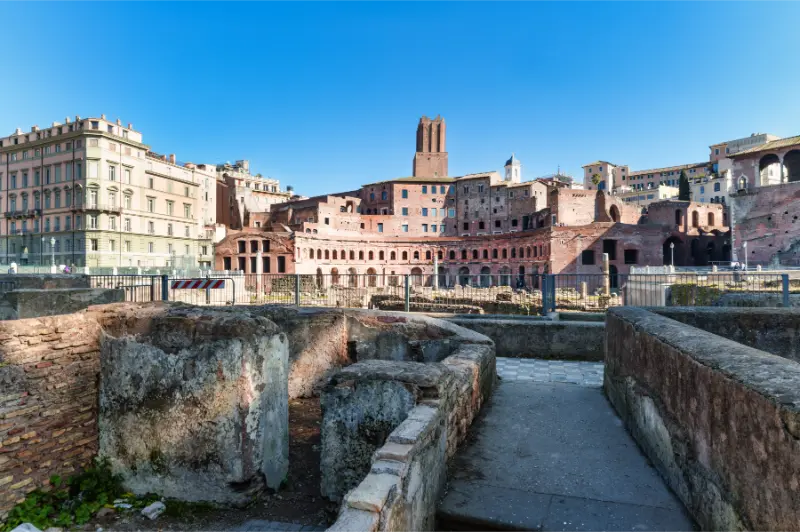
Later construction transformed the ancient forum dramatically. The medieval church reused temple structures, street levels rose, and the riverfront changed. As a result, understanding the Forum Holitorium requires reading fragments across several periods rather than expecting an intact archaeological enclosure.
What to look for on site
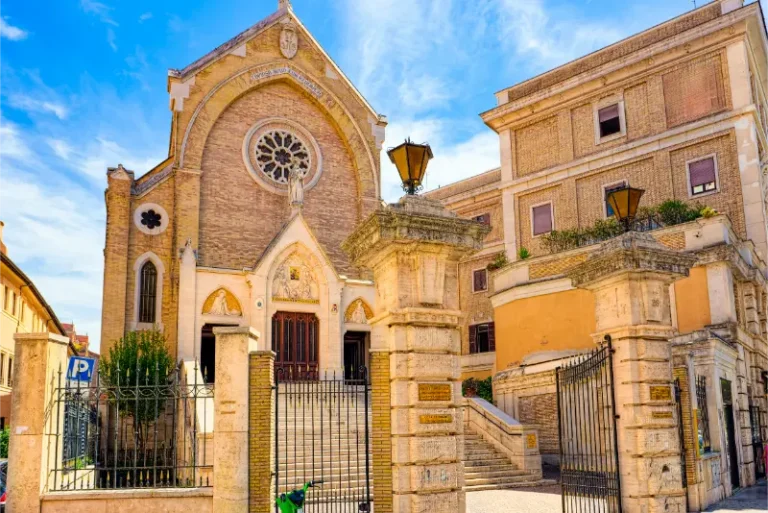
Start with the exterior of San Nicola in Carcere, where ancient columns and masonry are visibly integrated into the church walls. The reuse is not incidental: the building literally preserves the footprint of older sanctuaries.
Move toward the Theatre of Marcellus to understand the scale of urban redevelopment under Augustus. The theatre altered the earlier temple landscape and helps explain why some Republican structures disappeared while others survived through reuse.
Look toward the nearby Apollo Sosianus and Bellona area. Together, these temples show that the district was packed with cult buildings serving different political and religious purposes near major public routes.
Finally, remember the market function. The Forum Holitorium was not created primarily for tourists or ceremonial display; it was part of the everyday supply system of a growing city. That practical role gives the ruins a different character from imperial prestige monuments.

How to visit Forum Holitorium in 2026
The archaeological remains of the forum are mainly visible from outside. Interior access to structures incorporated into San Nicola in Carcere follows the church’s arrangements. Before setting out, check the official visitor information. This is especially important in archaeological areas where restoration, weather, events or safety work can alter the route at short notice.
Allow 30–60 minutes from outside; longer if you visit San Nicola in Carcere. The goal is not simply to photograph the ruins but to understand their position in the city. Walk around the site where possible, compare different viewpoints and use nearby monuments as fixed points. If you are visiting during the hottest months, early morning is usually more comfortable for exposed archaeological areas.
How to get there
between the Capitoline slopes, Theatre of Marcellus and the former Tiber port area is in central Rome or within the main archaeological zone, so walking is usually the most useful approach once you are nearby. Public transport can bring you to the broader district, but the final part of the visit is best done on foot because the historical relationships between monuments become much clearer at street level.
Wear shoes with good grip. Ancient paving, uneven sidewalks, steps and sloping streets are common around archaeological sites. In summer carry water and use sun protection; in winter, allow for slippery surfaces after rain. Rome rewards visitors who plan geographically rather than crossing the city repeatedly between isolated attractions.
Build a small Ancient Rome cluster around the visit
A practical way to make the stop worthwhile is to connect it with San Nicola in Carcere, Theatre of Marcellus, Portico di Ottavia and Jewish Ghetto. These places are close enough geographically or thematically to create a coherent half-day rather than a checklist of unrelated sights.
If this is your first trip, prioritize one major paid archaeological attraction and use smaller outdoor sites to connect the route. If you have visited Rome before, reverse the strategy: spend more time on the lesser-known monuments and use the famous landmarks mainly as orientation points. This produces a much richer picture of the ancient city.
How to read fragmentary ruins without getting frustrated
Many ancient monuments survive only as foundations, columns, brick walls or changes in ground level. That can feel disappointing if you expect complete buildings. The most useful technique is to identify three things: the original function, the ancient street level and the relationship with the nearest major monument. Once those are clear, even a small fragment becomes meaningful.
Do not rely only on a single reconstruction image. Roman buildings often changed across centuries, and modern reconstructions necessarily choose one phase. Compare the surviving material with plans, labels and official descriptions, and treat uncertainty as part of archaeology rather than a flaw in the visit.
Photography and the best viewpoints
For photographs of Forum Holitorium, wider contextual views are often more informative than tight close-ups. Include a recognizable neighboring monument, street or hill when possible; it helps show scale and location. Mid-morning and late afternoon usually produce more modeling on stone and brick than flat midday light, though narrow urban settings can create deep shadows.
If the site is fenced or accessible only from outside, avoid blocking sidewalks or stepping into traffic for a better angle. A safe oblique viewpoint usually reveals more depth than photographing straight through a barrier. For interior museum spaces, follow current photography rules and avoid flash where prohibited.
Visiting with children and accessibility considerations
This type of stop can work well with children when you turn it into a question rather than a lecture: What was this building for? How would people have entered? What can we still recognize? Short focused visits are usually more successful than long explanations. Pair the site with an open space, gelato stop or larger attraction nearby.
Accessibility varies considerably in Rome’s archaeological landscape. Outdoor viewpoints may involve cobbles, slopes, curbs or uneven paving, while museums can offer lifts and adapted routes that do not exactly match the standard visitor circuit. Check the official accessibility information if step-free access is essential, and build extra transfer time into the itinerary.
Best time to visit
For exposed outdoor remains, spring and autumn offer the most comfortable balance of temperature and daylight. In July and August, visit early or later in the day when possible. Winter can be excellent for photography and quieter streets, but shorter daylight means you should place archaeological stops earlier in the itinerary.
Crowd patterns are driven more by nearby headline attractions than by this site itself. If the monument is close to the Colosseum, Forum or Capitoline Museums, the surrounding streets can become busy even when the specific ruin remains quiet. Arriving before the main visitor wave often improves both interpretation and photography.
A suggested itinerary
Start at San Nicola in Carcere and use it as your main orientation point. Continue to Forum Holitorium, spending enough time to identify the original function and the surviving elements described above. Then move toward Theatre of Marcellus. If energy and opening times allow, finish with Portico di Ottavia.
This order is only a framework. Reverse it if a timed ticket dictates your schedule, and do not sacrifice a reserved museum or archaeological entry just to keep the sequence perfect. The main principle is to minimize unnecessary transport and keep monuments from the same historical landscape together.
Frequently asked questions
What was the Forum Holitorium?
It was an ancient market area associated especially with vegetables and produce, located close to the Tiber and the commercial routes of the city.
What temples survive there?
Remains traditionally identified with temples of Janus, Spes and Juno Sospita survive in and around San Nicola in Carcere. Other sanctuaries once occupied the district as well.
Can you enter the archaeological area?
The official Rome tourism page describes the forum remains as visible from outside. Access to spaces beneath or within San Nicola in Carcere follows separate church arrangements.
Is it the same as the Roman Forum?
No. The Roman Forum was the principal civic and political center. The Forum Holitorium was a specialized market district closer to the Tiber.

How long should I spend here?
About 30 to 60 minutes is enough to study the exterior remains. Add time if San Nicola in Carcere is open for an interior or underground visit.
What is the best walking route?
Combine it with the Theatre of Marcellus, Portico di Ottavia and Jewish Ghetto. The monuments are close and together explain the riverward edge of ancient Rome.
Final tips
Forum Holitorium works best for travelers who want to go beyond Rome’s headline checklist. Give the site a clear historical question, connect it with nearby monuments and verify access shortly before visiting. That approach is more rewarding than judging the stop only by how much masonry survives above ground.
If you are staying several days, consider grouping this visit with other Ancient Rome articles on MyRomeTrip rather than trying to cover every ruin in one marathon day. Rome becomes easier to understand when you explore it in small geographic clusters and leave time to notice the spaces between the famous monuments.