
Rome in 2 Days: The Best Itinerary for a Short First Visit
Two days in Rome is short, but it can still feel like a real trip rather than a frantic stopover if you choose a clear structure. The biggest mistake is trying to see every famous sight. Rome’s monuments are spread across layers of history, security lines and pedestrian streets; a good 48-hour itinerary groups places geographically and protects enough time to sit in a piazza, eat properly and notice the city between attractions.
For a first visit, I would divide the trip into two themes: Ancient Rome and the historic center on Day 1, then the Vatican and the Tiber side of the city on Day 2. This gives you the Colosseum, Roman Forum, Trevi Fountain, Pantheon, Piazza Navona, Vatican Museums, Sistine Chapel and St. Peter’s area without crossing Rome unnecessarily.
Before you arrive: book only the essentials
With only two days, a failed reservation can derail the whole plan. Book your Colosseum time and Vatican Museums time before you travel. If you also want Galleria Borghese, you probably need to remove another major attraction; adding it on top of this itinerary will make the schedule too tight for most travelers.
- Book first: Colosseum/Forum/Palatine and Vatican Museums.
- Check current rules: Pantheon, Trevi Fountain inner-area access and any special exhibitions.
- Leave flexible: churches, piazzas, neighborhood walks and meal stops.
- Avoid: booking two timed attractions back-to-back on opposite sides of the city.
Day 1 morning: Colosseum, Roman Forum and Palatine Hill
Start with Ancient Rome while your energy is highest. An early Colosseum slot reduces the risk that midday heat or crowds will dominate the experience. Allow roughly three hours for the full archaeological area, more if you enjoy history. The Colosseum is the visual icon, but the Roman Forum and Palatine Hill are where the city’s political and imperial landscape begins to make sense.
Use our detailed Colosseum, Roman Forum and Palatine Hill guide to decide which ticket product is right for you. Wear shoes with grip and carry water. The ground is uneven, shade is limited in parts of the site, and trying to rush the Forum because you booked lunch too early is a common mistake.
Day 1 lunch: Monti rather than the Colosseum entrance
After the archaeological area, walk toward Monti for lunch. The neighborhood begins only a few streets from the Colosseum but feels more lived-in than the immediate monument perimeter. You will find casual trattorias, pizza, wine bars and small cafés around Via Urbana, Via del Boschetto and the streets near Piazza della Madonna dei Monti.

If you have an extra 30 minutes, read our Monti guide and wander without trying to tick off another attraction. That short reset makes the afternoon far more enjoyable.
Day 1 afternoon: Trevi Fountain, Pantheon and Piazza Navona
Move into the historic center after lunch. The exact order can change depending on where you start, but Trevi Fountain, the Pantheon and Piazza Navona form a natural walking sequence. The distances are short enough that the streets themselves become part of the sightseeing. Look into open churches, notice small fountains and let yourself detour when a courtyard or view catches your attention.
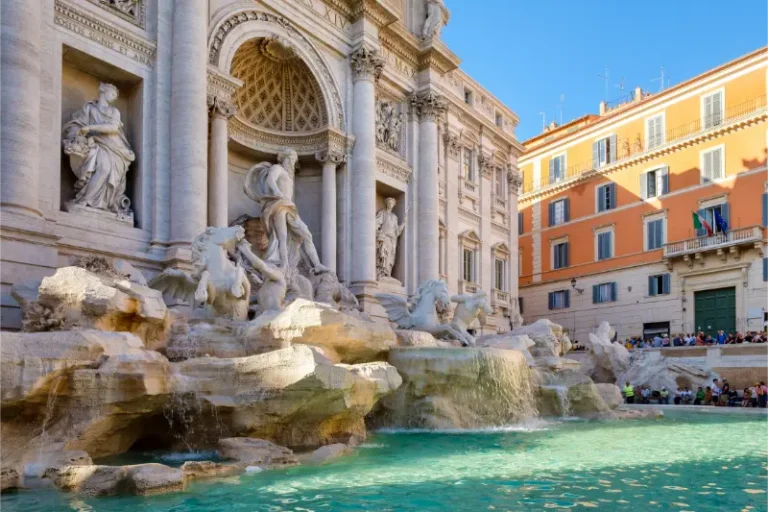
At the Trevi Fountain, remember that visitor access rules changed in 2026 for the inner perimeter. The Pantheon is now a ticketed monument, so check current opening and admission conditions if you plan to enter. Finish at Piazza Navona when the light begins to soften.
Day 1 evening: Campo de’ Fiori or the Jewish Ghetto
For dinner, continue south rather than returning to your hotel immediately. Campo de’ Fiori is central and lively, while the Jewish Ghetto offers a more distinctive historical setting and Roman-Jewish food traditions. You can also cross toward Trastevere if you still have energy, but on a two-day trip I would avoid turning the evening into another long checklist.
The route through the Jewish Ghetto is especially atmospheric after the daytime crowds thin. If you want a longer post-dinner walk, use our Rome at Night guide and choose only one or two illuminated monuments.
Day 2 morning: St. Peter’s Square and Basilica
Begin Day 2 on the Vatican side. If entering St. Peter’s Basilica is important, morning is generally more practical than trying to fit it after a late museum visit. Security lines can vary greatly, and liturgical events may affect access. Arrive with respectful clothing and enough time that a longer-than-expected queue does not immediately destroy the rest of the schedule.
Inside, focus on scale and a few key works rather than trying to absorb every chapel. Michelangelo’s Pietà, Bernini’s baldachin and the spatial drama of the nave are enough to make the visit memorable. If you plan to climb the dome, add substantial time and be prepared for stairs and confined spaces on the upper route.
Day 2 midday and afternoon: Vatican Museums and Sistine Chapel
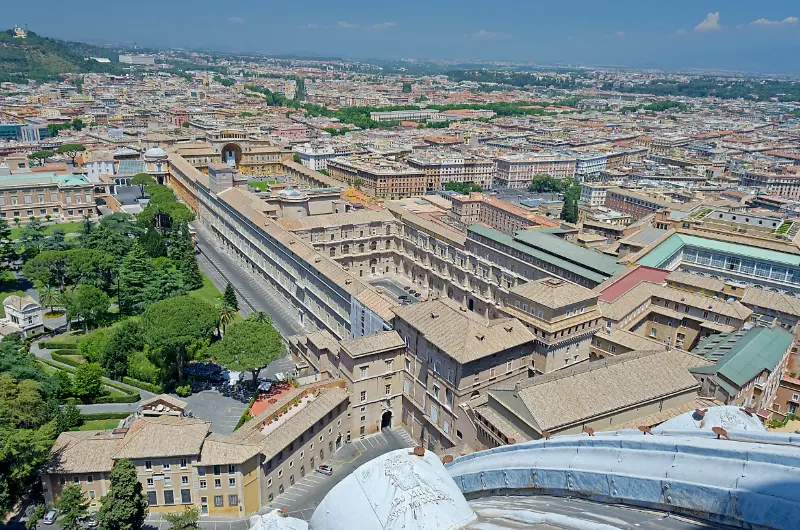
Book the Vatican Museums for late morning or early afternoon, depending on how long you want at the basilica. Allow at least three hours. The collection is too large to “do” completely in a short trip, so choose highlights: classical sculpture, Gallery of Maps, Raphael Rooms and the Sistine Chapel create a coherent first visit.
Our Vatican guide explains tickets and route planning in more detail. If you prefer a later museum slot, see the separate Vatican Museums evening visit guide and reverse the morning/afternoon structure.
Day 2 late afternoon: Castel Sant’Angelo and the river
After the Vatican Museums, you may not want another large museum. Walk toward Castel Sant’Angelo and the Tiber instead. Even without entering, the fortress, Ponte Sant’Angelo and river views create a satisfying final chapter. If you still have energy and enough time before closing, the castle terrace offers one of the best elevated views in central Rome.
See our Castel Sant’Angelo guide if you are deciding whether to go inside. Otherwise, cross the bridge and return toward Piazza Navona for aperitivo or dinner.
Where to stay for a 2-day trip
Location matters more when your stay is short. The historic center around the Pantheon and Piazza Navona gives you maximum walkability. Monti is excellent for the Colosseum and still convenient for the center. Prati works well if the Vatican is a major priority. Termini can be practical for very early or late trains, but choose the exact street and hotel carefully rather than booking based only on distance from the station.
Compare areas in Where to Stay in Rome. Paying a little more for a walkable base can save both time and transit friction on a 48-hour visit.
How to move between the two days
Walk whenever the route is compact and use metro or taxi for the larger transitions. For example, metro is useful between the Colosseum area and parts of the Vatican side, while the historic-center loop is better on foot. Buses can be useful but are more affected by traffic. Do not waste time studying every transport option; learn the routes that matter for your hotel and major reservations.
What to skip on a 2-day first visit
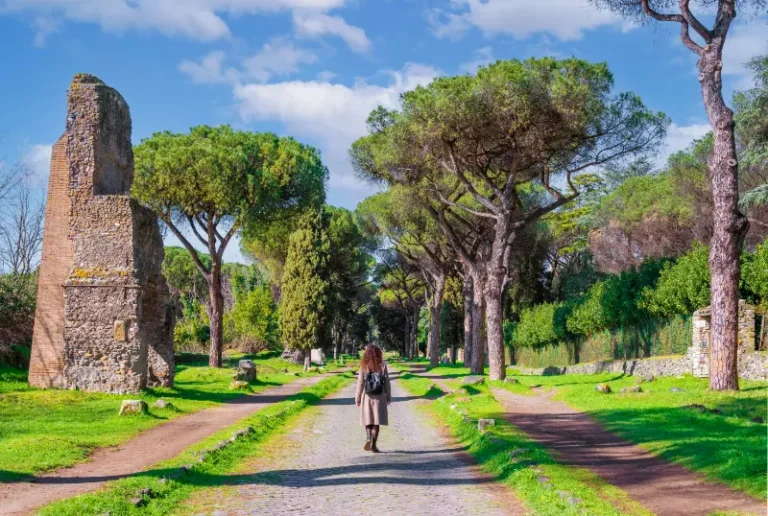
I would usually skip a day trip, large shopping sessions, multiple archaeological sites beyond the Forum area, and museums that require crossing the city unless one is a personal priority. Galleria Borghese is magnificent, but it deserves a deliberate slot; adding it to this exact plan means removing something else. The same applies to catacombs and the Appian Way.

A faster version for travelers who dislike museums
If you prefer streets and neighborhoods to art collections, shorten the Vatican Museums portion and spend more time in Trastevere, the Jewish Ghetto or on the Janiculum. Rome can be a superb two-day city even without entering every famous interior. The goal is to build around your interests rather than around someone else’s “must-see” list.
Food strategy for only two days
Do not sacrifice every meal to sightseeing. Choose one traditional pasta meal—carbonara, amatriciana, gricia or cacio e pepe—one casual pizza or bakery lunch, and at least one proper gelato. Eat slightly away from the most photographed squares when possible. Our what to eat in Rome guide can help you recognize the dishes that are genuinely Roman.
Final advice for 48 hours in Rome
A successful two-day Rome itinerary should leave you wanting to return, not relieved that the schedule is over. Book the two hardest attractions, start early, group sights by neighborhood and protect one relaxed evening. If you discover that you are enjoying a church, piazza or lunch more than expected, stay a little longer. Rome rewards attention far more than speed.
Extra planning notes before you go
Before finalizing any plan around Rome in 2 days, check official opening calendars again a few days before the visit. Rome changes constantly: restoration projects, religious events, strikes, heat measures and temporary exhibitions can alter entrances or routes. Save the official page on your phone and take a screenshot of any timed reservation so you are not dependent on mobile data at the entrance.
Build at least 20 to 30 minutes of margin around timed admissions. Central Rome looks compact, but cobblestones, security queues, crowded pavements and hot weather slow people down. A schedule that works perfectly on a map can feel stressful on the ground. It is usually better to arrive early and have a coffee nearby than to spend the final ten minutes running through unfamiliar streets.
For meals, move one or two streets away from the most photographed landmark before choosing a restaurant. Read the menu before sitting, check whether service or cover charges are clearly listed, and avoid places where staff pressure you from the pavement. A simple bakery, pizza al taglio counter or neighborhood trattoria often fits a sightseeing day better than an elaborate lunch beside a major monument.
Finally, keep water and footwear in mind. Rome is a walking city even when you use metro and buses, and many archaeological or historic surfaces are uneven. In summer, refill at public drinking fountains where appropriate and schedule outdoor sections earlier or later in the day. In winter, carry a compact rain layer and remember that daylight disappears much earlier.